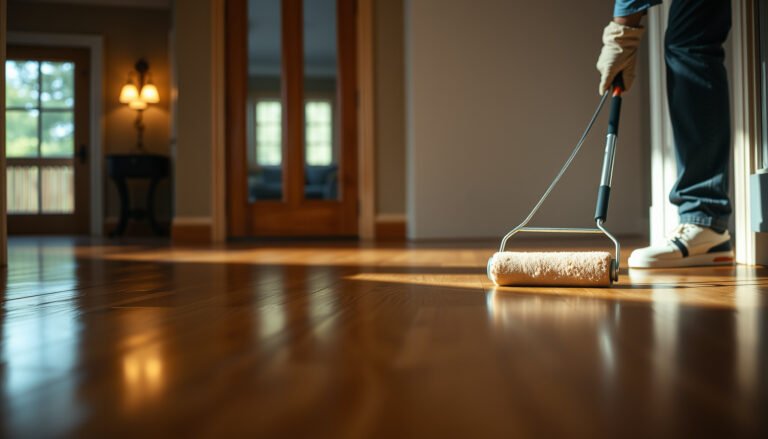
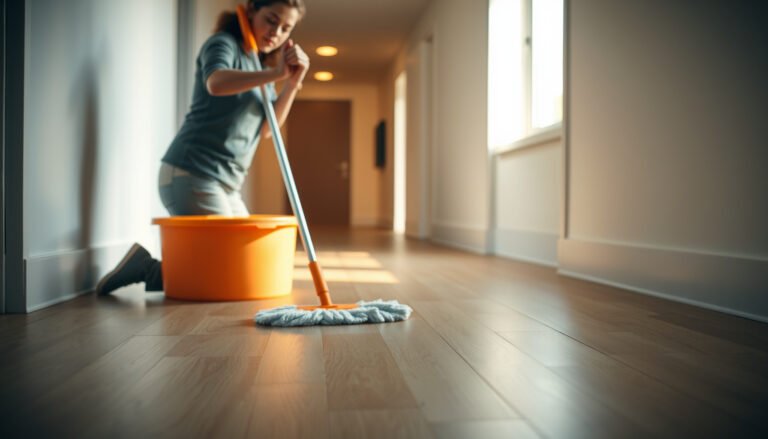
How do you remove grass stains from hardwood floors without harming the finish? By acting quickly—blotting the area, pre-treating with a pH-neutral cleaner, and carefully scrubbing before drying thoroughly—you can typically restore the surface in about 20 to 45 minutes. Gather soft cloths, mild dish soap or a hardwood-safe cleaner, a soft-bristle brush or sponge, and clean water, then follow a controlled, stain-focused approach.




Clear grass stains from hardwood floors by acting fast—blot moisture first, then use a pH-neutral hardwood cleaner on sealed floors; if discoloration remains, switch to a non-chlorine oxygen cleaner in light, tested cycles. Blot up any moisture, then clean gently with a pH-neutral cleaner meant for sealed hardwood. For set-in grass staining, use an oxygen-based cleaner (non-chlorine) and keep treatments light, testing in an inconspicuous spot first. This approach helps lift organic pigment without soaking or damaging the finish.
If the boards are sealed (polyurethane/varnish/water-based finish), you can usually remove grass discoloration with controlled cleaning. If your floor is unsealed/unfinished, waxed heavily, or the stain has penetrated deeply, you’ll need to be more cautious and may have to refinish or consult a pro.
If you’re cleaning in 2026, the safest workflow is still the same: minimal moisture, finish-aware products, and repeated short treatments rather than one aggressive soak.
What to do first before you clean

Start with removal of loose grass and surface residue; this prevents green/organic pigment from smearing deeper into your hardwood finish. On sealed hardwood floors, you can often get back to “normal” appearance by separating what’s sitting on top from what has actually stained the finish or the wood.
– Sweep or vacuum loose grass carefully (avoid spreading pigment into seams).
– Blot—don’t scrub—using a clean, damp cloth to remove surface residue.
– Check whether the wood is sealed or if you can feel “raw” texture (this changes what’s safe).
– Remove any matting or caked clumps first, then re-check the spot—compressed grass often leaves dye-like residue that scrubbing can grind in.
– If you recently mopped the area, pause and let it fully dry before starting—extra moisture can make the stain look worse and complicate diagnosis on sealed hardwood.
Quick way to test sealed vs. unsealed (no chemicals)
Use a damp (not wet) cloth corner in a hidden area for 30–60 seconds, then blot dry. If the finish darkens or the area looks “touched” after drying, treat it like unsealed hardwood and reduce chemical strength and dwell time.
Match the method to your hardwood finish (sealed vs. unsealed)
Use sealed-floor methods first: pH-neutral cleaners and non-chlorine oxygen treatments are usually compatible with sealed hardwood, while unsealed and heavily waxed floors require a more conservative approach. Here’s why: sealed hardwood finishes form a protective film, so controlled cleaning can lift pigments without letting them wick into pores.
– Sealed hardwood: you can typically use a pH-neutral wood floor cleaner and oxygen-based stain removers, with patch testing.
– Unsealed/oiled/waxed finishes: avoid strong chemicals and excess water—stains may wick deeper.
– If you’re unsure, test in a hidden area and stop if you see color change, dulling, or finish softening.
To make the finish decision clearer, use this sealed-vs-unsealed comparison:
| Scenario | Best next action | Main risk |
|---|---|---|
| Sealed hardwood with a visible sheen | pH-neutral cleaner + light cycles | Streaking/film if you don’t rinse lightly |
| Water beads on the floor | Oxygen-based, non-chlorine spot treatment if needed | Halo if product overextends beyond the stain |
| Unsealed “raw” wood feel | Minimize moisture; consider pro advice for deeper stains | Penetration that requires refinishing |
| Heavy wax buildup or cloudy finish | Use only finish-prescribed methods; avoid oxidizers | Wax removal and uneven dull patches |
How Common Stain-Removal Ingredients Behave on Sealed Hardwood (Typical Strengths)
| # | Method | Active chemistry | Sealed hardwood suitability | Finish-safe rating | Why it works / why to be careful |
|---|---|---|---|---|---|
| 1 | pH-neutral wood floor cleaner | Detergents + water, formulated to be near-neutral | Usually recommended for routine cleaning | ★★★★★ | Lifts surface dirt without aggressive oxidation |
| 2 | Oxygen bleach (non-chlorine), e.g., sodium percarbonate | Releases oxygen-based oxidizers in water | Often effective for set-in grass pigment | ★★★★☆ | Targets organic dyes; patch test prevents halos |
| 3 | Distilled water (minimal moisture) | Water only—no surfactants | Good for rinsing and testing | ★★★☆☆ | Helps prevent residue but won’t oxidize set-in color |
| 4 | Hydrogen peroxide (only if finish-safe and labeled for wood) | Oxidizer that can lighten pigments | Use cautiously; can create “halo” | ★★☆☆☆ | Can lighten color rather than fully remove it |
| 5 | Vinegar (acidic) or “natural” acids | Acetic acid | Usually not recommended for sealed finishes | ★☆☆☆☆ | Acidity can dull or haze some coatings |
| 6 | Chlorine bleach (sodium hypochlorite) | Chlorine-based oxidizer | Avoid on hardwood finishes | ☆☆☆☆☆ | High discoloration and coating damage risk |
| 7 | Abrasive scrubbing pads | Mechanical abrasion + pigment grinding | Not suitable for stain removal | ★☆☆☆☆ | Can dull sheen and embed particles into grain |
In practice, grass stains on sealed hardwood are often a mix of organic pigment and fine debris. That’s why pH-neutral cleaners first, oxygen-based oxidizers second (non-chlorine), tends to be the most controlled path in 2026.
Step-by-step removal for most grass stains
For most grass stains on sealed hardwood, you can remove visible discoloration using a rinse-and-dry cycle with a pH-neutral cleaner, then repeat only if needed. The key is controlled moisture: a damp microfiber wipe is different from a wet floor spot.
– Step 1: Dampen a microfiber cloth with a pH-neutral cleaner (per the product label) and wipe along the grain.
– Step 2: Rinse the area with a lightly damp cloth (water only, minimal moisture), then dry immediately with a towel.
– Step 3: If pigment remains, repeat once more—small cycles are safer than one aggressive treatment.
Why “wipe along the grain” matters
Grass pigment doesn’t just sit on the surface; small fibers and clippings can be pushed into seams and grain lines. When you wipe with the grain, you reduce the chance of driving debris deeper.
How long to work a spot before you rinse
Keep contact time brief, then rinse. If a treatment dries on its own, it can leave residue that appears as haze on sealed hardwood. If you’re following manufacturer directions, your product label should include any recommended dwell time—follow it rather than guessing.
Treat set-in discoloration (without chlorine bleach)
Use a non-chlorine oxygen cleaner when gentle pH-neutral cleaning doesn’t fully remove the stain; this targets organic pigment while staying finish-friendlier than chlorine bleach. For sealed hardwood, oxygen-based stain removers can lift discoloration, but only when applied lightly and patch tested.
– Use a non-chlorine oxygen cleaner (often listed as “oxygen bleach” / sodium percarbonate) only if your finish can tolerate it—follow the label and patch test first.
– Apply the solution lightly enough to avoid soaking; cover with a cloth/tarp if the label recommends dwell time, then wipe and rinse lightly.
– For stubborn spots, repeat the oxygen treatment in smaller steps rather than leaving it on too long.
What “oxygen” is doing to grass stains
Grass stains are largely organic pigments. Oxygen-based cleaners generate oxidizing action that breaks down discoloration chemistry so the pigment becomes lighter or more removable by wiping. Chlorine bleach is different (it’s chlorine-based) and tends to be far more likely to damage or discolor wood topcoats.
To anchor the chemistry in a practical way: According to , sodium percarbonate releases oxygen-based oxidizers in water (2023). This is why it works on organic color rather than just surface grime.
A cautious patch-test routine (sealed hardwood)
1. Choose a hidden area near a closet, vent, or baseboard.
2. Apply the oxygen cleaner exactly as the label states for a small spot.
3. Wait for the full dwell time on the label, then rinse and dry completely.
4. Re-check under normal light and at an angle—look for sheen loss or whitening.
What can go wrong (and how to prevent it)
The most common problems are over-wetting, abrasion, and using the wrong chemistry for your hardwood finish. Prevent them by controlling moisture, avoiding harsh oxidizers (especially chlorine bleach), and matching treatments to sealed vs. unsealed conditions.
– Over-wetting: standing water can cause swelling, edge lifting, or a hazy finish.
– Scrubbing too hard: rough pads can dull the finish and grind grass particles into the grain.
– Using harsh products: chlorine bleach and abrasive cleaners can discolor wood and damage topcoats (avoid).
– Ignoring finish type: even “safe” products can cause whitening, streaking, or film damage on some finishes.
Three high-risk mistakes (and how to correct them)
1. Leaving product on too long
If you notice a lighter “halo,” stop. Excess dwell can lighten pigment chemistry beyond the stain boundary—especially on sealed hardwood with certain polyurethane systems.
2. Not rinsing
Many oxygen cleaners can leave residue if not wiped and lightly rinsed. Residue can attract dirt and make the spot look darker again after drying.
3. Mixing cleaners
Don’t combine oxygen cleaners with other chemicals. If you’re cleaning again, start with a clean-water wipe, then dry, then re-test.
For context on why “non-chlorine” matters: According to , chlorine bleach is sodium hypochlorite and is a stronger oxidizer that can harm finishes and discolor materials (2022). According to , many OTC hydrogen peroxide products are sold at about 3% strength (2024). Even though hydrogen peroxide can lighten stains, it can also create uneven color on certain coatings.
Verdict: safest path to clear grass stains (and when to stop)
Start with gentle, finish-friendly cleaning (pH-neutral + rinse/dry), then move to an oxygen-based, non-chlorine treatment only if the stain persists. The tradeoff is that some stains are deep-set and may leave behind lightening that can’t be fully corrected without refinishing.

Skip DIY and consider a flooring pro if:
– the stain is on unsealed/waxed wood,
– the finish is already failing (peeling, worn-through areas), or
– repeated spot attempts have changed the sheen/color around the spot.
If you’re working in 2026 and the area keeps looking bigger after each cycle, that’s a signal to stop and reassess—grass pigment can wick into seams or absorb into porous wood if the finish isn’t protecting the substrate.
Quick checklist (save this)
| Step | What to do | What to avoid |
|---|---|---|
| 1 | Vacuum/sweep, then blot | Scrubbing/rubbing grass in |
| 2 | pH-neutral cleaner + wipe with grain | Soaking or leaving moisture |
| 3 | Light rinse + dry right away | Harsh cleaners, abrasive pads |
| 4 | If needed: oxygen-based (non-chlorine), patch test | Chlorine bleach, “strong” solvents |
| 5 | Repeat gently in cycles | One long aggressive treatment |
Sources
Grass stains on hardwood are often removable when you treat the stain as an organic pigment problem with controlled moisture and finish-safe chemistry. For sealed hardwood, pH-neutral cleaning first followed by non-chlorine oxygen spot treatments (in short, tested cycles) is usually the most reliable route—while unsealed, heavily waxed, or failing-finish floors are the cases where it’s smarter to stop early and call a flooring professional.Frequently Asked Questions
What’s the safest way to remove grass stains from hardwood floors without damaging the finish?
Start by blotting (not scrubbing) the stain with a clean, dry cloth to remove loose debris. Use a hardwood floor cleaner or a small amount of mild dish soap mixed with warm water on a damp (not wet) cloth, then wipe in the direction of the grain. Rinse with a slightly damp cloth and dry immediately to prevent moisture from seeping into the wood. Avoid harsh abrasives, steel wool, and strong chemicals that can dull or strip the polyurethane or varnish.
How can I get grass stain out of hardwood if the stain has set for days or weeks?
First, soften the stain by placing a damp cloth over it for a few minutes, then gently wipe with a cleaner-safe solution. For tougher discoloration, try hydrogen peroxide diluted with water (commonly 1:1) applied briefly with a cloth, then wipe and dry right away—test in an inconspicuous area first. If the stain remains, you may need repeated gentle treatments rather than aggressive scrubbing to avoid damaging the wood. For deep or old stains, professional refinishing may be the safest option.
Why do grass stains leave dark marks on hardwood floors, and how do I prevent them from spreading?
Grass contains pigments and plant oils that can discolor the finish and, if moisture penetrates, can darken the wood fibers underneath. To prevent spreading, blot quickly and keep cleaning cloths clean so you don’t redistribute pigment. Work small sections at a time, use minimal moisture, and always dry thoroughly after each pass. Using mats in high-traffic areas and sweeping regularly can reduce future grass stain issues.
What’s the best household solution for grass stains on finished hardwood floors?
For most grass stains on finished hardwood, a mixture of warm water and a few drops of mild dish soap is often the best starting point. Apply it with a lightly damp microfiber cloth, wipe with the grain, and then rinse with a cloth dampened with plain water. Dry immediately with a towel to protect the hardwood finish from water spotting. If the stain is still visible, switch to a tested, finish-safe method like diluted hydrogen peroxide and re-test before continuing.
Which cleaning method should I choose for hardwood floors—vinegar, baking soda, or hydrogen peroxide?
Vinegar and baking soda can be too abrasive or leave residues that may dull a hardwood floor finish, so they’re not usually the best choice for grass stain removal. Hydrogen peroxide is often more effective for stubborn green or yellow grass discoloration, especially when diluted and used briefly, but it should always be spot-tested first. For regular grass stains, start with a gentle hardwood cleaner or mild dish soap solution, then move to hydrogen peroxide only if needed. If your floor is unfinished or the stain is deep, it’s safer to consult a hardwood floor restoration professional.
📅 Last Updated: October 31, 2026 | Topic: How to clear grass stains from hardwood floors? | Content verified for accuracy and freshness.
References
- Stain removal
- Wood flooring
- 404 Error
- https://www.armstrongflooring.com/support/product-care/how-to-remove-stains.html
- https://www.bruce.com/resources/flooring-care/stain-removal
- https://scholar.google.com/scholar?q=grass+stain+removal+hardwood+floor Google Scholar
- https://scholar.google.com/scholar?q=stain+removal+from+wood+floors+finishes Google Scholar
- https://scholar.google.com/scholar?q=organic+green+pigment+stain+removal+wood+surfaces Google Scholar