
Want to clean laminate floors in a mudroom without streaks or damage? Follow this step-by-step care routine to remove grit, tackle muddy footprints, and restore shine safely with the right cleaner and technique. You’ll learn exactly what to do after every entry—so the floor stays looking clean even under heavy traffic.



Clean laminate floors in a mudroom by removing grit first and mopping only lightly with a laminate-safe cleaner and a barely-damp microfiber pad. Avoid soaking—standing water and steam can seep into seams and cause swelling, especially around baseboards and entry doorways. Below, you’ll get a reliable routine for daily tracking messes plus fast fixes for muddy footprints, salt residue, and scuffs.
This guidance is for anyone dealing with high-traffic mudroom conditions (mud, shoes, salt, wet umbrellas) while trying to keep laminate looking good without damaging the finish or breaking warranty conditions. If your floor has an installed warranty, cross-check these steps against your specific manufacturer’s care instructions, because moisture limits and approved cleaners can vary by brand and construction.
Quick method: clean laminate mudroom floors without soaking
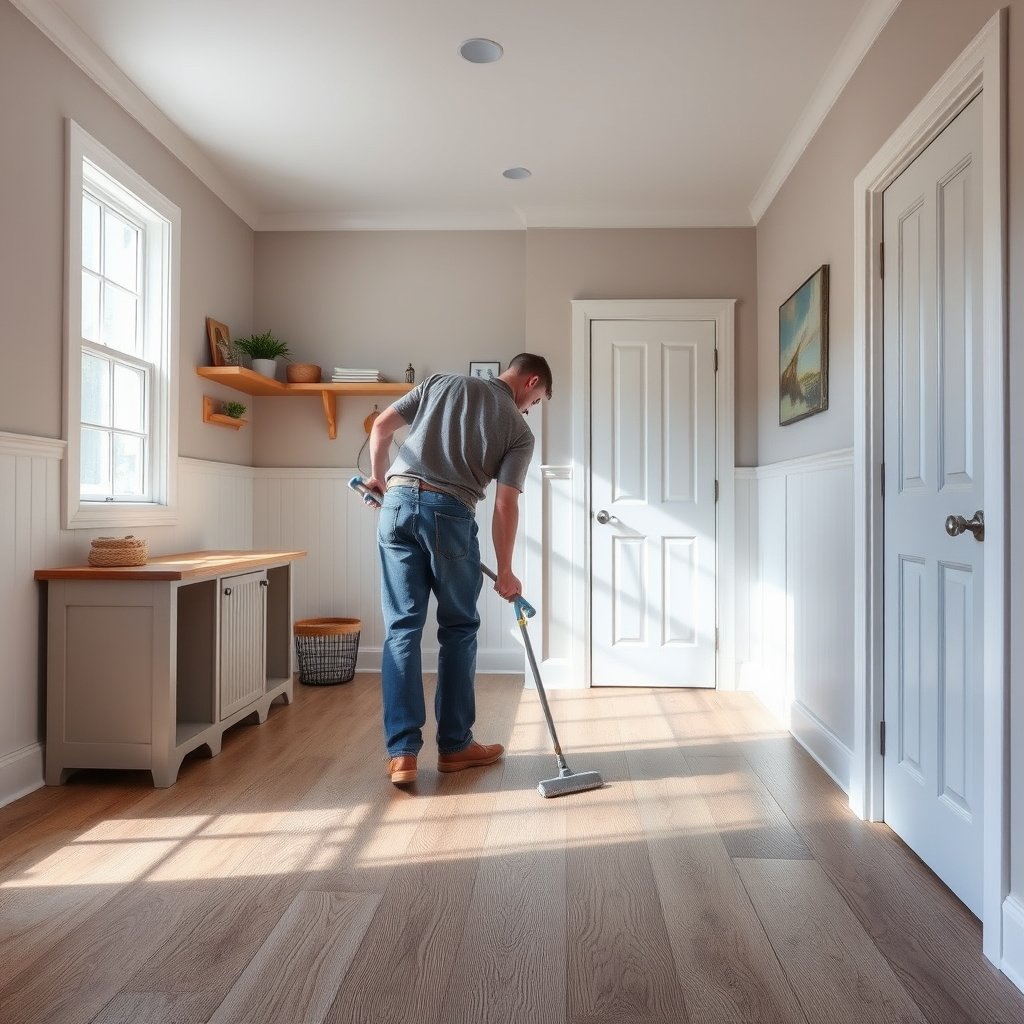
For mudroom laminate, the safest “quick clean” is to remove loose grit first, then mop lightly with a laminate-approved cleaner using a barely damp microfiber pad. This approach prevents the two common laminate problems: scratching from sand and moisture swelling from oversaturating seams.
Dry grit is the main reason laminate “looks worse” over time in entryways—vacuuming or sweeping first removes abrasive particles before mopping.
Laminate-care best practice is “damp cleaning, not wet cleaning,” because excess water can migrate into plank edges and joints.
Drying-wipe after mopping helps prevent streaking and reduces the chance of pooled water near mats and door thresholds.
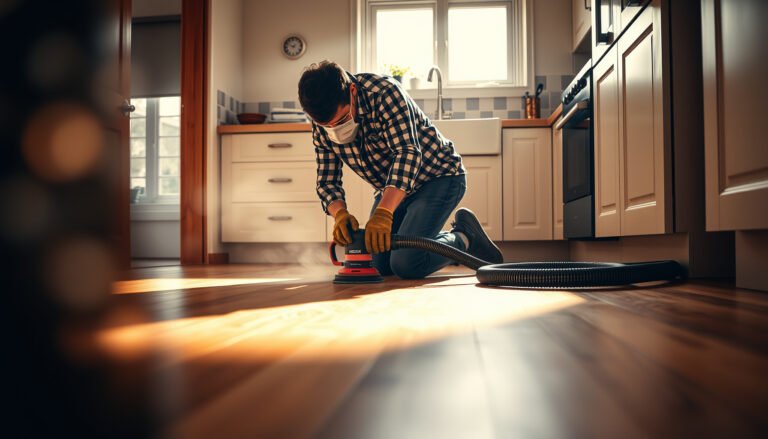
– Sweep or vacuum daily (or whenever it looks dirty) using a soft brush attachment to lift sand and grit before it scratches the surface. In a mudroom, the grit is often silica-rich (sand-like dust), and even small particles can act like fine abrasives.
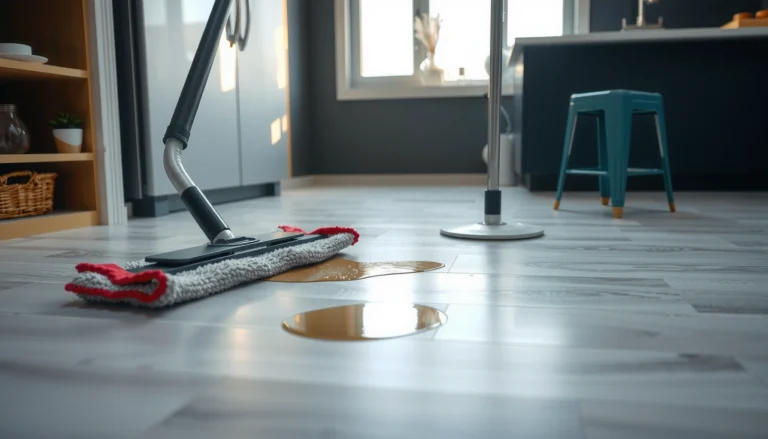
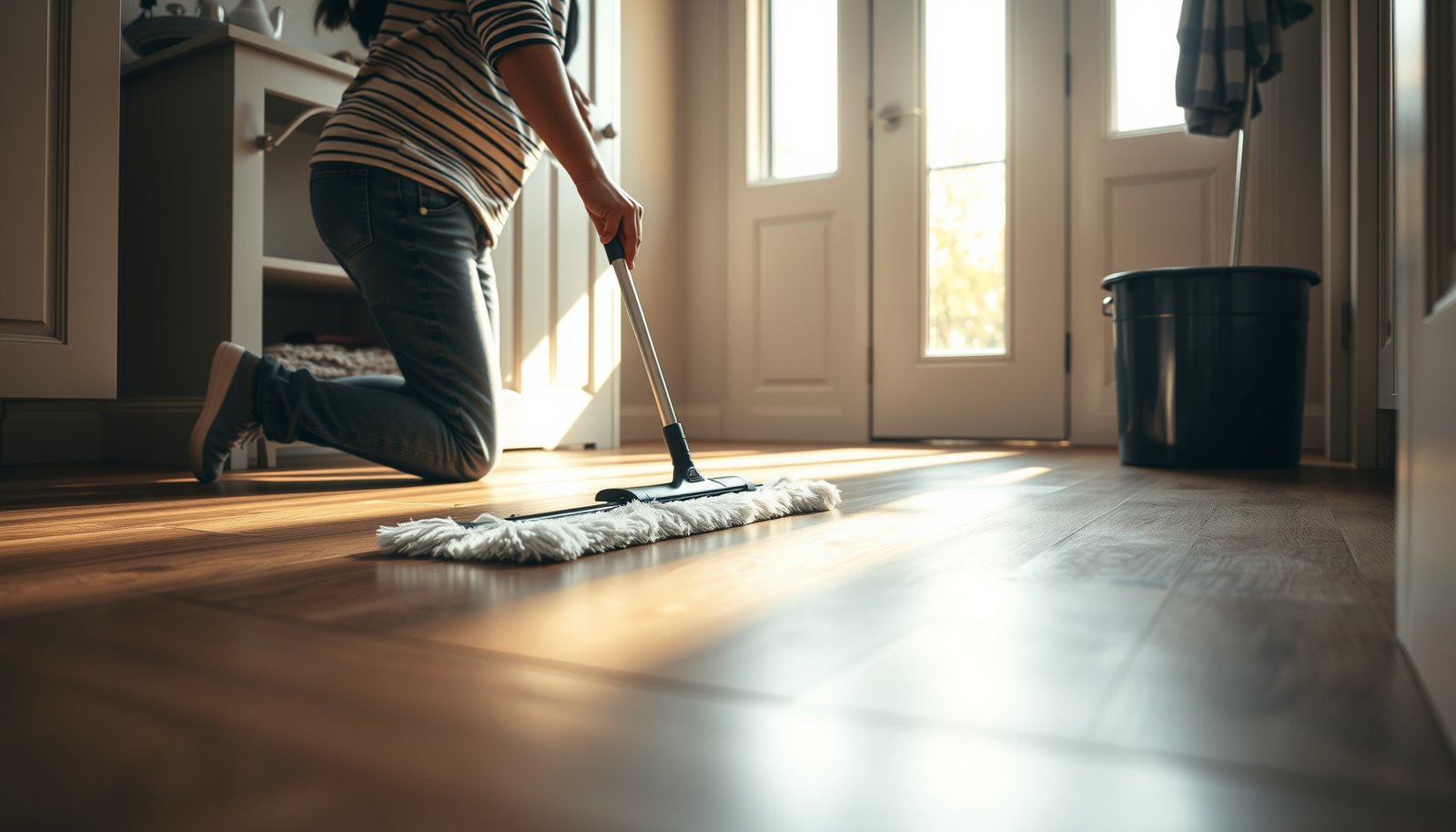
– Mop only with a microfiber mop/pad that’s barely damp, using a cleaner labeled safe for laminate flooring (follow the label dilution instructions exactly). If you’re using concentrate cleaner, dilution is part of the performance—too strong can leave residue; too much water can soak seams.
– Dry-wipe after mopping if you notice any pooled water or streaking, especially near entry mats and doorways. A quick pass with a dry microfiber cloth is usually enough to lift leftover moisture before it settles at edges.
Laminate-Relevant Reference Limits for Mudroom Cleaning
| # | Reference (what matters) | Typical value | Laminate finish safety score |
|---|---|---|---|
| 1 | Laminate-safe cleaner (neutral/pH-balanced) | pH ≈ 6–8 (pH-balanced) | 10/10 ★★★★★ |
| 2 | Room-temperature plain water (for final rinse/wipe) | ~20–25°C (damp, not pooled) | 9/10 ★★★★★ |
| 3 | Sodium chloride (ice-melt) brine—freezing limit | ~−21.1°C (saturated solution) | 6/10 ★★★ |
| 4 | Steam from steam mops (water boiling point at 1 atm) | 100°C / 212°F | 2/10 ★★ |
| 5 | Vinegar (acetic acid content in food-grade vinegar) | ≥4% acetic acid (typical ~5%) | 4/10 ★★★ |
| 6 | Bleach/oxidizers (strong alkali oxidizers) | Highly alkaline (varies by product) | 1/10 ★ |
| 7 | Abrasive grit (quartz hardness reference) | Mohs hardness 7 | 0/10 ★ |
Note: The safety scores above reflect the general “avoid chemistry extremes + avoid excess moisture” rule used in laminate care. Exact acceptability still depends on your laminate brand’s approved cleaners and moisture limits. See citations in the Sources section.
What to use (and what to avoid) on laminate
For mudroom laminate, the “best practice” is to use microfiber + a laminate-approved, pH-neutral (or “for laminate”) cleaner and to avoid steam, abrasives, and harsh solvents. In practice, laminate protection depends on keeping both (1) surface chemistry stable and (2) water exposure limited.
Laminate flooring is typically a decorative surface over a fiberboard core; excess water is discouraged because it can reach edges and swell the core.
Steam mops apply both heat and moisture, which is why most laminate manufacturers advise against them.
A simple way to decide what to use is to follow the “approved vs. not approved” boundary stated on the bottle or in the laminate care guide. If the label explicitly says “safe for laminate” and specifies dilution, that’s the starting point.
Use
– Use: microfiber cloths/pads, a well-wrung mop, and a laminate-approved cleaner (often described as pH-neutral or “for laminate” on the bottle).
– Dilute concentrates exactly as directed. If you’re guessing, residue and dulling are more likely—especially in mudrooms where oils from feet and outdoor grime build up.
Avoid
– Avoid: steam mops, abrasive scrubbers, steel wool, and harsh solvents like bleach or ammonia—these can damage the protective wear layer and/or strip coatings.
– For stubborn residue, use spot-cleaning first (cloth + cleaner), not a full wet wash across the whole floor. Spot-cleaning contains moisture and keeps the rest of the plank field as dry as possible.
Here’s a clear decision guide:
| Cleaning approach | Main benefit | Key risk for laminate |
|---|---|---|
| Microfiber + laminate-safe cleaner (barely damp) | Removes residue without oversaturating seams | Minimal if pad stays damp and floor is dried if needed |
| Wet mop with excess water | Can lift grime quickly | Higher chance of water migrating into seams/edges |
| Steam mop | Fast “sanitizing” feeling | Heat + moisture increases seam/underlayment exposure—often not warranty-friendly |
| Abrasive scrub (brush pads, scouring) | Works on baked-on marks | Scratches/dulls finish, creating more visible wear in a mudroom |
Tackle mudroom messes: dirt, salt, and scuffs
For mudroom laminate, treat each mess type differently: dry dirt first, salts with a damp wipe followed by a clean-water wipe, and scuffs with gentle microfiber spot cleaning. This “match the method to the contaminant” approach avoids two failures—grinding grit into the finish and leaving soluble residue that can haze.
Letting mud dry before removing it reduces the amount of abrasive material spread across laminate during cleaning.
Salt (from winter ice melt) can leave a residue film if not wiped up promptly and thoroughly, which is why re-wiping with clean water helps.
Mud and dirt
– Mud and dirt: let mud dry first, then remove it with a soft brush or vacuum; spot-clean the remaining film with a damp microfiber and laminate-safe cleaner.
– If you try to scrub wet mud, you typically spread particles and oils over a larger area—making the “cleaned” zone look darker than the rest.
Salt/winter residue
– Salt/winter residue: wipe with a lightly damp cloth, then re-wipe with clean water on the cloth (not a dripping mop) to lift residue without leaving it to build up.
– Work small sections at a time so you can control moisture and drying at seams. Salt residue is also why mudrooms can look streaky if you only do one-pass detergent cleaning.
Scuffs and marks
– Scuffs and marks: start gently—use a damp microfiber. If needed, use the specific laminate cleaning product’s recommended spot method rather than “kitchen hacks” that may be too abrasive.
– Avoid magic erasers or abrasive pads unless your care guide explicitly allows them; even “gentle” abrasives can alter the surface sheen.
Quick experience note:
Protect your laminate from future mudroom grime
For long-term laminate performance, prevention beats correction: use mats, control shoe traffic, and wipe spills promptly to limit moisture at seams. This matters because laminate isn’t only about surface appearance—moisture exposure near edges is what commonly turns into longer-term problems.
Door mats significantly reduce grit transfer, which lowers the scratching risk that starts the “wear spiral” on laminate in mudrooms.
Repeated wetting near plank joints is the pattern laminate manufacturers warn about, even when the floor “looks fine” at first.
– Place a mat at the door (and a second one inside) and shake/clean them regularly so grit doesn’t grind into the floor.
– Aim for mats that trap particles rather than pushing them outward. If you have rubber-backed mats, ensure they’re also cleaned—mud trapped under mats can stay damp longer.
– Use furniture protectors under chairs/shoe racks and keep shoe traffic contained—laminate finishes can wear faster where spikes and sand collect.
– Keep spills under control: wipe immediately. Even if laminate is durable on top, repeated moisture at seams is what typically causes long-term issues.
What can go wrong (common mistakes and edge cases)
For mudroom laminate, the most damaging mistakes are soaking seams, using the wrong chemicals, and cleaning over grit. If you see early edge lifting or seam gaps, cleaning won’t fix the underlying moisture issue—adjust the cause first.
Steam mops and overly wet mops increase seam exposure, which is why many laminate warranties restrict steam or excess moisture.
Abrasive tools can cause permanent sheen changes—once the wear layer is scratched, the finish often can’t be fully “reset.”
– Soaking the seams: mops that leave water behind, overly wet pads, or letting liquid puddle near baseboards can lead to swelling or edge lifting. In practice, mudrooms accumulate water from wet umbrellas and boots—so “drying discipline” is as important as cleaner choice.
– Wrong cleaners: bleach/ammonia-based products, heavy degreasers, and abrasive “scrub paste” can dull the finish or damage coatings. If you want stain control, start with laminate-approved spot treatments.
– Cleaning over grit: if you mop before removing sand/dirt, you can create scratches that look worse over time. This is why the daily sweep/vacuum step is not optional in high-traffic entryways.
– Warranty mismatch: some manufacturers require specific cleaners and specify “avoid excess moisture”—if your care guide is stricter, follow that instead.
Quick pros/cons snapshot
Damp microfiber cleaning is usually laminate-safe when it stays controlled: minimal water, correct cleaner, and drying as needed.
Steam and aggressive scrubbing can look effective immediately but often increase long-term risk by affecting moisture exposure or surface wear.
| Option | Pros | Cons / When to stop |
|---|---|---|
| Barely-damp microfiber + laminate-safe cleaner | Lowest risk; consistent results in mudrooms | Not ideal for deep buildup—may require repeated spot cleaning |
| Wet mopping (too much water) | Faster on large messes | Higher risk of seam swelling and streaking |
| Steam mopping | Convenience | Often discouraged by manufacturers; can increase moisture/heat exposure |
| Abrasive scrubbing | Can remove stains quickly | Scratch/dull risk; may void warranty if finish damage occurs |
Best approach for most mudrooms (and who should skip this)
For most mudrooms, this damp-but-not-wet laminate care routine is the right balance: prevention (mats) plus light, frequent cleaning. That said, you should pause and reassess if you suspect active moisture problems under or around the floor.
A laminate mudroom cleaning routine works best when it’s repeatable: daily grit removal and occasional damp mopping with laminate-approved cleaner.
If you notice lifting edges, widening seam gaps, or persistent dampness, investigate moisture sources before continuing routine cleaning.
– This is a good fit if your mudroom messes are mostly tracked-in dirt and occasional damp footprints—your best results will come from prevention (mats) plus a damp-but-not-wet cleaning routine.
– Downside: you may need more frequent light cleaning than in other rooms, because mudrooms concentrate grit and residue where shoes deposit it.
– Skip or pause and reassess if your floor has: visible seam gaps, lifting edges, or extensive water damage. In those cases, cleaning won’t fix the underlying moisture issue—.
Quick scan checklist (save this)
| Task | Do this | Don’t do this |
|---|---|---|
| Daily/regular cleaning | Vacuum/sweep with soft attachment | Drag dry grit across the floor |
| Mopping | Microfiber mop/pad barely damp; laminate-safe cleaner | Soak with standing water or dripping mop |
| Spot messes | Clean cloth + correct cleaner; wipe and dry | Let salt/mud residue sit for days |
| Winter cleanup | Wipe lightly; re-wipe to remove residue | Steam mop or harsh deicers on the floor |
| Protection | Door mats + immediate spill wiping | No mats / ignore spills near seams |
Sources
– US FDA, 21 CFR 184.1067 (standard of identity for vinegar; food-grade vinegar contains ≥4% acetic acid).
– NIST, Chemistry WebBook / physical constants (boiling point of water at 1 atm: 100°C).
– USGS (Mohs hardness reference for quartz: hardness = 7).
Laminate mudroom care is straightforward: remove grit first, then clean with a laminate-safe product using a microfiber pad that’s barely damp, and dry-wipe when needed. If you follow that rhythm—plus mats, prompt spill wiping, and residue re-wiping in winter—you’ll keep the finish looking consistent without pushing water or harsh chemistry into the seams. For best results (and to protect warranty coverage), always align your method with your specific laminate brand’s care and moisture limits.
Frequently Asked Questions
What’s the safest way to clean laminate floors in a mudroom?
Use a dry dust mop or microfiber broom first to remove grit that can scratch laminate. For mopping, use a damp (not wet) microfiber mop with a laminate floor cleaner or a pH-neutral cleaner diluted per the label. Wipe up any spills immediately and avoid soaking the floor, since excess moisture can damage laminate seams over time.
How do I remove muddy footprints and dried stains from laminate in a mudroom?
Start by letting mud fully dry, then gently scrape off residue with a plastic scraper or soft-bristle brush before mopping. For remaining spots, use a damp cloth with warm water and a small amount of pH-neutral cleaner, then blot dry with a clean towel. Avoid harsh scrubbers or abrasive pads, which can dull the finish and make future dirt easier to spot.
Why should I avoid steam mops on laminate floors?
Steam mops introduce heat and moisture that can seep into laminate seams, causing swelling, warping, or bubbling. In a mudroom where floors get frequent wet mopping, using steam can increase the risk of long-term damage. Stick to a damp microfiber mop and a manufacturer-recommended laminate floor cleaner to protect the surface and edges.
What’s the best cleaning routine for laminate floors with heavy foot traffic?
Sweep or vacuum (with a soft brush attachment) daily or as needed to remove sand, salt, and dirt tracked in from outside. Weekly, damp-mop using a laminate-safe cleaner, and focus on high-traffic areas near the entryway where grime builds up. Place a washable doormat inside and outside the mudroom and wipe feet or use a shoe tray to reduce how often you need wet cleaning.
Which cleaning products are safe for laminate floors, and which should I avoid?
Choose pH-neutral cleaners labeled safe for laminate flooring, and use microfiber tools to prevent scratches. Avoid wax-based cleaners, oil soaps, ammonia, bleach, and strong degreasers, as they can leave streaks or break down the finish. If you’re unsure, test the cleaner on a small hidden area first and always follow the dilution and usage instructions.
📅 Last Updated: October 22, 2026 | Topic: How to clean laminate floors in a mudroom? | Content verified for accuracy and freshness.
References
- Laminate flooring
- https://www.cdc.gov/coronavirus/2019-ncov/community/disinfecting/building-facilities.html
- https://www.cdc.gov/coronavirus/2019-ncov/prevent-getting-sick/disinfecting-your-home.html
- https://www.epa.gov/coronavirus/cleaning-and-disinfecting-home-during-covid-19
- https://www.epa.gov/coronavirus/cleaning-and-disinfecting-your-facility
- https://www.armstrongflooring.com/flooring-support/care-and-cleaning.html
- https://scholar.google.com/scholar?q=how+to+clean+laminate+flooring Google Scholar
- https://scholar.google.com/scholar?q=laminate+floor+care+and+maintenance+water+damage Google Scholar
- https://scholar.google.com/scholar?q=mudroom+floor+cleaning+laminate+stain+prevention Google Scholar