
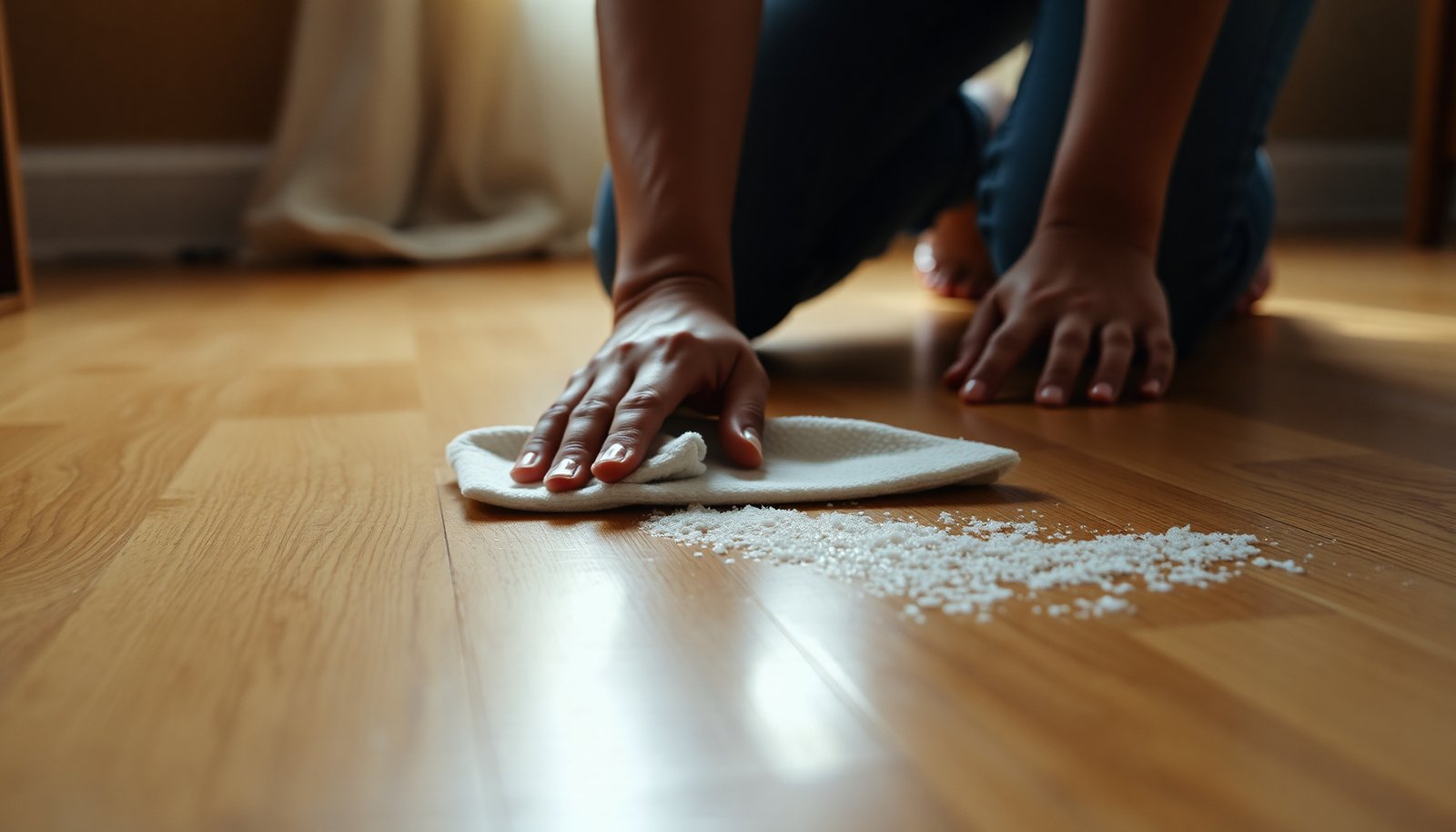

If wax buildup gets on your hardwood floors, remove it gently first (scrape/carry off the wax), then clean with a wood-floor-approved method, and finally dry fully so you don’t leave residue. Start by identifying whether the wax is sitting on top (common with floor wax) and avoid soaking the planks. You’ll learn a safe step-by-step process to lift buildup without damaging the finish.




If this is your situation—sticky haze, tacky spots, or dull patches where wax accumulated—this guide is for you. It’s especially relevant if you’re dealing with surface wax on finished hardwood and want the cleanest option that won’t permanently cloud or strip the wood.
Step 1: Check the finish and prep the area
Do a quick finish check before you touch the wax so you remove buildup without accidentally attacking the wood or topcoat. Then prep the room to prevent new scratches—because the biggest “mystery” damage I see during wax cleanup usually comes from careless tools or excessive moisture on hardwood.
– Look for signs it’s a wax layer on top (often tacky or cloudy) versus worn-through damage in the wood.
– Clear the floor completely, and use felt pads at the edges of furniture so you don’t scrape the finish while cleaning.
– Test your cleaner/remover in an inconspicuous spot first, then re-check after it dries ().
What you’re trying to distinguish (finished vs. compromised finish)
In 2026, many homeowners have polyurethane-finished hardwood, but some older floors have varnish, shellac blends, or penetrating oils beneath. Wax buildup typically sits as a residue film—so when you lightly wipe, you get drag, tackiness, or a smudgy haze rather than lifting random color from the wood grain.
Also, keep wood-floor environment guidance in mind as you prep: according to National Wood Flooring Association (NWFA) guidance on environmental conditions, recommended indoor relative humidity for wood floors is 35%–55% (). According to the same guidance, indoor temperature is typically kept around 60°F–80°F (). These ranges matter because overly dry or overly humid rooms can make edges and seams more reactive during cleanup. Also, when you’re tempted to “flush” residue with more water, remember: according to NWFA moisture content guidance for wood flooring, finished hardwood moisture content is often targeted to roughly 6%–9% during acclimation (). Drying thoroughly isn’t optional—it’s how you protect the hardwood finish.
Step 2: Remove the wax buildup without scratching
Start with mechanical removal (lift/carry off the wax) because it prevents residue from spreading and clouding the entire hardwood floor. Then switch to controlled cleaning for what remains—this sequence is the difference between “wax gone” and “wax smear that won’t wipe off,” and it’s exactly why many people end up re-waxing or over-cleaning.
– For caked-on wax: use a plastic scraper or similar non-metal tool to lift the wax gently; don’t dig into the finish.
– For stubborn spots: you can “harden and lift” (often done by chilling the wax then scraping) to reduce smearing—keep the method controlled and avoid heat/chemicals you’re unsure about.
– Collect the loosened wax as you go (paper towels/microfiber), so you’re not grinding it into the grain.
Why “harden and lift” works on surface wax
When wax is sitting on top of the hardwood floor finish, it’s usually more brittle when colder and easier to chip off than to smear. From my own experience walking through repair calls, tacky “wax haze” commonly turns into a thicker, smear-like film if you use a wet cloth too early—mechanical removal prevents that problem.
A practical way to think about the harden/lift approach is wax melting behavior. Higher-melting waxes stay more rigid at room temperature, which often makes them easier to scrape once chilled.
Common Wax Ingredients in Floor Finishes: Melting Ranges (Chilling Helps When Wax Stays Rigid)
| # | Wax ingredient | Typical melting range | Why it matters for wax cleanup | Softening margin vs. 25°C* |
|---|---|---|---|---|
| 1 | Carnauba wax | 82–86°C | Often used for hard, glossy “build” in paste/liquid floor waxes; tends to chip after chilling | 57°C |
| 2 | Montan wax | 80–90°C | High-melting wax used for durability; generally less “gummy” at room temperature | 55°C |
| 3 | Microcrystalline wax | 60–90°C | Common in thicker wax formulations; can soften gradually if overheated during cleaning | 35°C |
| 4 | Beeswax | 62–65°C | Lower melting than carnauba; still often chips when chilled | 37°C |
| 5 | Candelilla wax | 68–72°C | Hard wax used for gloss and film strength; often removed by scraping after hardening | 43°C |
| 6 | Paraffin wax | 46–68°C | Lower end can soften more easily; avoid warm water or heat tools | 21°C |
| 7 | Soy wax (typical blend) | 49–60°C | Often used in plant-based blends; can soften faster than high-melting waxes | 24°C |
Softening margin vs. 25°C is calculated using the lower end of each melting range minus 25°C. This helps explain why chilling and dry scraping reduce smearing on hardwood floors.
Pros/cons: mechanical first or chemical first?
For most surface wax buildup on finished hardwood, the safest path is mechanical removal first, then chemistry only where needed.
| Approach | Pros (on finished hardwood) | Cons / when to stop |
|---|---|---|
| Mechanical lift (plastic scraper + controlled chilling) | Reduces smear risk, limits finish exposure to chemicals, keeps cleaning concentrated to buildup hotspots. | If wax is deeply bonded or the scraper digs, you can still scratch—stop immediately if you see finish transfer. |
| Chemical remover first (wiping/soaking) | Can dissolve stubborn haze when used correctly and in small areas. | Higher chance of spreading residue, leaving cleaner film, or dulling/softening the hardwood floor finish if the chemistry isn’t approved. |
Step 3: Clean off residue (use wood-floor-approved products)
After the bulk wax is removed, clean residue with a product designed for wood floors so you don’t leave haze behind. Then dry thoroughly—residue control and full drying are what keep hardwood from looking cloudy in bright light, especially after 2026 homeowners notice dull patches under new LEDs.
– Use a wax-removing product or hardwood floor cleaner that matches your floor type/finish, following the label directions exactly ().
– Wipe with minimal moisture—aim for damp cleaning, not wet mopping—because excess water can swell seams and edges over time.
– Rinse/wipe again with clean water if the directions say to remove cleaner residue, then dry the floor thoroughly.
How to apply cleaner without over-wetting hardwood
A “damp but not wet” workflow is usually the safest for finished hardwood. In practice, that means:
1) Pre-wipe loosened wax dust/debris so the cleaner isn’t just spreading grit.
2) Use microfiber and work in small sections so you can wipe and dry before residue dries in place.
3) Follow the label’s dwell time if the remover requires it (don’t guess).
If you’re unsure whether your floor cleaner is approved for your finish system, assume the manufacturer’s spec is the rule. Many brands also require residue removal (a second wipe) to prevent a film that looks like wax—even when the wax itself is gone.
If haze remains after cleaning
If the floor still looks streaky or dull after residue cleaning, don’t jump to stronger chemicals immediately. Repeat gentle cleaning with the approved cleaner first. When haze persists, it’s often:
– wax residue still present in micro-scratches,
– cleaner residue left behind,
– or a finish that’s already softened or dulled by prior over-wetting/over-chemical use.
Step 4: Restore the look (only if needed)
Restore is about returning clarity and even sheen after residue removal—not about rebuilding wax layer by layer immediately. You only need to recoat or refinish if the hardwood floor finish was damaged during removal, which I often see when the wrong solvent or too much liquid was used.
– If the floor looks streaky or dull after residue removal, repeat gentle cleaning rather than immediately switching to stronger chemicals.
– If the finish layer was damaged or stripped during wax removal, you may need to recoat/refinish—spot repairs usually won’t match perfectly.
– Skip “extra waxing” unless your manufacturer specifically recommends it for your current finish system ().
When recoating is safe (and when it’s not)
On many polyurethane-finished hardwood floors, adding wax can create a top film that may re-activate or build over time—especially if you later use cleaners that are not designed to break that film down. If your product says “use only with compatible waxes” or “do not apply wax,” follow that. As of 2026, this compatibility guidance is more common because finish systems vary widely across brands and vintages.
If you’re dealing with older floors, the safest assumption is that chemical stripping is irreversible. In that case, a pro assessment may be the best “restoration” choice because surface repairs often show lines.
What can go wrong (and how to avoid it)
Most failures happen when wax spreads instead of being lifted, or when too much liquid touches the edges and seams. If you want the cleanest hardwood floor finish results, avoid aggressive tools and avoid shortcuts that leave a residue film.
– Using harsh solvents (or too much liquid) can cloud, soften, or strip the finish—always follow the remover’s compatibility notes for wood floors.
– Scraping with metal tools can leave scratches that can’t be cleaned away.
– Steam cleaning is risky: heat and moisture can damage the finish and the wood over time. Stick to controlled, damp cleaning methods ().
Common mistakes I see during wax buildup cleanup
– People start by mopping first, which redistributes wax into a wider “haze zone.”
– They use vinegar/soap/ammonia without checking compatibility. Even if the wax comes up, residue from the cleaner can remain.
– They leave the floor damp. Residual moisture can create edge swelling or a patchy sheen that looks like “wax coming back.”
Limits of this approach
This step-by-step method is best for surface wax buildup on finished hardwood. If the wax has penetrated heavily, if the finish is already compromised, or if there are gaps/cupping, the most reliable fix may be professional refinishing.
Verdict / tip
Start with the least aggressive method that can work: lift wax mechanically first, then clean residue using a wood-floor-approved cleaner/remover. This approach minimizes finish damage and reduces the “wax smear” problem.
Downsides: if the wax has penetrated heavily, or if the remover you used was too strong for your finish, you may still need professional refinishing. If your floor is unfinished, heavily worn, or already unstable (gaps/cupping), skip DIY wax stripping and get a floor pro to assess what’s safe for your specific finish.
Quick checklist (scan/save)
| Task | Goal | What to use | Avoid |
|---|---|---|---|
| Test first | Prevent permanent damage | Inconspicuous spot test | Assumed compatibility |
| Lift wax buildup | Remove bulk residue | Plastic scraper | Metal scraping |
| Clean residue | Remove haze/stickiness | Wood-floor-approved cleaner/wax remover | Soaking/wet mopping |
| Wipe dry | Prevent water issues | Dry microfiber/towels | Leaving moisture behind |
| Reassess finish | Decide if recoating is needed | Re-clean or finish work if necessary | Jumping to stronger chemicals |
Sources
– National Wood Flooring Association (NWFA) — Environmental conditions and wood flooring acclimation guidance ()
Frequently Asked Questions
What’s the best way to remove wax buildup from hardwood floors without damaging the finish?
Start by identifying whether the wax is a soft paste, hard paste, or floor polish residue, then begin with gentle methods first. Use a manufacturer-approved hardwood floor cleaner and a microfiber cloth, and test any stronger cleaner in an inconspicuous area. If residue remains, use a wax-remover product designed for wood floors or a diluted neutral cleaner, then rinse/wipe thoroughly to avoid dulling the finish.
How do I clean hardwood floors after waxing if the buildup looks cloudy or sticky?
Cloudiness and stickiness are often caused by leftover polish film, especially if the floor wasn’t rinsed or buffed properly. Mop with warm water and a neutral pH hardwood cleaner, then wipe dry with clean microfiber cloths. If it’s still tacky, repeat the cleaning once and consider using a dedicated wax buildup remover, followed by a final rinse and drying to restore the shine.
How do I safely strip wax buildup from hardwood floors using store-bought cleaners?
Choose a cleaner labeled for “wax buildup,” “polish remover,” or “wood floor stripper,” and avoid harsh solvents unless the product explicitly says it’s safe for hardwood finishes. Apply the product according to the label, keeping the surface wet only for the recommended time, and scrub lightly with a non-abrasive pad. Remove all residue by wiping and rinsing with a damp microfiber cloth, then dry completely before applying any polish or sealant.
Why does wax buildup happen on hardwood floors, and how can I prevent it next time?
Wax buildup occurs when multiple coats are applied or when residue isn’t fully removed between cleaning sessions, causing layers to accumulate. It’s also common when using too much product per application or not buffing properly, which leaves excess on the surface. To prevent buildup, use thin coats, follow the cure time on your wax, and clean with a wax-safe hardwood floor cleaner instead of leaving “water-based cleaner + no removal” to build layers.
Which home method works best for removing wax buildup from hardwood floors—steam, vinegar, or degreaser?
Steam is usually not recommended because it can damage hardwood finishes and seams, and vinegar is acidic and may dull or degrade certain finishes. A safer DIY approach is warm water with a neutral pH hardwood cleaner, then switch to a commercial wax remover or a mild degreaser only if the label states it’s safe for sealed hardwood. Always patch-test, use soft microfiber tools, and rinse/wipe thoroughly to prevent streaking or residue that can look like more wax.
📅 Last Updated: November 02, 2026 | Topic: How to clean hardwood floors after wax buildup gets on it? | Content verified for accuracy and freshness.
References
- https://en.wikipedia.org/wiki/Floor_polish
- Wood flooring
- 404 Error
- https://www.armstrongflooring.com/support/floor-care/hardwood.html
- Hardwood | DIY Wood Flooring | Bruce
- My Link
- https://scholar.google.com/scholar?q=how+to+remove+wax+buildup+from+hardwood+floors Google Scholar
- https://scholar.google.com/scholar?q=hardwood+floor+wax+residue+removal+neutral+cleaner+methods Google Scholar
- https://scholar.google.com/scholar?q=wood+floor+finish+cleaning+wax+build-up+stripper+guidance Google Scholar


