
Are you planning to revamp your living space with new flooring? Whether you’re eyeing sleek hardwood, cozy carpet, or modern tiles, getting the measurements right is crucial.
Imagine the satisfaction of a perfect fit, without the hassle of extra trips to the store or unexpected costs. By understanding how to measure accurately, you can ensure a seamless installation and a stunning finish. In this guide, you’ll discover simple steps that will save you time, money, and stress.
Let’s dive in and empower you to take control of your flooring project with confidence.
Gathering Tools
Start with a tape measure. It’s the most important tool. A notepad and pencil help keep track of numbers. Use a calculator for quick math. An angle finder measures tricky corners. A straight edge checks for uneven spots. A laser measure works for big rooms. Don’t forget a ladder for high places.
Safety goggles protect your eyes. Gloves keep your hands safe. Wear a mask to avoid dust. Always have a first aid kit nearby. Keep the area clear of clutter. Check the tools before use. Stay alert to avoid accidents. Work slowly and with care. Ask for help if needed.
Preparing The Area
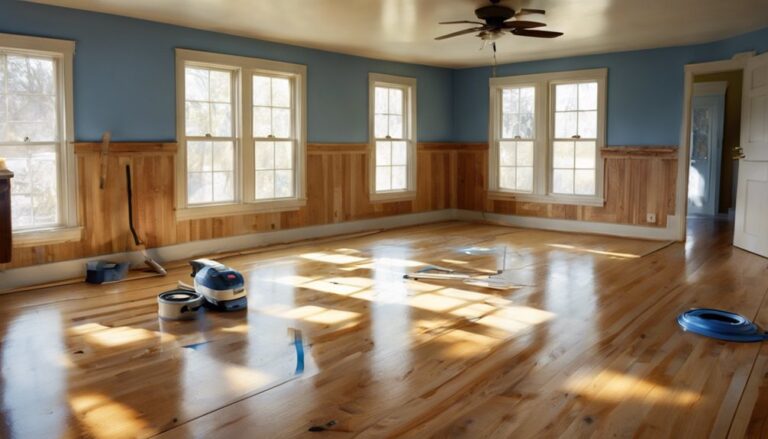
Move all furniture out of the room. This makes measuring easier. Make sure the floor is empty. Double-check corners and small spaces for any items. Clear any rugs or mats. Take away any loose items. Empty shelves and remove any wall hangings that might fall.
Look for any obstacles on the floor. These can be vents or pipes. Measure around each obstacle separately. Make a note of each one. Remember to include them in your floor plan. Check for uneven floors. They might need special attention. Plan for doorways and steps too. They can affect the flooring fit.
Measuring The Room
First, measure the length of the room. Use a tape measure. Start at one end. Stretch it to the other end. Write down the number you see. Next, measure the width. Do the same steps. Stretch the tape from side to side. Note the number you see. These numbers are important. They help in buying flooring.
Keep a record of your numbers. Write them in a notebook. You can use a phone app too. Always check your measurements twice. Mistakes can happen easily. Double-check to be sure. These numbers decide how much flooring you need.
Calculating Square Footage
Measure the length and width of the room. Use a tape measure for accuracy. Multiply the length by the width. This gives the square footage. If the room is 10 feet long and 12 feet wide, multiply 10 by 12. The room is 120 square feet. Always double-check your measurements. Write them down to avoid mistakes.
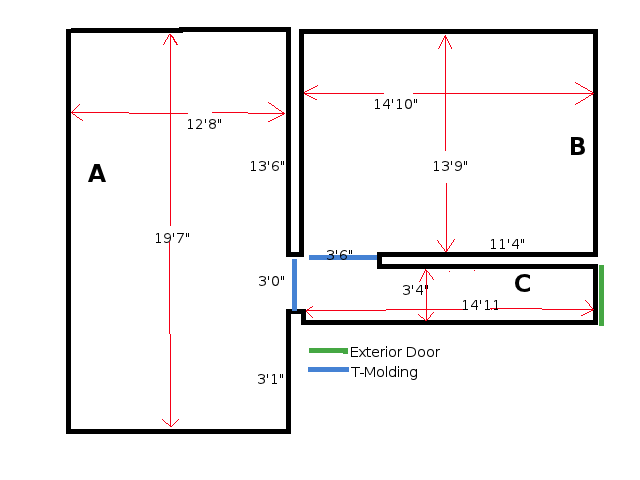
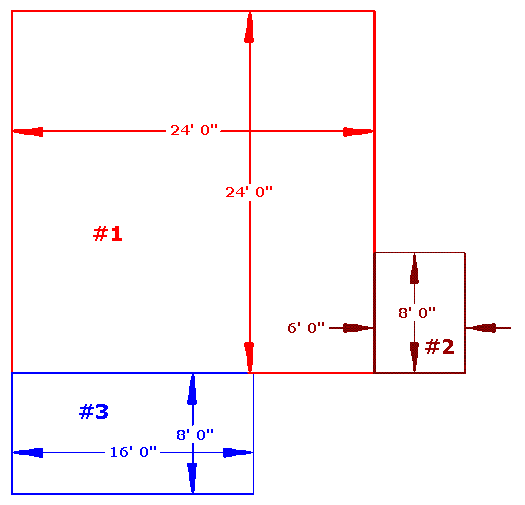
Break the room into simple shapes. Measure each shape separately. Draw the room on paper if needed. Use basic formulas for each shape. Add all the areas together. For a room with a bump-out, measure the main area first. Then measure the bump-out. Add both areas. Accurate measurements help choose the right amount of flooring.
Accounting For Additional Needs
Mistakes happen. Extra flooring material can be a lifesaver. Sometimes you cut wrong. Sometimes pieces break. Buying more is smart. Extra material helps cover these mistakes. It saves time and stress. Always plan for this.
Waste is common in flooring projects. Cuts and trims create waste. Extra material covers these losses. Projects often need more than planned. Consider waste when buying flooring. It’s better to have too much than too little.
Finalizing Your Measurements
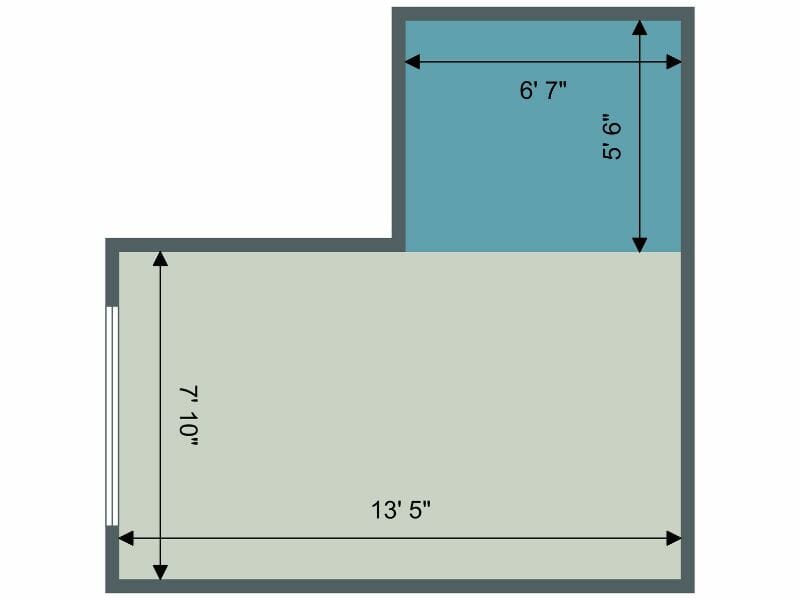
Accurate measurements are essential for a perfect flooring fit. First, measure each room’s length and width. Then, multiply these numbers to find the area. For irregular spaces, break them into smaller rectangles. Add these areas together for a total. Double-check your calculations to ensure accuracy.
Double-checking Dimensions
Check your numbers twice to avoid mistakes. Use a tape measure for accuracy. Write down each measurement clearly. Make sure all figures match up. Compare the dimensions with your initial notes. Look for any differences or errors. A small mistake can cause big problems later.
Compiling The Data
Gather all the numbers together. It’s helpful to create a table. Use this to keep track of each room’s size. Include length and width. Also, note the total square footage. This makes ordering materials easier. A well-organized table saves time and effort.

Frequently Asked Questions
How To Measure A Room For Flooring?
To measure a room for flooring, start by calculating the length and width of the room. Multiply these two numbers to get the area in square feet. For irregular rooms, divide the space into smaller sections and measure each separately.
Add all sections together to get the total area. Always add extra for waste.
What Tools Are Needed For Measuring Flooring?
Essential tools for measuring flooring include a tape measure, calculator, and pencil. A laser measure can offer more precision. Use graph paper to sketch the room layout. A notepad helps in recording measurements accurately. Ensure you have a helper for larger rooms to hold the tape measure.
How Do I Measure Flooring For Odd-shaped Rooms?
For odd-shaped rooms, divide the space into manageable sections. Measure each section separately and calculate the area of each. Sketch the room layout on graph paper for accuracy. Add all sections together to find the total area. Include extra material for cutting and fitting around corners.
How Much Extra Flooring Should I Buy?
It’s recommended to buy 10% extra flooring to account for mistakes and waste. This ensures you have enough material for cutting around corners and fitting odd spaces. Having extra flooring also helps in case of future repairs. Check with your supplier for their specific recommendations.
Conclusion
Measuring flooring doesn’t have to be tricky. Follow simple steps for accuracy. Double-check all measurements before buying materials. Use a tape measure for precision. Make sure to calculate square footage correctly. Always add extra for waste and cutting errors. Choose the right tools for the job.
Measuring well saves time and money. With careful measuring, your flooring fits perfectly. Enjoy your new floor with confidence. Planning and precision are key to success. Get started on your flooring project today. Your space deserves the perfect fit. Happy measuring and installing!