
Thinking about changing the floors in your home? It’s an exciting project that can transform your space, but first, there’s a crucial step you can’t skip: measuring square footage.
Getting this right means you won’t waste money on excess materials or face the frustration of running short mid-project. Imagine the satisfaction of a perfectly planned and executed flooring job. You’ll feel confident and in control, avoiding the common pitfalls that many encounter.
In this guide, you’ll discover simple, clear instructions to measure square footage accurately, ensuring your flooring project goes smoothly. Ready to dive in and learn how this essential step can save you time, money, and stress? Let’s get started!
Tools Needed
To measure square footage, you need a few tools. A measuring tape is very important. It helps you find the length and width of the floor. Make sure it’s long enough for the room.
A calculator helps you with math. It makes it easy to multiply numbers. This tool saves time and reduces mistakes.
Bring a notepad and pencil. Write down your measurements. This helps you remember them later. It’s easy to forget numbers. So, jotting them down is a smart move.
Understanding Room Shapes
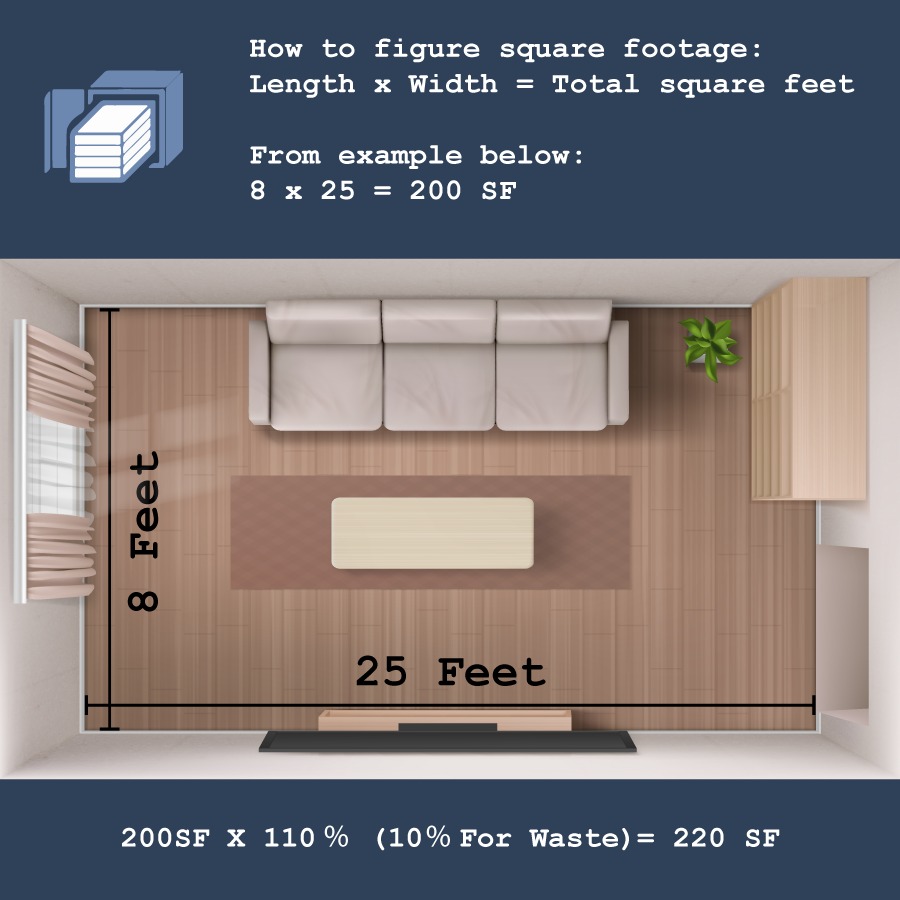
Rectangular rooms are the simplest to measure. Measure the length and width of the room. Multiply these two numbers. This gives you the square footage. For example, a room 10 feet by 12 feet is 120 square feet.
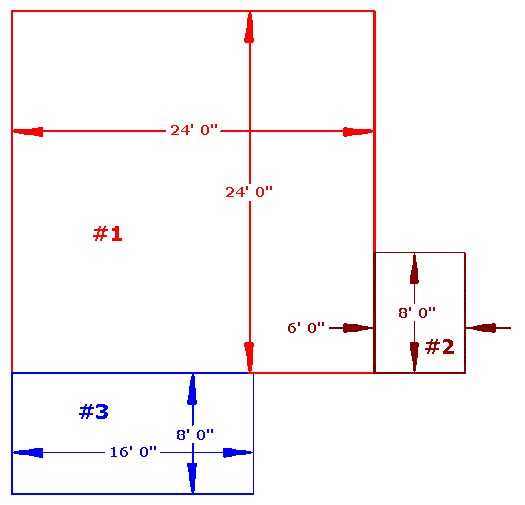
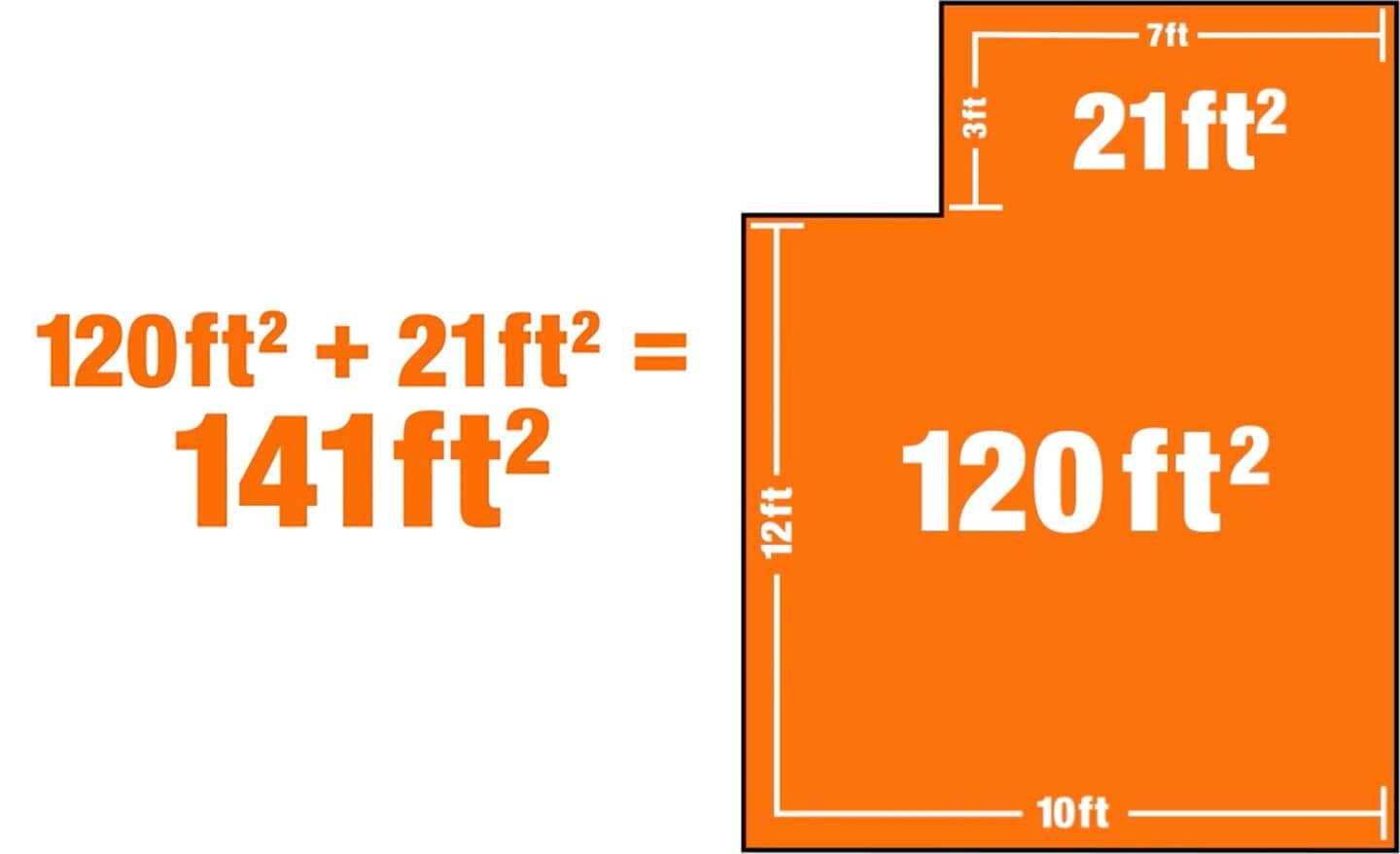
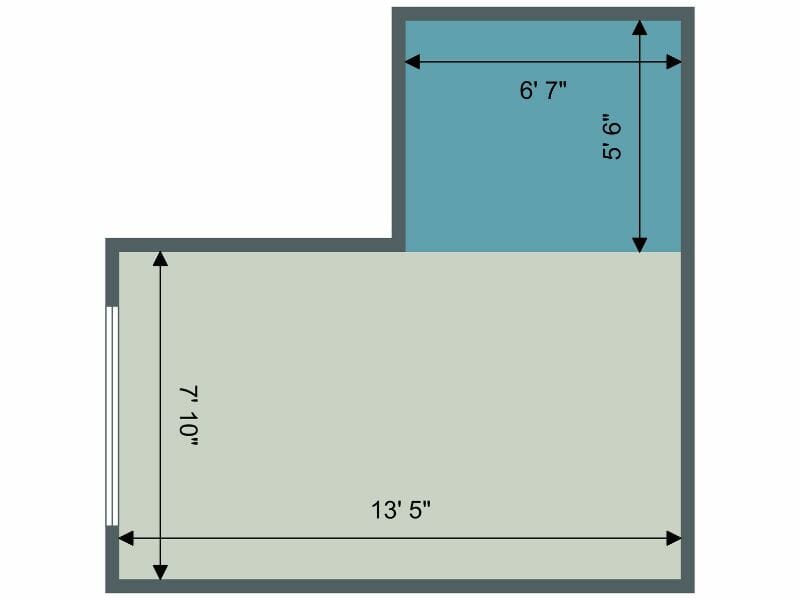
Irregular shapes need special steps. Break the room into rectangles or squares. Measure each section separately. Add the square footage of each section. This gives you the total square footage. Always double-check measurements for accuracy.
Rooms with steps or levels need extra care. Measure each level separately. Calculate square footage for each. Add them together for the total square footage. Remember to include small areas like closets.
Measuring Rectangular Rooms
Measure the room’s length first. Use a tape measure. Write it down. Then, measure the width. Write that number too. Check your numbers. They must be accurate. You need both numbers for the next step.
Multiply the length by the width. This gives the square footage. Use a calculator if needed. Always double-check your math. Correct math ensures proper flooring. Flooring fits better with correct measurements. Keep numbers clear and simple.
Handling Irregular Shapes
Some rooms have odd shapes. These rooms are not squares or rectangles. To find the area, break the room into smaller parts. These parts should be square or rectangular. It is easier to measure them this way.
Dividing Into Sections
Look at the room. See where you can draw lines. Make simple shapes. For example, use squares and rectangles. This makes measuring easier. It also helps in getting the correct area.
Calculating Each Section
Measure each shape separately. Write down their lengths and widths. Multiply length by width to find the area. Do this for all sections. Add the areas together. This gives the total square footage.
Considering Multiple Levels
Each level of your home may have different floor areas. It’s important to measure each one separately. Use a measuring tape to find the length and width. Write these numbers down. Then, calculate the square footage for each area.
Add the square footage of each separate area. This will give you the total. Make sure to check your math. Double-check all your measurements. This helps avoid mistakes. Always round up to be safe. It’s better to have a little extra flooring.
Factoring In Additional Areas
Closets are small but need measuring. Measure each closet separately. Record the length and width. Multiply to find the area. Add these areas to your total. Alcoves are like small nooks. They add charm to rooms. Measure them too. Use a tape measure. Get the length and width. Multiply these numbers. Add this to your total square footage. Every inch counts when buying flooring.
Hallways connect rooms. Measure them carefully. Use a tape measure. Find the length first. Then the width. Multiply to get the area. Add this to your total. Hallways need flooring too. Don’t skip them. Accurate measurements help you buy the right amount. Buying too little is bad. Too much is wasteful. Be careful and double-check your numbers.
Adjusting For Obstacles
Measuring square footage is important. Sometimes, there are obstacles in the way. These could be fixtures like sinks or toilets. You need to subtract these from the total space. First, measure the fixture’s length and width. Then, multiply to find the area. Subtract this from the room’s total area. This gives you the correct flooring size.
Built-in furniture can affect your measurements. Think of cabinets or shelves. Measure their space too. Find their length and width. Multiply to find their area. Then, subtract this from the total square footage. You will know exactly how much flooring you need. This helps avoid buying too much or too little.
Using Digital Tools
Floor plan apps can help measure room sizes. Many apps use your phone’s camera. This makes measuring easy and quick. Some apps even save your measurements. This way, you can refer back anytime. They often have step-by-step guides. These guides help you measure correctly. Always check your app’s instructions. Different apps might have different steps.
Online calculators are very handy for measuring. You just enter room dimensions. The calculator does the math for you. This means fewer mistakes. Many websites offer these tools for free. They are usually easy to find. Just search for “flooring calculator”. Always ensure your measurements are in the same unit. This will give you the right result.
Tips For Accuracy
Double-check Measurements are important for flooring. Measure each side twice. Write down numbers each time. Use a calculator to add them. This helps find mistakes. Mistakes can cost money. Always be sure of your measurements.
Consider Waste Allowance when planning flooring. Some tiles may break. Some wood may need cutting. It’s smart to buy extra. Add 10% to your total square footage. This covers waste and mistakes. Always plan for a little extra. It saves trips to the store.
Frequently Asked Questions
How Do I Calculate Square Footage For Flooring?
To calculate square footage, measure the length and width of the room in feet. Multiply these two numbers to get the total square footage. For irregular rooms, divide the space into smaller rectangles, measure each, and sum the totals. This ensures accurate measurements for your flooring needs.
What Tools Do I Need For Measuring?
You’ll need a tape measure, calculator, and paper for notes. A laser distance measurer can also be useful for larger areas. These tools will help ensure your measurements are accurate, leading to a successful flooring project without costly mistakes.
Can I Measure Square Footage For Carpet And Tiles?
Yes, the same method applies to both carpet and tiles. Measure the length and width, then multiply to get square footage. For tiles, consider the size of each tile and the spacing between them for precise coverage estimation.
What Should I Do About Irregular-shaped Rooms?
For irregular-shaped rooms, divide the area into smaller rectangles. Measure each section separately, then sum the totals. This approach allows you to account for all parts of the room, ensuring you purchase enough flooring material.
Conclusion
Measuring square footage for flooring is simple with the right steps. Start with a clear plan and gather your tools. Measure each room’s length and width, and multiply to get the area. Don’t forget to include closets or nooks. Add 10% extra to cover mistakes or future changes.
Double-check your measurements for accuracy. This ensures you buy enough materials without waste. Accurate measurements save time and money. Now, you can confidently choose the perfect flooring for your space. Happy renovating!