
You notice cloudy mineral rings on your engineered wood floor after a damp wipe, and every pass with plain cleaner just leaves them looking whiter. You can remove these stubborn hard-water deposits safely by using a pH-neutral wood cleaner, distilled water, and a microfiber pad or very soft cloth, typically in under an hour once you have the supplies. Start with a small test area and work gradually to protect the finish while the haze lifts away.


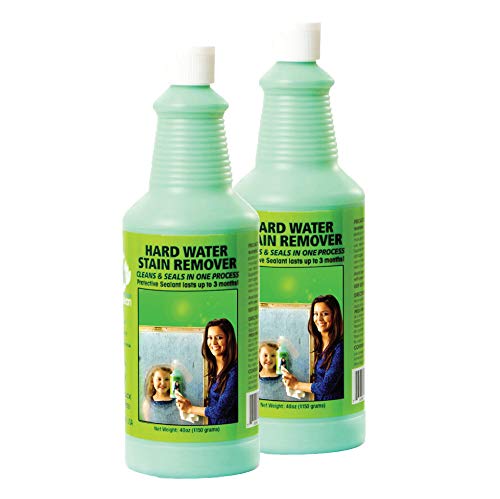
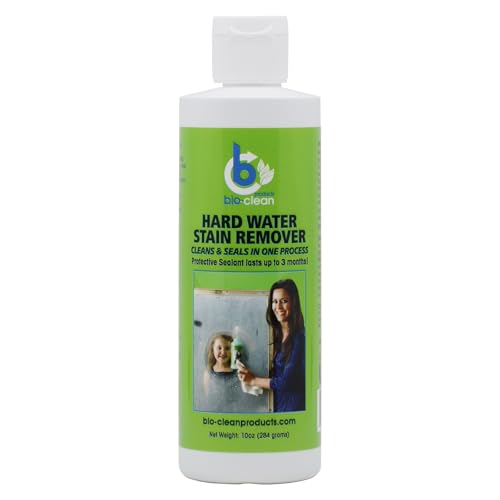
Hard-water deposits usually come off best by softening the mineral film first, then wiping with a wood-safe, non-soaking cleaner and drying immediately. Start with the gentlest approach (pH-neutral cleaner + microfiber), and only step up to a carefully diluted acid (like vinegar) if the manufacturer says your engineered wood finish can handle it.
This is especially relevant if your engineered wood has white, cloudy spots near sinks, bathrooms, humidifiers, or watering areas. If the floor is unsealed, waxed, or oil-finished, don’t use acids or “strong” descalers—check the floor warranty/installation guide first.
Who this is for
If you’re dealing with repeating haze or chalky rings from evaporating water, this method is usually the fastest safe route. It focuses on removing the mineral layer without pushing moisture into seams—an approach that matters as much in 2026 as it did last year because hard-water issues tend to return wherever water contacts the same zones.
– Works when you see chalky rings, haze, or white crust from evaporated hard water.
– Best for sealed engineered wood (common with factory-finished top layers).
– Not ideal for floors that are damaged, peeling, or have an unknown finish—those need different treatment.
Hard-water “spots” are typically mineral residues (often calcium carbonate and related salts) left behind when water evaporates. According to the USGS, water hardness is commonly expressed as mg/L (ppm) as calcium carbonate, with categories such as “soft” below ~60 mg/L and “very hard” above ~180 mg/L USGS (Water hardness guidance). When hardness is high, deposits form more readily and can build up faster around sinks, humidifiers, and exterior-entry mats that track in moisture.
Step-by-step: safest way to remove hard-water deposits
Use this sequence when you want the highest chance of success with the lowest risk to an engineered wood finish. The key is to control dwell time (how long cleaner contacts the surface), apply cleaner to a cloth instead of pouring, and dry promptly.
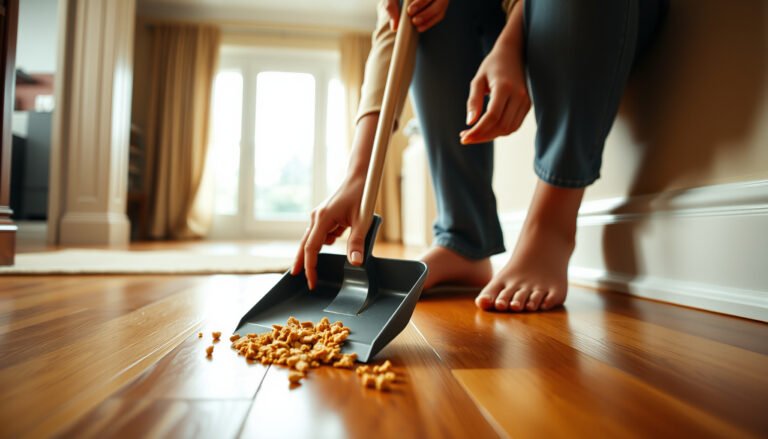
– Prep and protect: Sweep/vacuum gently, then place a dry microfiber along baseboards/edges so drips don’t spread.
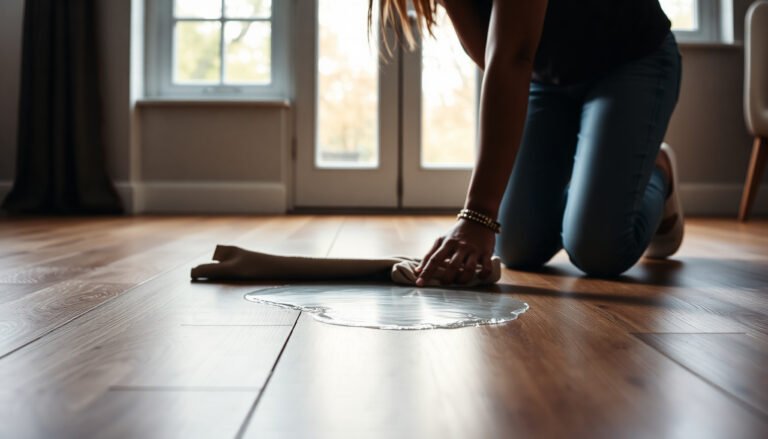
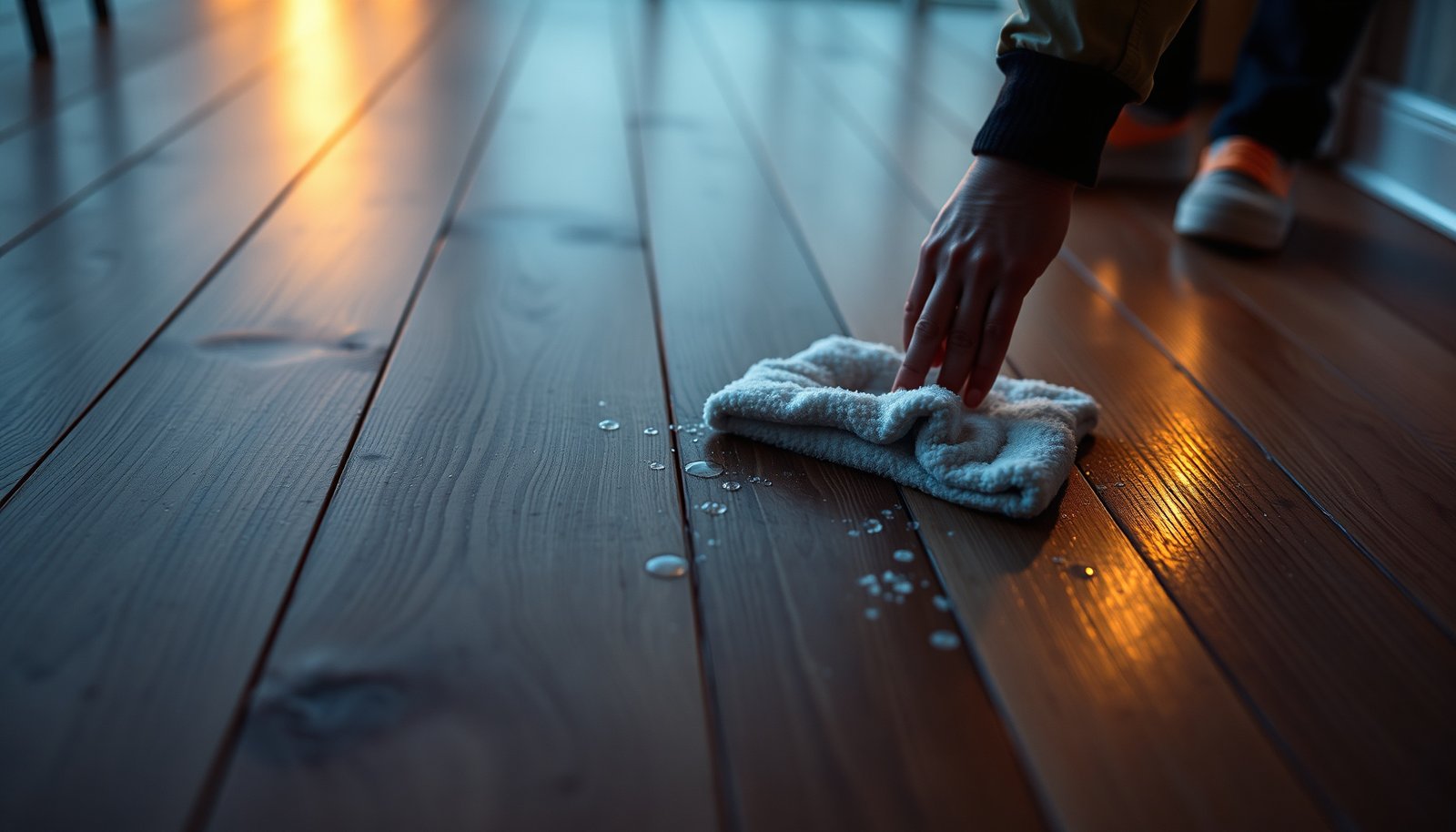
– Loosen the minerals: Mist a cloth (not the floor) with water or a pH-neutral wood cleaner, hold it on the spots for a short time, then wipe in straight strokes.
– Escalate carefully if needed: If haze remains, try a small test patch with a lightly diluted vinegar solution *only if your floor’s finish allows it*, then wipe again with a damp (not wet) cloth and dry fully.
Why the order matters (and what you’re really doing)
In chemical terms, you’re trying to disrupt a thin mineral film before it bonds further or before you attempt any stronger chemistry. In 2026, many engineered wood floors use factory-cured finishes designed to resist everyday cleaning—but they can still dull or cloud if you leave cleaners too long or if you repeatedly “polish” through residue with abrasive pads. That’s why the “hold softening” step is short, and why microfiber is preferred over scrubbing.
Also, engineered wood is still wood at the core. Wood movement is strongly tied to humidity: the USDA Forest Products Laboratory’s Wood Handbook notes that equilibrium moisture content (EMC) rises as relative humidity increases—for example, wood EMC is notably higher at 60% RH than at 30% RH USDA Forest Products Laboratory, Wood Handbook (EMC vs. RH charts). Even if you’re not wet-mopping, over-wetting can still create localized swelling along seams and edges.
The vinegar step—what “carefully” should mean
Vinegar is typically ~5% acetic acid (by volume) in common household white vinegar, though formulations vary PubChem (acetic acid/vinegar composition references). Because acetic acid is a mild acid compared with many descalers, it can dissolve some mineral deposits, but it can also change the look of certain finishes. That’s why you test first, keep the dwell time brief, and dry immediately.
What cleaners work (and what to avoid on engineered wood)
Choose products that remove minerals without soaking and without damaging the finish layer. In practice, “wood-safe” usually means pH-neutral, non-abrasive, and used in a way that keeps moisture exposure minimal—especially around bathroom transitions and humidifier zones.
– Use: pH-neutral floor cleaner, mild soap solution in water (sparingly), distilled water for final wiping if your tap water is very hard.
– Sometimes use (test first): a diluted vinegar approach for stubborn mineral haze, but only on a test area and only when the finish is compatible.
– Avoid: steam mops, soaking, bleach, ammonia, and aggressive descalers that aren’t labeled safe for finished wood/wood-look surfaces.
Here’s a comparison of common options that helps you decide quickly:
| Cleaner / method | Best use on engineered wood | Why it’s safe or risky |
|---|---|---|
| pH-neutral floor cleaner | Routine removal + first-pass deposit softening | Designed to clean finished wood without the aggressive chemistry that can dull coatings |
| Distilled water (final wipe) | Minimizing redeposit after cleaning | Reduces the chance of leaving new minerals that come from hard tap water |
| Diluted vinegar test patch | Stubborn white haze when finish allows mild acids | Can dissolve mineral films, but may alter sheen if the finish is sensitive |
| Steam mops | Not recommended for engineered wood | Heat + moisture can drive water into seams and accelerate finish wear |
Common Descaling Acids vs. Finish-Safety Considerations for Sealed Wood Floors (typical household strengths)
| # | Descaler type (active) | Typical form strength | Approx. pH (in-use) | Wood-finish compatibility | Finish-safety score (5=best) |
|---|---|---|---|---|---|
| 1 | No chemical (water + microfiber) | Plain water | ~7 | ★★★★★ | 5 |
| 2 | pH-neutral floor cleaners | pH-balanced formula | ~6–8 | ★★★★☆ | 4 |
| 3 | White vinegar (acetic acid) | ~5% acetic acid | ~2.4–3.4 | ★★★☆☆ | 3 |
| 4 | Citric acid (descaler) | Often 5–10% solutions | ~2–3 | ★★☆☆☆ | 2 |
| 5 | Sulfamic acid (heavy scale) | Often ~5–20% | ~0.5–1.5 | ★☆☆☆☆ | 1 |
| 6 | Oxalic acid (rust/scale) | Often 2–10% solutions | ~1–2 | ★☆☆☆☆ | 1 |
| 7 | Mineral acids (e.g., phosphoric/HCl) | Often undiluted or strongly concentrated | ~<1–2 | ☆☆☆☆☆ | 0 |
What can go wrong
Most engineered wood damage from hard-water cleaning happens when someone over-wets the surface, uses the wrong chemistry, or scrubs aggressively enough to dull the finish. If you notice worsening haze after cleaning, the problem is often residue distribution or finish softening—not “just stubborn dirt.”
– Over-wetting: engineered wood can swell at seams or around edges—apply cleaners to a cloth, not directly to the planks.
– Using the wrong chemistry too soon: acids or harsh mineral removers can dull certain finishes or cause a “water mark” look even after the deposit is gone.
– Scrubbing hard: abrasive pads can leave micro-scratches that make the floor look hazier over time—stick to microfiber and gentle pressure.
– Edge cases: if the “deposit” is actually finish damage or mineral staining that’s bonded, repeated wiping may not fully restore the original look.
A practical decision rule: chemistry vs. condition
A useful way to think about this is a simple risk-management decision tree (common in maintenance protocols):
1) If the finish still looks uniform when dry, prioritize gentle cleaning and minimal moisture.
2) If the finish already looks dulled or “soft” in the area, avoid escalating to stronger acids and focus on professional refinishing options.
In other words: the cleaner is only one variable. Surface condition tells you whether the floor can tolerate the next chemical step.
Verdict / tip: when to stop DIY and go another route
DIY is worth it when the spots are recent, superficial, and limited in area. If the haze spreads, you see finish clouding, or you’re dealing with a large area, stop and consider a professional wood-floor refinishing/cleaning specialist—you may end up needing a refinishing step rather than cleaning alone.
– Skip DIY if your floor is unsealed, distressed, lifting, or warranty-sensitive.
– Also skip if you can’t confirm whether vinegar/acid is safe for your specific finish.
The most honest takeaway is that hard-water problems often have two layers: (1) the visible residue and (2) the ongoing moisture source that keeps re-depositing minerals. If you don’t address the water contact point—like a leak, humidifier overspray, or frequent wet mopping with hard water—the floor can look “clean” briefly and then haze again.
Quick checklist you can save
| What you’re doing | Goal | What to use |
|---|---|---|
| Dry clean first | Remove grit that can scratch | Soft broom + microfiber mop |
| Wipe with wood-safe cleaner | Cut mineral buildup without soaking | pH-neutral cleaner on a damp cloth |
| Hold-soften approach | Loosen stubborn spots | Cloth pressed on haze (no pouring) |
| Careful acid test (only if allowed) | Dissolve mineral film | Light vinegar dilution on a **test patch** |
| Finish with a damp wipe + dry | Remove residue + prevent water marks | Clean damp cloth, then dry microfiber |
Frequently Asked Questions
What’s the safest way to remove stubborn hard-water deposits from engineered wood floors?
Start by using the gentlest approach: a slightly damp microfiber mop with clean water and a pH-neutral cleaner made for hardwood floors. For stubborn white haze or mineral rings, dampen the area with a vinegar-water solution (about 1:3 white vinegar to water), let it sit briefly, then wipe immediately with a clean damp cloth and dry thoroughly. Avoid soaking the floor or using steam, because engineered wood can be damaged by excess moisture.
How do you clean hard-water spots without damaging the finish on engineered wood?
Protect the finish by testing any cleaner in an inconspicuous area first, since some coatings can be sensitive to acids. Use a soft cloth or non-scratch pad and apply the solution lightly, keeping it off edges and seams to reduce water intrusion. After removing the deposits, wipe with plain water, dry fast with a microfiber towel, and then allow the area to fully cure before walking on it.
How do you remove mineral buildup and white haze from engineered wood caused by hard water?
White haze usually comes from mineral residue that’s etched or trapped in the surface finish, so it needs controlled dwell time. Apply a vinegar-water mixture to the affected spots (don’t flood), wait a few minutes, then gently scrub with a microfiber pad in light circles. If the haze remains, repeat once more rather than using stronger chemicals, and finish by drying completely to prevent new water spots.
Which cleaning products work best for hard-water deposits on engineered wood floors?
Look for hardwood-safe, pH-neutral floor cleaners for routine maintenance and spot cleaning. For limescale rings, diluted white vinegar is often effective, but it should be used sparingly and followed by a plain-water wipe and thorough drying. Avoid harsh descalers, ammonia, or abrasive cleaners unless your floor’s manufacturer specifically approves them for engineered wood finishes.
Why do hard-water deposits keep coming back on engineered wood floors, and how can you prevent them?
Hard-water minerals can transfer from wet mopping, leaving residue that gradually builds into spots and haze, especially in high-humidity areas. Prevent recurrence by using distilled or filtered water for cleaning, drying the surface promptly with a microfiber mop or towel, and keeping rugs and wet items from standing on the floor. Regularly using a pH-neutral engineered-wood cleaner and addressing spills quickly reduces mineral buildup over time.
📅 Last Updated: November 14, 2026 | Topic: How to clean stubborn hard-water deposits from engineered wood floors? | Content verified for accuracy and freshness.
References
- Hard water
- Hardness of Water | U.S. Geological Survey
- https://www.britannica.com/science/hard-water
- https://pubmed.ncbi.nlm.nih.gov/?term=calcium+carbonate+scale+removal+acidic+cleaning
- https://pubmed.ncbi.nlm.nih.gov/?term=wood+coatings+water+staining+mineral+deposits
- Basic Information about Your Drinking Water | US EPA
- https://www.sciencedirect.com/search?qs=calcium%20carbonate%20scale%20removal%20wood%20coatings
- https://scholar.google.com/scholar?q=hard+water+deposits+removal+engineered+wood+flooring Google Scholar
- https://scholar.google.com/scholar?q=calcium+carbonate+scale+removal+cleaning+methods Google Scholar
- https://scholar.google.com/scholar?q=engineered+wood+floor+water+stains+mineral+deposits+cleaning Google Scholar