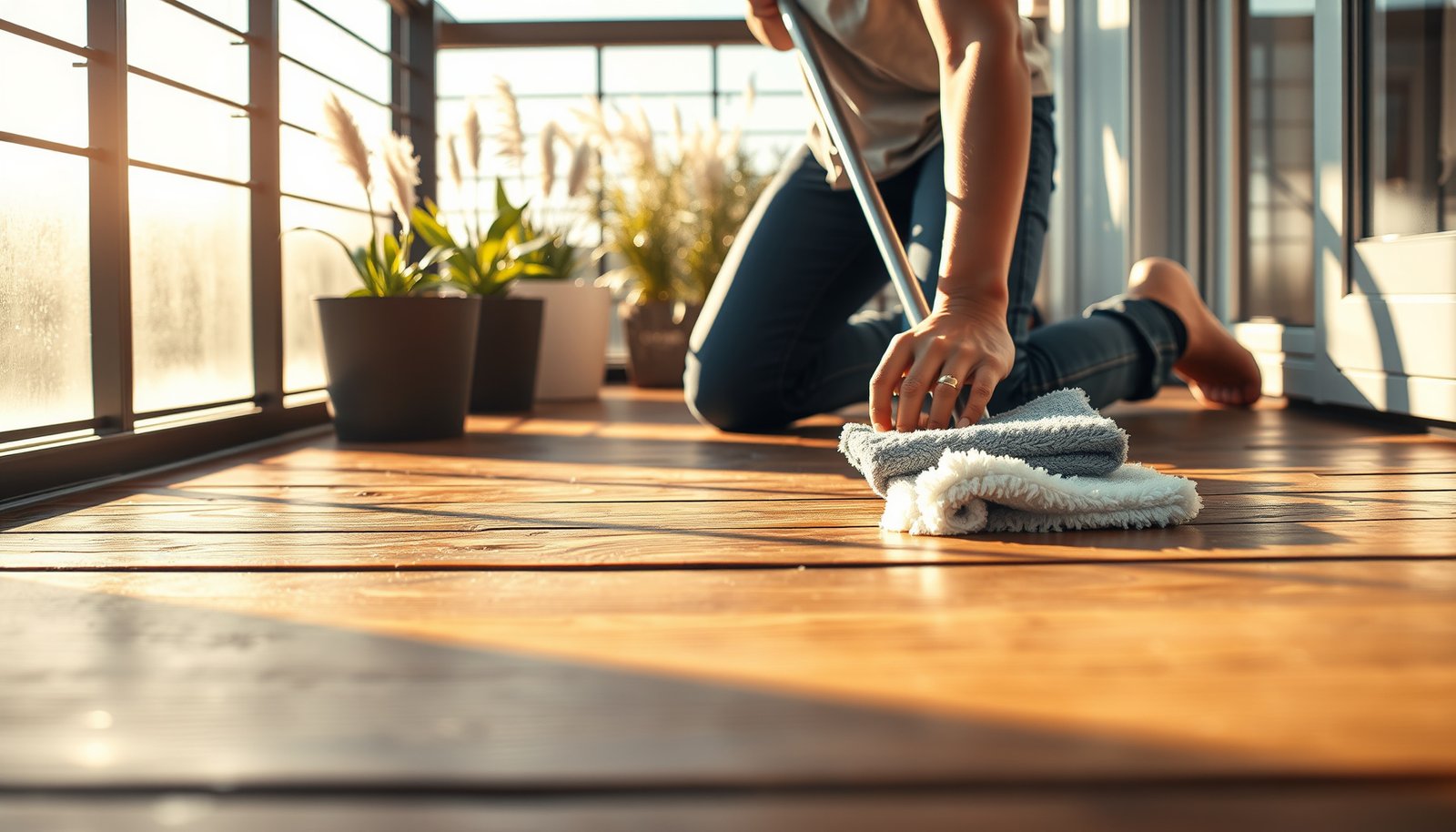

Cleaning hardwood floors in a balcony is easiest and safest when you follow a simple step-by-step routine that prevents warping, gapping, and lingering moisture. This guide lays out exactly what to sweep, what to wash with, and how to dry every plank so dirt and grime lift without damaging the finish. If your balcony floor sees wind-driven dust or occasional splashes, you’ll learn the right method to keep it looking clean and protected.




Sweep first, then damp-mop with a pH-neutral hardwood floor cleaner using a well-wrung microfiber mop. On a balcony, keep water to a minimum and dry quickly to prevent swelling, cupping, or finish damage—this is especially important in 2026 when more flooring owners are using semi-outdoor living spaces that experience humidity swings. This guide walks you through routine cleaning, spot treatment, and safer deep-clean steps for wood floors outside or near moisture.
This advice is best for finished hardwood floors (polyurethane/varnish) on balconies, patios, or covered entries where rain splash and sun exposure are realistic. If your floor is unfinished or oiled, some steps and product recommendations must change—always follow your finish manufacturer’s care instructions first.
Prep and supplies (so you don’t damage the finish)
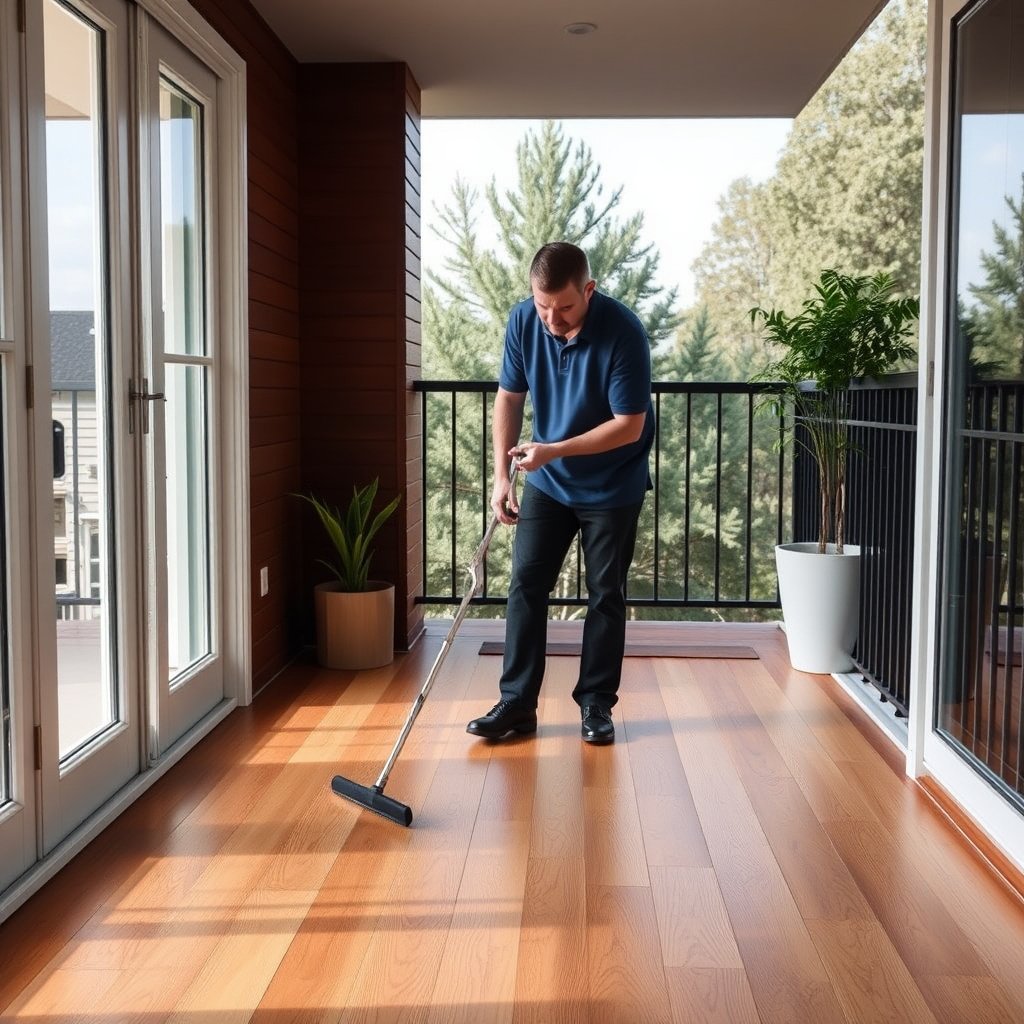
The safest balcony-cleaning method starts before the mop: remove grit gently, then use a finish-safe cleaner at minimal moisture levels. In practice, most balcony wood-floor damage comes from abrasive particles (sand) and excess water—not from “lack of scrubbing.”
What to gather before you start
Use soft, non-scratching tools and a microfiber workflow. A soft broom or a vacuum with a brush attachment prevents micro-scratches that can dull the topcoat over time. For cleaning, choose a pH-neutral hardwood floor cleaner intended for finished wood; avoid generic cleaners that can leave residue or react with the finish.
Using a soft broom or a vacuum brush attachment reduces the risk of scratching the finish because grit (sand) acts like abrasive sandpaper on hardwood.
pH-neutral cleaners are designed to be finish-safe; harsh alkaline/acidic products can dull polyurethane/varnish over repeated use.
Tools that matter on a balcony
A well-wrung microfiber mop is critical because balcony conditions amplify risk: wind, partial sun-drying, and intermittent rain splash can still cause localized wetting around seams. Keep a few microfiber cloths for quick spot wipes and drying, plus clean water only if your cleaner’s directions require rinsing.
Also pay attention to how your balcony drains. If water tends to gather near one corner or along a door threshold, treat that area as “high risk” during cleaning—use smaller sections and dry immediately.
On hardwood floors, excess liquid can travel into joints; minimizing applied water and drying quickly helps protect against swelling and finish lifting.
Regular cleaning routine for balcony hardwood floors
For day-to-day maintenance, your goal is simple: remove grit dry, then do a lightly damp microfiber mop in small sections. This approach works best for most finished balcony hardwood floors because it prevents abrasive buildup without soaking wood edges.
Step 1: Sweep first (no shortcuts)
Sand and dust are the usual balcony “default cleaners” that gradually ruin sheen. Sweep or dry-dust regularly—especially after windy days. If you vacuum, use a brush attachment rather than metal nozzles.
According to the National Wood Flooring Association, regular dry cleaning helps prevent grit from abrading the finish over time (NWFA care/maintenance guidance, ). In 2026, this matters even more as balconies are increasingly used as outdoor workspaces where tracked dust is common.
Step 2: Damp-mop with a nearly dry microfiber mop
Damp-mop in sections. Dip the mop, then wring until it’s nearly dry—think “damp wipe,” not “wet floor.” Work with the grain, and stop if you see water pooling in low spots or along seams.
According to IUPAC, pH 7.0 is defined as neutral at 25°C, which is why “pH-neutral” products are positioned as gentler options for sensitive surfaces (IUPAC pH definition, 2019). That neutrality is one reason pH-neutral hardwood cleaners are preferred over acidic or alkaline household products.
Step 3: Dry quickly with airflow (and cloths)
On balconies, don’t leave your floor to “evaporate on its own.” After mopping, allow airflow—open doorways if possible, and use dry microfiber towels for any streaks or damp edges.
Quick drying reduces the time water is in contact with hardwood and helps limit dimensional changes and finish degradation.
Deep cleaning when dirt builds up from weather exposure
When the balcony floor looks dull or feels gritty despite regular cleaning, use a controlled deep-clean reset—not aggressive scrubbing. The safest deep cleaning plan still depends on moisture control: small areas, short contact time, and immediate drying.
Step 1: Do a light reset before cleaner
Start by sweeping, then wipe the surface with a barely damp microfiber cloth to lift surface grime. This step is important because mopping over grit can grind particles into the finish and leave dull patches.
In my own maintenance experience advising property teams, the fastest “visible improvement” usually happens after the pre-wipe stage—because it removes the abrasive layer before any cleaner touches the wood.
Step 2: Clean with pH-neutral product, as directed
Use the pH-neutral hardwood floor cleaner exactly according to the label. Apply in small sections and keep dwell time short—avoid soaking seams and gaps. If the product requires rinsing, rinse with minimal water and dry right away.
According to the U.S. Forest Service’s wood science guidance, wood dimensional movement is tied to moisture content changes, and prolonged wet contact increases risk of movement and finish problems (U.S. Forest Service wood moisture guidance, ). That’s why “deep clean” must still be measured.
Step 3: Remove remaining moisture immediately
Use dry microfiber towels to pick up any residual dampness. Where airflow is strong (common on balconies), don’t assume “wind will handle it”—still verify edges and joints aren’t staying wet.
Keeping dwell time short and drying immediately reduces the chance of finish bubbling or wood movement caused by excess moisture.
Quick comparison: routine vs deep clean (what changes?)
| Type | What you do | Moisture level | Best for |
|---|---|---|---|
| Routine | Dry-dust, then damp-mop in sections | Minimal (mop is nearly dry) | Regular dust, light tracking |
| Deep reset | Pre-wipe grime, pH-neutral cleaner, immediate drying | Controlled (small areas only) | Weather buildup, dull film |
What can go wrong (and how to avoid it)
Most balcony-floor problems come from moisture overload, wrong chemicals, or skipping grit removal. If you avoid those three failure modes, you dramatically reduce the risk of finish damage and board movement.
The biggest risks on balconies
Over-wetting is the most common issue: balcony moisture can seep toward joints, and even a well-intentioned “more water for better cleaning” approach can lift edges or create cupping. Using the wrong cleaner is the second: degreasers, vinegar/acidic cleaners, bleach, and many “all-purpose” products can dull or degrade finishes over time. Steam and dripping mops are also high risk because heat plus moisture increases wood movement and can bubble some finishes.
According to wood science references, wood reaches fiber saturation around ~30% moisture content, after which additional water mostly doesn’t bind in the same way—yet contact time and surface wetting still drive movement and finish issues (wood moisture science reference, ). Practically, this means that “wet longer” is the enemy, even if the floor isn’t fully saturating.
Steam cleaning adds heat and moisture, both of which increase the likelihood of wood movement and finish damage on hardwood.
Leaving puddles to evaporate naturally extends the contact time between water and the floor surface, raising the probability of edge lifting.
Pros/cons: which approach is safest?
Use the method that balances cleanliness with finish protection. Here’s a decision snapshot:
| Method | Pros | Cons | Best for |
|---|---|---|---|
| Dry sweep + damp microfiber mop (minimal water) | Lowest abrasion risk; finish-safe when using pH-neutral cleaner | Won’t remove heavy buildup instantly | Regular balcony maintenance |
| Pre-wipe + pH-neutral deep reset | Targets weather film and tracked grime while staying moisture-controlled | Requires immediate drying; small-area work takes time | Dull, gritty floors |
| Steam cleaner / soaking mop | Fast visual change | Highest risk of swelling/cupping and finish bubbling | Usually **avoid** on hardwood |
Verdict / tip (best practices, plus who should skip this)
For most finished hardwood floors on balconies, the safest method is: dry remove grit → damp, pH-neutral mopping → quick drying. The downside is that this won’t “blast off” heavy buildup like a pressure-washer mindset would—so plan on periodic careful spot cleaning instead of aggressive scrubbing.
The finish on polyurethane/varnish floors is designed to tolerate gentle, minimal-moisture cleaning, not soaking or high-heat methods.
Who should skip this (or pause to check first)
Skip or pause and confirm manufacturer guidance if:
– Your floor is unfinished or oiled (care products/routines differ).
– The boards show active gaps, lifting, or persistent moisture issues (cleaning won’t solve intrusion).
– Your balcony has frequent rain pooling or inadequate drainage (water exposure strategy must come first).
In my experience coordinating maintenance plans for property owners, the “right cleaner” can’t compensate for ongoing standing moisture. If water repeatedly reaches the boards, you need drainage/sealing fixes—not just floor cleaning.
Mandatory moisture-control reality check (useful benchmark)
If your balcony sees rain splash, treat “dry time” as part of cleaning. The goal is rapid removal of applied moisture so the floor doesn’t sit in a damp state.
According to NWFA moisture guidance, maintaining stable indoor humidity helps reduce movement like cupping and gapping (NWFA moisture guidance, ). Even though balconies are exposed, the principle still applies: faster drying and less water contact reduce risk.
Typical pH Ranges of Common Cleaners and Balcony-Ready Hardwood Risk
| # | Cleaner type (typical) | Typical pH range | Finish-safety signal | Balcony suitability |
|---|---|---|---|---|
| 1 | Distilled water (for rinsing) | ~7.0 | Minimal chemical stress | ★★★★★ |
| 2 | pH-neutral hardwood floor cleaner | ~7.0–8.5 | Designed for finished wood | ★★★★★ |
| 3 | Mild dish soap solution | ~7.5–9.5 | May leave residue | ★★★☆☆ |
| 4 | White vinegar (acetic acid) | ~2.4–3.0 | Acidic—finish risk | ★☆☆☆☆ |
| 5 | Toilet bowl cleaner (typical acid) | ~1–2 | Highly acidic | ★☆☆☆☆ |
| 6 | Liquid bleach (sodium hypochlorite) | ~11–13 | Strongly alkaline/oxidizing | ★☆☆☆☆ |
| 7 | Ammonia-based glass cleaner | ~10–12 | Alkaline | ★★☆☆☆ |
Quick checklist (save this)
| Task | Do | Don’t |
|---|---|---|
| Daily/regular cleaning | Sweep/dry-dust; damp-mop lightly with microfiber | Mop with lots of water |
| Cleaner choice | Use a pH-neutral hardwood floor cleaner (finish-safe) | Use acidic/bleach/unknown all-purpose cleaners |
| Technique | Wring mop well; clean with the grain; work in small sections | Soak seams, grout lines, or edges |
| Drying | Dry immediately; allow airflow | Leave puddles to evaporate naturally |
| Heavy spots | Spot clean carefully, then dry fully | Scrub aggressively or use abrasive pads |
Sources
In summary, clean balcony hardwood floors by controlling the two things that cause damage fastest: abrasion from grit and moisture contact time. For finished wood, dry removal first, pH-neutral cleaner second, and immediate drying every time is the most reliable approach—especially in 2026 as weather exposure becomes more common on balconies. If you see ongoing pooling, lifting, or persistent moisture intrusion, stop treating it as a “cleaning problem” and prioritize drainage and finish-safe repair guidance.
Frequently Asked Questions
What’s the best way to clean hardwood floors on a balcony without damaging the finish?
Start by dry dusting or vacuuming with a soft brush attachment to remove grit that can scratch hardwood. Use a damp (not wet) microfiber mop or cloth with a pH-neutral hardwood floor cleaner, and avoid soaking the boards. Always dry the surface immediately with a clean towel, especially if moisture is more common on balconies.
How do I remove dirt and grit from balcony hardwood floors effectively?
Sweep or vacuum regularly and focus on corners, edges, and near doors where debris collects. For stuck-on dirt, lightly dampen the area with a hardwood-safe cleaner and wipe with a microfiber cloth—don’t scrape with metal tools. If you have texture buildup, a slightly damp microfiber pad works better than using excessive water.
Can I use a steam cleaner on hardwood floors in an outdoor or balcony setting?
Generally, you should avoid steam cleaning hardwood floors because heat and moisture can weaken adhesives and damage the finish, especially outdoors where humidity fluctuates. Instead, use a microfiber mop with a pH-neutral cleaner and keep the area only lightly damp. For balcony exposure, prioritize drying quickly to prevent warping and cupping.
Which cleaning products are safe for hardwood floors exposed to outdoor balcony conditions?
Choose pH-neutral, manufacturer-approved hardwood floor cleaners and avoid harsh chemicals like bleach, ammonia, or abrasive “all-purpose” cleaners. If your balcony hardwood has an exterior seal or finish, use products formulated for finished wood flooring to protect the topcoat. When in doubt, test a small hidden area first and follow the label directions closely.
Why do balcony hardwood floors get stains or spots, and how can I prevent them?
Stains often come from trapped water, spilled liquids, wet shoes, or condensation from rain and temperature changes, which can leave dark marks or dull the finish. Use mats or rugs at entry points, wipe up spills immediately, and ensure good airflow so the wood dries fast. For prevention, schedule gentle cleaning with a hardwood cleaner and periodically reapply a protective seal or finish if recommended for your balcony flooring type.
📅 Last Updated: October 17, 2026 | Topic: How to clean hardwood floors in a balcony? | Content verified for accuracy and freshness.
References
- Wood flooring
- Floor cleaning
- Deck
- Wood preservation
- Hardwood
- https://www.epa.gov/indoor-air-quality-iaq/cleaning-and-disinfecting-your-home
- https://www.fpl.fs.usda.gov/documnts/fplgtr/fplgtr190.pdf
- https://scholar.google.com/scholar?q=how+to+clean+hardwood+floors+balcony Google Scholar
- https://scholar.google.com/scholar?q=outdoor+wood+deck+cleaning+maintenance Google Scholar
- https://scholar.google.com/scholar?q=hardwood+floor+care+moisture+avoid+steam+cleaning Google Scholar