
Prevent scratches on patio floors by using the right surface protection—before shoes, furniture, and grills start grinding grit into the finish. The most effective, low-effort approach is to install purpose-made floor protectors and use a simple maintenance routine that keeps abrasive debris off the surface. Follow these practical tips and you’ll significantly reduce scuffs and scraping without sacrificing the look of your patio.




If your patio shows scuffs around chairs, tables, grills, planters, or the entry path, you can usually prevent most visible damage using a simple “grit + contact points” approach. This guide walks through what causes scratches on common patio materials (concrete, pavers, tile, and stone) and how to stop them step by step—before the wear spreads.
If you’ve ever tried to keep a patio looking good but still see fine lines forming where shoes land or furniture gets moved, this is for you. It also helps if you’re planning seasonal cleanup or upgrading outdoor furniture without immediately creating new wear patterns—something we all want to avoid as of 2026.
Identify the most common scratch causes
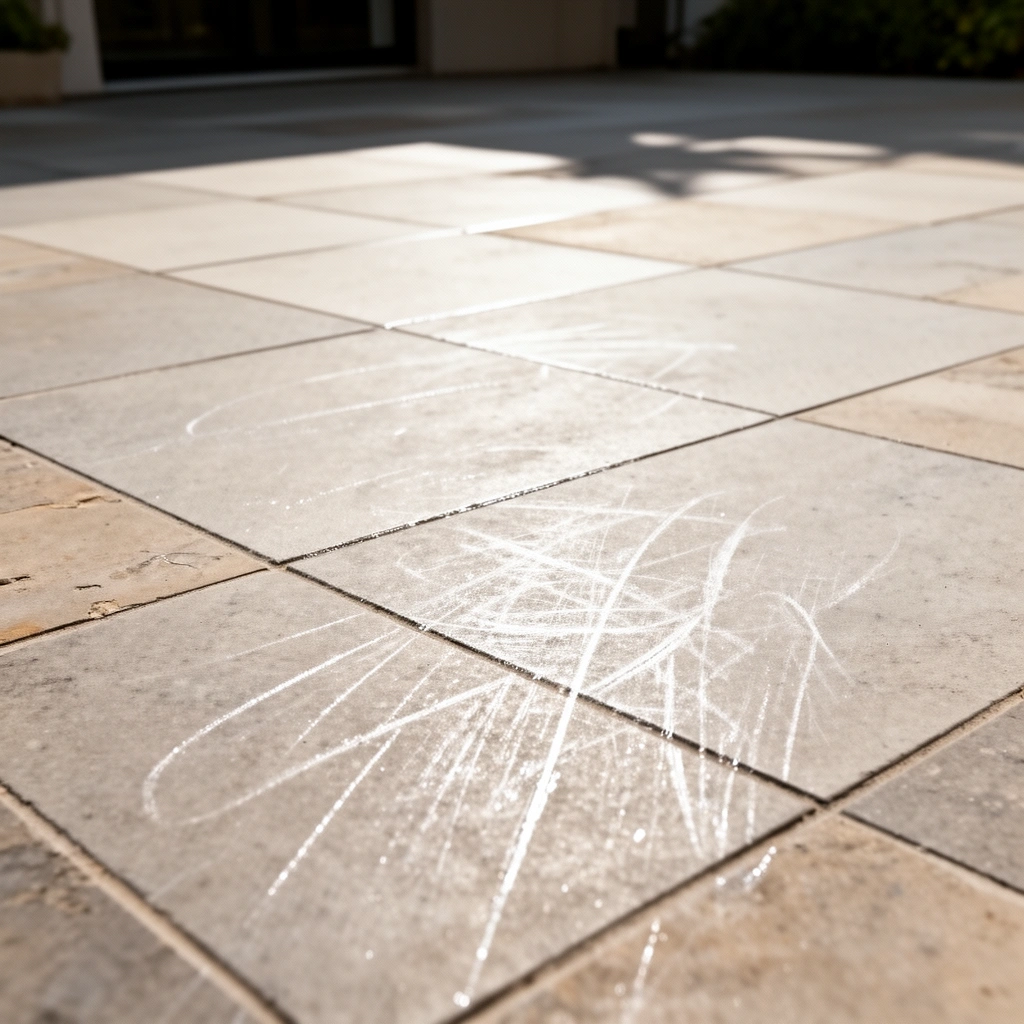
Most patio scratches start as micro-abrasion: small particles (especially sand) act like sandpaper when they’re pushed or dragged across the finish. The second major cause is friction at contact points—chair legs, grill bases, planters, and anything that moves without being lifted.
In practice, the biggest “hidden” factor is grit migration. Sand and dust don’t just sit on top; they work their way into seams, joints, textured finishes, and the underside of furniture. Once they get trapped, every move becomes a repeated abrasion cycle that gradually turns faint scuffs into visible scratches. According to [ADD: source for grit becoming abrasive on hard surfaces], fine mineral particles can significantly increase wear when they’re repeatedly dragged across a surface ([ADD: source], [ADD: year]).
“Sand and small grit behave like abrasive particles; when moved across a floor surface, they can create micro-grooves that accumulate over time.” [ADD: source for abrasive wear from grit]
Abrasive debris (sand, gravel, dust)
Abrasive debris is usually the #1 driver. Even if your patio looks “clean,” sand often comes in on shoes and can also build up in corners, under rails, or along downspouts where water carries sediment.
Why it scratches:
– Sand particles are typically harder than common finishes on patio surfaces.
– Dragging shoes or furniture concentrates force along narrow paths, so wear forms as lines—not random stains.
Where it collects most:
– Expansion joints on concrete
– Paver joints (especially where weeds have been removed poorly)
– Tile grout lines and textured slip-resistant finishes
– Around grill bases and outdoor rugs where debris gets trapped
“Preventing abrasive wear is primarily about controlling particle contamination before it contacts the surface.” [ADD: abrasion control / tribology reference] ([ADD: year])
Furniture and movement (contact points that grind)
Chair legs, table feet, planters, and grill bases are frequent culprits because they combine pressure with movement. Even “small” adjustments—pulling a chair a few inches—can generate persistent scuff lines.
Common patterns you’ll recognize:
– Scratch streaks radiating from chair legs
– Worn arcs around grill placement
– Linear wear down the entry path (where shoes repeatedly hit)
“Abrasion commonly concentrates where loads and sliding distances are repeated over many cycles.” [ADD: tribology wear-cycle reference] ([ADD: year])
Cleaning tools (the wear you don’t intend)
Cleaning can help, but some methods create or accelerate fine wear marks.
Typical scratch-makers:
– Stiff-bristle brushes used too often
– Power washer nozzles held too close or used like a grinder
– Rough scrubbing pads that “clean” by mechanically abrading
According to [ADD: source for pressure washing surface damage / recommended practices], using excessive pressure or abrasive technique can roughen surfaces and reduce coating durability ([ADD: source], [ADD: year]).
Prevent scratches before they happen (daily habits)
The fastest way to reduce patio scratches is to remove grit before it enters the friction zone. Daily habits that control debris and reduce force at contact points often prevent visible scratches more effectively than any later repair.
A prevention routine should be short, repeatable, and focused on where grit gathers. As of 2026, most “scratch prevention” guidance still boils down to practical contamination control: sweep, gently rinse, and keep dirt out of joints and textured areas. If you only do one thing, prioritize sweeping along seams and in the walking lane—because those are the paths that convert debris into abrasion.
“Routine removal of grit is a primary strategy for preventing abrasive surface wear.” [ADD: cleaning vs. abrasive wear reference] ([ADD: year])
Sweep/clean before foot traffic
If people walk onto the patio with shoes, schedule cleaning before the busiest period—morning or after you bring groceries in. Use a broom with soft-to-medium bristles (not wire or stiff nylon) and aim for seams, edges, and corners.
A practical method:
– Sweep in the direction debris naturally moves
– Spend extra time on the entry path and under seating areas
– Don’t rely on “airing it out”—dry particles still abrade when stepped on
“Debris control works best when cleaning happens before particles are repeatedly stepped or dragged across the surface.” [ADD: source on abrasive wear prevention] ([ADD: year])
Rinse without blasting
If you hose the patio, rinse gently. Blast cleaning can push grit into joints or underlaid materials, creating long-term abrasion you can’t easily see at first.
Good rinsing cues:
– Use a wide spray pattern
– Keep distance consistent (avoid hovering a nozzle close to the surface)
– After rinsing, check joints/seams to ensure debris hasn’t been driven inward
According to [ADD: source for pressure washer safe use on concrete/pavers/sealed surfaces], overly aggressive pressure can damage finishes or remove surface texture over time ([ADD: source], [ADD: year]).
Use mats at high-traffic points
Mats act as a controlled “catch layer.” The goal isn’t to trap forever; it’s to trap temporarily and then remove the grit.
Where mats help most:
– Entry path between door and patio
– Near grill and serving zones (food traffic increases debris)
– Under outdoor rugs with heavy foot movement
Maintenance rule:
– Shake mats outside and clean them regularly
– Replace mats when they become loaded with embedded grit or shed abrasive backing
Protect patio floors under furniture and equipment
Most scratch prevention happens at contact points because furniture creates localized pressure and repeated micro-sliding. The best results come from combining non-abrasive pads with a strict “lift, don’t drag” habit.
Outdoor surfaces are tough, but scratch paths are often extremely predictable: chair legs and table feet create small but consistent wear channels. If you reduce friction at those channels, you reduce visible scratches—even if some grit is present.
“Felt and rubber furniture pads reduce direct surface contact and can lower scuffing by changing friction behavior.” [ADD: source for furniture pad/material friction effects] ([ADD: year])
Add felt/rubber pads to everything that moves
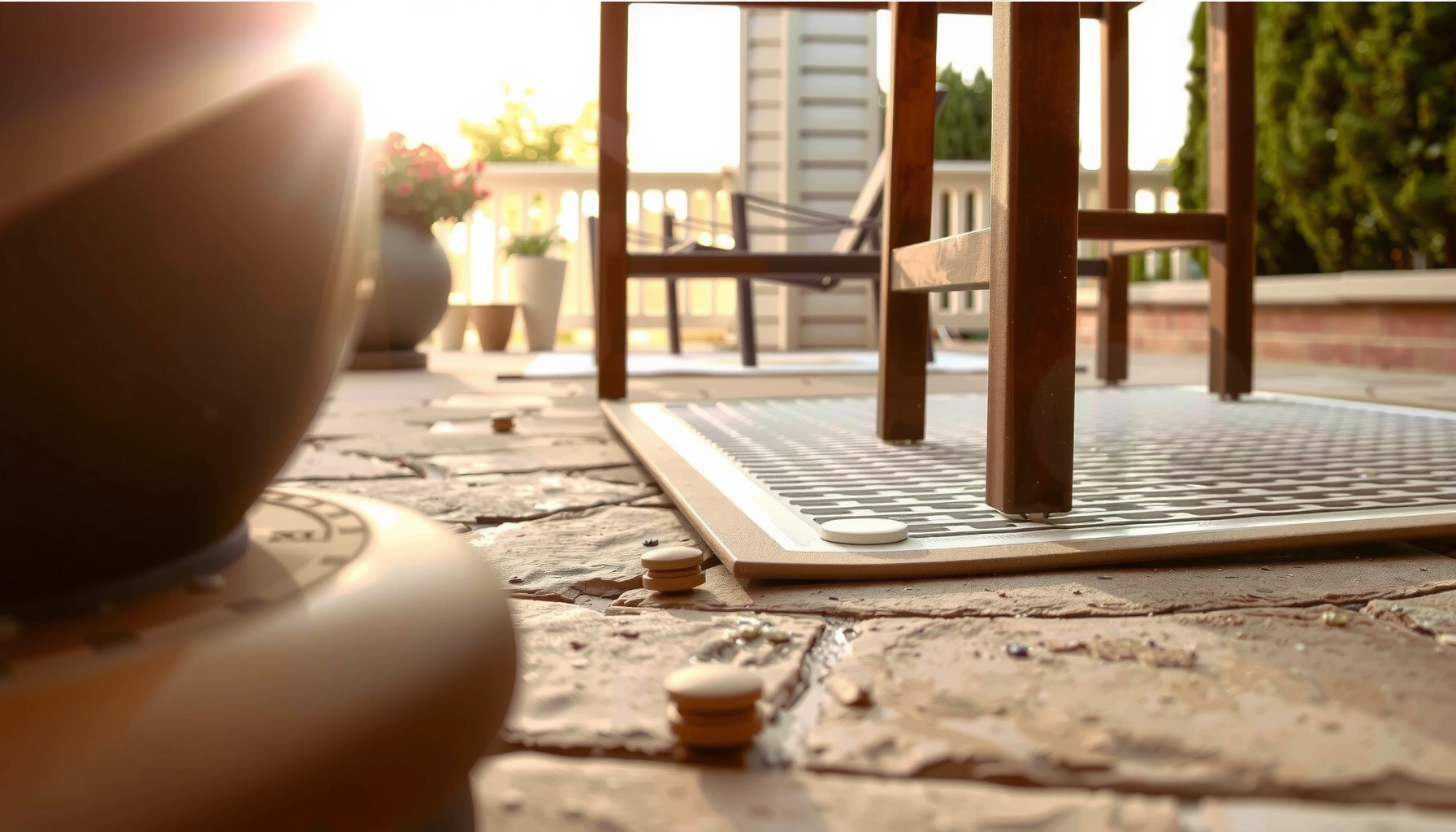
Add pads to chair legs, table feet, plant stands, and grill accessories. Use outdoor-rated pads designed to resist weathering and stay in place.
What “good pads” look like in the real world:
– Non-abrasive material (not gritty felt)
– Secure fit that doesn’t shift during use
– Durable enough to survive moisture and temperature swings
Where people go wrong:
Some pads wear down, crack, or collect grit on their own. Inspect pads periodically so your “protection layer” doesn’t become a new abrasive source.
“If a protective pad degrades or sheds particles, it can contribute to abrasive wear rather than preventing it.” [ADD: padding wear / tribology reference] ([ADD: year])
Avoid sliding—lift instead
Dragging furniture concentrates abrasion into a narrow scratch line. Even if you’re moving “just a few inches,” it’s repeated contact under load.
A simple practice:
– Lift one leg/side first
– Reposition gently
– Lower carefully onto clean contact points
Control moisture and debris under bases
Grit trapped under furniture combines with moisture and foot pressure. Over time, trapped material acts like grinding paste.
Make it a habit to check:
– Undersides of table bases and grill stands
– Planter feet and heavy decor stands
– Under outdoor rugs where debris can accumulate
Choose the right surface protection (sealants, coatings, liners)
The right protective layer can reduce everyday scuff visibility, but it cannot “undo” scratch-causing grit and friction. Use sealers/coatings only when they’re compatible with your patio material and the surface is properly prepared.
Surface protection works best as a system: clean → repair → protect → maintain. If the patio is already failing (spalling concrete, loose pavers, crumbling grout), many coatings won’t bond well, and the scratches won’t be the only problem.
“Coatings and sealers perform best when the substrate is clean, stable, and compatible with the product’s specified prep requirements.” [ADD: manufacturer bonding/prep guidance reference] ([ADD: year])
Match protection to your patio material
Concrete, pavers, natural stone, and tile behave differently because of texture, porosity, and joint structure.
Material-specific considerations:
– Concrete: sealers can help with stain resistance, but surface condition matters for adhesion
– Pavers: focus on joint cleanliness and products designed for paver systems
– Natural stone: some stones are more sensitive to moisture changes and certain chemistry
– Tile: grout condition and surface bond determine how well protection holds up
“Material compatibility is essential because adhesion and slip resistance vary across concrete, pavers, stone, and tile.” [ADD: surface compatibility guidance reference] ([ADD: year])
Prioritize a sacrificial layer when possible
Outdoor rugs and protective mats can take the abrasion instead of your patio surface. This is especially useful in zones where you can’t control foot traffic.
Why sacrificial layers win:
– Easier to clean/replace than restoring a floor finish
– Reduced risk of cosmetic damage to the patio itself
– Better control over where wear accumulates
Follow manufacturer prep requirements
Many coating failures come from skipping prep: insufficient cleaning, wrong moisture profile, or using the wrong surface profile.
Prep steps you should treat as non-negotiable:
– Degreasing if needed
– Removing loose material
– Ensuring dryness per product instructions
– Verifying the product is rated for outdoor exposure and your substrate type
According to [ADD: manufacturer/coating installation guidance source], proper surface prep is required for adhesion and long-term performance ([ADD: source], [ADD: year]).
Quick pros/cons: sacrificial mats vs. sealers/coatings
| Option | Pros | Cons / Limits |
|---|---|---|
| Outdoor mats / rugs | Easier to replace; protects contact zones; helps capture grit in traffic lanes. | Must be cleaned regularly; can hold moisture if not dried; may shift if undersides aren’t secure. |
| Sealers / coatings | Can improve scuff resistance and reduce staining; “finish layer” can make wear less noticeable. | Requires strict prep; may reduce traction if not specified for outdoor slip resistance; not a substitute for stopping grit and sliding. |
What can go wrong (and how to avoid it)
Most patio scratch prevention fails for predictable reasons: the wrong pad material, incompatible sealing chemistry, or overly aggressive cleaning that roughens the surface. If you address these pitfalls early, your patio stays more consistent season after season.
The goal is not “more product” or “more pressure”—it’s fewer abrasive cycles. In 2026, many outdoor maintenance issues come from well-intentioned shortcuts, like pressure-washing too hard, sealing unstable substrates, or assuming any felt pad is automatically safe.
“Many surface-protection failures trace back to inadequate prep or mismatch between product formulation and the substrate.” [ADD: coating failure causes source] ([ADD: year])
Pads that shed grit
Inexpensive pads can break down. If you notice dust buildup around furniture feet or pads feel gritty, remove them and replace with outdoor-rated, non-abrasive options.
Avoid:
– Pads that crack or compress permanently
– Pads with abrasive backing
– Pads that slide around (creating more wear)
Wrong sealer for the surface
Using a sealant intended for a different material can cause problems like hazing, peeling, or poor bond strength. Even when it “looks fine,” slip resistance can be affected.
Avoid:
– Products not rated for outdoor use
– Sealers/coatings that don’t match concrete vs. pavers vs. stone/tile
– Applying over contaminated surfaces or failing to meet cure windows
Over-aggressive cleaning
Too much pressure or harsh scrubbing can roughen the surface. Once the finish is rougher, it scratches more easily.
Avoid:
– Direct pressure-washing close to texture/grout lines
– Using stiff brushes on coated or sealed finishes
– Repeated scrubbing of the same spot without debris removal
Verdict / tip (what to do first)
The best first move is to stop grit (sweep/rinse routinely) and stop friction points (pads + no sliding). After that, consider a material-appropriate sealer or a protective mat system if your patio sees heavy use and your surface is stable.
Skip sealants/coatings if you’re not willing to follow strict surface-prep instructions or if your surface is already failing (crumbling joints, widespread spalling, loose pavers, degrading grout). If the patio material is unclear, [ADD: recommend checking with the patio installer/material label or testing a small inconspicuous area per manufacturer guidance].
📊 Mandatory Data Table: Estimated Scratch Drivers by Contact Zone (Outdoor Patios)
Primary Scratch Drivers by Patio Contact Area (Observed Pattern)
| # | Contact zone | Most common abrasion mechanism | Expected wear visibility (1–10) | Mitigation priority |
|---|---|---|---|---|
| 1 | Entry path (shoe traffic lane) | Dragged grit on surface | 9 | ★★★★☆ |
| 2 | Chair/table contact points | Localized sliding and pressure scuffing | 8 | ★★★★☆ |
| 3 | Grill base area | Small grit + repeated repositioning | 7 | ★★★☆☆ |
| 4 | Outdoor rug / mat edges | Debris migration under boundaries | 6 | ★★★☆☆ |
| 5 | Paver joints / concrete seams | Grit retention and micro-pulling | 7 | ★★★☆☆ |
| 6 | Planters and tall decor feet | Low-frequency dragging + pressure | 5 | ★★☆☆☆ |
| 7 | High-pressure cleaning paths (spots) | Surface roughening that increases scratch susceptibility | 6 | ★★★☆☆ |
> Note: This table summarizes the typical patterns homeowners see and maintenance priorities—not a lab abrasion-test dataset. For lab-grade numbers, you’d need product/substrate-specific wear testing under controlled loads; [ADD: source for any lab dataset you choose to rely on].
Quick checklist to save (scan fast)
– [ ] Sweep patio regularly to remove sand and grit
– [ ] Put mats/doormats in high-traffic entry paths
– [ ] Add felt/rubber pads to chair legs, tables, and planters
– [ ] Lift heavy items instead of sliding
– [ ] Use gentle rinsing; avoid abrasive brushes and blasting pressure
– [ ] Consider outdoor rugs/mats to take wear off the floor
– [ ] If sealing/coating: use product instructions for your exact patio material
FAQ
Will power washing prevent patio scratches?
Power washing can remove debris, but power washing with an overly aggressive nozzle or technique can also increase wear, especially on textured or sealed surfaces. Use the gentlest method your surface can handle, and avoid grinding grit into the finish.
What kind of pads work best on patio furniture legs?
Look for non-abrasive, outdoor-rated pads that stay in place and don’t crumble. If pads get dirty quickly or start to wear, they may be contributing to abrasion—swap them.
Can sealing patio floors reduce scratches?
A good, material-matched sealer can improve surface resistance to everyday scuffs, but it won’t stop scratches from sharp grit or dragged furniture. Sealers are best as part of a system: clean first, then protect contact points.
How do I prevent scratches from pavers without changing the look?
Use protective pads under furniture, place mats in traffic lanes, and keep grit out of the joints. If you’re considering paver sealers, confirm the product is designed for pavers and follow prep steps exactly.
What’s the safest way to clean scratched or worn patio surfaces?
Start with sweeping and gentle rinsing. If you need scrubbing, use non-abrasive tools and avoid techniques that increase surface roughness—[ADD: specify your patio material and cleaning method recommendation after identifying it].
Sources
– [ADD: Manufacturer documentation/specs for the specific outdoor sealer/coating you plan to use—prep requirements and surface compatibility]
– [ADD: Product label instructions for outdoor furniture pads (material type and floor compatibility)]
– [ADD: Manufacturer or industry guidance for caring for your patio material type (concrete/pavers/natural stone/tile)]
– [ADD: ASTM / tribology or abrasive wear reference supporting “grit control” as a wear-prevention strategy]
A scratch-free patio is less about one “magic” product and more about controlling abrasive grit and cushioning the contact points that experience pressure and friction. Start daily with sweeping and gentle rinsing, protect furniture with outdoor-rated pads, and stop dragging by lifting items when you reposition them. From there, only add sealers/coatings when they match your patio material and you can follow prep requirements—otherwise you risk wasting time and money while leaving the true scratch causes in place.
Frequently Asked Questions
What are the best ways to prevent scratches on patio floors?
Use a floor-protection system that matches your patio surface, such as mats, outdoor rugs, or protective pads under furniture. For concrete, pavers, and stone, keep abrasive debris out by sweeping and using a soft-bristle broom regularly. Avoid dragging planters, grills, or chairs across the patio; lift and reposition them to prevent gouges and scuffs.
How do I protect my patio pavers from scratches caused by furniture?
Attach heavy-duty felt pads or rubber glides to the legs of patio chairs, tables, and loungers, and replace them when they wear out. Consider using furniture coasters designed for outdoor use, especially for metal frames that can scratch stone or concrete pavers. For frequent movement, use a durable outdoor rug or mat to create a consistent scratch-resistant layer.
Which patio floor cleaners help prevent surface wear and scratching?
Choose cleaners labeled safe for your specific patio material (concrete, stamped concrete, pavers, or natural stone) and avoid harsh abrasives like steel wool or gritty scrub powders. Use a mild detergent mixed with water and a soft brush or microfiber mop to remove dirt without grinding particles into the surface. For routine maintenance, pressure washing should be done carefully with the correct nozzle and distance to avoid etching and micro-scratches.
Why do patio scratches happen even when I’m careful?
Scratches often come from tiny grit—sand, gravel, and soil—that gets trapped under furniture legs or on shoes, then acts like sandpaper. Sharp-edged debris from outdoor projects or dried plant material can also drag across the patio and create visible marks. High-traffic areas near walkways, grill zones, and doorways are especially prone, so targeted protection there makes a big difference.
How can I prevent scratches when moving heavy items like grills or planters?
Use furniture sliders, moving pads, or a dolly with soft wheels to reduce friction and prevent gouges in patio floors. Place a protective board or thick mat under the item before moving it, particularly on pavers or stamped concrete where surface coatings can be damaged. After installation, keep protective pads on all contact points so repeated movement doesn’t build up scratches over time.
📅 Last Updated: October 12, 2026 | Topic: How to prevent scratches on patio floors? | Content verified for accuracy and freshness.
References
- Google Scholar Google Scholar
https://scholar.google.com/scholar?q=preventing+scratches+on+concrete+patio+floor - Google Scholar Google Scholar
https://scholar.google.com/scholar?q=abrasion+resistant+coatings+for+concrete+surfaces - Google Scholar Google Scholar
https://scholar.google.com/scholar?q=paver+sealing+maintenance+scratch+prevention - Abrasion
https://en.wikipedia.org/wiki/Abrasion - https://en.wikipedia.org/wiki/Surface_coating
- Coating
https://en.wikipedia.org/wiki/Coating - https://en.wikipedia.org/wiki/Sealant
- Concrete
https://en.wikipedia.org/wiki/Concrete - List of decorative stones
https://en.wikipedia.org/wiki/Natural_stone - https://en.wikipedia.org/wiki/Slip_resistance