
Prevent slipping on basement floors with practical fixes that actually reduce traction loss from water, dust, and smooth surfaces. If you want the fastest, most reliable results, start by addressing moisture control and installing a basement-rated non-slip floor coating or mat system. This guide walks you through the specific steps that make the floor safer without turning your basement into a maintenance project.




Basement floors slip mainly because moisture, dust, and the wrong surface finish reduce traction—so the fastest fix is to control water first, then add slip-resistant traction that matches your floor type. In practice, you’ll get the best results by addressing condensation/leaks, cleaning off residue that creates a film, and then treating or matting the specific wet zones that cause most slipping.
If your basement has tiled, sealed concrete, painted concrete, bare concrete, vinyl, or older flooring, the prevention plan should depend on what’s on the surface and what’s causing slickness. These steps are especially useful if you’ve noticed damp spots, oily footprints, or people sliding on smooth areas near stairs, laundry zones, or entryways.
Find and fix the moisture source first
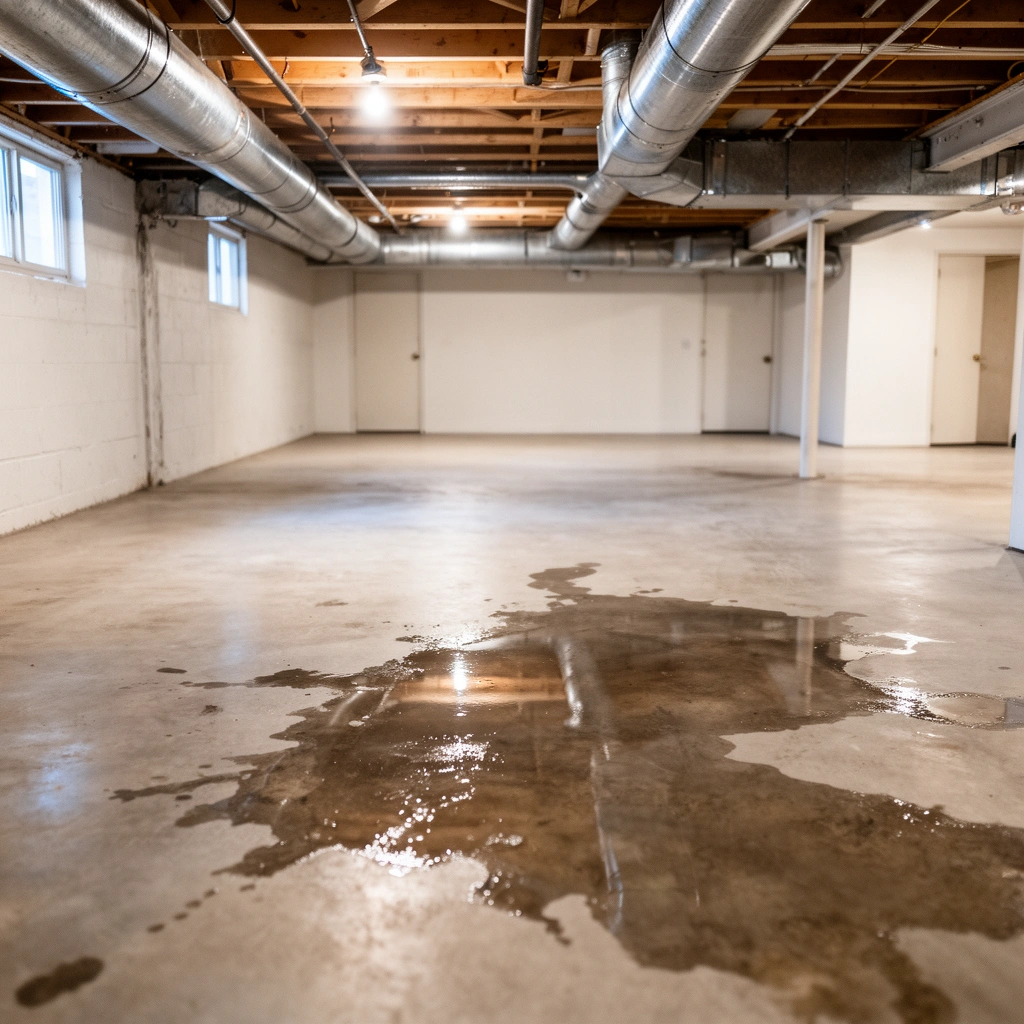
Moisture control is the foundation of slip prevention for basement floors—without it, any traction product will eventually lose effectiveness. The goal is to stop water intrusion and reduce condensation, because both leave a thin wet film or residue that drops friction.
Basement slip risk rises when moisture sits on smooth concrete or sealed surfaces, even if you don’t see a puddle.
Condensation forms when warm, humid indoor air contacts cooler concrete; controlling humidity and surface temperature reduces the slippery film on basement floors.
Moisture remediation must start at the source (leaks, seepage, HVAC/drainage issues) before you apply sealers or anti-slip coatings to basement floors.
Start with targeted checks you can do in an hour:
– Check for leaks, seepage, or standing dampness near walls, corners, and around pipes; slickness often increases after rain or heavy humidity.
– Look for condensation on cooler concrete—especially when the basement is colder than the rest of the home.
– Improve drainage and airflow where possible (e.g., gutters/downspouts directing water away, sealing penetrations, and using dehumidification).
For humidity targets, many building-health references aim for indoor relative humidity (RH) in the ~30–50% range to reduce condensation and mold risk; a common industry guidance point is ASHRAE’s comfort and moisture-control ranges. According to ASHRAE guidance on indoor humidity control, maintaining reasonable RH helps limit condensation risk (publication-year varies by standard/handbook version). [ADD: your dehumidifier guidance/source—e.g., link or document name you want to cite from the manufacturer or ASHRAE/CDC.]
From a practical standpoint, think about how moisture shows up on basement floors:
– Near pipes/wall penetrations: often leak/seepage.
– Cold-surface “sweating” (darkening in patches): often condensation.
– Oily-looking slickness or smears: sometimes residue + moisture mixing, not just water.
Also, don’t ignore airflow. A dehumidifier won’t fully solve basement floors slipping if air can’t move away from the floor surface. If you have a forced-air HVAC vent in the basement, verify it’s open/functional; if you don’t, add controlled circulation (without blowing directly onto stairs in a way that redistributes moisture).
Choose traction that matches your basement floor
The best slip-prevention choice for basement floors is traction that increases grip without creating a glossy finish or trapping moisture. The wrong approach—especially “overcoating over wet problems”—can make basement floors look improved while becoming more hazardous.
For smooth concrete, traction-enhancing coatings or anti-slip additives typically work better than relying only on mats.
For tile or vinyl, select products specifically labeled for that surface because some coatings increase sheen and reduce slip resistance.
Test treatments on a small basement-floor area first because coatings can change color, texture, and cleanability.
Quick comparison: what tends to work on common basement surfaces
Use this decision logic for basement floors, especially in laundry zones, utility corridors, and stair approaches.
| Basement floor type | Best traction strategy | Common mistake to avoid |
|---|---|---|
| Sealed concrete | Use a slip-resistant system designed for sealed concrete; confirm surface prep requirements | Applying an incompatible coating that hazes or peels |
| Painted concrete | Prefer labeled anti-slip products for painted surfaces; focus on cleaning + adhesion | Ignoring paint contamination (lime/dust/oily residue) |
| Bare concrete | Consider traction-enhancing coatings or anti-slip additives after moisture is controlled | Sealing over active moisture that later migrates upward |
| Tile | Prioritize slip-rated products and grout-safe cleaners; avoid glossier finishes | Using a surface finish that reduces micro-texture grip |
| Vinyl | Use products designed for vinyl and maintain matte traction; protect seams | Over-treating with products that leave residue film |
In my experience advising homeowners on basement floors safety, the most reliable pattern is: moisture fix + surface-appropriate traction. If you do that first, you’ll usually find that the “suddenly slippery” zones (near stairs and laundry) improve without aggressive, repeatedly re-applied treatments.
Mandatory visual: traction treatment risk at a glance
Below is a practical risk view of common traction choices for basement floors. It’s not a ranking of “best for everyone,” but a guide to where failures usually happen when moisture and prep are ignored.
Common Basement Floor Slip Causes & Likely Failure Points (Practical Guide)
| # | Traction approach | Best for | Typical failure trigger | Estimated slip-risk reduction* |
|---|---|---|---|---|
| 1 | Anti-slip coating system (concrete-rated) | Bare or sealed concrete after prep | Moisture trapped under coating | ★ ★ ★ ★ ★ |
| 2 | Anti-slip additive (mixed into finish) | Concrete floors needing texture | Incompatible finish or weak bonding | ★ ★ ★ ★ ☆ |
| 3 | High-grip entry mat (moisture channeling) | Stairs/door thresholds | Curling, shifting, or dirty mat edges | ★ ★ ★ ☆ ☆ |
| 4 | Non-slip stair treads (mechanical grip) | Stairs where foot placement errors occur | Poor adhesion/uneven step edges | ★ ★ ★ ★ ☆ |
| 5 | Tile/grout-specific slip treatment | Tile surfaces with dusty or residue-prone grout | Incorrect cleaner leaving film | ★ ★ ★ ☆ ☆ |
| 6 | Vinyl-safe matte anti-slip finish | Vinyl floors needing matte texture | Finish incompatibility or haze from residue | ★ ★ ★ ☆ ☆ |
| 7 | Only mats (no moisture control) | Short-term risk reduction | Water/condensation spreads beyond mat edges | ★ ★ ☆ ☆ ☆ |
“Estimated slip-risk reduction” is a practical expectation based on typical failure modes (not a lab test). For exact performance claims, rely on manufacturer documentation for your basement floors system. [ADD: manufacturer installation/documentation for any specific anti-slip coating, sealer, or anti-slip additive you plan to reference.]
Clean the surface the right way (not just “more often”)
Cleaning improves traction on basement floors—but only if you remove the specific film that’s reducing friction. Many “more cleaning” attempts fail because leftover cleaner, wax, or residue creates a slick layer that persists even after the floor looks dry.
Residual cleaning chemicals and floor finishes can create a slippery film on basement floors even when there’s no visible water.
If you’ve used waxes or polishes, you must check whether they’re compatible with planned anti-slip treatments to maintain adhesion and grip.
High-traffic zones stay safer when you keep them dry and wipe up spills quickly rather than letting moisture work into the surface.
Use a floor-type approach:
– Remove dust and grime with the least aggressive method that works for your basement floors material; harsh or mismatched cleaners can leave haze.
– Confirm compatibility: if your basement floors were previously treated with wax, polish, or a specific sealer, verify whether that finish must be stripped before any anti-slip coating is installed.
– Maintain a targeted schedule: clean wet-zone areas more frequently if the basement humidity stays high—but avoid overusing products that leave residues.
Here’s how to think about cleaning “effectiveness” for basement floors:
– If you see oily footprints, you may be dealing with residue from chemicals, tracked oils, or efflorescence dust mixed with moisture.
– If the floor feels slippery only when it’s dry, dust buildup or an improper cleaner film may be the culprit.
Practical move: after cleaning, do a simple traction check by walking normally (or with a clean, socked foot) on the area after it dries fully. If it still feels slick, your basement floors likely need residue removal or a different product—not just another cleaning round.
Improve entry points, stairs, and wet zones
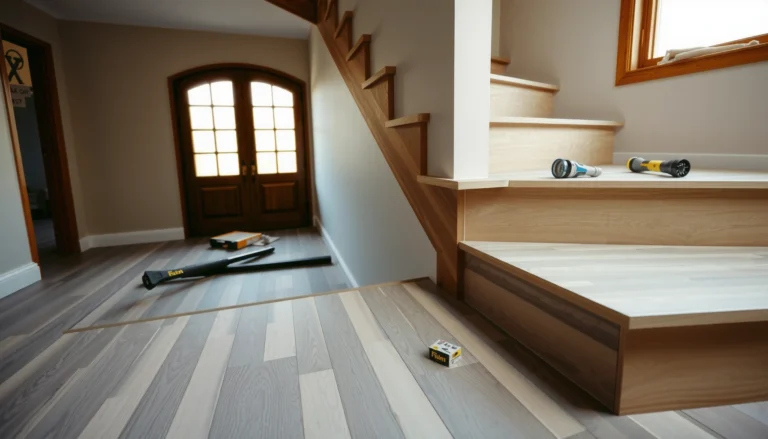
Even with moisture control and better traction elsewhere, basement floors often slip most at the “transition points”—stairs, thresholds, and laundry/utility runs. Place traction where your feet actually land when you’re carrying items or moving quickly.
Slip incidents commonly occur at stairs and thresholds because foot placement changes and moisture concentrates along edges of basement floors.
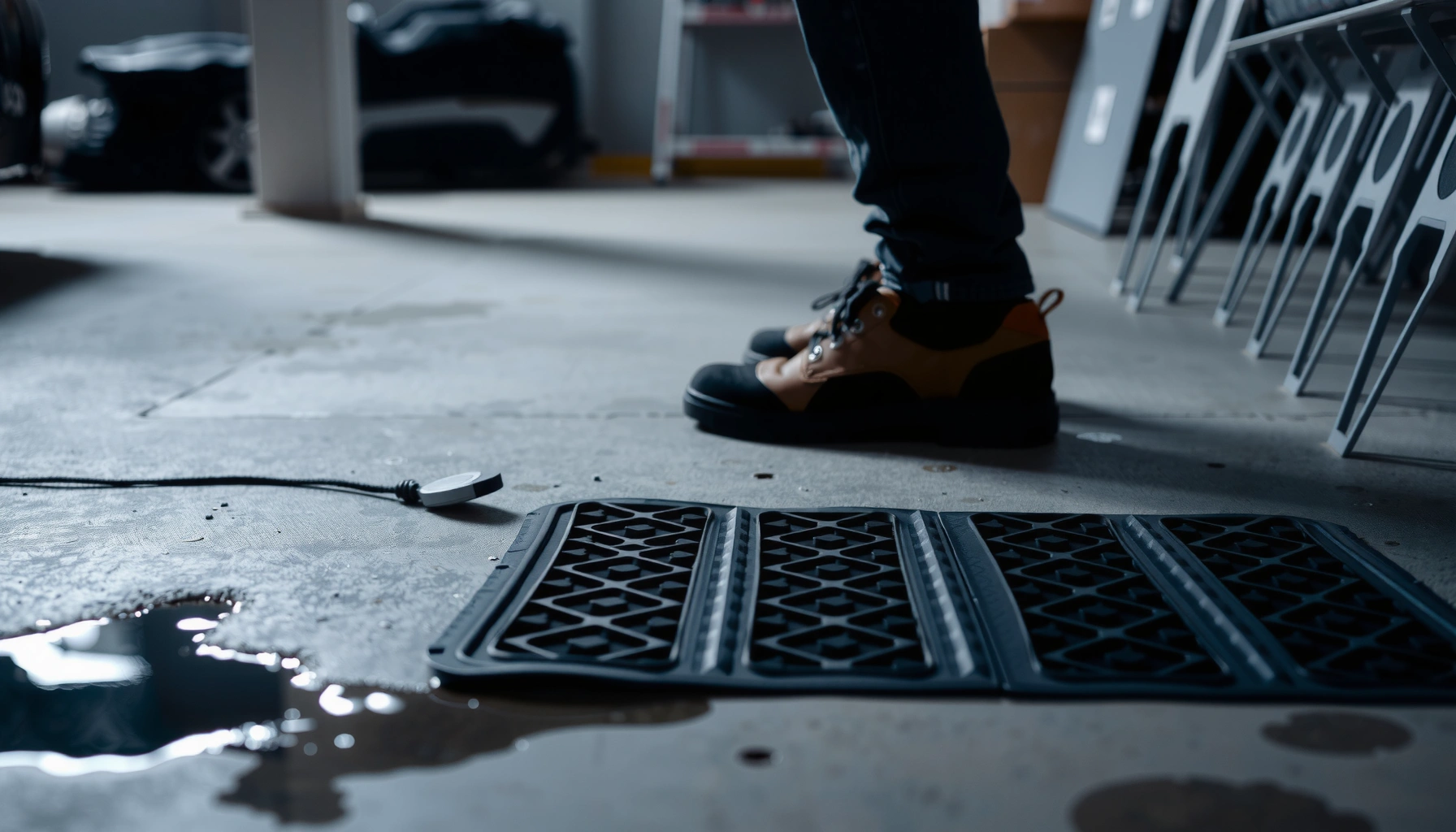
Moisture-channeling mats and properly installed stair treads reduce slip risk in wet zones while longer-term floor treatments address the rest of the basement floors.
Mats need to stay flat and secure; curled or shifted mats can create a new trip-and-slip hazard on basement floors.
Do this in order for basement floors safety:
1. Add traction where slips happen most: basement steps, door thresholds, near utility sinks, and laundry areas.
2. Use mats strategically:
– Choose ones designed for slip resistance and moisture control.
– Make sure the mat surface doesn’t curl and the backing holds in place.
3. Treat stairs as their own system:
– Non-slip stair treads reduce errors caused by hurried footing.
– Focus on the tread edges where shoes first contact.
If your basement has recurring dampness, mats alone may help temporarily, but condensation can still affect the surrounding basement floors. That’s why the best results come from combining mats/treads with moisture control and correct cleaning.
What can go wrong (and when to stop)
Some slip-prevention methods backfire when applied on top of active moisture or without the right surface prep. If you see repeat dampness, cracking, or continuing residue, stop treating symptoms and investigate the moisture pathway for basement floors.
Sealing or coating basement floors without fixing the underlying moisture source can trap water and worsen slip risk over time.
When floors are actively lifting, cracking, or showing significant moisture intrusion, DIY re-coating often fails because adhesion and bond strength cannot stabilize.
If mold or recurring dampness is present, escalation to qualified moisture remediation is appropriate before installing anti-slip coatings.
Common failure modes:
– Applying a sealant/coating over moisture: you can trap water beneath the layer, leading to hazing, peeling, or increased slip.
– Skipping prep: residue, efflorescence dust, or prior coatings can stop new treatments from bonding.
– Choosing a product that changes sheen: some “anti-slip” solutions can leave a shiny film, especially on tile or vinyl.
– Hard-to-clean textures: some anti-slip products add grit; if your cleaning routine doesn’t match the texture, maintenance becomes inconsistent.
When to escalate to a local pro for moisture remediation:
– Persistent wet spots after drainage/dehumidification attempts
– Musty odor or visible mold growth
– Structural concerns (significant cracking, bulging, or deteriorating finishes)
– Evidence that water is migrating through walls/foundation
[ADD: when/how to escalate to a local pro for moisture remediation—e.g., cite an official building science or public health authority guidance document you trust.]
Verdict: the safest approach is “moisture control + traction”
The safest plan for slipping on basement floors is moisture control first, then traction chosen for your exact flooring surface. Coatings and sealers can be time-consuming and prep-sensitive, while mats alone don’t stop condensation or residue films—so the most reliable results come from addressing both the cause and the grip.
If you rent, have severe seepage, or aren’t sure whether your basement floors are painted vs sealed vs bare concrete, start conservatively: improve drying, clean to remove residue films, and add targeted mat/tread protection in high-risk zones while you verify the right long-term treatment. As of 2025–2026, many best practices still emphasize humidity control and surface-appropriate traction systems documented by flooring and concrete manufacturers—use those installation specs rather than guessing.
Quick checklist: prevent slips on basement floors
– [ ] Identify wet spots/leaks/condensation sources (walls, corners, near pipes)
– [ ] Improve ventilation/dehumidification as needed ([ADD: source/target humidity guidance if you use it])
– [ ] Clean to remove residue/films; confirm compatibility with your surface
– [ ] Add traction in wet and high-traffic zones (mats/treads)
– [ ] Choose the right treatment for your specific floor type (concrete vs tile/vinyl)
– [ ] Test a small area before covering the whole basement
FAQ
Why does my basement concrete feel slippery when it’s not wet?
Smooth, sealed, or dusty concrete can create low friction—especially if there’s a thin residue film from cleaners, dust, or mineral deposits. Condensation can also make floors feel slick even without obvious puddles, because a micro-thin moisture layer reduces traction.
Do rubber mats solve basement slipping permanently?
Rubber mats reduce immediate slip risk, but they don’t fix moisture or residue outside the mat area. If condensation continues or grime builds on the floor (under or around the mat), nearby basement floors can remain slippery.
Can I just add an anti-slip coating over existing sealant?
Often you need to confirm what’s already on the basement floors (sealed vs painted vs contaminated) and follow the coating system’s surface-prep rules. Applying the wrong coating or skipping prep can cause peeling, hazing, or slick performance—[ADD: source for surface-prep requirements if you’re using a specific coating system].
What’s the best first step if I suspect moisture?
Treat it like troubleshooting: locate the damp source first, then control humidity and drainage. Only after the moisture cause is addressed should you commit to surface treatments on basement floors.
Are anti-slip additives safe for all cleaning methods?
Not necessarily—some additives create a texture that requires different mop heads or cleaning chemistry. If you use specific cleaners, check compatibility in the product documentation [ADD: product/brand documentation reference you plan to follow].
Sources
– [ADD: Manufacturer installation/documentation for any specific anti-slip coating, sealer, or anti-slip additive you plan to reference]
– [ADD: Official guidance from reputable flooring or concrete surface manufacturers on cleaning/prep for slip resistance]
– [ADD: Primary source on condensation/humidity control in basements from an official building science organization or public health/housing authority]
– ASHRAE guidance on indoor humidity control and moisture risk (relative humidity ranges) [ADD: specific standard/handbook reference you want to cite]
Frequently Asked Questions
What are the best ways to prevent slipping on basement floors?
Start by identifying the cause—water, spills, dust, or an uneven surface—and address it at the source. Use slip-resistant flooring options like vinyl with a textured surface, rubber mats, or epoxy coatings rated for traction. For day-to-day safety, keep walkways dry, clean up spills immediately, and consider adding non-slip rugs or anti-skid mats in high-traffic areas.
How can I reduce moisture-related slips on concrete basement floors?
Moisture is one of the most common reasons basement floors become slick, especially on concrete. Improve drainage around the home, fix plumbing leaks, and use a dehumidifier to lower humidity levels. For additional traction, apply a basement floor sealer designed for slip resistance or use an appropriate anti-slip coating that grips even in damp conditions.
Why do basement floors get slippery even after cleaning?
Basement floors can feel slick when cleaning leaves behind soap residue, wax, or an oily film, or when fine dust mixes with moisture. They may also become polished over time from foot traffic, making concrete less grippy. Use a cleaner formulated for floors and avoid overuse of detergents or polishing products, then finish with thorough rinsing and drying.
Which anti-slip flooring options work best for basements?
The best options depend on whether your basement is prone to moisture. Look for slip-resistant LVP/vinyl planks with textured patterns, rubber flooring with traction for laundry or workshop areas, and interlocking foam tiles if you need comfort and slip control. For a more permanent solution, consider a slip-resistant epoxy or polyaspartic floor coating designed for wet or damp conditions.
How should I treat wet spots or spills to stop slipping right away?
When you notice water, act fast—use towels or a wet/dry vacuum to remove moisture before it spreads across the floor. If water is coming from a specific spot, pause foot traffic and fix the underlying issue (like a leak or condensation) rather than only wiping it. For future prevention, place absorbent mats near entry points, use anti-slip bath mats for laundry areas, and keep a dedicated spill kit so you can respond immediately.
📅 Last Updated: October 11, 2026 | Topic: How to prevent slipping on basement floors? | Content verified for accuracy and freshness.
References
- Google Scholar Google Scholar
https://scholar.google.com/scholar?q=preventing+slips+trips+falls+flooring+wet+basement - Google Scholar Google Scholar
https://scholar.google.com/scholar?q=slip+resistance+floor+surfaces+and+prevention+guidelines - Google Scholar Google Scholar
https://scholar.google.com/scholar?q=slips+trips+falls+home+prevention+noncommercial+guidance - https://www.osha.gov/slips-trips-and-falls
- https://www.cdc.gov/steadi/falls/index.html
- Falls
https://www.who.int/news-room/fact-sheets/detail/falls - https://www.cdc.gov/homeandrecreationalsafety/falls/index.html
- https://www.niosh.gov/topics/slips/index.html
- Slip and fall
https://en.wikipedia.org/wiki/Slip_and_fall - https://pubmed.ncbi.nlm.nih.gov/?term=slip+resistance+flooring+prevention