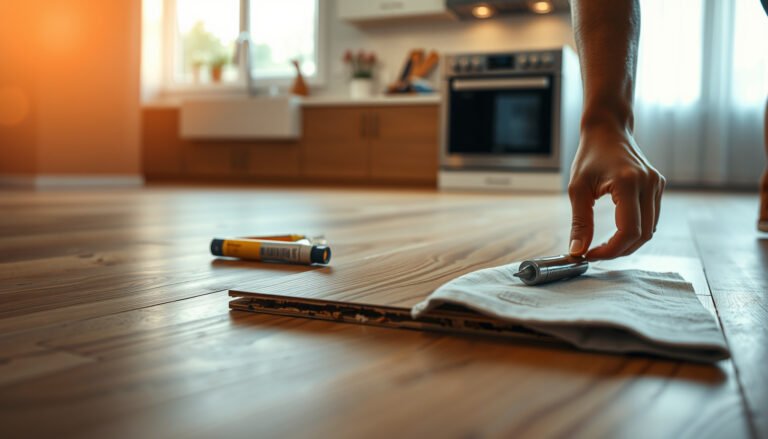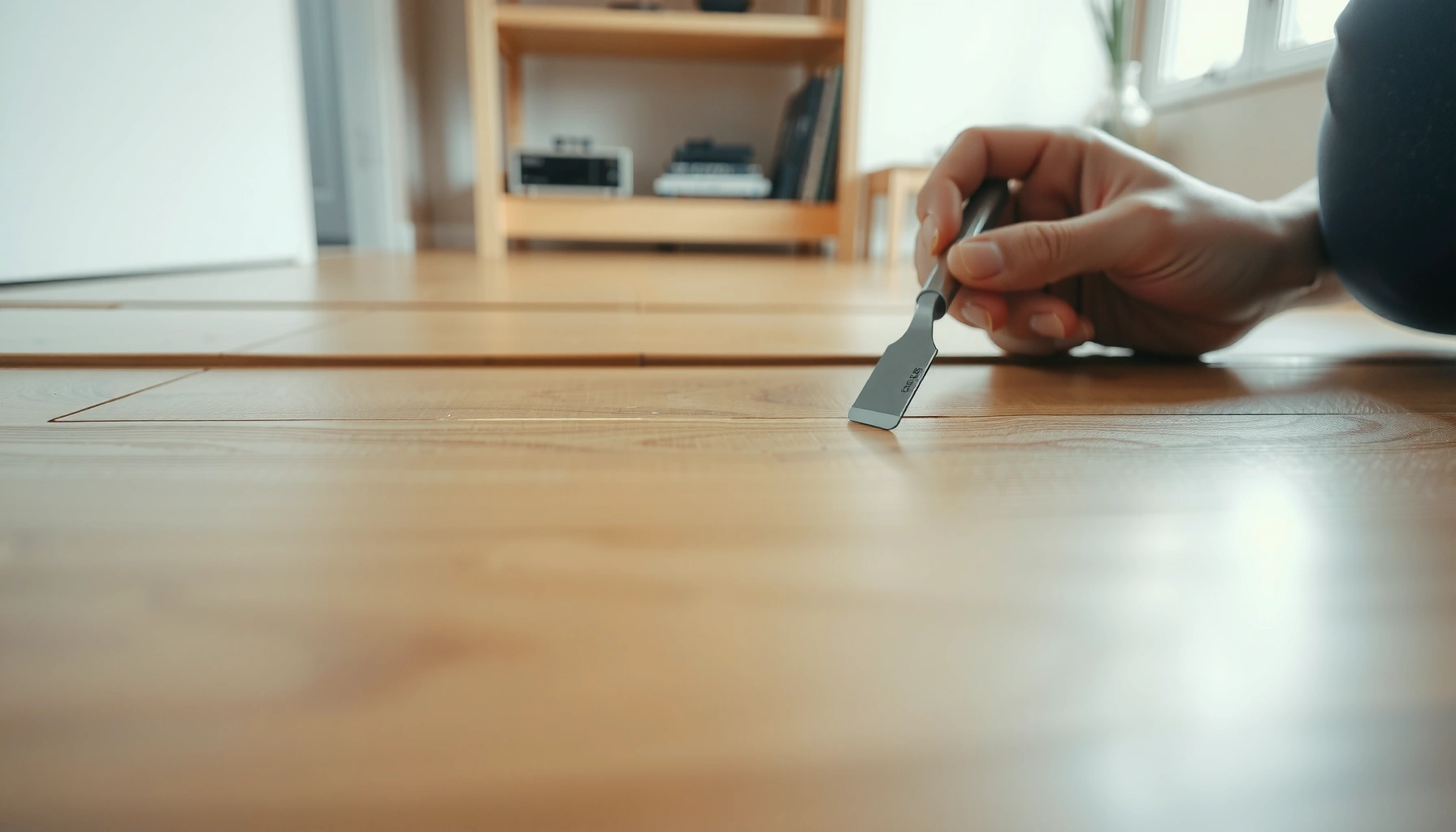

Cracks in bamboo floors can usually be fixed cleanly without replacing the entire plank, as long as you act before they widen or lift. This step-by-step repair guide walks you through diagnosing the crack type, prepping the surface, filling it correctly, and sealing for a durable, long-lasting finish. If you want the fastest, most reliable way to restore a damaged bamboo floor, follow these instructions in order.



Cracks in bamboo floors are usually caused by normal seasonal movement or subfloor issues—so the right repair starts with figuring out whether the crack is stable (finish separation) or still “working” (movement or bonding/subfloor failure). Most hairline gaps can be stabilized and filled with a bamboo-appropriate filler, while wider separations at seams often require re-securing loose planks and/or correcting subfloor flatness before you patch.
If you’re seeing cracks after humidity changes, near seams, or after a spot got wet, the steps below will help you choose the right repair (filler vs. re-leveling vs. board replacement). If the crack is growing, boards are loose, or the subfloor feels uneven, treat that as the real problem—not just the visible line in the finish.
Who this is for / when it applies: This guide is for homeowners and facility managers dealing with cracked bamboo flooring—especially engineered bamboo, strand-woven bamboo, and solid bamboo—where the gaps appear seasonally or after a localized moisture event. Use it when you can inspect seam areas, confirm whether the crack changes over time, and check for unevenness or looseness beneath the floor surface.
Assess the crack type and severity
A proper bamboo crack repair begins with classifying what’s actually cracked: a hairline gap in the finish, a seam separation, or a split board. Once you know which category you’re dealing with, the repair route becomes predictable—either stabilize and fill, or address plank/subfloor movement first.
Here’s how I approach this on-site: I measure the gap width, check whether the crack edges are moving, and then correlate the location with likely failure points (perimeter, seams, fasteners, and joint transitions). That sequence prevents the most common DIY error—filling a gap that keeps expanding.
Hairline cracks that stay the same over days to weeks are usually finish separation or surface shrinkage, which often responds well to a matching bamboo filler.
Cracks that change width over time or coincide with squeaks often indicate active movement, which usually requires subfloor and/or fastening correction before patching.
Check whether it’s finish separation, seam separation, or a split board
– Hairline gap in the finish: Thin line, minimal depth, no obvious plank lift at the edges.
– Separation at seams: Visible joint opening along plank borders; may align with clicking seams or nailed/glued edges.
– Split board running lengthwise: A board surface that has cracked through; sometimes you’ll see slight rocking.
Measure gap width and note the location
Use a ruler or calipers and write down the width (even roughly). Then map where it appears:
– Near walls/perimeter (movement space and humidity-driven expansion are common culprits)
– Between planks/joints (fastening or subfloor flatness issues often show up here first)
– Around fasteners/edges (nail/screw issues or bonding failure)
Test stability (don’t guess)
Treat “stability” as a testable condition:
– Mark the crack with a painter’s tape edge and re-check after a few humidity cycles.
– Step near the crack and listen/feel for clicking or board flex.
Stat anchor: According to the National Wood Flooring Association (NWFA), maintaining indoor humidity within a recommended range during and after installation helps minimize cupping and gapping in wood flooring NWFA (humidity recommendations for wood flooring).
Confirm the cause (humidity, installation gaps, or subfloor movement)
Most cracks that appear seasonally come from moisture-driven expansion/contraction plus insufficient movement allowance or subfloor instability. The fastest path to a lasting repair is to confirm the cause—humidity, installation gaps, or subfloor movement—before you fill anything.
On bamboo, expansion and contraction aren’t “optional”; they’re part of how the material responds to indoor moisture content. If the environment or the supporting structure won’t cooperate, the floor keeps seeking the shape it wants.
Seasonal bamboo movement commonly shows up as gapping at seams and along the perimeter when relative humidity swings exceed what the flooring was acclimated for.
Moisture exposure (leaks, standing water, or mopping without adequate drying) can change flatness and cause cracking even when the visible crack looks “minor.”
Diagnose humidity and installation gaps
– Seasonal movement: Bamboo expands/contracts as indoor moisture changes.
– Inadequate acclimation: Flooring installed without enough time to reach room conditions can crack as it rebalances.
– Missing movement space at edges: Many perimeter cracks originate where expansion needs somewhere to go (baseboards can hold the floor back).
Stat anchor: NWFA guidance commonly targets an indoor range around 35–55% RH to reduce dimensional changes in wood floors NWFA (relative humidity guidance for wood flooring). (Verify your bamboo manufacturer’s exact requirement.)
Inspect moisture exposure and related symptoms
Look for evidence beyond the crack line:
– Recent leak, plumbing condensation, or wet mopping episodes
– Darkening, loss of uniform sheen, or localized surface haze
– Cupping or edges that feel higher than the center
Press and probe for subfloor problems
You’re looking for support and bonding/fastening problems:
– Soft spots
– Squeaks (often correlate with movement)
– Uneven feel when you run your hand across adjacent seams
Stat anchor: Wood flooring is typically expected to acclimate toward a target moisture content range; installation moisture content guidance from industry groups often centers around ~6–9% for many wood products (confirm for bamboo and your specific specs) NWFA (wood flooring moisture content/acclimation guidance).
Prep the surface for a clean, durable fill
A durable bamboo crack repair depends on surface cleanliness and correct room conditions. If you fill dust, oils, or damp edges, fillers won’t bond well—and the crack often reappears.
This prep step is where many repairs fail quietly. A clean, dry groove creates the conditions for adhesion and for the filler to flex with seasonal movement instead of popping out.
Before filling, the crack area should be fully dry and free of dust, because moisture and debris reduce adhesion strength of wood-compatible fillers.
Keeping repairs at normal room conditions improves dimensional stability while the filler cures, which helps prevent shrink-back during re-expansion.
Remove dust, debris, and loose particles
– Vacuum thoroughly (a crevice tool helps)
– Use a soft brush to dislodge grit
– Let the area return to normal indoor conditions before applying any filler
Lightly clean if needed (and re-dry)
If you used a cleaner previously, confirm it’s compatible and fully removed:
– Use only what’s approved for your flooring finish
– Allow full dry time; don’t rush cure under a humid environment
Mask surrounding surfaces
– If your bamboo has grooves, texture, or a satin topcoat, mask adjacent areas carefully.
– This prevents filler smear that can require heavy sanding or topcoat blending.
Fill hairline cracks and small gaps
Hairline cracks and small gaps are often best repaired with a bamboo-appropriate filler that stays flexible enough to handle seasonal movement. The key is choosing the correct filler type and not overfilling the groove.
This is also the stage where appearance matters: you want the filler nearly flush so the sanding/finish touch-up (if required) looks intentional rather than patchy.
For small gaps that don’t widen over time, flexible, wood-compatible patching compounds can bond effectively and remain serviceable through typical humidity cycles.
Overfilling forces extra sanding through the topcoat, which can dull sheen or expose material you didn’t intend to abrade.
Choose a filler matched to bamboo flooring
Look for products described as:
– Wood/bamboo floor repair compounds
– Designed for seasonal movement (often labeled flexible or non-brittle)
– Finish-compatible (some require a topcoat/spot sealer)
Apply per instructions and avoid overfill
– Force filler into the gap using a plastic putty knife
– Scrape off excess while the material is workable
– Respect cure time before any sanding or touch-up
Plan on spot touch-up, not perfect blending
If your bamboo is sealed:
– Expect a subtle mismatch unless you can refinish the whole area.
– For best results, follow the filler’s recommended procedure for sanding and topcoating.
Comparison: filler approach for different crack sizes
| Crack/gap condition | Best repair method | Why it works |
|---|---|---|
| Hairline surface crack / stable gap | Bamboo-appropriate flexible filler | Fills cosmetic separation while allowing minor dimensional change. |
| Small seam gap (not widening) | Fill + verify planks are solid | If planks are tight to the subfloor, patching can hold. |
| Wider seam separation or split plank | Re-secure/replace board; patch only after stabilization | Patch fails when the joint keeps opening under load. |
Repair separation at seams or loose boards
If planks are pulling apart, the repair starts with re-securing what’s loose and confirming subfloor support—filler alone won’t stop an opening joint. Once the floor stops moving, you can patch cosmetic gaps.
This section is where many “fixes” fail: people fill a seam that is being pried open every day by foot traffic and seasonal expansion. Addressing the mechanical cause is what makes repairs last.
Seam separations often require correcting fastening or subfloor flatness before patching, because movement reopens the joint after filler cures.
When a plank can flex, the filler experiences repeated stress and can crack, crumble, or pull out of the joint.
Check movement around the seam
– Push on adjacent planks (with care)
– Watch for visible lift or slight rocking
– Confirm whether the separation aligns with known seam types (click-lock joints vs. glued/nail-down)
Re-secure loose boards using manufacturer-approved methods
Follow your flooring manufacturer’s instructions for:
– Fastener type and spacing (for nail/glue-down systems)
– Whether click-lock systems should be removed/reinstalled rather than forced closed
– Whether a seam glue is permitted for your specific bamboo construction
[ADD: if your bamboo floor type is strand-woven vs. engineered vs. solid, and whether it’s click-lock or nailed/glued—add the exact manufacturer-recommended repair route.]
Correct subfloor flatness if that’s the root cause
If you feel uneven support:
– Level/flatten before patching
– Address high spots or poor bonding where applicable
– Don’t assume the crack line tells the full story—the subfloor commonly drives the pattern.
What can go wrong (and when to stop)
Even a correct filler application can fail if the cause isn’t fixed. Your goal is to stop ongoing movement and moisture effects—not just hide the visible line.
From what I’ve seen across wood and bamboo maintenance calls, the most expensive outcomes come from sanding or filling over active movement. Once you’ve removed too much finish or sealed in moisture, you may create a larger repair.
Filling expanding gaps without fixing the cause can lead to shrink-back, filler cracking, or repeat separation within the next humidity cycle.
Sanding through the topcoat on sealed bamboo can change sheen and reduce surface protection, making the repair more noticeable and less durable.
Common mistakes that make cracks return
– Filling without stabilizing: The crack widens after the filler cures.
– Ignoring moisture exposure: Leaks or high RH remain unresolved.
– Rushing cure/sanding: You damage a soft filler or disturb adhesion.
– Over-sanding: You thin the protective wear layer and create a visible patch.
When to stop DIY and escalate
Stop DIY if you see any of the following:
– Cracks keep widening after you correct indoor conditions
– Boards are loose and repeatedly separate
– The subfloor feels uneven over multiple boards
– You suspect ongoing moisture (recurring darkening, swelling, or musty odor)
Pros/cons comparison (filler-only vs. cause-based repair)
– Filler-only
– ✅ Fast and usually low-cost for stable hairlines
– ❌ High risk of repeat cracking if the joint is moving
– Cause-based repair (re-secure/flatten + then patch)
– ✅ Best long-term outcome for seams and “working” cracks
– ❌ More labor; may require plank removal or professional leveling
Choosing the Right Bamboo Crack Repair (by What You Observe)
| # | What you see on site | Typical crack behavior | Likely root cause | Recommended first action | Expected success |
|---|---|---|---|---|---|
| 1 | Hairline finish crack (no plank lift) | Stable | Seasonal surface movement | Prep + flexible filler | ★★★★☆ |
| 2 | Small seam gap along joints | Stable or slowly changing | Minor movement/allowance | Verify planks tight + fill | ★★★☆ |
| 3 | Gap widens after humidity rise | Reversible seasonal behavior | RH swing + movement allowance mismatch | Stabilize RH + then patch | ★★★☆ |
| 4 | Seam separation with audible flex/squeak | Active | Loose board or weak fastening | Re-secure first | ★★☆☆☆ |
| 5 | Perimeter crack near wall/baseboard | Often seasonal | Insufficient expansion gap | Check spacing + RH control | ★★★☆ |
| 6 | Cupping/edge darkening + cracks | Moisture-driven | Active moisture exposure | Fix moisture + assess boards | ★☆☆☆☆ |
| 7 | Board split running lengthwise | Usually persistent | Localized impact, overstress, or moisture imbalance | Replace board (often) | ★☆☆☆☆ |
Verdict: the best DIY path (and who should skip it)
For many bamboo floors with stable hairline cracks or small gaps, the best DIY path is: control indoor humidity, prep thoroughly, stabilize the floor if needed, then use a bamboo-appropriate flexible filler with correct cure time. If the crack is widening, boards are loose, the subfloor feels uneven, or moisture is still present, skip patch-only DIY and correct the structural or installation-level cause first.
The most reliable DIY strategy is cause-first: stabilize movement (RH and fastening/subfloor) before you fill so the patch doesn’t get stressed again.
If a bamboo plank can move underfoot, expect filler to fail over time unless the joint is re-secured or the subfloor is corrected.
From my perspective, the “decision line” is simple: if the floor behaves differently when you step near the crack (flex, clicking, squeaks, rocking), treat it as an installation/subfloor problem, not a cosmetic crack.
| # | DIY approach | What to check first | When it’s a good fit |
|---|---|---|---|
| 1 | Stable hairline fill | Crack width stable, no plank lift, area fully dry | Good |
| 2 | Fill + verify seam tightness | Seams not widening, no squeaks/clicking near joint | Often |
| 3 | Cause-first seam repair | Loose boards or suspect fastening; subfloor support issues | Required |
| 4 | Moisture-impacted boards | Cupping/softness/darkening or persistent humidity source | Skip |
Important type note (bamboo construction varies): [ADD: if your bamboo floor type is strand-woven vs. engineered vs. solid, and whether it’s click-lock or nailed/glued—add the exact manufacturer-recommended repair route.]
Quick crack-repair checklist (scan/save)
– Identify crack location: seam, near wall, or within a plank
– Check stability over a few days/weeks: [ADD: what you observed—e.g., “gap widens in winter”]
– Look for moisture or leak history (and confirm it’s resolved)
– Inspect subfloor: squeaks, softness, uneven feel
– Clean and fully dry before filling
– Use a bamboo-appropriate, flexible filler; follow cure time on the label
– If boards are loose, re-secure first—don’t just patch over movement
A successful patch is preparation + compatibility: clean, dry material and a filler designed for wood/bamboo dimensional movement.
FAQ
Can I fix bamboo floor cracks with wood glue?
Wood glue alone usually isn’t the right fix for active movement gaps; for separated seams, the more important step is addressing the underlying movement or loose board issue first. Use glue only if your manufacturer’s instructions specify it for your bamboo type and installation method. [ADD: source for your flooring manufacturer’s repair guidance.]
Using an adhesive that isn’t approved for your bamboo installation can trap movement or fail under seasonal dimensional change.
Will the cracks come back after I fill them?
They can if the floor continues expanding/contracting due to humidity swings, missing movement gaps, or subfloor problems. If the crack changes with seasons, you’ll likely need a cause-based fix before (or along with) filling.
What if the crack is wider than hairline?
Wider separation—especially at seams or where boards can move—often needs board re-securing or subfloor correction. Filling can be a stopgap, but it’s rarely a permanent solution if the boards are not supported.
If foot traffic or subfloor movement can open the joint, any filler you apply becomes a “flex point” and will likely fail sooner.
Should I sand the whole floor after patching?
Usually you only spot-sand/touch up if your filler requires smoothing; sanding the entire floor can create uneven appearance and may remove too much finish. Follow your filler and flooring topcoat instructions. [ADD: exact instructions from filler/finish product documentation.]
Sources
– [ADD: manufacturer installation/repair instructions for your specific bamboo flooring type (engineered/solid, click-lock vs. nailed/glued) and their guidance on movement gaps and crack/repair products.]
– Manufacturer guidance for wood flooring acclimation and humidity requirements: [ADD: exact spec sheet link/title from your flooring maker or distributor documentation].
– Product documentation for the recommended wood/bamboo filler: [ADD: product technical data sheet name].
Conclusion
Crack repair for bamboo flooring works best when you treat the crack as a symptom: stable hairline gaps typically respond to careful cleaning and a flexible bamboo-appropriate filler, while seam separations or splits demand that you re-secure loose boards and address subfloor/support issues first. If you control humidity, verify the floor is stable, and only then patch, you get the highest chance of a repair that stays closed through the next seasonal cycle. If the crack is widening, the floor flexes, or moisture exposure is still present, skip DIY patching and move to cause-based correction.
Frequently Asked Questions
What causes cracks in bamboo floors?
Cracks in bamboo floors are most often caused by seasonal humidity swings that cause the boards to expand and contract, especially if the home isn’t climate-controlled. Improper installation—like not leaving enough expansion gap—or subfloor movement can also lead to splitting or gapping. In some cases, low-quality or poorly acclimated bamboo flooring may crack sooner, particularly in high-traffic areas or near heat sources.
How do I fix small gaps or hairline cracks in bamboo flooring?
Start by cleaning the crack and removing any debris so patching material can bond properly. For hairline cracks, you can use a bamboo floor filler or wood filler that matches your floor color, then lightly sand and clean again before applying the appropriate finish if needed. If the crack is a joint gap, consider using a wood floor repair epoxy designed for hardwood/bamboo and follow the manufacturer’s curing times carefully.
How do I repair a split board in bamboo flooring without replacing it?
If a board is only slightly split and still firmly attached, you may be able to stabilize it by injecting a matching wood repair epoxy into the crack and clamping it until fully cured. Ensure the subfloor is solid—if the board moves, the crack will likely reappear after repairs. After the epoxy sets, sand flush and refinish the area to restore the bamboo floor’s surface finish and wear resistance. For wider or structural splits, replacement of the affected plank is usually the safest long-term fix.
Why does my bamboo floor crack after installation or during the winter?
Bamboo flooring can crack when indoor humidity drops too low, causing the planks to shrink and separate or split along the grain. This is common during winter when heating dries the air, or when the floor is exposed to direct HVAC airflow or windows without proper shading. If the expansion gap was insufficient at installation, normal movement can stress the boards and create cracks. Maintaining steady humidity—typically around 35–55%—helps prevent recurring floor crack issues.
What is the best way to prevent cracks in bamboo floors long-term?
The best prevention is controlling the environment and following correct installation practices: maintain stable indoor humidity, keep temperature consistent, and avoid concentrating heat or air vents on the floor. Use felt pads under furniture, a proper entry mat to reduce moisture tracking, and clean with products formulated for bamboo or hardwood flooring. If your floor is installed over an uneven subfloor, address flatness issues early—movement often shows up as cracks later. Finally, keep up with routine maintenance and refinish schedules where needed to protect the bamboo floor surface.
📅 Last Updated: October 11, 2026 | Topic: How to fix cracks in bamboo floors? | Content verified for accuracy and freshness.
References
- Google Scholar Google Scholar
https://scholar.google.com/scholar?q=how+to+fix+cracks+in+bamboo+flooring - Google Scholar Google Scholar
https://scholar.google.com/scholar?q=bamboo+flooring+crack+repair+maintenance+moisture - Google Scholar Google Scholar
https://scholar.google.com/scholar?q=bamboo+flooring+splitting+cracking+causes+and+prevention - Google Scholar Google Scholar
https://scholar.google.com/scholar?q=bamboo+flooring+dimensional+stability+cracks - Google Scholar Google Scholar
https://scholar.google.com/scholar?q=hardwood+floor+cracks+repair+guidelines+moisture+humidity - Google Scholar Google Scholar
https://scholar.google.com/scholar?q=wood+flooring+cracks+filler+epoxy+repair+gap+causes - Google Scholar Google Scholar
https://scholar.google.com/scholar?q=bamboo+flooring+moisture+content+movement+gapping - Google Scholar Google Scholar
https://scholar.google.com/scholar?q=bamboo+floor+installation+underlayment+to+prevent+cracking - Google Scholar Google Scholar
https://scholar.google.com/scholar?q=bamboo+flooring+technology+crack+formation+and+mechanisms - Google Scholar Google Scholar
https://scholar.google.com/scholar?q=site:edu+bamboo+flooring+cracking+repair