
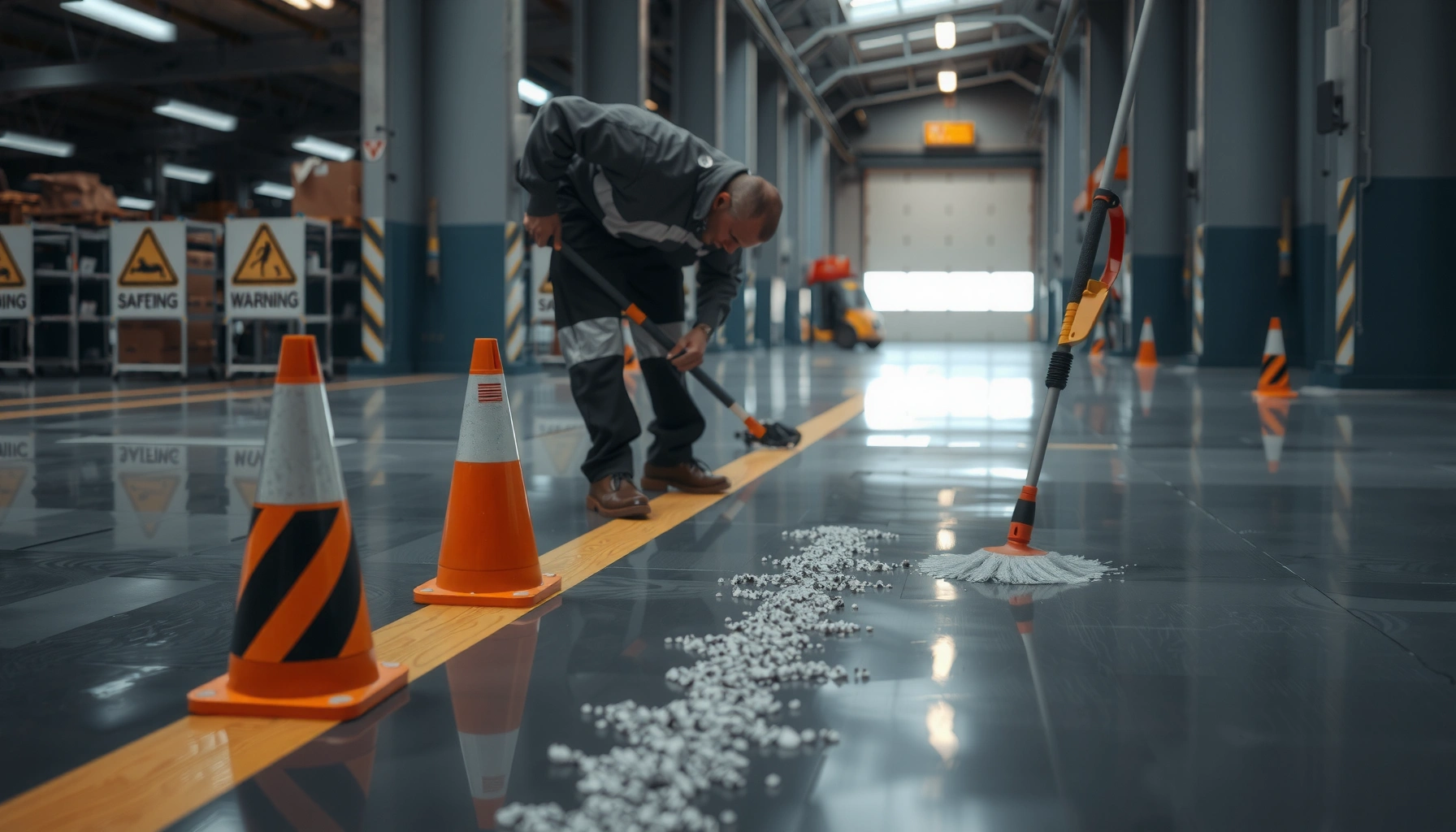

To prevent slipping on epoxy floors, use the safety steps that make traction non-negotiable: clean thoroughly, remove standing moisture, and apply the right anti-slip additives or coatings for your wear conditions. This guide delivers a clear, practical checklist of what to do before and after installation to keep feet stable under real traffic. If you want fewer slips quickly, follow the prevention methods with the biggest impact—and avoid the common fixes that don’t hold up.
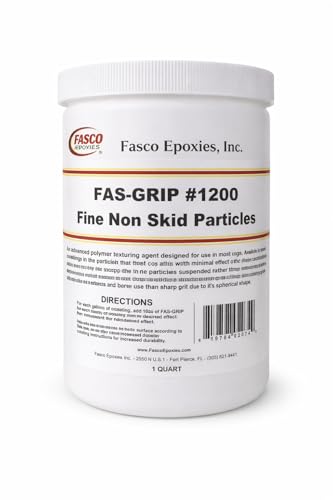

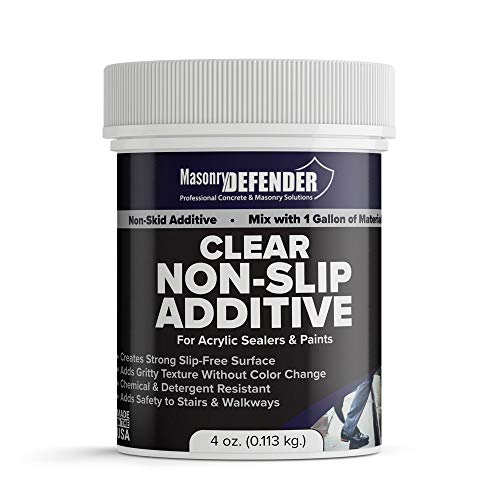

Slipping on epoxy floors is usually preventable when you (1) select a slip-resistant epoxy/topcoat system instead of relying on a glossy finish and (2) manage moisture and contamination so the floor never develops a slick film. Start with the right surface texture and cure spec, then clean using approved, residue-free methods—especially in wet-cleaning and high-traffic areas.
This guidance is for homeowners, facility managers, and contractors responsible for epoxy floors in garages, basements, warehouses, retail areas, and any location where mopping, tracked-in grime, or water exposure is part of daily operations.
Choose a Slip-Resistant Epoxy Finish (Don’t Rely on Gloss)
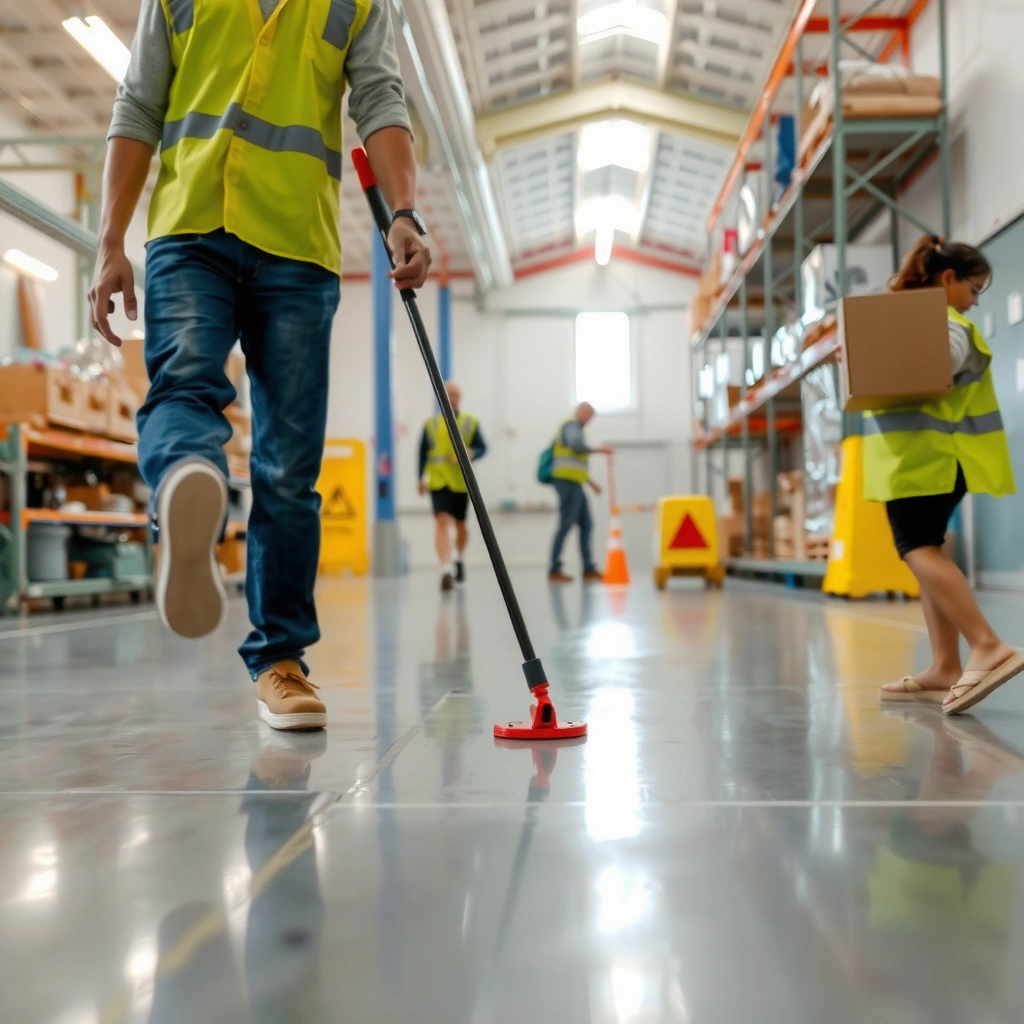
The fastest way to prevent slips is to start with a slip-resistant epoxy system designed for your traffic conditions, not a high-gloss “easy to wipe” finish. In practice, slip resistance comes from surface texture (and sometimes anti-slip additives/aggregate), and the wrong sheen can undo an otherwise solid installation.
A glossy, smooth epoxy topcoat can reflect water and create a lubricating layer, so slip resistance often drops when the surface is wet.
Slip-resistant performance is typically engineered through texture and/or anti-slip media (for example, broadcast aggregate), rather than achieved by cleaning alone.
If a floor is “too slick,” the remedy is often a system upgrade (overlay/broadcast) instead of switching detergents or mops.
What to look for in the product system
– Choose an epoxy topcoat that is explicitly rated/marketed for slip resistance or “anti-slip” performance. Many reputable manufacturers describe how slip resistance is achieved (texture level, broadcast media, and/or anti-slip additives).
– Prefer systems that build traction at the surface. A common mistake is selecting a smooth base with a clear, glassy topcoat and assuming the epoxy is “inherently non-slip.”
– Match the surface design to the environment:
– Dry zones (light dust, occasional damp mopping): you still want traction, but the risk profile is lower.
– Wet zones (frequent mopping, cleaning runoff, condensation, or water exposure): you need a topcoat/texture system that performs under wet maintenance, not just dry footfall.
If your floor is already too slick
If your existing epoxy is failing the wet test—people feel the “skate” effect—plan for a surface upgrade:
– A manufacturer-compatible anti-slip broadcast or overlay is typically more reliable than changing cleaning chemicals.
– Avoid mixing products outside the manufacturer’s approved system. A compatible system matters because different resins and topcoats cure differently and can change the surface microtexture that controls traction.
In my experience advising facilities on slip-risk remediation, the biggest pattern is this: teams try to “clean their way out” of a traction problem. That works only when the cause is contamination. When the cause is a smooth, glossy film, only a traction-focused system change usually fixes it.
Control the Causes: Moisture, Dust, and Contaminants
If the surface is wet or becomes contaminated, you can lose traction even on a correctly specified epoxy. The goal is to remove the “wet causes” first (water sources and film-forming contamination), then implement cleaning and drying habits that don’t leave behind residue.
Persistent water films from leaks, condensation, or poor drainage are a primary driver of slip events on otherwise slip-resistant coatings.
Tracked-in dirt and oily residues can form a thin lubricating layer that reduces traction more than people expect.
After mopping, letting a wet film remain on the surface can create a slippery condition; damp cleaning with proper drying reduces this risk.
Moisture control is step zero
Before you invest in anti-slip epoxy additives or overlays, address the sources that keep the floor wet:
– Leaks and plumbing: fix drip points immediately, including HVAC condensate lines where water can run across the slab.
– Condensation: in cold climates or around refrigeration, condensation can form under normal operating temperatures.
– Sprinkler overspray: even occasional activation can coat the surface with fine droplets that behave like a lubricant.
– Drainage and slope: water pooling in low areas is one of the most common “mystery” slip causes.
Reduce tracked-in contamination at entrances
Entrance mats and entry control are not “extras”—they are traction insurance:
– Use mats/booths to reduce tracked-in grit that can create a paste-like slick layer.
– If you have forklifts, carts, or frequent wheel traffic, consider an entry workflow that limits how much oily debris reaches the epoxy zone.
Clean in a way that doesn’t leave a film
A common operational slip trigger is leaving detergents or emulsions behind. That residue can combine with dust and water into a micro-slick film.
According to the U.S. Centers for Disease Control and Prevention, falls are a leading cause of injury, and fall-related injuries account for millions of emergency department visits in the United States each year (CDC, National Center for Injury Prevention and Control (NCIPC); fall injury burden data). While this doesn’t isolate epoxy specifically, it underscores why facilities focus on traction under wet/dirty conditions.
Use the Right Surface Prep Before and After Installation
The surface prep process determines how well your epoxy bonds and how consistently the finished texture performs. If you skip prep or trap contamination/dust, you can end up with uneven performance that feels “slippery” even when the product is designed to be anti-slip.
Epoxy slip performance depends on the surface texture that results from the approved application method—not only on the chemistry of the coating.
Proper grinding/sanding and thorough cleaning are typically required so the coating bonds correctly and cures to the intended finish.
Cure time matters for traction: exposing epoxy to heavy traffic or wet conditions before it reaches full cure can change surface behavior.
Prep that supports the texture you’re counting on
Manufacturers usually require:
– Mechanical profile (often grinding or sanding) to create adhesion and a consistent substrate.
– Contamination removal (dust, laitance, oils, and residues). A clean substrate supports consistent coating thickness and texture.
– Correct topcoat application conditions (temperature/humidity windows). These affect cure and surface microstructure.
Avoid dust entrapment during topcoat application
Even when the system is “anti-slip,” dust trapped under or into the topcoat can change how the surface grips:
– Ensure the surface is cleaned exactly as the manufacturer specifies before topcoat.
– Don’t accelerate the process by applying over visible dust or after wiping with a method that leaves lint or residue.
After installation: respect the cure window
Use the manufacturer’s cure guidance before you allow heavy traffic or wet operations. The exact cure window depends on the epoxy/topcoat spec sheet—use your system’s stated timeframe (for example: “foot traffic” and “full cure” milestones).
[ADD: exact cure window from your epoxy system’s spec sheet—e.g., “light foot traffic after X hours, full cure after Y days,” and whether water exposure is allowed after the same period.]
Clean Without Making It Smoother
The wrong cleaning products and techniques can reduce slip resistance by leaving residue films on top of cured epoxy. For safety, use approved cleaners, avoid “shine” products, and remove residue so you don’t rebuild a lubricating layer day after day.
Some waxes, sealers, and “shine” products can increase slip risk by sealing the surface and reducing microtexture traction on cured coatings.
Residue from detergent films can make a coating feel slippery even when the floor looks clean.
A consistent cleaning schedule that prevents buildup often performs better for slip prevention than occasional heavy, residue-prone cleaning.
A simple comparison: safe vs. risky maintenance choices
Below is a practical way to think about maintenance impact on traction:
| Cleaning approach | What it does to epoxy traction | Typical slip risk outcome |
|---|---|---|
| Manufacturer-approved neutral cleaner (proper dilution) | Removes grime without leaving a slick film | Lower risk (recommended) |
| Solvent-based degreaser (only if approved) | Can clean oils but may affect surface if incompatible or overused | Medium risk if misused |
| Wax, “floor shine,” or gloss sealers not approved for epoxy | Can seal microtexture and trap residue | Higher risk (often slippery) |
| Overconcentrated detergents | Increases residue film thickness | Medium-to-high risk |
| Mopping then leaving a wet layer to dry naturally | Keeps lubrication present longer | Medium-to-high risk |
Keep it operationally realistic
– Use the manufacturer’s dilution ratios and test in a hidden area if you’re changing chemicals.
– Train staff to clean consistently and dry as needed—especially after wet cleaning.
– Build a routine that targets the actual contamination pattern:
– garages: tire rubber dust + oil mist
– basements: condensation + dust
– warehouses: tracked-in grit + cleaning residues
If you maintain multiple sites, we recommend you document the cleaner name, dilution ratio, and drying method—because “the same job” done differently can change slip outcomes.
What Can Go Wrong (Common Slip-Risk Mistakes)
Even a well-specified epoxy system can become slippery when teams make predictable application or maintenance errors. Most failures trace back to compatibility issues, texture design problems, or ongoing moisture/contamination that the coating can’t overcome.
Anti-slip texture that’s too fine, too smooth, or uneven can create inconsistent traction under wet footfalls.
Using the wrong topcoat sheen—especially high-gloss surfaces—can reduce wet traction even if the base coat was textured.
Applying over contamination (oils, paint overspray, dust, or curing residues) can cause uneven coating performance and slick patches.
Common mistakes to audit
– Anti-slip texture that’s not designed for your wet conditions
If the additive/aggregate is chosen for appearance rather than traction performance, you may get “grit” that doesn’t hold up in water or cleaning.
– Sheen mismatch
A system that’s fine in dry traffic can become hazardous when the floor is frequently cleaned or exposed to water.
– Skipping or compressing surface prep
Bond issues can lead to micro-failure, uneven texture behavior, and hard-to-clean slick zones.
– Using shine products or unapproved sealers
These can lock in slipperiness by sealing the surface or changing how water behaves on top.
The moisture-and-traction interaction is the real villain
A properly textured epoxy still needs a clean, dry surface at the moment of footfall. Research and industry guidance consistently treat slip risk as a system problem: surface + contamination + water + footwear + behavior (walking speed, turns, and traffic patterns).
According to the World Health Organization, unintentional falls are a major cause of injury worldwide (WHO, falls and injury burden documentation). In facility environments, the most preventable contributors are usually moisture sources, residue control, and engineered traction.
“Don’t just pick a product—pick a system”
Use one compatible coating system and keep documentation (tech data sheets, application instructions, and cure specs). If you change any part—primer, base coat, topcoat, additive—make sure it still forms the intended slip-resistant surface.
Verdict: Best Path to a Safer Epoxy Floor (and When to Skip DIY)
If you’re preventing slips, the best path is to choose a slip-resistant epoxy/topcoat system and maintain it with manufacturer-approved cleaning that doesn’t leave residue films. DIY can help only when the existing floor is sound and you’re applying a compatible anti-slip additive/overlay per the system instructions; skip DIY when the coating is peeling, contaminated through-to-the-substrate, or repeatedly failing after cleaning because you’ll likely need mechanical correction and system-compatible repairs.
Slip prevention is most reliable when engineered traction and maintenance procedures work together as a system.
When epoxy is failing (peeling, delaminating, or contaminated), traction additives alone can’t fix adhesion or coating uniformity problems.
A pro coating contractor can verify compatibility, substrate profile, and cure/maintenance conditions using the manufacturer’s application guidance.
If this article is for your site, consider adding a short internal recommendation such as: “We recommend hiring a professional coating contractor experienced with slip-resistant epoxy systems and manufacturer-approved overlays.” In bids, look for: documented substrate prep approach, the exact coating system/tech sheet references, and a maintenance plan that avoids unapproved sealers or shine products.
Quick visual: which traction approach fits which risk
Slip-Resistance Strategy Fit by Floor Condition (Planning Guide)
| # | Traction strategy | Best where | Strength (★) |
|---|---|---|---|
| 1 | Slip-resistant topcoat with texture | Dry-to-moderate wet cleaning | ★★★★☆ |
| 2 | Anti-slip additive blended into topcoat | Uniform traction across typical traffic | ★★★☆☆ |
| 3 | Broadcast anti-slip aggregate + seal/finish | Frequent wet cleaning and water exposure | ★★★★★ |
| 4 | Low-sheen overlay to retain microtexture | Retrofitting slick existing epoxy | ★★★★☆ |
| 5 | Entry mat program + traffic control | Retail/shops to reduce tracked grit | ★★★☆☆ |
| 6 | Unapproved shine/sealer over epoxy | Not recommended anywhere | ★☆☆☆☆ |
| 7 | Cleaning-heavy maintenance with no drying control | Wet zones with residual films | ★★☆☆☆ |
Quick Checklist (Scan & Save)
– Choose a slip-resistant epoxy/topcoat system (texture and/or anti-slip additive as specified)
– Fix moisture sources (leaks, drainage, condensation) before focusing only on coating
– Use correct surface prep per manufacturer instructions
– Clean with approved methods; avoid residue-forming products (waxes/shine/sealers not approved)
– Remove standing water; dry after wet cleaning
– Use mats/entry control to reduce tracked contamination
– Reassess after changes (new cleaning products, seasonal wet conditions)
FAQ
Will a non-slip wax or shine product help on epoxy floors?
Sometimes it can, but many “shine” products increase slip risk by sealing microtexture or leaving a residue film. Only use products that are explicitly compatible with epoxy systems, and test in a small hidden area first. [ADD: source for compatibility—manufacturer guidance or product label statement.]
Can I add anti-slip texture to an epoxy floor after it’s installed?
Often yes, depending on the condition of the existing coating and the coating system type (how the topcoat was built). The safest route is to follow the original manufacturer’s recommendations for additives/overlays. [ADD: source for recoat/anti-slip retrofit steps from your system spec.]
Why is my epoxy floor more slippery after mopping?
It’s usually due to detergent residue, detergent concentration, or leaving a thin water layer on the surface. Use manufacturer-approved cleaners and switch to damp cleaning with adequate drying time. [ADD: source for recommended cleaning method.]
Does grit make epoxy floors safer, or can it backfire?
Grit can improve traction, but it can also backfire if the surface texture is too fine, too smooth, or applied unevenly—especially when the floor is wet. Slip resistance depends on the full system design and how the surface behaves under your conditions (dry vs. wet). [ADD: source for slip-resistance guidance from manufacturer.]
Sources
– CDC (NCIPC), fall injury burden and emergency department visit data
– World Health Organization (WHO), unintentional falls and injury burden documentation
– [ADD: manufacturer technical datasheet(s) for your specific epoxy resin/topcoat system covering slip resistance, surface prep, curing time, and cleaning recommendations]
– [ADD: manufacturer application instructions for anti-slip additives/aggregate broadcast and recoat/overlay compatibility]
– [ADD: official documentation from the flooring/coating standard body used by your chosen system, if applicable (e.g., manufacturer references to test methods/ratings)]
A safer epoxy floor is built as a system: traction comes from the correct finish and texture, and slip risk drops further when moisture sources and residue films are controlled. If your floor feels slick in real conditions (especially when wet), prioritize system-compatible upgrades and maintenance changes over quick cleaning tweaks—and skip DIY when adhesion is compromised or performance keeps failing after cleaning.
Frequently Asked Questions
What are the best ways to prevent slipping on epoxy floors?
To prevent slipping on epoxy floors, focus on surface texture, proper curing, and slip-resistant products. Use a high-quality epoxy system designed for commercial or residential floors, and consider adding anti-slip additives or non-slip broadcast flakes for traction. Also keep the floor clean and dry, since oil, dust, and water reduce grip even on slip-resistant epoxy.
How do I make my epoxy floor less slippery after it’s installed?
The most effective approach is to add slip resistance by applying a compatible anti-slip topcoat or using a broadcast system (such as silica sand, aluminum oxide, or non-slip flakes) during a recoat. If the floor is already cured and sealed, you can scuff-sand the surface and reapply a slip-resistant clear coat designed for epoxy. Avoid using random abrasives that can damage the coating or create uneven spots that worsen traction.
Why does epoxy flooring get slippery, and how can I stop it?
Epoxy can feel slick because it creates a smooth, hard surface that doesn’t grip well under wet or dusty conditions. Common causes include over-polished finishing, incorrect mix ratios, insufficient curing, or the absence of traction additives. Ensuring correct installation, using slip-resistant aggregates, and maintaining the right cleaning routine helps reduce slipperiness across everyday conditions.
Which anti-slip additives work best for epoxy floors?
The best anti-slip additives for epoxy flooring depend on how the floor will be used and how wet it gets. For general slip resistance, silica sand or aluminum oxide broadcast media are popular because they create durable texture. For more controlled traction and a smoother finish, consider non-slip flakes designed for epoxy floors, especially in garages, basements, and light commercial areas.
How can I prevent slip hazards when cleaning epoxy floors?
Use cleaning methods that don’t leave a residue film, since oils, soaps, and some detergents can make epoxy floors slippery. Sweep or vacuum regularly to remove grit, then mop with a recommended cleaner and plenty of water, and dry the surface promptly. If your epoxy floor is in a high-risk area, consider a maintenance plan that includes periodic inspections for worn areas or contamination that reduces slip resistance.
📅 Last Updated: October 10, 2026 | Topic: How to prevent slipping on epoxy floors? | Content verified for accuracy and freshness.
References
- https://en.wikipedia.org/wiki/Slip_resistance
- https://www.osha.gov/slips-trips-and-falls
- 1910.22 – General requirements. | Occupational Safety and Health Administration
https://www.osha.gov/laws-regs/regulations/standardnumber/1910/1910.22 - https://www.cdc.gov/niosh/topics/slips/
- Slips and trips – HSE
https://www.hse.gov.uk/slips/ - Google Scholar Google Scholar
https://scholar.google.com/scholar?q=epoxy+floor+slip+resistance - Google Scholar Google Scholar
https://scholar.google.com/scholar?q=slips+trips+falls+preventive+measures+floor+surface+friction - Google Scholar Google Scholar
https://scholar.google.com/scholar?q=epoxy+floor+surface+grit+additives+slip - Google Scholar Google Scholar
https://scholar.google.com/scholar?q=How+to+prevent+slipping+on+epoxy+floors? - How to prevent slipping on epoxy floors? – Search results
https://en.wikipedia.org/wiki/Special:Search?search=How+to+prevent+slipping+on+epoxy+floors?

