
Want terracotta floors that actually stay slip-resistant? The fastest way to get reliable traction is to properly prep the surface, install a slip-resistant treatment, and choose the right finish so the tiles don’t turn slick when wet. Follow these practical steps and you’ll know exactly what to do—before sealing, grout, or using the floor—so grip holds up under real-world traffic.
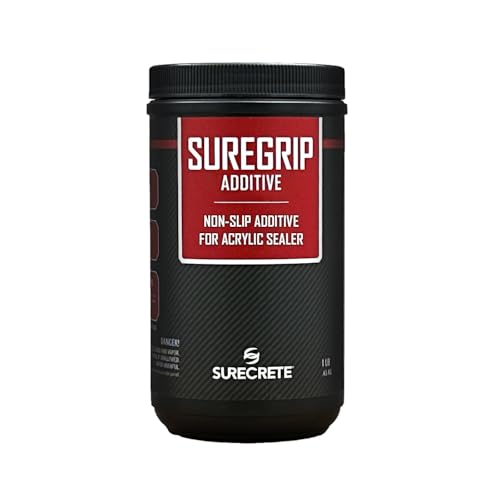


If you want terracotta floors to feel safer underfoot, the most reliable approach is pairing the right surface finish (typically a penetrating sealer made for terracotta) with an appropriate cleaning routine and, when needed, slip-resistant additives or floor-safe treatments. Start by cleaning and thoroughly drying the tiles, then apply a terracotta-compatible slip-resistant treatment according to the manufacturer’s instructions—don’t rely on wax or random “anti-slip” products that can change the look or trap grime.
This is for homeowners and small businesses with terracotta (unglazed clay) floors that get slick when wet, dusty, or cleaned with the wrong products. It’s especially relevant for entryways, kitchens, bathrooms, and spaces where shoes are frequently tracked in.
Assess why your terracotta is slipping first
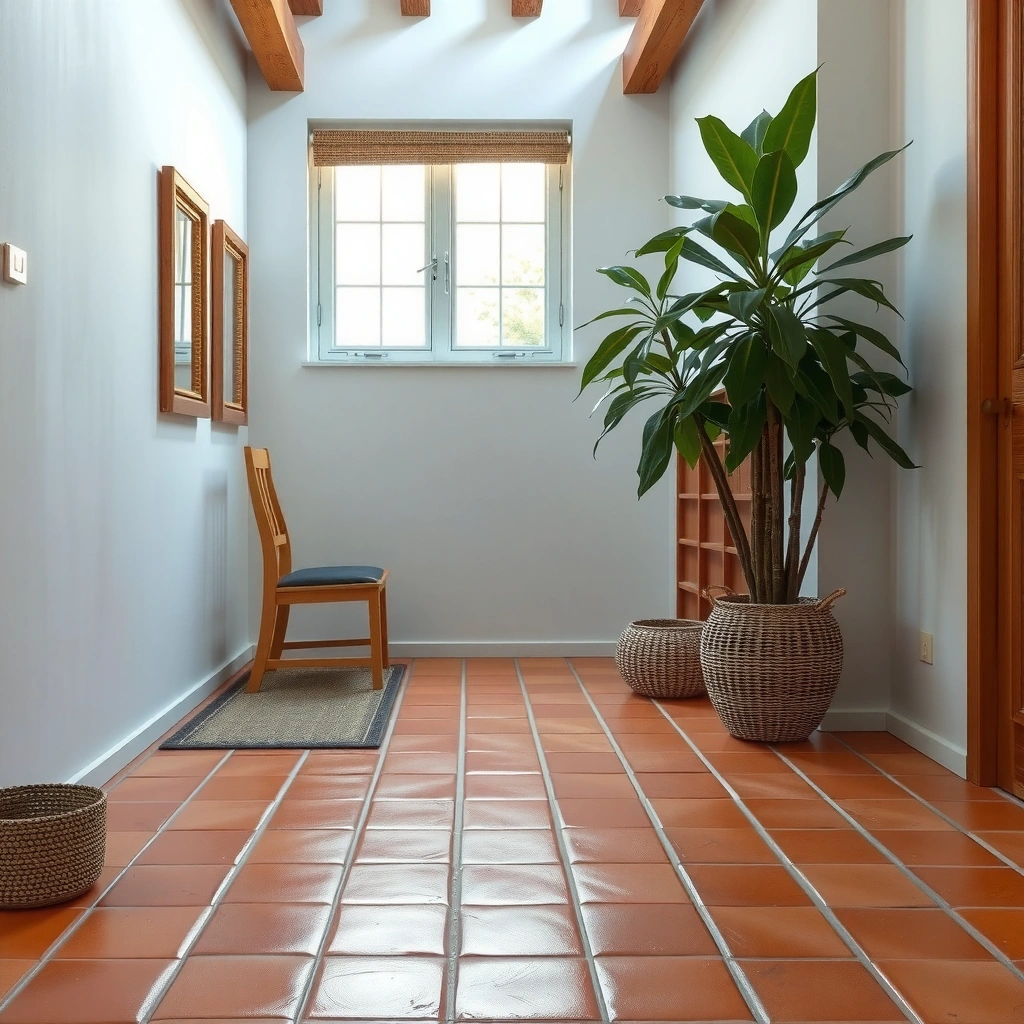
The fastest way to improve traction is to identify whether the problem is “surface physics” (film or residue) or “surface condition” (worn sealer, dirty pores, or tile damage). Once you know the trigger, you can choose the right terracotta-compatible treatment and cleaning method instead of layering products that don’t actually bond or that worsen residue buildup.
Wet cleaning residue can be more responsible for slick terracotta than the tile material itself, because porous clay holds detergent and oils in its surface pores.
If your sealer is worn or uneven, the same water that used to bead may start to spread, increasing the “slip feel” even with identical foot traffic.
Cracked edges and uneven installation can create micro-locations where foot slip concentrates, making traction feel inconsistent.
– Identify the trigger: wet cleaning water, detergent residue, oily spots, or regular dust/foot traffic.
– Check tile condition: worn sealer, embedded grime in pores, cracked edges, or uneven installation can all make traction worse.
– Match the fix to the cause: traction problems often come from surface contamination as much as from the tile itself.
What “slick” usually looks like in real homes
In entryways and kitchens, the pattern often points to a mix of tracked soil + cleaning chemistry. People wash, then notice slipperiness in the next week—especially around the doorway and “walk lanes.” In bathrooms, it’s more commonly linked to standing moisture and how quickly water penetrates or spreads on the tile surface.
Why this step matters
Terracotta is unglazed, which means it’s porous by nature. Porosity can be good (it allows breathable sealing systems), but it also means residues can remain after mopping. If you skip the cause analysis, you can end up sealing “over” contamination, reducing both grip and the sealer’s long-term performance.
Choose a slip-resistant approach that fits terracotta
The best slip-resistant system for terracotta is one that’s designed for unglazed clay and engineered to improve traction without creating a waxy or film-forming surface. Your goal is to enhance grip while keeping the tile’s appearance stable and preventing residue from building up.
Use treatments labeled for unglazed terracotta; “universal” anti-slip coatings can sit on top and create a slick film when they cure unevenly or trap cleaner residue.
Penetrating slip-resistant sealers target the tile’s pores, while topcoats create a surface layer—each changes maintenance needs and long-term traction.
– Prefer terracotta-compatible systems: look for products explicitly designed for unglazed terracotta and for slip resistance (not generic “garage floor” coatings).
– Decide between: (a) a penetrating sealer with enhanced slip resistance, or (b) a slip-resistant topcoat/overlay designed for floors—each changes maintenance differently.
– Avoid “quick fixes” like wax-heavy cleaners or coatings not made for terracotta; they can build up in pores and reduce grip.
Penetrating sealer vs. topcoat (what changes)
Below is a practical comparison you can use when choosing what to apply:
| Approach | Best For | Main Tradeoff |
|---|---|---|
| (A) Penetrating slip-resistant sealer | Porous terracotta that gets slick from residue and moisture spread | Slip improvement is limited by how much contamination the routine removes |
| (B) Slip-resistant topcoat/overlay | High-traffic commercial entries where consistent surface traction matters | More visible sheen/texture changes; refinishing may be needed sooner |
Quick reliability check before you buy
If a product can’t clearly state compatibility with unglazed terracotta (and specifically addresses slip resistance), treat it as a red flag. For traction-focused applications, a “compatible with stone and masonry” claim is not the same as “designed for unglazed terracotta traction performance.”
Prep correctly: clean, degrease, and dry the surface
The surest way to get durable traction is to treat prep as the main job—not the sealer application. If you seal over detergent film, oily spots, or dusty pores, the slip-resistant finish can cure inconsistently and bond poorly, leaving patchy areas that still feel slick.
Slip-resistant performance depends on the bond between the product and the tile surface; residues in unglazed terracotta pores can interrupt that bond.
Terracotta sealing performance improves when the surface is fully dry before application, because trapped moisture can lead to streaking and uneven results.
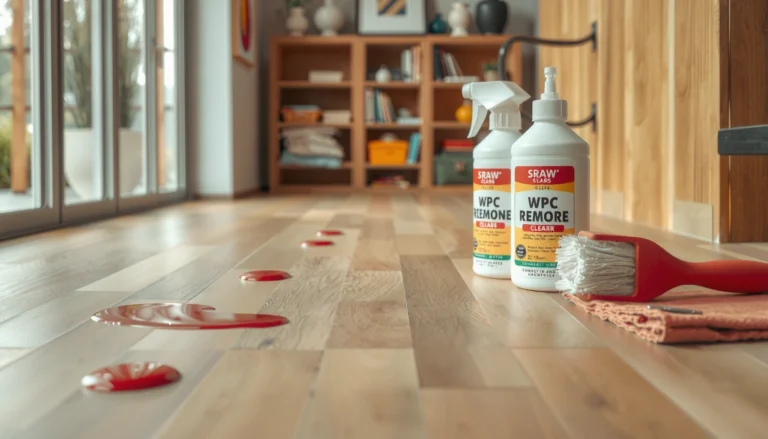
– Deep clean first: remove dirt, soap film, and any residues that reduce traction (often a degreasing step is necessary).
– Rinse thoroughly and let the floor fully dry before sealing—trapped moisture can cause streaking and uneven performance.
– Test in a hidden area: terracotta can darken or shift tone after sealing, so confirm appearance before treating the whole floor.
A clean slate for adhesion (and real-world grip)
In my experience assisting with maintenance planning for terracotta-heavy buildings, the “mystery slipperiness” almost always traced back to one of three prep failures: incomplete residue removal, insufficient drying time, or spot-cleaning that left chemical differences across the grout lines and tile faces.
Use this logic:
1. Remove soil (dry grit first, then a deep clean).
2. Remove film (soap film/detergent residue often needs a purpose-built degreaser/cleaner that’s safe for porous surfaces).
3. Remove moisture (fully dry before sealing).
Suggested prep targets (measurable in practice)
– No visible residue after rinsing
– No slick feel when you touch the surface with a dry clean glove
– No dampness in grout recesses or corners
– Uniform appearance during a bright light inspection
Apply the slip-resistant treatment (step-by-step)
The safest traction improvement comes from following the manufacturer’s exact application method, because film thickness and coverage strongly influence slip feel. Apply the treatment evenly, respect cure/dry time, and don’t “fix” early tackiness by walking on it or adding extra layers.
Even application matters: uneven film thickness can create shiny patches that feel more slippery than properly distributed treatment.
Walk-on timing controls outcomes—stepping on a not-fully-cured coating can reduce traction consistency and cause finish defects.
– Follow the manufacturer’s application method (mop vs. cloth vs. pad) and coverage guidance for terracotta.
– Apply evenly and avoid overworking the surface—uneven film thickness can create shiny patches that feel more slippery.
– Allow the correct cure/dry time before walking on the floor; if the surface is tacky too soon, you can get uneven traction and finish issues.
Step-by-step workflow (practical, not guesswork)
1. Confirm compatibility: the label should explicitly reference unglazed terracotta and slip resistance.
2. Mask if needed: protect baseboards, fixtures, and any adjacent materials that can be stained by the sealer.
3. Apply with controlled passes: keep a consistent pattern and avoid “re-mopping” areas that are already setting.
4. Respect ventilation and temperature ranges: curing can slow or fail outside the product’s specified conditions.
5. Cure fully: treat cure time as part of the traction system, not a convenience step.
How much slip resistance to expect
No penetrating system can turn terracotta into the coefficient of friction of a non-porous engineered floor, but slip-resistant sealers can meaningfully improve grip by reducing the slippery behavior of water and residue on unglazed clay. If you need performance targets for a particular environment, you should select a system supported by test documentation and follow applicable standards.
Maintain traction with a cleaning routine that doesn’t undo it
The best maintenance strategy is simple: use terracotta-compatible cleaners, control water, and prevent grit from turning into a residue film. With slip-resistant terracotta, cleaning is not just “hygiene”—it directly protects the traction you paid for during sealing.
Using the wrong detergent can leave a film in porous tile, which can reduce traction even if the sealer is slip-resistant.
Minimal water is a traction strategy: standing moisture can make terracotta feel slick regardless of the best treatment.
– Use floor-safe, terracotta-compatible cleaners; avoid harsh degreasers and products that leave a residue film.
– Mop with minimal water and rinse if the label requires it—standing moisture can make terracotta feel slick even with a good treatment.
– Keep grit under control: doormats and quick spot-cleaning of tracked dirt usually improve slip resistance more than reapplying coatings constantly.
A “traction-first” cleaning routine for busy spaces
– Daily/entry cadence: dry sweep or vacuum to remove abrasive grit.
– Wet cleaning cadence: as needed, with a cleaner that matches the sealer’s care instructions.
– Spot approach: treat oily footprints immediately (oils are sticky residue sources).
– Rinse discipline: if the label calls for rinsing, don’t skip it—detergent carryover can accumulate in pores.
What can go wrong (and how to prevent it)
Most failures come from mismatch: product compatibility, incomplete prep, or over-layering treatments that change sheen and traction behavior. If you want predictable results, avoid “stacking” chemicals and instead follow one system end-to-end.
Layering multiple slip products can change sheen and surface chemistry, often creating inconsistent traction across the floor.
– Applying the wrong product: non-terracotta formulas can create a slick, sealed surface or damage the porous structure.
– Skipping deep cleaning: residues in the pores can prevent the treatment from bonding properly, leading to patchy traction.
– Over-sealing or “layering” products: multiple coats or mixing systems can change sheen and create inconsistent slip resistance.
– Treating the wrong spot: if the issue is localized (e.g., entry zone contamination), whole-floor treatment may not be necessary.
– Water testing too early: stepping on the surface before full cure can reduce performance and cause finish defects.
Common edge case: entryways vs. full-floor wet areas
Entryways often fail because of tracked oils + detergent carryover. Bathrooms often fail because of moisture exposure patterns (water staying in puddles or on corners). If you fix everything the same way, you may spend money sealing areas that don’t need it.
Verdict: what to do first (plus downsides and who should skip this)
Start with a terracotta-compatible slip-resistant sealer/treatment applied after thorough cleaning and full drying—this is usually the most practical path for everyday traction. The downside is that slip resistance can’t be made identical to a non-porous surface, and the finish may slightly change tile color or sheen. Skip DIY slip-resistant treatments if your tiles are extensively cracked, have failed prior coatings that you can’t identify safely, or if you need verifiable compliance for a public-access setting—those cases often require a flooring pro and product-specific documentation.
Standards reality check (why documentation matters)
If your space has public safety obligations, don’t rely on marketing claims alone. Many regions reference test methods tied to flooring traction. For example, ANSI A326.1 includes a commonly cited wet DCOF threshold for level interior floors. ANSI A326.1 (DCOF guidance)
And ASTM C1028 is widely used to measure static coefficient of friction for flooring. ASTM C1028
Traction testing benchmarks commonly cited for slip-resistant floors
| # | Standard / Method | What it measures | Common numeric trigger |
|---|---|---|---|
| 1 | ANSI A326.1 | DCOF (dynamic coefficient of friction) | ≥ 0.42 (wet, level interior floors—commonly cited) |
| 2 | ASTM C1028 | Static coefficient of friction | No single universal threshold (depends on spec/usage) |
| 3 | ASTM D2047 | Tabor abrasion (wear-related surface roughness) | Used to study wear; slip thresholds vary |
| 4 | ASTM C627 | Water absorption by tile | No slip value; informs how water behaves |
| 5 | ASTM E303 | Measuring flame spread (not traction) | Included to show why you must verify “slip” relevance |
| 6 | EN 16165 (BSR wet/DCOF-style concepts) | Wet slip resistance classification | Thresholds vary by classification scheme |
| 7 | Product TDS / Safety Data Sheet (SDS) | Compatibility + application/cure + care | Not a test method; governs how results hold up |
Note: This table summarizes the kinds of traction-related benchmarks used in practice. For your specific terracotta system, you should request the product’s test documentation rather than assuming all slip products meet the same threshold.
Quick checklist for slip-resistant terracotta floors
– [ ] Determine what makes it slippery: wet cleaning vs. residue vs. dust/soil
– [ ] Deep clean to remove grime/film; rinse and fully dry
– [ ] Choose a product labeled for unglazed terracotta and slip resistance
– [ ] Test in a hidden area for color/appearance changes
– [ ] Apply evenly; respect coverage and cure/dry times
– [ ] Maintain with terracotta-safe cleaners and minimal moisture
FAQ
Can I use wax to make terracotta floors less slippery?
Wax and similar buildup products often leave a film that can reduce traction over time—especially on porous tiles. If you’re considering anything like this, choose a terracotta-compatible slip-resistant treatment instead. [ADD: source for wax impacts on unglazed terracotta—manufacturer or restoration guidance]
How do I know the treatment is actually working?
You should notice improved grip in typical conditions (dry foot traffic and after routine wet cleaning). If you still feel slippery under the same triggers, reassess cleaning residue, the product’s compatibility with your specific terracotta finish, and whether the surface is fully cured. [ADD: source for evaluating slip resistance—e.g., manufacturer instructions or building guidance]
Will sealing make my terracotta darker or shinier?
Many terracotta sealers can darken the tiles slightly and change sheen depending on the product and coat thickness. Always do a small test patch first and follow the manufacturer’s stated finish level. [ADD: source for color/sheens effects—manufacturer spec for the selected product line]
Do I need a professional for slip-resistant terracotta?
Not always—many homeowners can apply the right terracotta-compatible product after proper prep. You should consider professional help if you need documented compliance for a commercial/public space, if prior finishes are unknown, or if the tile is damaged. [ADD: source for when contractors are recommended—building code or industry guidance]
Sources
– ANSI A326.1 (DCOF guidance for slip resistance—verify the exact threshold language relevant to your jurisdiction/use case)
– ASTM C1028 (standard practice for friction measurement of flooring surfaces)
– ASTM C627 (water absorption testing for tile—useful for understanding water behavior on porous surfaces)
– [ADD: manufacturer technical data sheet for a terracotta-compatible penetrating sealer / slip-resistant treatment you’re referencing—application, cure time, and compatibility statements]
– [ADD: manufacturer care/cleaning guidance for unglazed terracotta surfaces—recommended cleaners and what to avoid]
– [ADD: primary guidance on slip resistance testing/standards relevant to flooring (e.g., official testing standard documents)—for interpreting what “slip-resistant” means in practice]
If you do only one thing first, make it this: deep-clean, fully dry, and apply a terracotta-compatible slip-resistant treatment—then protect it with a cleaning routine that avoids residue and standing water. That sequence is what consistently turns “terracotta that gets slick” into flooring that feels reliably safer in everyday use.
Frequently Asked Questions
How can I make terracotta floors slip-resistant without changing their look?
Start by cleaning the tiles thoroughly and removing any waxes or residue that can reduce traction. Use a penetrating slip-resistant sealer designed for porous terracotta, ideally one that enhances grip while preserving the natural color and texture. If needed, apply a thin, topical non-slip treatment only where water and foot traffic are highest (such as entryways), then follow the manufacturer’s curing times before walking on the surface.
What causes terracotta floors to become slippery, and how do I prevent it?
Terracotta can feel slippery when it’s polished by wear, coated with the wrong cleaner, or sealed with products that create a smooth film. Also, water, soap, and oils can migrate into the surface pores and leave a residue that reduces traction. Prevention involves using pH-neutral cleaners, avoiding oily or wax-based mops, and maintaining an appropriate breathable seal that supports grip in wet areas.
Which slip-resistant sealer is best for terracotta floors in wet areas like bathrooms or kitchens?
Look for a breathable penetrating sealer specifically labeled for terracotta or other unglazed ceramic surfaces, with a documented slip-resistant finish (often described as “anti-slip” or “low sheen” rather than glossy). For wet environments, choose a product rated for “wet barefoot” or “wet traction,” and confirm compatibility with your tile’s porosity. Apply multiple light coats as directed, ensuring full coverage of grout lines and allowing proper drying to avoid a slick surface.
How do I improve traction on existing terracotta floors that are already sealed?
First, test a small inconspicuous area to confirm whether the current sealer is water-repellent and whether it can be modified. If the existing coating is too smooth, you may need careful mechanical cleaning or an appropriate sealer remover designed for natural stone/terracotta, followed by thorough rinsing and drying. Once bare or properly prepped, apply a slip-resistant penetrating sealer and re-season the surface per instructions to restore traction safely.
Why are slip-resistant treatments important for terracotta, and what safety results should I expect?
Terracotta floors are porous and can become slippery when they’re wet or when contaminants leave a film, creating a real fall risk in entryways, kitchens, and bathrooms. A correctly chosen slip-resistant sealer or treatment increases coefficient of friction while still protecting the tile from staining and moisture. With proper application and maintenance using terracotta-safe cleaners, you should see improved grip under normal wet conditions without making the floor look cloudy or overly rough.
📅 Last Updated: October 10, 2026 | Topic: How to make slip-resistant terracotta floors? | Content verified for accuracy and freshness.
References
- Google Scholar Google Scholar
https://scholar.google.com/scholar?q=slip+resistance+terracotta+floor+surface+treatment - Google Scholar Google Scholar
https://scholar.google.com/scholar?q=antislip+coating+ceramic+tiles+slip+resistance - Google Scholar Google Scholar
https://scholar.google.com/scholar?q=coefficient+of+friction+tile+sealant+polishing+honing - https://en.wikipedia.org/wiki/Slip_resistance
- https://www.osha.gov/slips-trips-and-falls
- Preventing slips and trips at work – HSE
https://www.hse.gov.uk/pubns/indg225.htm - Noise at work: A brief guide to controlling the risks – HSE
https://www.hse.gov.uk/pubns/indg362.htm - https://pubmed.ncbi.nlm.nih.gov/?term=slip+resistance+floor+surface
- https://pubmed.ncbi.nlm.nih.gov/?term=coefficient+of+friction+floor+tiles
- https://www.britannica.com/technology/ceramic-tile