

Want to estimate the cost of marble floors accurately before you commit? This step-by-step guide shows you exactly how to calculate material, thickness, cut-and-lay complexity, installation labor, and finishing so you can price your project with confidence. You’ll also see the key cost drivers that make marble come in on-budget—or blow it—so you know what to verify before contractors quote.

- ENTER DIMENSIONS JUST LIKE YOU SAY THEM: Input measurements directly in feet, inches, building fractions, decimals, yards and meters, including square areas and cubic volumes; one key instantly converts your measurements into all standard Imperial or metric math dimensions that work best for you and the project you are working on
- DEDICATED BUILDING FUNCTION KEYS: Make determining your project needs easy; just input project measurements, select material type like wallpaper, paint or tile; then calculate the quantity needed and total costs to avoid surprises at the homecenter checkout
- ACCURATE MATERIAL ESTIMATION: Helps you estimate material quantities and costs for your projects, ensuring you never buy too much or too little material; simplifies your home improvement and decorating jobs and cuts down on the number of trips to the hardware store

Estimating marble floor cost is mainly a bottom-up math exercise: add marble (plus waste) + consumables + labor for prep/setting, then layer in add-ons like sealing and transitions. This step-by-step guide shows how to total it so you can compare contractor quotes apples-to-apples, even when their line items look different.
If you’re planning a kitchen, bath, entryway, or whole-room upgrade—and you want to know what drives the number before you call contractors—this is for you. It’s also useful when you’ve received one quote and need to spot what might be missing.
What drives marble floor cost (your biggest variables)
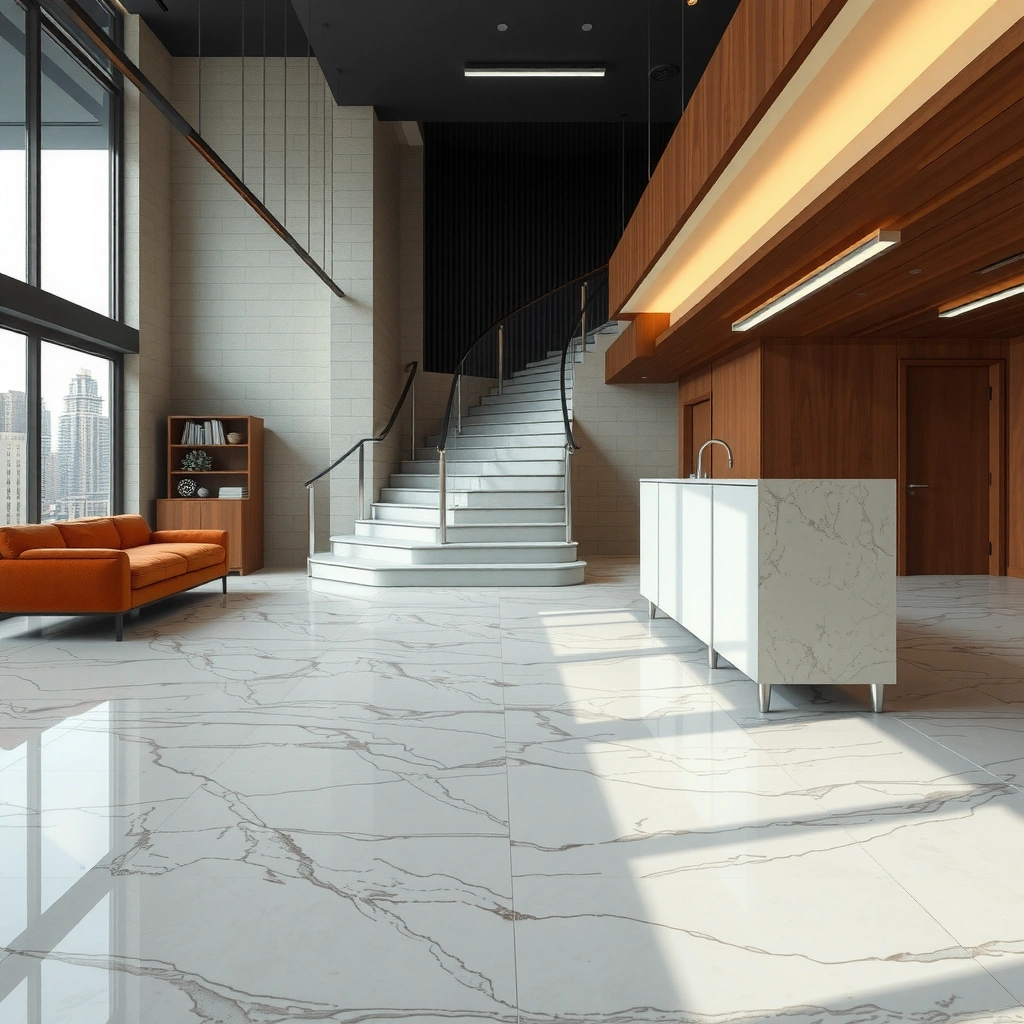
Marble floor pricing varies most because stone price changes by grade and finish, and installation cost changes with substrate prep and layout complexity. In practice, the “same” marble can swing in total installed cost depending on thickness, cut pattern demands, and whether your subfloor needs significant flattening or moisture mitigation.
– Marble pricing depends heavily on stone grade/type, origin, and finish (polished, honed, etc.).
– Installation cost shifts with complexity: layout size, straight vs. cut-heavy areas, and whether the subfloor needs leveling or repair.
Marble cost per square foot is not just a material question—finish (polished vs. honed) and selected thickness can change the slab/tile price and what installers require for a stable installation.
Natural stone installations are sensitive to substrate flatness and mortar coverage, so leveling/repair work can materially increase labor even when tile quantities look unchanged.
If two quotes quote the same marble but different scope (sealing, transitions, grout type, or subfloor work), the totals will differ even if the stone line item matches.
Measure your floor and plan for waste
Accurate square footage is the fastest way to prevent quote mismatches. Measure each area separately, then add a waste allowance for cuts, breaks, and pattern layout so your marble quantity matches how stone is actually installed.
– Measure square footage room-by-room and convert to total coverage area (e.g., length × width, then add for openings/adjacent areas as appropriate).
– Include a waste factor for cutting and breakage—use a conservative [ADD: recommended waste percentage from your installer or stone supplier] if you don’t have guidance.
How to calculate coverage without undercounting
1. Measure the floor footprint: length × width for each room, and add adjacent area corridors or landings if they share the same marble lot and installation plan.
2. Account for irregular edges: for small bump-outs, alcoves, or entryways, break them into rectangles or approximate triangles.
3. Handle openings correctly: most flooring estimates treat doorways and built-in obstacles differently than wall-to-wall space; decide whether you want marble run to stop at door jambs or continue through thresholds.
Waste factor: the “quiet” driver
Even with straight runs, marble requires trimming at edges and around penetrations. With complex layouts (returns, many thresholds, or detailed borders), waste rises. Industry practice often starts around 10% for simple cuts and 15% for more complex layouts, but you should confirm what your supplier/installer expects in writing ([ADD: source for typical stone waste percentages—e.g., TCNA/installer guidance]).
Break down material costs (marble, thickness, and finishing)
Material cost is more than the marble square-foot price. You want to capture (1) stone quantity and finish, (2) thickness/format requirements, and (3) the “consumables” that are frequently itemized separately from the stone itself.
– Get pricing for the marble slabs/tiles in the exact finish you want, and confirm thickness requirements for your installation method.
– Add the “consumables” that are often separate from the stone price: setting materials, grout, sealers, and any trim/transition pieces you need ([ADD: typical items to include from your supplier/installer’s estimate checklist]).
Marble formats affect both price and installation method
Marble is sold as tiles (often in standardized thicknesses) or as slabs (cut to size). Your installer’s approach matters because marble’s weight and stiffness can change:
– whether they recommend specific adhesives/mortar thickness,
– the need for reinforcing or specific underlayment approaches, and
– how they manage edges (polished edge vs. honed/filled, bullnose, pencil rounds, etc.).
Consumables commonly omitted from “marble-only” quotes
Use your checklist to ask whether these are included:
– Setting materials (thinset mortar compatible with natural stone)
– Grout type (often sanded vs. unsanded; color-matched options)
– Sealer (penetrating sealer vs. topical finish—varies by stone and finish)
– Trim/transition pieces (reducers, T-molds, stair nosings, end caps)
– Underlayment or membranes (if required for moisture control or crack isolation)
– Edge work (if the quote assumes a factory-finished edge but your plan needs site-fabricated edges)
Typical budgeting logic for materials
A practical way to total materials is:
– Marble cost = (total sq ft × waste-adjusted factor) × price per sq ft
– Consumables = line items per installer/supplier estimate (don’t assume they’re included)
Estimate labor and installation complexity
Labor is where “marble quotes” often drift from each other. Two installers may price the same material, but one might include demo, flattening, and waterproofing prep while the other lists only tile setting and grout.
– Ask for labor line items separately if possible: demo/removal, subfloor prep/leveling, tile setting, grouting, and sealing.
– Complexity multipliers to consider: stairs, thresholds, detailed patterns, unusual layouts, and time-consuming edge work ([ADD: how your installer typically rates complex layouts]).
The labor categories to request (in this order)
Ask for labor as separate line items so your quote comparison is “apples-to-apples”:
1. Demo/removal (existing tile, carpet glue, base removal as needed)
2. Subfloor prep
– flattening/leveling
– patching or replacing failed sections
– moisture mitigation (if applicable)
3. Setting (layout, back-buttering if required, spot-lippage management)
4. Grouting (including grout mixing, tooling, and cleanup)
5. Sealing (often time-dependent on cure/installation conditions)
Complexity multipliers that drive time
The following features can add labor even when total square footage is the same:
– Stairs (risers/treads, bullnose handling, adhesive coverage demands)
– Thresholds and transitions (door jamb conditions, reducers, framing details)
– Patterned layouts (herringbone, offset grids, or larger format with staggered joints)
– Detailed borders (contrasting marble, metal inlays, banding)
For natural stone, installers typically break cost out by substrate prep and setting/grouting tasks because substrate flatness issues can require additional leveling time even when tile count stays constant.
Stairs and transitions often increase labor disproportionately to area because they add fabrication and edge-handling steps that don’t scale linearly with square footage.
Don’t miss common add-ons (where quotes differ)
Quotes differ most when one contractor includes prep and finishing scope that another leaves to “later.” Before you sign anything, confirm whether the quote covers subfloor conditions, sealing guidance, and transitions as part of the original package.
– Subfloor issues: moisture mitigation, patching, underlayment needs, or flattening a concrete slab—these can change total cost quickly.
– Finishing and maintenance: sealing schedules, ongoing care, and repairs should be accounted for beyond the initial installation ([ADD: source for marble sealing guidance from the stone manufacturer or installer best practices]).
Add-on categories to explicitly ask about
Here’s a quick “quote audit” approach:
Subfloor and moisture scope
– Will they test/assess moisture (or require mitigation if needed)?
– Is crack isolation or membrane installation included when required by the substrate and environment?
– What’s included in flattening (materials + labor), and what tolerance do they target?
– Many tile standards and best practices emphasize flatness limits checked with a straightedge; confirm the specific standard your installer references. ([ADD: cite the exact standard/flatness tolerance the installer plans to follow])
Finishing scope
– Is sealing included in labor, or billed later after cure?
– Does the quote include sealing for both the stone surface and grout (if recommended for your specific marble and grout system)?
– Will they provide written care instructions tied to the actual sealer product used? ([ADD: cite manufacturer care/sealing instructions])
Pros/cons comparison: what to include for apples-to-apples quotes
| Scope choice | Pros | Cons / risk |
|---|---|---|
| Include sealing + transitions in the base bid | Easier quote comparison | Higher upfront number |
| Quote only setting + grout, add finishing later | Lower initial bid | Common “surprise” add-on |
What can go wrong (and how to avoid budget surprises)
Most budget surprises happen when quotes aren’t aligned on scope and when the subfloor condition forces extra prep. Marble is also unforgiving: if the surface isn’t flat enough or edges aren’t detailed correctly, you can see lippage or stress-related failures that require remediation.
– Comparing quotes that aren’t “apples-to-apples”: one may include subfloor work and sealing while another lists only setting and tile.
– Underestimating prep: marble is unforgiving if the surface isn’t flat—any unevenness can lead to lippage or cracking in some cases.
– Ignoring transitions and trim: doorways, wall edges, and transitions to other flooring types are frequently omitted until late-stage pricing.
Substrate flatness directly affects natural stone surface performance, so under-budgeting leveling/patching often shows up later as lippage or the need for rework.
Transitions (reducers, thresholds, stair noses) are frequently excluded from “sq ft only” assumptions because they require per-location fabrication and measuring.
A quick budgeting reality check
When you compare bids, make sure each quote addresses at least these elements:
– subfloor condition and flattening tolerance,
– whether sealer application is included (and when),
– grout type and color allowances,
– number of transitions/edge returns included,
– and how waste is handled (especially for complex layouts).
Verdict: a realistic way to total your estimate (and who should pause)
Use a bottom-up estimate: total square footage → marble cost (plus waste) → consumables → labor (demo + prep + setting + grout + sealing) → add-ons (transitions, repairs). The downside is it requires careful measuring and asking specific questions to contractors; if you skip that, you’ll likely get a “surprise” adjustment later. Skip this DIY-style estimating approach if your subfloor has suspected moisture damage, major leveling problems, or if you want a complex layout/pattern—those scenarios often need an on-site assessment to price accurately.
Typical Installed-Cost Share for Marble Floors (Residential, US)
| # | Cost component | Typical share of total | Budget impact |
|---|---|---|---|
| 1 | Marble stone (tile/slab) + cutting waste | 45–60% | High |
| 2 | Setting materials + grout | 8–14% | Moderate |
| 3 | Sealer + finishing labor | 2–6% | Low–Moderate |
| 4 | Subfloor demo/removal | 3–10% | Can escalate |
| 5 | Flattening/leveling/patching | 5–25% | High variability |
| 6 | Labor: layout + setting + grouting | 20–35% | Moderate |
| 7 | Transitions/trim/stair work | 0–12% | Quote-sensitive |
> Note: This table is a budgeting framework, not a promise. Your local labor rates, marble grade, and the actual condition of your subfloor can shift these ranges significantly. For exact pricing, always rely on a written scope.
Quick estimate checklist (scan-and-save)
– [ ] Total area (sq ft) for each room
– [ ] Waste allowance: [ADD: %] (or installer guidance)
– [ ] Marble price per sq ft + selected finish
– [ ] Tile/slab thickness confirmed for your installation
– [ ] Subfloor prep included? (leveling/patching/moisture mitigation)
– [ ] Labor broken out: demo, prep, setting, grouting, sealing
– [ ] Transitions/trim/thresholds included?
– [ ] Sealer/maintenance plan accounted for
FAQ
How do I estimate marble floor cost per square foot?
Start with the marble price per square foot for your chosen finish, then add waste and consumables, and finally include labor for prep and installation. If a quote only lists “tile + labor,” ask whether sealing and subfloor leveling are included.
Do I need to pay extra for subfloor leveling with marble?
Often, yes—especially on older concrete slabs or uneven floors. Marble installations typically require a flatter surface to reduce risks like lippage and cracked tiles.
Is polished or honed marble cheaper?
It depends on the supplier and stone type, but finish can affect pricing and availability. The key is to compare the exact grade and finish on every quote—not just “marble tile.”
What’s usually the biggest difference between two marble floor quotes?
Subfloor preparation and whether extras are included (transitions, sealing, grout type, underlayment, and edge work). Ask for a line-item breakdown so you can see what’s missing.Sources
– [ADD: Manufacturer installation instructions for your specific marble/sealer product line—use the “Installation” and “Care/Sealing” sections.]
– [ADD: Stone supplier or tile council documentation on marble tile installation considerations, such as substrate flatness and grout/sealing recommendations.]
A realistic marble floor estimate comes from aligning scope first (prep, sealing, transitions) and then totaling stone + consumables + labor. If you use the checklist above to normalize contractor bids, you’ll usually identify the missing line items that cause budget swings—before you commit.
Frequently Asked Questions
How do I estimate the total cost of marble floor installation?
Start by calculating the marble floor area in square feet and choose a thickness and grade, since higher-quality marble typically costs more per square foot. Add installation labor, underlayment or cement backer board, leveling materials, waterproofing (if needed), and marble-specific supplies like thinset and grout. Don’t forget extras such as cutting for edges, sealing, and floor removal/haul-away if you’re replacing an existing surface.
What factors affect the price per square foot for marble flooring?
Marble flooring cost varies based on stone grade (premium vs. standard), slab thickness, finish (polished, honed, brushed, or matte), and whether you need a special pattern like veining matching. Installation price can also rise if your subfloor requires extensive leveling, if the layout includes many cuts, or if you’re installing in wet areas where waterproofing is required. Transportation, availability, and waste/trim allowance (often 10–20%) can also change your final budget.
How can I calculate material quantity and waste to budget accurately?
Measure the room length and width, then multiply for square feet, adding a waste factor for cuts, breaks, and pattern alignment. For many marble floor estimates, budgeting about 10–15% waste helps, but higher waste may apply when using large-format slabs, complex layouts, or strict vein-matching requirements. Also plan for extra underlayment, sealant, grout, and transition strips at doorways or between floor types.
Which hidden costs should I include when estimating marble floor cost?
Many homeowners miss costs for subfloor preparation, including leveling compounds, moisture barriers, and patching. If you’re replacing old flooring, demolition and disposal fees can be significant, and you may need new baseboards or molding to achieve proper installation height. Sealing (and sometimes additional sealing later), specialty grout for certain colors, and permits/inspection costs (in some areas) should be included to avoid surprises.
What’s the best way to compare quotes for marble floor installation?
Ask contractors for a line-item estimate showing marble price per square foot, labor rate, surface prep scope, and materials like thinset, grout, sealant, and waterproofing. Confirm whether the quote includes removal of existing flooring, leveling, haul-away, and how waste is handled (especially important for marble tile vs. slabs and for matching patterns). Compare the finish (polished vs. honed), thickness, and timeline, then choose the option that clearly specifies the marble grade and installation method rather than just the lowest marble floor cost figure.
📅 Last Updated: October 09, 2026 | Topic: How to estimate the cost of marble floors? | Content verified for accuracy and freshness.
References
- Cost estimate
https://en.wikipedia.org/wiki/Cost_estimation - https://en.wikipedia.org/wiki/Construction_estimation
- Google Scholar Google Scholar
https://scholar.google.com/scholar?q=marble+floor+cost+estimation+unit+cost - Google Scholar Google Scholar
https://scholar.google.com/scholar?q=natural+stone+flooring+installation+cost+estimation - Google Scholar Google Scholar
https://scholar.google.com/scholar?q=marble+flooring+life+cycle+cost+analysis - Google Scholar Google Scholar
https://scholar.google.com/scholar?q=construction+cost+estimating+methods+unit+cost+estimate+guide - Google Scholar Google Scholar
https://scholar.google.com/scholar?q=building+component+cost+estimation+flooring+materials - Google Scholar Google Scholar
https://scholar.google.com/scholar?q=estimating+construction+costs+labor+material+productivity+natural+stone - Google Scholar Google Scholar
https://scholar.google.com/scholar?q=quantity+takeoff+floor+tile+marble+cost+estimate - Google Scholar Google Scholar
https://scholar.google.com/scholar?q=cost+model+for+floor+covering+installation+marble