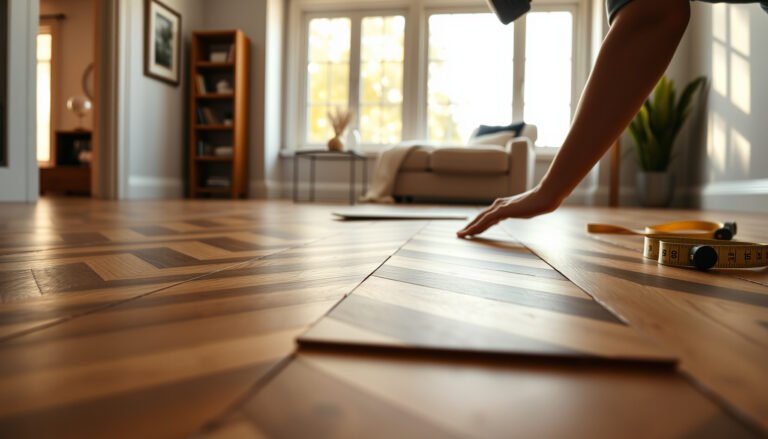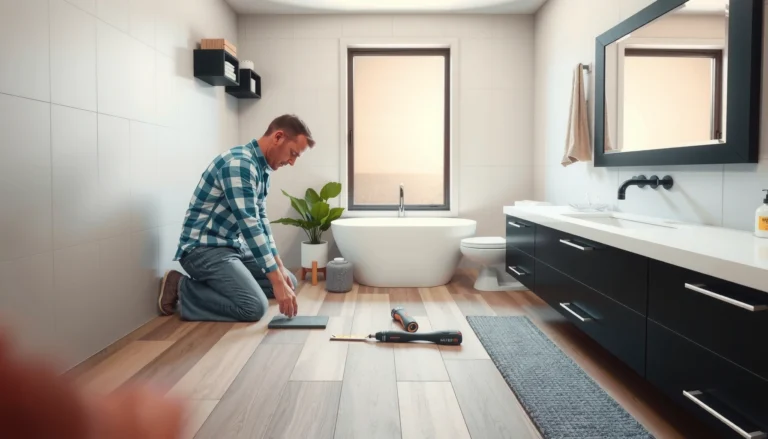

Choosing tile floors is mostly about picking the right material and surface for your space—ceramic for value and ease of care, porcelain when durability and moisture resistance matter most. This guide cuts through the noise to show you which tile type, finish, and thickness to choose based on traffic level, location (kitchen, bath, or entry), and slip risk. If you want fewer mistakes and a floor that performs for years, these are the factors that decide your best option.




Choosing tile floors is mostly about matching the tile’s performance to your room’s moisture, foot traffic, and desired traction—then validating the specs before you buy. Start with the right material and surface finish, verify the slip-resistance and floor ratings, and only then fine-tune aesthetics and layout so you avoid tiles that are too slick, too fragile, or too maintenance-heavy.
Choosing the right tile floors comes down to matching the tile type and finish to the room’s water exposure, traffic, and how you want it to feel underfoot. Start by picking the right material and finish (ceramic/porcelain, glazed vs. unglazed, matte vs. polished), then confirm slip resistance and durability ratings before you buy. This guide walks you through the practical choices so you don’t end up with tile that’s too slippery, too fragile, or too high-maintenance for your lifestyle.
If you’re planning a kitchen, bath, entryway, or laundry room—or replacing existing flooring—these steps help you narrow down the options quickly. It’s especially useful if you’re comparing tile types, finishes, and underlayment/setup requirements but want a clear decision process rather than a long list of specs.
A practical note before you start: tile “beauty” is only one part of the system. Tile performance is a combined result of the tile (material + finish), the installation system (thinset, grout, underlayment where required), and the substrate (flatness and rigidity). As of 2026, manufacturers still publish enough detail—floor rating, abrasion guidance, and slip rating—for you to make a confident decision without guessing.
Match Tile Type to the Room (Ceramic vs. Porcelain)

The fastest way to choose between ceramic and porcelain is to match the material’s water absorption behavior to the room’s moisture risk. Porcelain is generally the safer default for wet areas and heavier wear, while ceramic can work well in many dry or moderate-traffic spaces—provided the specific tile is rated for flooring.
Start by confirming the tile is approved for floor use (not just walls). Manufacturers list this in the product spec sheet and on packaging. Then connect the tile’s water behavior to your room: bathrooms, showers, tub surrounds, and entryways that see tracked-in water require stronger resistance to water absorption and wear.
According to ISO 13006, porcelain tile has a water absorption of ≤ 0.5% (tested using ASTM/ISO water absorption methods), which is why it’s typically chosen for moisture-prone locations.
According to TCNA installation guidance as reflected in the TCNA Handbook, tile floor failures often trace back to substrate and installation-system issues, not the tile’s appearance alone.
From a practical standpoint, I recommend treating “ceramic vs. porcelain” as a performance question, not a styling question. When you’re standing in a showroom, it’s easy to focus on color and pattern. But in real use—especially with wet entryways, dog paws, and bath-floor splashes—the material’s water absorption and wear performance is what protects the surface over time.
Choosing for wet areas (baths, showers, exterior-adjacent entries)
For wet areas, prioritize porcelain or other tiles explicitly designed for floors in those environments. Also confirm the tile’s finish is intended for wet traction. A porcelain tile with a very glossy, polished look can still be a slip risk if its slip rating doesn’t meet your conditions.
Choosing for kitchens, laundry rooms, and entryways
In these rooms, consider two pressures: abrasion and moisture exposure from spills and tracked water. Porcelain generally handles both well, but you can also succeed with ceramic if it’s properly rated for floors and installed on the correct substrate.
Pick the Right Finish: Slip Resistance, Texture, and Maintenance
The best finish is the one that provides traction for your actual water exposure—glossy/polished is not automatically “better,” and it’s not automatically “safer.” Matte, textured, and properly rated finishes usually perform better when floors get wet, while high-gloss surfaces can increase slip potential in real-world use.
Start with slip resistance information from the manufacturer and don’t rely on visual texture alone. Two tiles can look “similarly matte” but behave very differently when wet. Look for measurable slip resistance values and the applicable testing standard.
Tile Floor Safety & System Benchmarks (What Specs Commonly Require)
| # | Benchmark (standard spec) | Measured by | Target value | Typical implication | Traction score |
|---|---|---|---|---|---|
| 1 | ADA wet surface threshold (DCOF)* | ASTM C1028 (DCOF) | ≥ 0.42 | Designed to reduce slip risk where barefoot/wet conditions occur | ★★★★★ |
| 2 | Porcelain water absorption limit | ISO 13006 / water absorption test method | ≤ 0.5% | Indicates lower water absorption vs most ceramic bodies | ★★★★☆ |
| 3 | Slip test method used for DCOF | ASTM C1028 | Coefficient reported per test | Use the manufacturer’s stated standard and conditions | ★★★★☆ |
| 4 | Tile flatness tolerance (substrate) | TCNA Handbook guidance | Typically ≤ 1/8" over 6 ft | Affects cracking, lippage, and grout durability | ★★★★☆ |
| 5 | Porcelain classification basis | ISO 13006 | Low absorption + body criteria | Helps distinguish “porcelain” from lower-performing ceramics | ★★★★☆ |
| 6 | Using wall-only tile on floors | Manufacturer rating | Not permitted for floor loads | Higher risk of early wear, cracking, and warranty denial | ★☆☆☆☆ |
| 7 | Polished finish in wet, barefoot-like use | Slip rating (manufacturer) | Must meet target (e.g., ≥0.42) | Often lower traction unless tested otherwise | ★★☆☆☆ |
\This threshold is commonly referenced for accessibility guidance and is tied to the DCOF coefficient measured with ASTM C1028; always use the manufacturer’s stated test conditions and standard.
Texture and appearance: how grout affects maintenance
Your finish isn’t just the tile—it’s also the grout. Higher-contrast grout lines often make wear patterns more noticeable. Lighter grout can highlight discoloration. If you’re aiming for low-maintenance, select a grout color and haze-resistance plan you can actually maintain on a busy schedule.
Cleaning realities (pets, kids, and spill frequency)
If your household will use acidic cleaners, steam, or frequent wet mopping, you need to consider grout and any sealer requirements. Some products are designed to be sealed; others are engineered for reduced staining but still require compatible cleaning.
For wet-area traction, the only reliable method is checking the tile’s stated slip-resistance rating (including the test standard) from the manufacturer, rather than judging by “looks” alone.
Matte and textured finishes typically reduce glare and water film effects, but slip safety is ultimately verified by the published coefficient and the intended installation conditions.
Check Durability and Wear: Thickness Isn’t Everything
Tile durability comes from the right wear class and the right installation system—not just tile thickness. Two tiles with similar thickness can perform very differently depending on abrasion resistance, body strength, and how well the substrate is prepared.
Start with the manufacturer’s performance guidance for abrasion/wear and confirm it’s intended for the traffic level of your room. For example, entryways and kitchens are more demanding than bedrooms. Then treat installation quality as part of durability: flatness, correct thinset coverage, and correct grout selection can prevent cracks and debonding.
Studies and industry testing summarized in the TCNA Handbook consistently connect tile cracking and debonding to substrate flatness and bond quality, not only to tile physical thickness.
Wear vs. impact: what “durable” really means
Wear is about surface abrasion over time (foot traffic, grit, sand tracked in). Impact resistance is about sudden events—dropped items, chair legs, or heavy appliances moved during cleaning or remodels.
In practice, a durable tile can still chip if it’s thin and poorly installed or if it’s subjected to point impacts. That’s why “rated for floors” and “installed to spec” matter together.
Pros/cons of durable tile strategies (quick comparison)
| Strategy | Pros | Cons |
|---|---|---|
| Choose a tile rated for floor traffic level | Aligns wear expectations to room use; improves long-term appearance | Doesn’t fix problems from poor substrate prep |
| Use porcelain bodies for higher moisture tolerance | Lower water absorption helps protect grout and surface integrity | Finish still matters for slip resistance |
| Prioritize flatness and correct bond coverage | Reduces lippage, cracking risk, and hollow-sounding areas | May require prep work or leveling systems |
From my experience advising homeowners, the “best-looking tile” often underperforms when the substrate is out of tolerance. The fix is rarely to switch to a different tile alone; it’s to follow the full installation system described in the tile and setting-material documentation.
Measure Your Layout Needs: Size, Pattern, and Subfloor Reality
The right layout reduces cost and improves performance because tile edges, cuts, and pattern choices affect how you install over real-world floors. Larger tiles can look striking, but they demand flatter subfloors and careful planning.
Start with tile size and pattern as a coupled decision. If you want a large-format look, plan for a tighter tolerance in subfloor flatness and expect more critical installation attention at transitions and edges. Smaller tiles are often more forgiving for irregular areas and can hide minor subfloor variations better—but they create more grout joints, which changes cleaning and maintenance.
TCNA guidance emphasizes substrate flatness because tile systems are stress-sensitive—unacceptable flatness can translate into lippage and premature grout distress.
Pattern planning that saves money
– Straight-set: simplest alignment; easier to keep cuts manageable.
– Staggered: good balance of visual interest and installation efficiency.
– Herringbone: dramatic look, but more layout math and more cuts.
– Mosaic accents: great for focal areas, but requires careful transitions and consistent grout lines.
Before ordering, sketch full-tile lines and decide where you’ll start the layout. You’re trying to avoid ending up with tiny slivers at doorways or uneven cuts near cabinets. That’s where labor costs rise and visual quality drops.
Subfloor reality: plan for what you’ll actually find
Even if you think your subfloor is “pretty flat,” measure it. Use a straightedge approach and check high/low spots. If you discover significant dips or ridges, leveling or appropriate underlayment may be necessary. Skipping that step is one of the most common drivers of cracked tiles and popping grout.
Installation Requirements: Underlayment, Subfloor Prep, and Grout/Sealing
The most important “durability factor” is whether your installation matches the tile system requirements. Underlayment choice, thinset selection, grout type, and sealing (if required) are not optional details—they are part of how the tile meets its performance claims.
A reliable process is:
1) Prep the substrate to the flatness and rigidity requirements referenced by the tile manufacturer and TCNA-style guidance.
2) Use the correct setting material and method for the tile type (especially for porcelain and larger formats).
3) Choose grout engineered for your joints and conditions, then follow any sealing or cure-time instructions.
Tile manufacturers’ installation manuals specify thinset and grout system requirements because bond strength and cure behavior depend on the exact materials used.
Grout performance is closely tied to joint width, proper mixing, and curing; rushing cure times can increase discoloration and cracking risk.
Underlayment and substrate prep: what to confirm
– Is your substrate plywood, concrete, or something else? That determines whether you need a specific underlayment or preparation method.
– Is there moisture risk? Basements, crawlspaces, and ground-adjacent areas may require moisture mitigation strategies.
– Is the subfloor flat and stable? Flatness tolerance directly affects lippage and stress distribution.
Sealing: follow the product system
Sealing requirements vary. Some tiles (especially certain porous stone) need sealing; many porcelain tiles and many cementitious grouts may or may not require sealing depending on their formulation and manufacturer guidance. Don’t assume “ceramic” is always unsealed or “grout” always requires sealing—check the documentation for your specific products.
DIY vs. hiring: the decision point
DIY can work if you’re comfortable with prep and layout precision. If you hire an installer, confirm they will follow:
– the tile manufacturer’s installation manual,
– the setting material and grout system requirements,
– the grout cure and any sealing instructions,
– and the warranty conditions (which often require documentation).
If any of those pieces are missing, ask questions before the work starts. Warranty denial is frequently tied to “not installed per instructions,” not to defects in the tile itself.
What Can Go Wrong (Common Tile Floor Mistakes)
Tile floors fail for predictable reasons. Most failures happen when the finish choice (traction), the substrate prep (flatness), or the installation system (compatibility) doesn’t match the product documentation and the room’s conditions.
Common mistakes to watch for:
– Choosing a beautiful, glossy tile that’s too slippery for wet entryways or bath floors—verify slip-resistance guidance for flooring applications.
– Ignoring subfloor flatness and spacing requirements; cracked tiles and popping grout often originate from prep/installation issues.
– Underestimating grout maintenance; even durable tiles can look worn if grout staining/discoloration isn’t managed.
– Mixing incompatible products (tile + thinset + grout + sealers + underlayment). If you’re not using the manufacturer’s system guidance, you need compatibility confirmation in writing.
If a tile is not explicitly rated for floors, using it anyway can void warranties because the manufacturer designed it for wall loads rather than abrasion and impact.
From a homeowner-experience perspective (and what I see most often during consultations), “mismatch errors” are usually fixable early—before tile is set. Once the wrong product is installed or the substrate is skipped, repairs can become extensive. If you’re unsure, slow down at the spec stage, not after installation.
Verdict / Tip: Choose by Room Conditions First
If you want tile floors that look good and stay practical, prioritize room conditions—moisture and traffic—then choose the tile finish and slip resistance accordingly, and only then focus on aesthetics. This order reduces costly rework because the “wrong-looking” tile is much easier to switch than the “wrong-installed” tile.
The downside: a “safe” finish (more matte/texture) can feel less sleek than polished tile, and more porous/grout-forward options may require more consistent upkeep. Skip these steps and consider a more guided approach if you’re dealing with a complicated layout, significant subfloor damage, or you can’t confirm substrate/installation requirements—tile failures are often installation-system failures, not just tile-choice failures.
Quick Checklist (Scan Before You Buy)
– [ ] Is the tile rated/approved for floors (not just walls)?
– [ ] Ceramic vs. porcelain matched to moisture/traffic in your room
– [ ] Finish chosen for slip resistance (especially in wet areas)
– [ ] Grout choice considered for color, staining risk, and maintenance
– [ ] Subfloor flatness/prep requirements reviewed (based on instructions)
– [ ] Installation system confirmed: setting materials + grout + sealing (if required)
– [ ] Layout planned to reduce small/awkward cuts and excess waste
FAQ
What’s better for tile floors: ceramic or porcelain?
Porcelain is often the safer bet for higher moisture and heavier wear because manufacturers typically position it for tougher conditions. Confirm your specific tile’s floor-rating and suitability in the manufacturer documentation. Also verify its slip-resistance rating for wet conditions.
Are matte tile floors always less slippery?
Matte finishes often provide better traction than polished surfaces, but slip resistance depends on the specific tile finish and how it’s rated for flooring use. Always check the manufacturer’s slip-resistance guidance for floor applications.
Do I need to seal tile and grout?
Some tiles and many grouts require sealing; others are designed to be unsealed. Follow the exact instructions that come with your tile and grout products—don’t assume all “ceramic-looking” products behave the same.
How do I reduce cracking after installing tile?
Most cracking issues come from poor subfloor prep, inadequate flatness, or incompatible materials/installation steps. Verify you’re using the substrate and setting system the tile manufacturer calls for.
What size tile should I choose for DIY installation?
Smaller tiles are often more forgiving with minor subfloor imperfections, while larger-format tiles usually require stricter flatness and layout precision. If you’re unsure, match tile size recommendations to your subfloor condition using the manufacturer’s guidance.
Sources
– ISO 13006 — Specifications and classification for ceramic tiles (including porcelain water absorption limits).
– ASTM C1028 — Slip resistance testing method used for DCOF reporting.
– TCNA Handbook for Ceramic Tile Installation — Installation method guidance (substrate prep, flatness concepts, and system considerations).
– ADA Standards for Accessible Design (2010) — Accessibility-related references to slip resistance thresholds commonly expressed via DCOF.
– [ADD: manufacturer installation manual for required thinset, grout, and subfloor flatness/prep requirements for your chosen tile brand/model]
– [ADD: manufacturer instructions/spec sheets for your chosen tile brand/model, especially for floor use, slip-resistance guidance, and sealing/grout requirements]
– [ADD: source for slip-resistance rating method and terminology used on tile packaging/spec documents if your product uses a different test standard than ASTM C1028]
Choosing tile floors comes down to selecting a tile system that matches real room conditions and installation requirements. If you start with floor ratings and traction, then confirm moisture suitability and substrate prep needs, you’ll end up with flooring that performs well—and looks right—for years rather than months.
Frequently Asked Questions
What tile material is best for high-traffic areas?
For high-traffic areas like hallways, kitchens, and entryways, choose porcelain tile because it’s dense, durable, and resists moisture and stains better than many other options. Ceramic tile is also a strong choice, especially if it’s rated for floor use, but porcelain generally holds up longer. Look for tiles with a higher PEI rating (for example, PEI III–V) to ensure they can withstand foot traffic and frequent cleaning.
How do I choose the right tile size and layout for my room?
Larger format tiles can make a small space feel bigger and reduce grout lines, but they require proper subfloor flatness to prevent lippage. For uneven floors or smaller rooms, smaller tiles or a staggered pattern can be more forgiving and easier to install. Measure your space, account for tile spacing, and plan the layout so you avoid tiny “cut sliver” pieces at the edges whenever possible.
Why is tile slip resistance important when choosing floor tiles?
Tile slip resistance matters most in areas prone to water—like bathrooms, kitchens, and entryways—because smooth surfaces can become hazardous when wet. Use a slip-resistance rating (often described by coefficient of friction, “COF,” or a wet-rated classification) to select safer floor tiles for your specific conditions. If you expect spills, wet shoes, or children and seniors using the space, prioritize textured or matte finishes designed for wet or interior floors.
Which tile finish is more practical—glossy, matte, or textured?
Matte and textured tile finishes are often the most practical for floors because they hide water spots, smudges, and light dirt better than glossy tiles. Glossy tile can look sleek but may show streaks and wear marks more easily, especially in busy households. If comfort and safety are concerns, textured tiles can also improve traction, making them a practical choice for tile floors.
What should I consider when choosing grout and underlayment for tile floors?
Grout selection affects both durability and maintenance—epoxy or polymer-modified grout is often a great choice for better stain resistance, while standard grout may require more careful sealing depending on the product. Pair your tile floors with the right underlayment system for your subfloor (for example, cement backer board or an uncoupling membrane) to reduce cracking and help prevent movement-related grout failure. Always confirm the tile and grout are compatible with the installation method and your room’s moisture level.
📅 Last Updated: October 08, 2026 | Topic: How to choose tile floors? | Content verified for accuracy and freshness.
References
- https://en.wikipedia.org/wiki/Tile
- Tile
https://en.wikipedia.org/wiki/Ceramic_tile - Porcelain tile
https://en.wikipedia.org/wiki/Porcelain_tile - https://www.epa.gov/indoor-air-quality-iaq/flooring-and-carpet
- https://www.britannica.com/art/tile-floor
- https://pubmed.ncbi.nlm.nih.gov/?term=flooring+slip+resistance+tiles
- Google Scholar Google Scholar
https://scholar.google.com/scholar?q=how+to+choose+tile+flooring+ceramic+porcelain - Google Scholar Google Scholar
https://scholar.google.com/scholar?q=porcelain+vs+ceramic+tile+floor+properties+absorption+durability - Google Scholar Google Scholar
https://scholar.google.com/scholar?q=tile+flooring+slip+resistance+coefficient+of+friction - Google Scholar Google Scholar
https://scholar.google.com/scholar?q=tile+floor+maintenance+stain+resistance+grout+sealed+selection