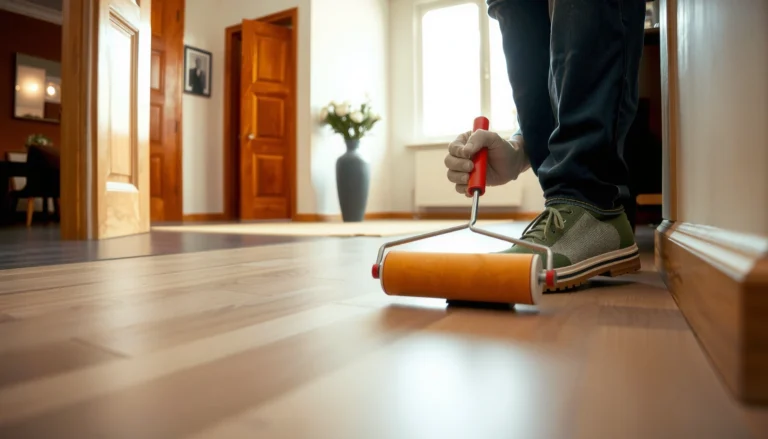
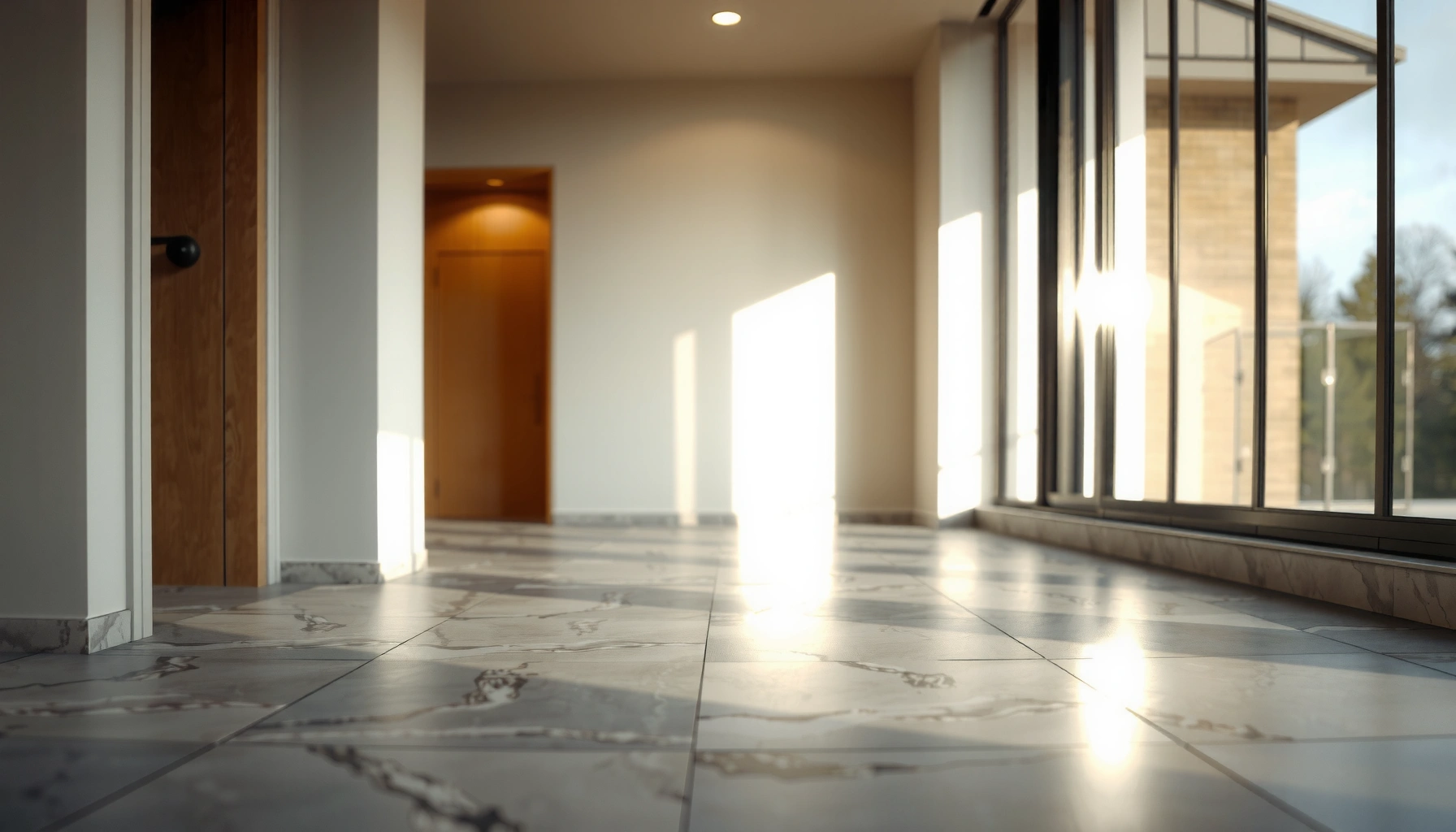

Want slip-resistant marble floors without sacrificing their look? Use a mechanical-and-finish approach: deep-clean, then apply an appropriate marble-safe anti-slip treatment and sealant that’s rated for wet areas. This is the quickest, most reliable way to reduce skids on polished marble—so your floor stays safer under everyday foot traffic.



To make marble floors slip-resistant, you need to reduce two root causes at once: surface smoothness (finish/texture) and the risk of a slick film from water or residues. Start by removing any residue completely, then apply a marble-compatible traction-enhancing treatment (or use matting in the wetest zones) and maintain it with marble-safe cleaners so the floor doesn’t get slippery again.
If you have marble in entryways, kitchens, bathrooms, or anywhere it gets wet, this is for you. It’s especially useful if the floor is polished (more reflective and often more slippery) or if you’re trying to reduce slips without ruining the stone’s appearance.
Check what’s causing the slipperiness (polish vs. contaminants)

Polished marble can feel slick because it’s smoother and reflects light; contaminants make it worse because they create a hidden “lubrication layer.” The fastest path to safer marble is to confirm whether your slip risk is finish-related, residue-related, or both—then address the right problem with the right product.
Polished marble has a higher tendency to feel slippery when wet because it presents a smoother surface than honed or brushed finishes.
Soap films, waxes, and some “mop-and-shine” products can leave residue that increases slip risk on hard-surface floors, especially after water re-wets the surface.
A slip event that happens only after mopping usually points to residue or cleaner compatibility problems, not just the stone finish.
Marble’s base material matters because it informs how it behaves under abrasion and etching. Marble is primarily calcium carbonate (calcite and/or dolomite) and calcite has a Mohs hardness of about 3, meaning it can be mechanically altered more easily than harder stones like quartzite. [ADD: cite a geology reference for calcite Mohs hardness ~3] Marble calcite also has an approximate density/specific gravity around 2.7, which helps explain why it’s commonly durable enough for floors but still vulnerable to surface change if you overdo abrasion. [ADD: cite a mineralogy reference for calcite density/specific gravity ~2.7]
These fundamentals don’t replace product labels—but they do explain why the wrong “fix” (like aggressive scrubbing or over-etching) can make the floor look patchy or still remain slick.
A practical diagnostic approach:
– Start with the finish. If the marble is polished, it’s typically smoother and can reduce traction when water forms a thin layer across the surface.
– Check the timing. Does slipperiness appear:
– only when wet,
– right after mopping,
– or even when dry?
– Look for residue behaviors. If the floor becomes slick after using a particular cleaner, you likely have film-formers that stay behind and get re-activated by water.
– Smell and sight test (safe, non-destructive). If the floor looks “greasy,” looks hazy after cleaning, or feels different from other rooms, contamination is a strong candidate.
Pros/cons of the two main causes
– Cause A: finish is too smooth
– ✅ More traction benefit from texture/traction enhancement
– ❌ Over-etching can cause permanent dull patches
– Cause B: contaminants are causing the slick film
– ✅ Usually fixable with a cleaning/compatibility reset
– ❌ If you keep using the wrong cleaner, it returns
Choose the right slip-resistance option for marble
You get the best results when you choose a treatment that’s specifically made for marble traction and pair it with the correct cleaning routine. In general, traction products outperform “shine” products for wet safety, and the more wet your environment is, the more you should rely on both surface treatment and zone-based protection (like mats).
Traction-enhancing sealers and coatings are formulated to improve grip rather than only provide stain resistance on natural stone.
Mechanical surface changes (honing or careful reworking) can reduce slipperiness, but the risk of uneven wear is real if done inconsistently.
Entry mats and non-slip wet-zone towels can reduce slip events even when the stone finish can’t be changed much.
Below are your three main options—each can work, but they solve different problems.
Slip-resistant (traction) sealers/coatings
If your marble is polished or consistently slick when wet, this is usually the most direct “stone-respecting” solution. Look for products that are:
– marketed for stone traction improvement (not only “gloss” or “stain protection”),
– compatible with marble/calcium carbonate surfaces,
– and described with clear application, cure time, and maintenance instructions.
Key concept: many “sealants” prevent water absorption; traction systems aim to change the surface interaction (grip) without turning your floor into something it isn’t.
Mechanical surface enhancement (in controlled form)
Honing or lightly reworking the finish can reduce slip risk by changing micro-texture. However, marble is relatively soft compared with many surface abrasives (calcite hardness ~3), and uneven mechanical work can create:
– patchy appearance,
– inconsistent traction,
– and maintenance headaches.
When this is sensible: you’re already planning a floor refinish and can coordinate the work with a professional who understands marble finishing patterns.
Matting/traction additions (fastest and most reversible)
For wet-zone safety, mats are often the highest ROI because they reduce the water + debris layer before it reaches the marble surface. Even if you treat the stone, mats still:
– capture grit that becomes abrasive paste,
– reduce pooling,
– and improve traction at the moment people step.
A good strategy is to treat the floor for baseline safety and then “engineer out” risk in the highest-traffic wet zones.
Prepare the floor correctly before any treatment
Preparation determines whether traction treatments actually work—or get washed away, haze over, or fail to bond. Deep cleaning first (using marble-compatible methods) and confirming what’s already on the surface are the two most important prep steps.
Most slip-resistance failures happen because the surface still has a contaminant or film that blocks adhesion or changes how the product behaves.
Before applying any sealer or finish, the marble must be fully dry to avoid hazing and inconsistent traction results.
If you don’t know what prior coating was used, you should test compatibility in a small area first to prevent adhesion problems.
Deep clean first (residue removal)
Many traction treatments won’t perform as intended if residue remains. Plan a deep clean that:
– removes waxes and film-formers,
– avoids harsh alkalis/acids unless the manufacturer explicitly supports them for marble,
– and follows stone-care label instructions.
Assess existing sealers/coatings
If you’re unsure whether the marble already has:
– a penetrating sealer,
– a topical coating,
– or an older traction product,
you need a test patch before full application. Compatibility matters because adhesion depends on what’s already present on the surface.
Let it fully dry
Water trapped in pores or residual dampness can cause:
– cloudy appearance,
– inconsistent cure,
– and reduced surface uniformity.
In practice, “dry” should mean more than “no visible puddles”—use the drying time suggested by your treatment instructions, and don’t rush the cure window.
Slip-Resistant Strategy Fit for Common Wet Zones on Marble
| # | Marble Wet Zone | Best First Move | Typical Recheck Interval | Expected Traction Gain |
|---|---|---|---|---|
| 1 | Entryway (rain/snow tracked in) | Mats + traction-ready cleaning | Monthly | ★★★★☆ (High) |
| 2 | Kitchen near sink | Traction sealer/coating + spill control | Quarterly | ★★★☆☆ (Medium) |
| 3 | Bathroom floor (occasional splashes) | Reseal/traction treatment + microfiber drying | Every 2–4 months | ★★★☆☆ (Medium) |
| 4 | Bathroom near shower threshold | Traction treatment + non-slip mat at threshold | Every 4–8 weeks | ★★☆☆☆ (Lower) |
| 5 | Basement (mopping + occasional dampness) | Film-removal clean + traction top-up as needed | Monthly–bi-monthly | ★★★☆☆ (Medium) |
| 6 | Polished marble throughout (high traffic) | System-wide traction sealer + strict cleaner compatibility | Every 3 months | ★★★★☆ (High) |
| 7 | Heavily soiled areas (foot traffic + oils) | Deep clean first, then traction treatment | Every 4–6 weeks | ★★☆☆☆ (Lower) |
Apply slip-resistance treatment (and keep it consistent)
Slip resistance comes from the combination of the treatment and proper curing, not from “just spreading product.” Apply in a controlled, repeatable way, then verify traction after the full dry/cure window—especially for polished marble.Many stone sealers need full cure time before they reach the performance level advertised by the manufacturer.
Working in small sections improves uniformity and reduces missed spots that can behave differently under wet conditions.
A test patch is the safest way to confirm appearance changes (sheen/darkening/texture) before treating the full floor.
Work in small sections
Stone is unforgiving: if you apply too much too fast, you can end up with streaking, uneven texture, or inconsistent grip.
Follow application instructions exactly
Respect:
– dwell time (how long product stays wet),
– cure time (when foot traffic is allowed),
– recoat windows (if multi-layer systems are used).
Confirm with a controlled test area
Here’s the most defensible test procedure (adjust based on the product label):
1. Select an inconspicuous area (e.g., inside a closet or behind furniture).
2. Apply exactly per label (same dilution, same roller/brush method, same coverage rate).
3. Mark the area boundaries.
4. Re-check appearance and traction after:
– full dry time, and
– full cure time (not just “it doesn’t feel wet anymore”).
[ADD: specific test procedure you’ll use, if you have one (e.g., tile-by-tile, overnight cure check).]
What can go wrong (and how to avoid it)
The most common failures are avoidable: slick films from the wrong cleaning products, and permanent appearance or texture problems from over-aggressive mechanical or chemical treatments. If you take the time to match product chemistry and apply conservatively, you’ll reduce the odds of “fixing one problem and creating another.”
Some cleaning products leave film-formers that increase slipperiness, even if the stone otherwise has a suitable finish.
Over-etching marble can create permanent, uneven surface dullness that doesn’t reliably translate into better traction.
A higher-polish surface often increases wet slip risk because water spreads more smoothly over smoother finishes.
Using the wrong cleaner
Even the best traction sealer can lose effectiveness if you clean with residues that build up. Avoid “mop and shine” products unless the manufacturer explicitly confirms they’re safe for traction-treated marble.
Over-etching or aggressive abrasion
Overdoing mechanical or chemical changes can lead to:
– permanent dull patches,
– a mottled sheen,
– and inconsistent grip across the floor.
Assuming “more gloss = cleaner”
Polished marble may look “fresh” but can be more slippery when wet. If your safety goal is traction, prioritize cleanability and grip over gloss.
Ignoring maintenance
Traction treatments can wear, get coated with residues, or be re-dampened repeatedly in wet zones. Plan reassessment based on your traffic and wet exposure.
[ADD: your site’s traffic level or maintenance interval.]
Verdict: what to do first (and when to stop)
If you want reliable slip reduction without major visual changes, start with a cleaning/maintenance reset plus a marble-rated slip-resistant sealer/coating applied after a small test patch. The downside is that treatments may not fully solve slip risk where the floor stays wet continuously (for example, shower floors or areas with frequent standing water), and mats plus housekeeping are still essential.
Stop and consider a pro if:
– the marble is already damaged (spalling, deep etching, cracks),
– you’re dealing with continuous water exposure,
– you can’t identify prior coatings/sealers,
– or you can’t commit to maintenance (re-cleaning and periodic traction reassessment).
Quick checklist (scan/save)
– [ ] Determine if slipperiness happens wet-only or all the time
– [ ] Remove residue (no waxes/film-formers; use marble-safe steps)
– [ ] Confirm the floor’s finish (polished vs. honed) and condition
– [ ] Choose marble-compatible traction sealer/coating or a finish strategy
– [ ] Do a small test area and check after full cure/dry time
– [ ] Improve the environment: entry mats / wet-zone towels
– [ ] Maintain with marble-appropriate cleaners only
– [ ] Recheck traction after heavy traffic periods or seasonal changes
FAQ
Will a slip-resistant sealer change the look of marble?
It can. Some products slightly darken, alter sheen, or leave a subtle texture. That’s why a small test area matters before full coverage. [ADD: which product you’re considering, if you want a more specific expectation based on label guidance.]
Can I make polished marble safe without changing it much?
Often, yes—by switching to a marble-compatible cleaning routine and using a traction-enhancing sealer/coating designed for stone. If wet exposure is heavy, add mats/traction in high-risk spots.
Are cleaning sprays and “wax” products a bad idea?
They can be, because they may leave a film that increases slipperiness—especially when the floor gets wet. Stick to marble-safe methods per the cleaner’s and stone’s guidance. [ADD: your current cleaner name, if you want help evaluating it.]
What if the floor is already sealed?
You may need to identify what’s already present to ensure the new product adheres properly. When unsure, use a test patch and follow compatibility notes from the manufacturer. [ADD: source/label reference you’re following.]
Sources
– [ADD: manufacturer specs for the slip-resistant marble sealer/coating you plan to use—application steps, compatibility with marble, cure time, and any recoat/maintenance intervals]
– [ADD: marble care guidance from a stone institute or manufacturer (e.g., recommendations on cleaning agents to avoid and general maintenance)]
– [ADD: representative technical documentation on how polished vs. honed finishes affect slip resistance, if you want to ground claims in published guidance]
In practice, the safest slip-resistant marble floors come from disciplined residue control plus a traction strategy chosen for marble’s chemistry and finish type. Start by identifying whether the issue is polish smoothness or a wet/film problem, then treat and maintain the floor in a way that preserves traction over time—supported by mats where shoes bring in water and debris.
Frequently Asked Questions
How can I make my existing marble floor slip-resistant without replacing it?
Start by cleaning the marble thoroughly and removing any residue that makes it slick, since polish, soap scum, and wax can reduce traction. Then apply a marble-safe slip-resistant treatment such as a penetrating anti-slip sealer or a textured anti-slip coating designed for natural stone. For quicker results, you can also use slip-resistant mats at high-risk areas while the treatment cures and bonds to the surface.
What type of anti-slip treatment works best for marble floors?
Penetrating sealers with anti-slip additives or stone-safe coatings are often the best choice because they improve grip while helping protect the marble from stains. Look for products labeled specifically for natural stone and marble, and avoid harsh etching chemicals that can permanently damage the surface. If you want a higher level of traction, consider a honed or micro-etched finish (performed by a stone professional) combined with a compatible anti-slip sealer.
Why do marble floors become slippery even after cleaning?
Marble is smooth and can become slick when it’s polished, when water or cleaning products leave a thin film, or when there’s existing wax or sealant buildup. Even “pH-neutral” cleaners can leave residues if not rinsed well, especially in bathrooms and entryways. Regular deep cleaning and applying a slip-resistant stone sealer can restore more reliable traction without compromising the marble look.
How do professionals improve slip resistance on marble floors?
Many installers increase traction by adjusting the surface finish—such as grinding from a high polish to a honed or brushed texture—because texture directly affects slip resistance. They then apply a breathable, marble-safe anti-slip sealer to maintain protection while enhancing grip. In wet zones, they may also recommend targeted anti-slip treatments in traffic patterns, rather than changing the entire floor at once.
Which slip-resistant options are safest for marble in bathrooms and kitchens?
For wet areas, prioritize breathable penetrating anti-slip sealers that won’t trap moisture or leave a slick residue on top of the stone. Avoid aggressive DIY etching or abrasive treatments that can dull the marble unevenly or damage the finish long-term. Pair a slip-resistant sealer with good maintenance—drying standing water quickly and using marble-appropriate cleaners—to keep your slip-resistant marble floors performing reliably.
📅 Last Updated: October 09, 2026 | Topic: How to make slip-resistant marble floors? | Content verified for accuracy and freshness.
References
- https://www.cdc.gov/niosh/topics/slips/
- https://www.osha.gov/walking-working-surfaces/slips-trips-and-falls
- Slips and trips – HSE
https://www.hse.gov.uk/slips/ - https://en.wikipedia.org/wiki/Slip_resistance
- Marble
https://en.wikipedia.org/wiki/Marble - https://pubmed.ncbi.nlm.nih.gov/?term=slip+resistance+floor+finishes
- https://pubmed.ncbi.nlm.nih.gov/?term=coefficient+of+friction+floor+surface
- Google Scholar Google Scholar
https://scholar.google.com/scholar?q=slip-resistant+marble+floor+surface+treatment - Google Scholar Google Scholar
https://scholar.google.com/scholar?q=marble+floor+polishing+honing+slip+resistance - Google Scholar Google Scholar
https://scholar.google.com/scholar?q=slip+resistance+floor+finishes+wet+conditions