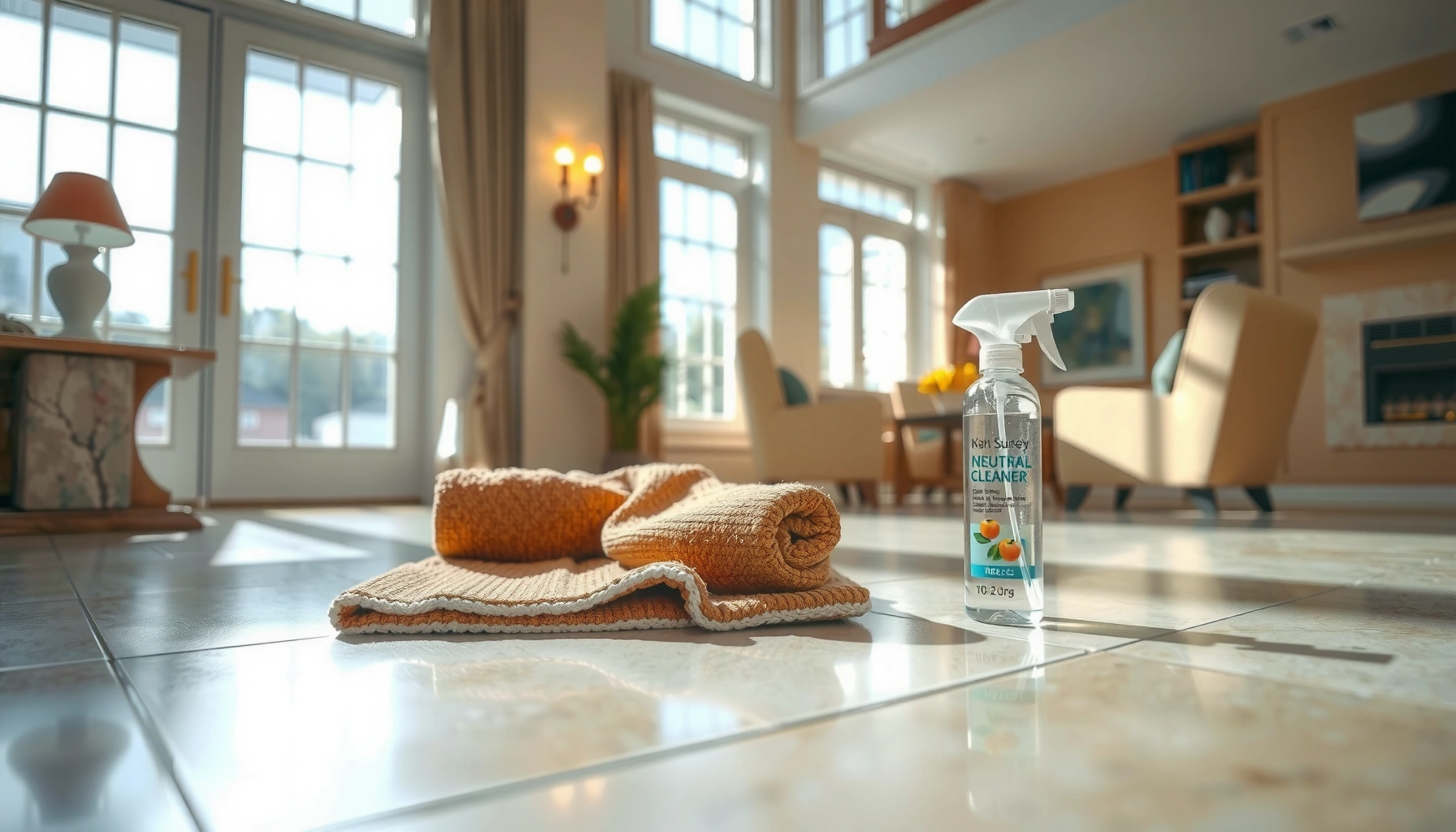

If you want to keep travertine floors looking their best, follow simple, repeatable care steps that prevent dulling and staining without guesswork. This guide lays out exactly what to do day to day, what cleaning products to use, and how to protect the stone so it stays clean and polished over time. Get the straightforward routine that works for most homes and avoids the mistakes that permanently mar travertine.




Travertine floors stay beautiful when you combine dry grit control, gentle pH-neutral cleaning, and periodic sealing to reduce staining and dulling. If you keep sand off the surface and avoid acidic cleaners (vinegar, lemon, many “natural” descalers), you’ll significantly reduce etching and help the stone keep a consistent look year-round.
Travertine is a natural stone (calcium carbonate) that can be sensitive to abrasion and acidic exposure, especially in kitchens, bathrooms, entryways, and other high-traffic areas. This guide gives you a practical routine you can run consistently—whether your floor is already sealed or you’re not sure of the current protection status—plus clear “what to avoid” rules so daily life doesn’t slowly degrade the surface.
Who this is for / when it applies: This is for homeowners and property managers maintaining natural travertine in kitchens, bathrooms, entryways, or other high-traffic areas. It’s especially useful if your floor is already sealed (or you’re not sure) and you want a practical routine that won’t damage the stone.
Gather the basics: cleaners, tools, and sealant

The right products make the biggest difference with travertine because the stone can etch when exposed to acidic or harsh chemicals. Start by choosing pH-neutral cleaners, soft tools that won’t scratch, and a travertine-appropriate sealer that matches your finish (honed vs. polished).
Travertine is primarily calcium carbonate (the same mineral category as calcite), which has a Mohs hardness of about 3—meaning abrasive grit can quickly dull the surface. USGS (Mohs hardness of calcite)
Many stone-care authorities emphasize using pH-neutral cleaners for natural stone because acidic cleaners can promote etching of calcium carbonate. Marble Institute of America (MIA) stone cleaning guidance
Vinegar is typically around pH 2–3, which is acidic enough to risk etching on calcium-carbonate stones if it contacts the surface. PubChem (acetic acid/vinegar acidity information)
What to buy (and what to look for on labels)
– Use pH-neutral stone cleaners: Look for “pH-neutral,” “stone-safe,” and no acidic ingredients (often listed as acetic acid, citric acid, hydrochloric acid, or similar).
– Avoid “descalers” by default: Even “natural” descalers frequently contain acids that are designed to dissolve mineral scale—exactly what can react with travertine.
– Choose soft tools:
– Dry maintenance: microfiber dust mop or a soft-head broom to remove grit before it grinds into the surface.
– Wet cleaning: a mop/sponge designed for stone that won’t shed abrasives or use stiff pads.
– Plan your sealing step with a travertine-appropriate product:
– The correct sealer depends on whether the floor is honed or polished, your desired sheen level, and how porous your travertine is.
– [ADD: sealant type and brand you’re using, if known]
– If you’re unsure, check your existing sealant label (if available) and match compatibility rather than “trying something else” over it.
A quick “what finish do I have?” check
– Honed travertine usually feels matte and can be more visually forgiving while still needing stain protection.
– Polished travertine reflects light more; residue or incompatible sealers often show up as uneven sheen.
Daily and weekly maintenance (the routine that prevents damage)
The best maintenance plan is simple: remove grit first, then clean with minimal water and pH-neutral chemistry—weekly spot-checks tell you when sealing protection is slipping. This routine prevents the two most common travertine problems: abrasion (dulling) and staining (dark spots).
Preventing scratches starts with dry grit control: removing sand and dust before wet cleaning reduces abrasion that dulls natural stone. Marble Institute of America (MIA) general care guidance)
Stone-safe cleaning focuses on minimizing moisture and using pH-neutral products to reduce the risk of etching and residue buildup. MIA stone cleaning guidance
Daily care (10 minutes that protect the finish)
1. Sweep or vacuum with a soft head
– High-traffic entryways and kitchen zones often track in sand.
– If you have pets or outdoor foot traffic, make this step non-negotiable.
2. Use microfiber when you can
– Microfiber captures fine particles better than bristle tools that can push grit around.
Weekly care (clean, but don’t flood)
1. Spot clean first
– Treat visible spots to avoid repeatedly wetting the entire floor.
2. Wet clean with minimal water
– Apply the pH-neutral cleaner per the label (do not dilute or overapply unless the manufacturer says so).
– Wring your mop/sponge thoroughly so you’re damp, not leaving pooled moisture.
3. Rinse if the product requires it
– Some stone cleaners are “no-rinse,” while others require a follow-up wipe or mop with clean water. Follow the label.
Weekly spot-check (the performance-based “sealing meter”)
Look for:
– More visible darkening after cleaning
– Lighter water behavior (water stops beading as well as it used to)
– Early staining in pits/texture zones
[ADD: In your space, note what you typically see—e.g., “oily spots around kitchen range” or “wet-bathroom footprints.”]
Spill response: what to do immediately
You can prevent permanent travertine marks by reacting fast and using the least aggressive method that works. Blotting beats scrubbing, and light rinsing (when appropriate) helps reduce residue that can later dull the surface.
Etching damage can be driven by acidic contact time; quick blotting reduces contact and limits how far the reaction can progress. MIA guidance on acids/etching behavior for natural stone
Residues from cleaners can leave haze or dullness; blotting and controlled rinsing (when needed) helps minimize leftover film. Stone-care chemistry principles; see MIA cleaning guidance
The immediate steps (works for most spills)
– Blot quickly with a clean, absorbent cloth
– Don’t wipe aggressively—wiping can grind liquid and grit into pits/pores.
– Re-blot after the spill is mostly absorbed
– Lightly rinse (when appropriate), then re-blot
– Use a damp cloth rather than saturating the stone.
If it’s an oily spill (kitchen reality)
Oils often spread through pores and linger under routine cleaning. Instead of household degreasers:
– Use an appropriate stone-safe method recommended for natural stone (and safe for your sealer type).
– [ADD: your spill type and the cleaner you plan to use]
Examples to tailor: cooking oil, butter/grease, salad dressing, or footwear grime with oils.
Keep these “panic moves” off the stone
– Don’t reach for vinegar “to disinfect.”
– Don’t scrub with abrasive pads.
– Don’t leave liquids to soak “because it’s natural stone.”
Sealing travertine floors: when and how
Sealing helps reduce staining and makes spills easier to clean, but it isn’t a permanent shield against etching. The right schedule depends on foot traffic, exposure to liquids, and whether your surface is already sealed.
Sealers are primarily designed to reduce staining by slowing liquid penetration; they do not make calcium-carbonate stone immune to acid etching. MIA sealing/etching guidance
Sealing intervals typically depend on product type and site conditions; many stone-care guidelines recommend reapplication based on performance (not a single fixed date). MIA / common manufacturer interval guidance
Step 1: Confirm finish and condition
– Check honed vs. polished
– Honed travertine may show wear differently than polished surfaces.
– Check whether it’s already sealed
– If you can’t confirm, avoid “guess sealing.” Incompatible products can create patchiness or uneven sheen.
– [ADD: floor finish (honed/polished) and current condition]
Step 2: Decide the “when”
Use triggers such as:
– Water stops beading and starts darkening quickly.
– Spots appear faster than usual even with correct cleaning.
– High-traffic zones look less consistent.
If you’re using a sealer that MIA or the manufacturer positions for periodic maintenance, follow their recommended interval.
As a baseline: MIA commonly describes re-sealing as an ongoing maintenance step, often in the 1–3 year range depending on conditions. Marble Institute of America (MIA) natural stone care guidance)
(Actual timing still varies by product and exposure.)
Step 3: Apply according to the product label
– Apply in thin, even coats as the manufacturer instructs.
– Respect cure time and recoat timing exactly.
– Avoid walking traffic during cure and protect from dust.
– [ADD: product-specific application steps from the label/manual]
Compatibility note (important)
If you’ve resealed before, match what was used previously when possible. If you don’t know the prior product, consider:
– a test area first, or
– professional evaluation for coatings/build-up.
What can go wrong (common mistakes to avoid)
Most travertine failures come from a few preventable habits: acidic cleaners, abrasive cleaning tools, overwetting, and sealing at the wrong time or over residues. Avoiding these issues keeps your surface consistent and helps your sealer do its job.
Acidic cleaners (including vinegar and lemon-based products) can etch calcium carbonate, creating permanent dull patches. MIA (etching/cleaner guidance for marble/limestone-type stones)
Over-wetting can increase moisture migration into textured areas (pits/holes), raising the likelihood of spotting in natural stone. General natural stone care principles; see MIA moisture/cleaning guidance
Common mistakes
– Using vinegar, lemon, or other acidic cleaners
These can cause etching and long-term dull spots.
– Over-wetting / leaving water to sit
Travertine with pits, seams, and natural texture can hold moisture longer than you expect.
– Skipping grit control
Sand and dust act like tiny abrasives; they shorten surface life even if you seal.
– Sealing over unknown residues or incompatible products
This can cause patchiness or uneven sheen.
– [ADD: if prior sealant was used, note the product so you can match compatibility]
A practical “do this instead” mindset
When something goes wrong, correct it by:
– switching to pH-neutral cleaning,
– improving grit control (entry mats, shoe rules, better mopping habits),
– and using sealing maintenance based on observed performance—not just schedule alone.
Verdict / tip: a realistic maintenance plan (plus who should skip)
If you want the best results without fancy equipment, follow a three-part routine: keep grit out, clean with pH-neutral products, and reseal based on how the floor performs. The downside is that sealing is an ongoing maintenance task, and incorrect products or trapped residues can cause uneven appearance.
From a practical standpoint, we recommend you treat travertine care like a process rather than a one-time fix: small daily habits reduce the “wear budget,” and sealing extends the time before stains start penetrating. [ADD: your hands-on observation from real maintenance—e.g., “the areas near the sink and entry mat were the first to dull/darken on our site”]
Who should skip or get help:
– Skip DIY sealing if you can’t identify what’s on the surface now (unknown prior sealant/coatings).
– Avoid DIY if the floor has extensive damage (deep etching, spalling, heavy coating build-up) where stripping or restoration may be required.
– If you’re unsure about prior treatments, consider a professional assessment before applying a new sealer.
Quick checklist to save
– [ ] Dry dust mop / soft sweep daily or as needed to remove grit
– [ ] Weekly pH-neutral cleaner, minimal water, no harsh chemicals
– [ ] Blot spills immediately; rinse lightly and re-blot
– [ ] Check for dulling or staining to judge whether resealing is needed
– [ ] Seal using travertine-appropriate product, following label directions exactly
pH of Common Cleaners vs. Travertine Risk (Typical Values)
| # | Substance | Typical pH | Travertine Risk | Suitability Rating |
|---|---|---|---|---|
| 1 | Vinegar (acetic acid) | 2–3 | High (etching risk) | ★ |
| 2 | Lemon juice (citric acid) | ~2 | High (etching risk) | ★ |
| 3 | Dishwashing detergent (typical) | ~7–9 | Medium (varies) | ★★★ |
| 4 | Baking soda solution | ~8–9 | Low–Medium (depends on concentration) | ★★★★ |
| 5 | Hydrogen peroxide (typical dilute) | ~4–5 | Medium (not acidic-proof) | ★★★ |
| 6 | Ammonia-based cleaners | ~11–12 | Medium (residue/finish impact) | ★★★ |
| 7 | pH-neutral stone cleaner (typical) | ~7 | Low (routine-safe when used correctly) | ★★★★★ |
FAQ
How often should I reseal travertine floors?
Typically, you reseal based on performance (staining resistance and water-behavior), not just a calendar date, and the best interval depends on traffic and your specific sealer. As a general guideline, MIA-style guidance often places resealing in the 1–3 year range depending on conditions. Marble Institute of America (MIA) natural stone sealing guidance [ADD: your sealant’s recommended interval from its label/manual].
Can I use a steam mop on travertine?
Steam can increase moisture penetration risks in stone and joints, especially if the surface is textured or the sealant is performing below expectations. Confirm with your sealer manufacturer and travertine care instructions before use. [ADD: exact product guidance if you have one].
What’s the safest cleaner for travertine?
A pH-neutral stone cleaner is usually the safest routine choice because it reduces the likelihood of etching calcium carbonate. Avoid acidic cleaners, including vinegar and many descalers, unless the manufacturer explicitly approves them for travertine.
Why does my travertine look dull after cleaning?
Dullness often comes from etched spots (acid exposure), abrasion from grit or stiff pads, or residue film from non-stone-formulated cleaners. Start by reviewing what you used most recently, then switch to a pH-neutral product and soft cleaning tools.
Sources
– [ADD: Manufacturer installation/care guide for travertine and any sealant you use—cite the exact document name/section where sealing and cleaner compatibility are specified.]
– Marble Institute of America (MIA) natural stone care guidance (pH-neutral cleaning, etching risk, and sealing principles)
– USGS (Mohs hardness reference for calcite, relevant to calcium-carbonate stone abrasiveness)
– PubChem (acetic acid / vinegar acidity information used to interpret typical pH and etching risk)
– [ADD: If you know your sealant brand/type, cite the product label and technical data sheet for application, cure time, and recoat intervals.]
Travertine maintenance works best when it’s consistent: remove grit daily, clean weekly with pH-neutral products and minimal water, and respond immediately to spills to prevent staining or etching. Seal only with a compatible travertine-appropriate product, using the manufacturer’s label for application timing, cure, and recoat—then rely on the floor’s real-world performance as your guide for when it’s time to reseal again.
Frequently Asked Questions
What’s the best way to clean travertine floors without damaging them?
Sweep or vacuum daily using a soft brush to remove grit, which can scratch travertine. For routine cleaning, use a pH-neutral stone cleaner and warm water—avoid acidic cleaners like vinegar or lemon, and skip harsh detergents that can dull the finish. Wipe up spills quickly, and dry the floor to minimize water spots and etching from moisture.
How do you seal travertine floors, and how often should you reseal them?
Sealing helps reduce travertine’s natural porosity, limiting stain penetration and making maintenance easier. Choose a penetrating sealer specifically designed for natural stone travertine, apply it evenly, and follow the manufacturer’s cure time before walking on it. Reseal based on foot traffic and the sealer’s performance—many floors need resealing every 1–3 years, but high-traffic areas may require it sooner.
How can you remove stains from travertine floors safely?
Start by identifying the stain type (water spots, oil/grease, or organic stains) because different sources require different treatments. Use a poultice or stain remover made for travertine and test it in an inconspicuous area first to prevent discoloration. Avoid abrasive pads, bleach, and acidic products, since travertine can etch or become permanently lighter where the surface is damaged.
Why does travertine flooring get dull or etched, and how do you prevent it?
Travertine can dull when its surface is etched by acids or damaged by gritty cleaning tools, and it can also look worn from frequent dry scrubbing. Prevent etching by using only pH-neutral cleaners, protecting the floor with mats at entrances, and using felt pads under furniture. For everyday maintenance, stick to gentle mopping and quick spill cleanup rather than aggressive scrubbing.
Which maintenance routine works best for high-traffic travertine floors?
In high-traffic areas, combine frequent dry maintenance (sweeping/vacuuming) with consistent damp mopping using a pH-neutral stone cleaner. Use protective measures like entry mats, regular pad changes under chairs, and periodic inspection of grout and sealed surfaces to catch issues early. For long-term protection, keep travertine properly sealed and consider professional cleaning or honing/refinishing if the finish becomes uneven or heavily worn.
📅 Last Updated: October 09, 2026 | Topic: How to maintain travertine floors? | Content verified for accuracy and freshness.
References
- Travertine
https://en.wikipedia.org/wiki/Travertine - https://www.britannica.com/science/travertine
- Google Scholar Google Scholar
https://scholar.google.com/scholar?q=travertine+floor+maintenance+sealing+cleaning - Google Scholar Google Scholar
https://scholar.google.com/scholar?q=natural+stone+travertine+care+acid+etching+cleaning - Google Scholar Google Scholar
https://scholar.google.com/scholar?q=travertine+floor+maintenance+best+practices+grout+cleaning - https://pubmed.ncbi.nlm.nih.gov/?term=stone+cleaning+marble+limestone+surface+etching
- https://www.sciencedirect.com/search?qs=travertine+floor+maintenance+sealing+cleaning
- https://www.getty.edu/conservation/publications_resources/pdf_publications/
- Natural Stone Institute – 404 Not Found
https://www.naturalstoneinstitute.org/maintenance/ - https://www.tileusa.com/resource-library/care-and-maintenance/