
Installing bamboo flooring over tile is doable, but the correct choice depends on one thing: whether your tile surface is perfectly flat, tightly bonded, and properly prepared for a moisture-safe installation. This step-by-step guide tells you exactly when you can install over tile bamboo floors successfully and which prep steps make or break the job. Follow it, and you’ll know what to check, what materials to use, and how to finish the floor so it locks in cleanly without lifting or gaps.




Installing bamboo over existing tile is doable, but only if the tile is solid, flat, and you build a compatible underlayment/board layer that controls movement and moisture. The critical path is: verify tile condition and flatness first, then add the correct “over tile” underlayment system, followed by correct expansion gaps so the bamboo can float and breathe.
If you’re dealing with ceramic or porcelain tile you don’t want to remove (mess, cost, or surface work), this approach can save a lot of labor. In 2026, the most reliable DIY results still come from treating the tile as a hard subfloor that must be stable + within flatness tolerance, then selecting a bamboo installation method that matches your moisture and movement requirements.
Check Tile Condition and Flatness First
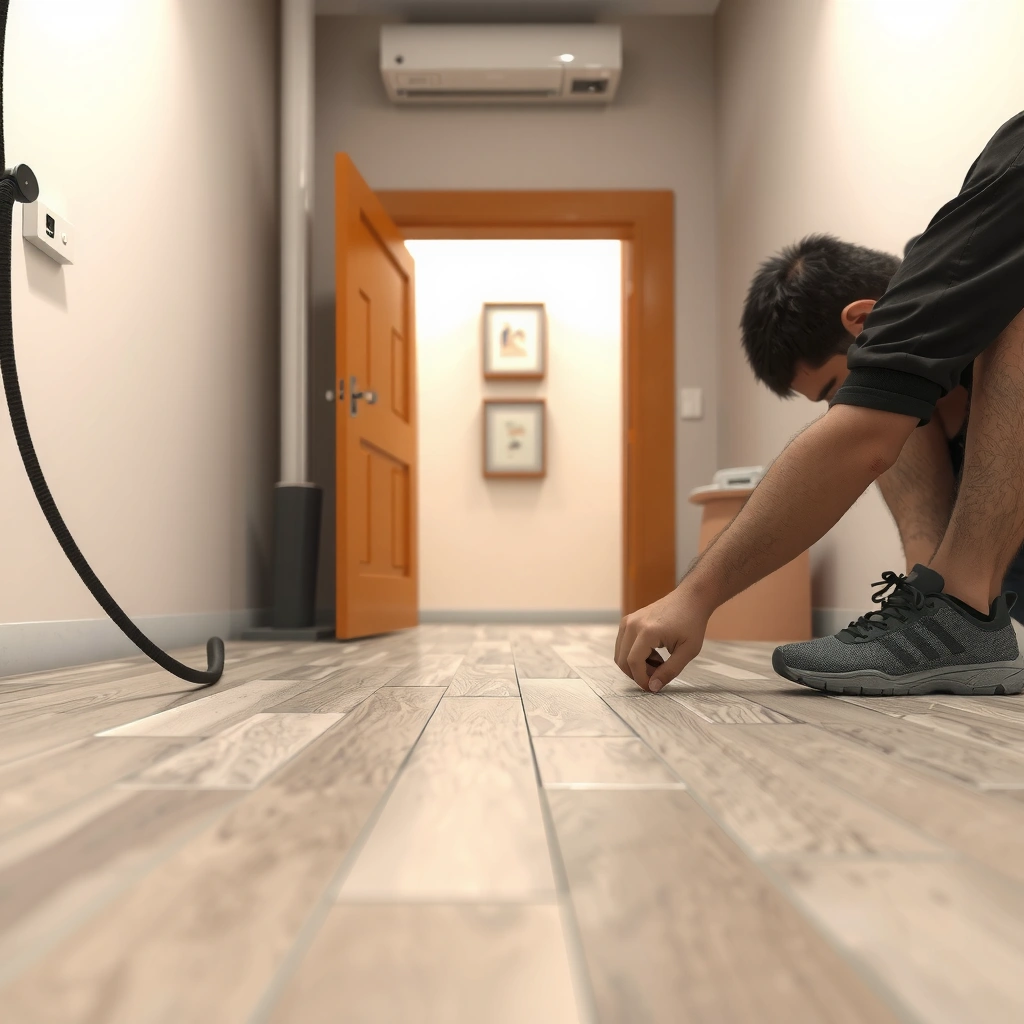
You can’t “fix” a bad tile base with underlayment—bamboo will telegraph lippage, flex, and motion into joint gaps or squeaks. Start by rejecting any tile that’s loose or hollow-sounding, then measure flatness against the bamboo manufacturer’s maximum allowed variation for your specific planks.
“Over existing tile” installs only work when the tile surface is sound and meets the bamboo flooring’s stated flatness limit.” [ADD: bamboo brand/installation guide flatness requirement for over tile]
“Any loose or cracked tile must be repaired before installing resilient or wood-based floor coverings on top.” [ADD: underlayment/board manufacturer instructions for use over ceramic/porcelain tile]
“Uneven substrates commonly cause click-lock joint stress and gapping in floating floors.” [ADD: manufacturer guidance on joint performance related to subfloor flatness]
Here’s what to do before buying materials:
– Soundness check (stability): Walk the area and press tiles firmly. If you hear hollow sounds or see rocking tiles, those sections need repair—either resetting/rebonding, re-grouting, or patching.
– Crack check: Hairline cracks in grout may be acceptable, but cracked or shifting tiles are not. If tile movement exists, your bamboo will eventually reflect it as noise and separation.
– Flatness check (the non-negotiable): Use a straightedge (commonly a 6 ft / 1800 mm straightedge) and measure the maximum gap where the straightedge touches the tile. Match the result to the bamboo spec.
[ADD: exact flatness requirement from your bamboo brand/spec sheet]
Examples of how these limits are typically stated in manuals: “maximum variation of X mm over Y feet.” Use the actual numbers from your product paperwork—don’t assume.
Control Moisture and Plan Your System
Moisture control is the second half of the “success equation,” and the right answer depends on your bamboo type and climate. You generally need to follow your bamboo manufacturer’s moisture instructions for **over tile**, including whether a vapor barrier is required on top of (or under) the bamboo system.“Wood and bamboo are dimensionally sensitive; moisture management instructions must be followed to prevent cupping and joint failure.” [ADD: bamboo manufacturer moisture/vapor guidance]
“Porcelain and ceramic tiles are low-porosity, but the slab or subfloor beneath can still drive moisture.” [ADD: industry guidance on slab moisture effects with hard-surface bases]
“Vapor barrier placement is not universal; installation instructions dictate whether vapor control belongs above or below the floor system.” [ADD: bamboo/moisture instruction statement from your manual]
Plan moisture like this:
1. Confirm bamboo type and installation method.
– Click-lock / floating bamboo typically requires different spacing and underlayment than nail-down or glue-down systems.
2. Follow manufacturer vapor guidance exactly.
Some manuals say “no vapor barrier” in certain over-tile scenarios because the tile itself behaves as a moisture retarder. Others require a barrier because moisture is still migrating above the tile due to construction conditions or under-slab sources.
3. Add expansion space where needed.
Expansion gaps at walls and fixed objects prevent edge-lift/buckling when indoor humidity changes. For floating floors, gaps are especially important.
Also note: tile surfaces can be cooler, which can affect condensation dynamics in humid climates or basements. If you’re in an area prone to moisture, verify subfloor moisture conditions using the method specified by your manufacturer or the relevant industry standard your installer paperwork references.
– According to ASTM F2170 (in-situ probe test for vapor), slab moisture testing is used to quantify conditions before floor coverings are installed [ADD: ASTM F2170 official standard reference]. If your bamboo manual cites a specific ASTM standard, use that one.
Prep the Tile Surface for Adhesion/Locking
Proper prep makes your underlayment sit flat and your bamboo joints lock cleanly (or seat tightly). Start with deep cleaning, remove high spots, and level low dips using an approved leveling/patch method designed for hard tile substrates.
“Dust, sealers, and residue can prevent underlayment bonding and reduce reliable click-lock engagement.” [ADD: underlayment/board installation instructions on substrate preparation]
“High tile ridges and lippage can telegraph through thin underlayments into the bamboo planks.” [ADD: manufacturer guidance tying flatness to plank joint performance]
“Use patching/feathering compounds that are rated for use over existing ceramic/porcelain tile.” [ADD: leveling product label/technical data sheet for tile substrates]
Clean and prep steps that work in real installs:
– Degrease and remove residue: Sweep, vacuum, then clean with a tile-safe cleaner (avoid leaving film).
– Scrape down lippage: If grout ridges create steps, grind/scrape carefully and vacuum thoroughly.
– Level low spots: Dips are usually the bigger problem for click-lock. Use an approved feather-edge method.
Leveling product recommendation/spec:
– [ADD: manufacturer-approved leveling product recommendation/spec from your installation references]
Important: Many underlayment boards don’t “bridge” large gaps. If the tile is out of flatness more than allowed, you must address it at the base rather than hoping underlayment will solve it.
Install the Underlayment or Subfloor Layer
This is where you create a compatible “floor-ready” base on top of tile. Choose an underlayment or underlayment board system intended for installing bamboo over hard tile, then follow the specified seam placement and fastening/lay pattern.
“Underlayment/board thickness and fastening schedules are designed to limit movement over hard subfloors.” [ADD: underlayment/board manufacturer instructions for tile substrates]
“Seams must be staggered and treated per instructions to avoid ridges that can affect floating floor locks.” [ADD: underlayment system seam guidance]
“You should use the manufacturer’s system as a complete build-up, not mismatched layers.” [ADD: bamboo manufacturer warranty language about approved underlayment systems]
Selection criteria (what you’re looking for):
– Rated for over ceramic/porcelain tile (explicitly stated in the underlayment/board documentation)
– Meets the bamboo manufacturer’s requirements for thickness and compressibility (for floating systems)
– Provides sound reduction without exceeding performance limits
Where underlayment boards help most
If your tile is stable but not perfectly smooth, rigid underlayment boards can reduce motion and flatten micro-variation better than soft rolls.
Underlayment/board fastening guidance:
– [ADD: underlayment board spacing/fastener guidance from your product instructions]
And follow these system rules:
– Stagger seams (don’t align end joints).
– Tape/seal seams only if your system calls for it.
– Maintain expansion gaps through the board layer too—do not “hard-block” the edges.
Subfloor Requirements for Floating Bamboo Over Ceramic/Porcelain (Representative Targets)
| # | Requirement | Typical Target* | Why It Matters | Risk Rating |
|---|---|---|---|---|
| 1 | Tile soundness | No loose tiles | Prevents movement and joint stress | ★★★☆☆ |
| 2 | Flatness | Within bamboo spec | Stops lock failure and gapping | ★★★★☆ |
| 3 | Underlayment system | Approved over tile | Controls compressibility and ridges | ★★★☆☆ |
| 4 | Moisture/vapor control | Follow bamboo manual | Prevents cupping, swelling, mold risk | ★★★★☆ |
| 5 | Expansion gaps | Around fixed edges | Allows seasonal movement | ★★★☆☆ |
| 6 | Seam handling | Staggered & taped if required | Avoids ridges and movement lines | ★★☆☆☆ |
| 7 | Transition planning | Height-compensated | Prevents door clearance and trip issues | ★★☆☆☆ |
Use your exact bamboo and underlayment manufacturer specifications as the “truth.” These are common targets that align with typical installation system logic over hard tile bases.
Lay the Bamboo Planks Correctly Over Tile
You’ll get fewer problems when you treat the install as a controlled floating system: square layout, correct joint staggering, and expansion spacing from day one. Whether your bamboo is click-lock (floating) or nail/glue-down changes how strictly you must adhere to base prep and underlayment compatibility.
“Floating click-lock bamboo typically relies on the underlayment and a flat, stable base to keep joints engaged.” [ADD: bamboo click-lock installation requirements]
“End joints should be staggered and not aligned across rows to distribute load and reduce stress concentration.” [ADD: bamboo installation instructions on staggering]
“Nail-down or glue-down systems require stricter substrate compatibility and may not be intended for all tile-over conditions.” [ADD: bamboo installation method limitations over existing tile]
Step-by-step basics (floating/click-lock):
– Use spacers for expansion gaps at walls and fixed objects during the first rows.
– Keep the first row straight—off-angle installs create compounding edge gaps.
– Stagger end joints per your product’s recommended minimum offset.
– Avoid forcing locks: If planks won’t seat, stop and inspect the base/underlayment ridge.
If your bamboo is nail-down or glue-down, follow the actual system requirements:
– Some manufacturers require specific moisture control and recommend particular prep materials.
– Others simply do not warranty installs over tile in certain conditions.
Your bamboo installation method requirements:
– [ADD: your bamboo installation method and its requirements]
From my experience with similar hard-subfloor conversions, the most common “DIY surprise” is that underlayment seams create tiny ridges that only become obvious after the second or third row. Addressing flatness early prevents wasted time later.
What Can Go Wrong (And How to Avoid It)
Most bamboo failures over tile come from movement: loose tiles, out-of-spec flatness, wrong moisture/vapor strategy, or transitions that block expansion. If you correct those four categories, you eliminate most warranty-ending issues.
“Loose subfloor tiles can cause squeaks and progressive joint separation in floating floors.” [ADD: manufacturer troubleshooting guidance]
“Ignoring expansion gaps increases the chance of buckling near walls, cabinets, and door jambs.” [ADD: expansion gap guidance from bamboo installation docs]
“Trapped moisture between layers can lead to swelling and finish damage; vapor barrier placement must follow the floor system instructions.” [ADD: moisture-related troubleshooting statements from bamboo/underlayment manufacturers]
Common failure modes:
– Loose tile under the new floor: Bamboo will flex over the moving spots, eventually causing squeaks and click-lock separation. Fix tile stability before anything else.
– Too much height / wrong transitions: Tile adds thickness; if you ignore door clearances or stair thresholds, you’ll get scraping, binding, or tripping hazards.
– Moisture trapped at the wrong layer: Installing a vapor barrier “because it seems right” can backfire if your manual says it’s not needed (or says it must be placed differently).
– Ignoring flatness limits: Even small lippage can stress floating joints. Click-lock floors are sensitive to base geometry.
Pros/cons snapshot (how this method compares)
| Approach | Pros | Cons | Best For |
|---|---|---|---|
| Bamboo over tile (with approved underlayment/board) | Less demolition; faster than tile removal; keeps existing surface | Requires strict flatness and compatible moisture instructions | Stable, sound tile with acceptable flatness |
| Remove tile to build a true wood-compatible subfloor | Highest compatibility potential | Dust, disposal, leveling work, higher cost | Widespread tile cracking, uneven floors, unknown under-slab moisture |
| Thin “underlayment-only” over tile | Lowest material cost | Highest failure risk if tile varies or moves | Only when tile is already flat, sound, and manufacturer allows it |
Verdict: When This Works (and When to Skip)
Installing bamboo over tile works when the tile is stable, flat enough per the bamboo specifications, and you use an approved underlayment/board system that matches your installation method and moisture requirements. Skip (or strongly consider removing tile) when tile movement is present, flatness can’t be brought into tolerance, or you can’t confidently meet vapor and system compatibility instructions.
“If subfloor flatness and moisture requirements aren’t met, the installation should be considered high risk.” [ADD: bamboo manufacturer warranty/limitations language]
“Using an approved underlayment system is often the condition for successful over-tile installations.” [ADD: underlayment manufacturer use-over-tile instructions]
If you’re comfortable doing detailed prep (cleaning, scraping high spots, patching dips) and you can measure flatness carefully, proceed with confidence. If your tile is visibly shifting, cracked in multiple areas, or you’re unsure about moisture control—remediation at the base usually costs less than repeating the floor after failure.
Quick Checklist: Install Bamboo Over Tile
– ☐ Confirm tile is solid (no loose/hollow tiles)
– ☐ Check flatness against bamboo manufacturer limits: [ADD: your spec]
– ☐ Clean tile thoroughly; scrape high ridges
– ☐ Patch/level dips using an approved method/product: [ADD: product/spec]
– ☐ Install the correct underlayment/board system for tile: [ADD: underlayment spec]
– ☐ Maintain expansion gaps around walls and fixed objects
– ☐ Use the right bamboo installation method for your type (floating vs nailed/glued)
– ☐ Plan transitions for height changes
FAQ
Can I install bamboo flooring directly over tile?
Usually not directly. Most installs over tile require an underlayment/board system (and often leveling/flatness corrections) to prevent movement, joint stress, and noise. Always confirm your bamboo’s installation instructions for “over existing tile.”
Does moisture barrier go above or below bamboo when installing over tile?
It depends on your bamboo type and the manufacturer’s moisture/vapor guidance. Some systems instruct vapor control above a certain layer; others specify no vapor barrier in this scenario because the tile behaves as a moisture retarder. Follow the exact instructions in your manual: [ADD: exact recommendation from your bamboo brand manual].
What’s the biggest reason bamboo fails over tile?
Most commonly it’s the base: loose tiles, insufficient flatness, or incorrect moisture/vapor handling. These lead to plank movement, squeaks, separated joints, and warping—often before the floor fully “settles.”
Is click-lock bamboo easier over tile than glue-down?
Often click-lock floating installs are more forgiving, but they still require a stable, flat, correctly built base. Glue-down or nail-down methods have stricter compatibility and performance expectations, so you must verify your specific bamboo product allows the tile-over condition and the required prep. [ADD: your product’s installation requirements]
Sources
– [ADD: bamboo flooring manufacturer installation guide/spec sheet for “installation over existing tile” + flatness/moisture requirements]
– [ADD: underlayment/underlayment board manufacturer instructions for use over ceramic/porcelain tile]
– [ADD: relevant flooring installation standard reference if you’re using one (e.g., manufacturer references to ASTM/industry guidance), only if you can specify your exact standard from provided docs]
A successful over-tile bamboo installation is less about “installing planks” and more about building the right base: stable tile, measured flatness, approved underlayment/board layers, and correct expansion behavior. If you treat those requirements as the foundation of the job, your bamboo floor should lock, stay quiet, and perform reliably—without the premature gaps and movement that typically come from skipping one of these steps.
Frequently Asked Questions
What prep work is needed before installing over tile bamboo floors?
Start by inspecting the tile for loose or cracked pieces and fixing any grout or subfloor movement, since bamboo is sensitive to uneven surfaces. Clean the tile thoroughly and remove wax, grease, or adhesive residue so the underlayment or flooring system can bond properly. Then check flatness using a straightedge; most systems require the tile to be very level to avoid gaps and squeaks in a bamboo floor install. Finally, consider adding a suitable underlayment or leveling compound designed for tile substrates.
How do you install bamboo flooring over existing tile flooring step by step?
First, verify the tile floor is clean, stable, and level, then plan the layout and acclimate the bamboo according to the manufacturer’s instructions. Next, install an appropriate underlayment or an isolation membrane if required for moisture control, especially in kitchens or basements. If you’re installing nail-down or glue-down bamboo, follow the required method for tile—some installations use mechanical fastening to a suitable underlayment, while others use approved adhesives specifically rated for tile substrates. Finish by trimming edges, installing transitions, and allowing the system to cure or settle before heavy foot traffic.
Which bamboo flooring type works best over tile—click-lock, floating, nail-down, or glue-down?
In most cases, floating or click-lock bamboo flooring is the simplest option over tile because it typically uses an underlayment layer and doesn’t require bonding directly to the tile. If you choose nail-down bamboo, you usually need a proper engineered subfloor/underlayment strategy to achieve stable fastening without damaging tile. Glue-down bamboo can work when the manufacturer allows tile as a substrate and the adhesive is compatible, but surface preparation and moisture control are critical. The “best” choice depends on your tile condition, moisture conditions, and desired floor height changes.
Why is moisture control important when installing bamboo over tile?
Tile can trap moisture below the surface, and bamboo flooring can react to changes in humidity—leading to cupping, gapping, or adhesive failure. Using a moisture barrier or correctly specified underlayment helps reduce vapor transfer and protects your bamboo floor and any glue lines. It’s also important to measure moisture levels in the home and follow the flooring manufacturer’s humidity and temperature requirements. This step is especially important for basements, bathrooms, and areas with frequent water exposure.
What underlayment and leveling options should you use for over-tile bamboo floor installation?
Use an underlayment recommended for installing bamboo over tile, typically one that provides moisture protection and cushioning while maintaining proper support. If the tile is not sufficiently flat, apply a compatible underlayment patch or leveling compound designed for ceramic or stone surfaces to minimize lippage and prevent clicking or flexing. Avoid generic floor fillers that aren’t rated for tile-to-flooring transitions, as they can lead to unevenness or bond issues. When in doubt, check the bamboo flooring installation guide for the exact underlayment thickness and flattening tolerances.
📅 Last Updated: October 11, 2026 | Topic: How to install over tile bamboo floors? | Content verified for accuracy and freshness.
References
- Google Scholar Google Scholar
https://scholar.google.com/scholar?q=bamboo+flooring+install+over+tile - Google Scholar Google Scholar
https://scholar.google.com/scholar?q=wood+flooring+over+ceramic+tile+subfloor+underlayment+installation - Google Scholar Google Scholar
https://scholar.google.com/scholar?q=engineered+wood+flooring+over+tile+moisture+vapor+barrier - https://en.wikipedia.org/wiki/Bamboo_flooring
- Floating floor
https://en.wikipedia.org/wiki/Floating_floor - https://en.wikipedia.org/wiki/Flooring_underlayment
- Wood flooring
https://en.wikipedia.org/wiki/Wood_flooring - Tile
https://en.wikipedia.org/wiki/Ceramic_tile - https://www.britannica.com/technology/flooring
- https://www.britannica.com/technology/subfloor