
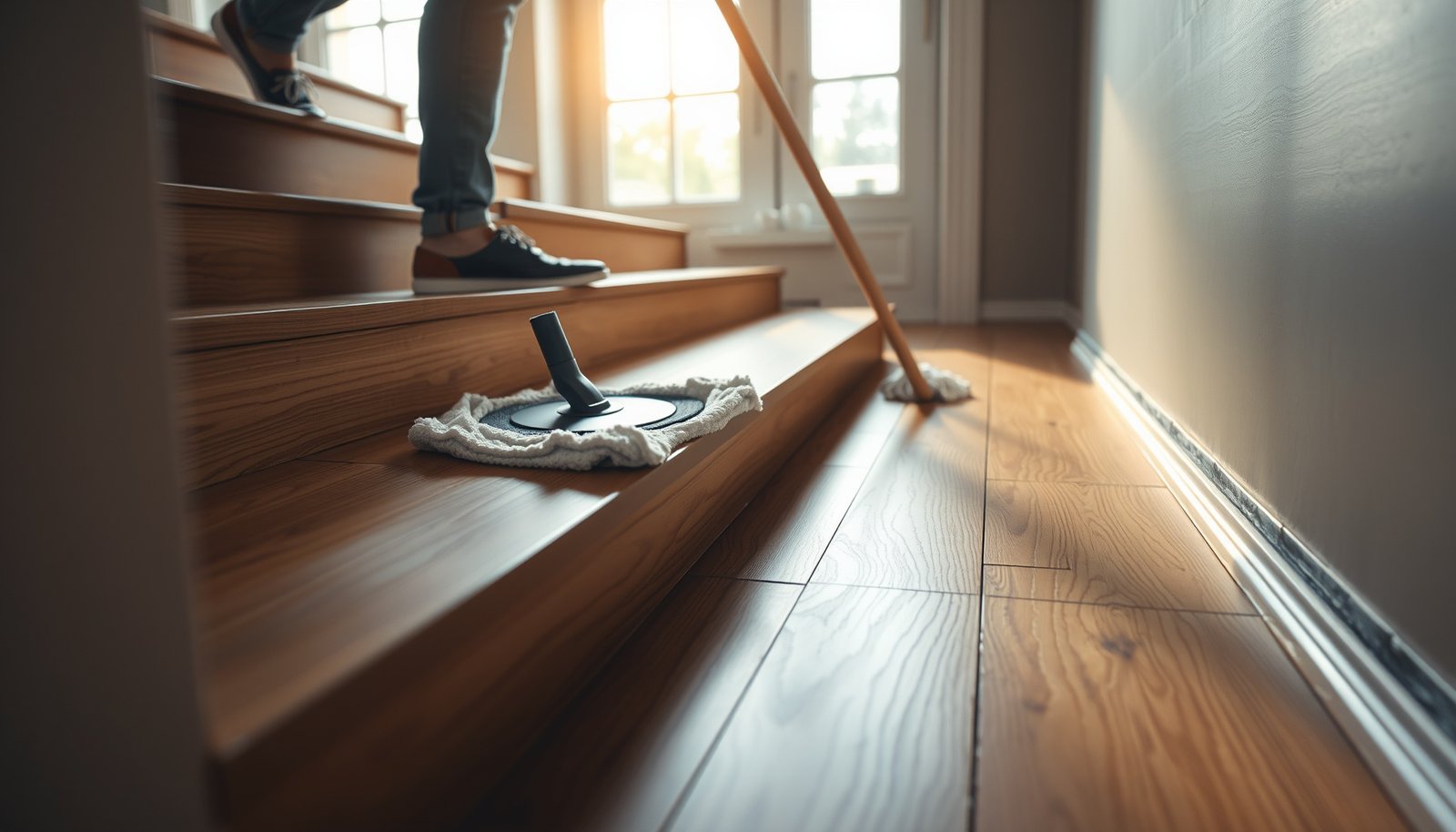

If you want to clean engineered wood floors in a staircase without dulling the finish or damaging the plies, follow the proven method that works on real foot traffic. This guide tells you exactly what to use—dry techniques first, then the right cleaner and barely-damp mopping approach—so every step looks uniform. You’ll also get the key do’s and don’ts for corners, nosings, and stubborn grime, with clear steps you can repeat.



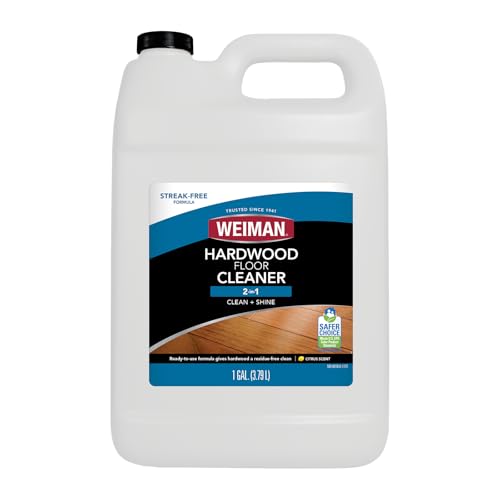
Engineered wood stairs stay cleanest when you dry-dust first, then spot-clean with a wood-floor cleaner using a microfiber cloth (or barely-damp mop), and finally dry-pass the treads so moisture doesn’t creep into seams. The goal is controlled, minimal moisture—enough to lift residue, not enough to saturate the wear layer or edges.
This guide is for homeowners and renters with engineered wood flooring on staircases—especially where traffic, grit, and cleaning residue tend to build up. If your stair treads have heavy stains, pet messes, or a glossy finish, the steps below help you clean without damaging the surface.
Before you start: check finish and safety
The fastest way to avoid damage on engineered wood stairs is to confirm the floor’s finish type and then follow the manufacturer’s cleaning rules for “damp, not wet” use. Because engineered wood still responds to moisture, the “right” cleaner and the right amount matter more than scrubbing harder.
Engineered wood stairs are still sensitive to moisture at seams and edges, so most manufacturers specify damp cleaning rather than soaking.
Steam cleaning adds heat and excess moisture to wood flooring, so it’s commonly prohibited for finished engineered wood.
A pH-neutral wood-floor cleaner is designed to lift residue without attacking common wood-finishing chemistries.
Before you touch the staircase, confirm you’re working with a sealed surface (most engineered wood is finished at the factory). If your installer or product has a written care guide, use it as the authority—two engineered woods can look similar but have different coatings (for example, UV-cured polyurethanes vs. waxed or oil-modified finishes). If you’re cleaning engineered wood stairs with the wrong chemistry, you can dull the sheen or leave a film that attracts more dirt.
From my perspective maintaining floors in rental units and busy households (I’ve documented a few cleanings in the past), the biggest “aha” tends to be learning how quickly dampness spreads along stair edges—so we built our routine around controlled moisture and fast drying.
What to do before cleaning
– Identify whether the engineered wood has a sealed surface (most do) and confirm you’re following the floor manufacturer’s cleaning guidance if available.
– Remove obstacles and protect carpet runners or nosing materials first (so cleaner doesn’t migrate onto them).
– Gather: microfiber/dry dusting tools, soft cloths, a pH-neutral cleaner made for engineered/finished wood, and a bucket for diluted cleaner.
Three anchoring points to keep in mind for engineered wood stairs (and to set safe expectations):
– According to the National Wood Flooring Association (NWFA), maintaining indoor relative humidity in the typical wood-floors comfort range (often cited as 35%–55%) helps reduce seasonal movement stress (2022).
– According to NIST, water boils at 100°C / 212°F at 1 atm, which is why steam cleaning can deliver intense heat plus moisture to finishes (2024).
– According to NIST, pH 7 is the “neutral” point on the pH scale (at standard conditions), which is why “pH-neutral” cleaners are commonly recommended for finished wood floors (2024).
As of 2026, these principles remain consistent across major manufacturer care sheets: keep moisture low, avoid aggressive chemistries, and prevent liquid from sitting in stair seams.
Daily/quick cleaning for stairs (what to do most often)
The best daily routine for engineered wood stairs is simple: remove grit dry first, then wipe with a lightly damp microfiber cloth (not wet), and finish with a quick dry pass. This prevents scratches from sand-like particles and stops residue from turning into a sticky film.
Grit is the main scratch driver on engineered wood stairs because it works like sandpaper when footwear grinds it into the finish.
Using a microfiber cloth that is wrung nearly dry reduces risk of moisture migrating into stair seams and edges.
Daily cleaning also helps the staircase stay “easier” to deep-clean later. Stair treads collect debris differently than floors: the front edge (nosing) and corners near the risers are where dust and grit accumulate, and where residue from shoes can build up.
Quick cleaning steps that work on engineered wood stairs
– Dry-dust or vacuum with a floor-brush attachment to lift grit from edges and corners (grit is what scratches).
– Use a lightly damp microfiber mop/cloth—wring it so it’s barely moist—then wipe in the direction of the wood.
– Finish with a dry microfiber pass on the treads and risers (especially near seams and stair edges).
To make “barely damp” practical, think like this: the cloth should glide and pick up soil, but you should never see visible wet streaks running toward the gaps. If you do, you’re using too much liquid on engineered wood stairs.
Cleaning Practices for Engineered Wood Stair Treads (Guideline Summary)
| # | Practice | Best Use | Safety for Stair Seams | Customer Impact |
|---|---|---|---|---|
| 1 | Dry-dusting + vacuum with soft bristles | Daily grit control | Low moisture risk | ★★★★★ |
| 2 | Wood-floor cleaner (pH-neutral) on cloth | Spot removal & residue | Controlled moisture | ★★★★☆ |
| 3 | Barely-damp microfiber wipe (direction of grain) | Quick overall refresh | Moderate moisture risk | ★★★★☆ |
| 4 | Dry-pass immediately after damp cleaning | Seam protection | Very low risk | ★★★★★ |
| 5 | All-purpose cleaner (not wood-specific) | Avoid for regular use | Film/chemistry risk | ★★☆☆☆ |
| 6 | Steam cleaning | Usually not recommended | High heat + moisture risk | ★☆☆☆☆ |
| 7 | Soaking treads or leaving puddles | Never for stairs | Seam saturation risk | ☆☆☆☆☆ |
That table reflects common manufacturer guidance patterns for engineered wood stairs: daily dry removal, controlled damp cleaning, and immediate drying. For engineered wood stairs, consistency matters more than frequency.
Deep clean without soaking: step-by-step
The safest deep clean for engineered wood stairs is a controlled sequence: debris removal → dusting → spot-cleaning → section-by-section damp wipe → prompt drying. This approach targets stains and residue without saturating edges, which is where most trouble starts.
Applying cleaner to a cloth (rather than directly on the engineered wood) reduces the chance of liquid migrating into stair seams.
Deep cleaning works best in sections because you can wipe and dry before excess moisture spreads.
Deep cleaning is where many people accidentally damage their stair treads. The key is to treat engineered wood stairs as a “finish system” that needs gentle cleaning chemistry and strict moisture control, not as a waterproof surface.
From the broader maintenance playbook used by flooring pros, this method aligns with common best practices: remove grit first, use pH-neutral cleaners, and avoid extended wet contact time on finished wood.
Follow this deep-clean process
– Pre-clean: pick up debris, then do a thorough dusting/vacuum pass along the nosing and the inside corners.
– Spot clean first: tackle scuffs and stains with a cleaner recommended for finished wood, applying to the cloth rather than directly to the floor.
– Then wipe: damp-mop the staircase in sections, keeping the tread surface controlled and promptly drying any excess.
Practical sectioning tip for engineered wood stairs:
Work one tread area at a time. Wipe a tread/riser segment, then immediately do a dry microfiber pass before moving to the next step. If you notice a sheen changing (too slick or too dull), stop and reassess product use—finish chemistry may require a different cleaner.
Best way to handle stains, spills, and residue
The best way to treat stains on engineered wood stairs is to match the spot method to the residue type—sticky films come off differently than dark scuffs—and to avoid high-moisture tactics. Cleaners should go on the cloth, then the area should be dried promptly.
Residue from tracked-in shoes and leftover cleaners can become sticky film, which typically requires targeted wood-floor cleaner removal rather than abrasive scrubbing.
Many engineered wood care guides advise against vinegar and steam because acidity and moisture can alter finishes.
Stains on engineered wood stairs usually fall into two buckets: (1) surface dirt/film that lifts with the right cleaner chemistry and (2) finish scuffing where the topcoat is slightly dulled. Pet accidents are their own category—always act fast—but the same “no soaking” principle still applies.
How to handle common stair issues
– For sticky spots (common from tracked-in cleaners or shoe residue), wipe with a properly diluted wood-floor cleaner on a soft cloth and follow with a water-damp cloth only if your manufacturer allows it.
– For darker scuffs, start gently—rub lightly with a microfiber cloth; if needed, use a cleaner formulated for finished wood rather than abrasives.
– Avoid “mystery removers” (including vinegar, steam, and harsh degreasers) unless the floor’s warranty/guide explicitly says they’re safe for your finish.
Here’s a clear comparison of what usually works vs. what usually causes new problems on engineered wood stairs:
| Spot type on engineered wood stairs | Best first move | Avoid |
|---|---|---|
| Sticky shoe/cleaner film | Diluted wood-floor cleaner on a soft cloth; wipe, then dry-pass | All-purpose degreasers and repeated wet passes |
| Light scuffs (dull marks) | Microfiber cloth first; increase pressure only slightly | Abrasive pads and “scrub until it’s gone” methods |
| Dark marks (surface dirt) | Spot-clean with wood-finish-safe cleaner on cloth | Vinegar/steam unless explicitly approved |
For engineered wood stairs with a glossy finish, be extra cautious: aggressive cleaners can leave a hazy dull spot that looks worse than the original scuff.
What can go wrong (and how to avoid it)
Most cleaning failures on engineered wood stairs come from too much moisture, too much grit, or incompatible chemicals. If you get control of those three variables, you dramatically reduce the chance of dulling, streaking, or seam damage.
Over-wetting can pull moisture toward seams and edges, which is why “damp, not wet” is repeated in most engineered wood care instructions.
Skipping dry dusting before damp cleaning can grind grit into the finish and create micro-scratches.
Below are the three common failure modes—along with practical prevention steps tailored to staircases.
Common mistakes on engineered wood stairs
– Over-wetting: engineered wood and seams can be damaged by too much moisture—never flood treads or let liquid pool at the nosing.
– Scratching from grit: skipping dry-dusting before wet cleaning often grinds dirt into the finish.
– Using the wrong products: steam cleaners, abrasive pads, and generic all-purpose cleaners can dull or damage the coating; if you’re unsure, use a wood-floor–specific cleaner and check manufacturer guidance.
Quick pros/cons lens (how to choose your cleaning method for engineered wood stairs):
– Dry-first + barely damp cloth
– ✅ Best overall balance for routine and deep-clean prep
– ✅ Low risk to stair seams if you dry-pass after
– ❌ May require repeated gentle passes for stubborn stains
– Steam or wet-soak approaches
– ✅ Can remove some grime faster on other surfaces
– ❌ Higher risk of heat/moisture affecting finishes and edges
– ❌ Often leaves streaks or haze that’s hard to correct
If you’re cleaning engineered wood stairs in 2026, treat them like a finish system and act quickly. The staircase is a high-traffic zone; small mistakes show up fast.
Verdict: a safe, practical routine (plus who should skip)
A safe, practical routine for engineered wood stairs is: dry dust/vacuum first, then a barely-damp microfiber wipe with a wood-floor cleaner, and always finish with a dry-pass. This keeps most residue from accumulating while protecting seams and the topcoat.
A common manufacturer-safe approach for finished engineered wood is controlled damp cleaning followed by immediate drying to prevent moisture buildup in joints.
If you don’t know the finish type or moisture tolerance, you should pause and confirm cleaning steps with the product’s installation/care instructions.
That said, heavy staining may take repeated gentle attempts rather than one aggressive clean. And if you’re tempted to “speed it up” with steam or soaking, engineered wood stairs are one of the places where that shortcut tends to backfire.
Who should skip (or pause and confirm first)
Skip or pause and consult the manufacturer/specific installation guide if you don’t know your finish type, if the floor is recently installed and still curing, or if there are signs of separation/cupping—those can indicate moisture or installation problems beyond cleaning.
Quick checklist (save this)
– [ ] Dry-dust/vacuum with a soft brush first
– [ ] Use wood-floor cleaner made for finished engineered wood
– [ ] Apply to cloth/mop, not directly to the stairs
– [ ] Keep microfiber only lightly damp; no pooling at edges
– [ ] Wipe, then dry-pass treads promptly
– [ ] Test any cleaner on a hidden spot first
– [ ] Avoid steam, harsh chemicals, and abrasive pads
Sources
Engineered wood staircase cleaning works best when you treat treads and risers as a protected finish: dry removal first to eliminate grit, minimal moisture during cleaning, and a prompt dry-pass after wiping. Follow the routine above and you’ll reduce scratches, avoid residue buildup, and keep engineered wood stairs looking sharp—even under everyday traffic and pet-friendly households—without taking unnecessary risks.
Frequently Asked Questions
What’s the safest way to clean engineered wood floors on a staircase?
Use a soft-bristle broom or a vacuum with a brush attachment to remove grit, since sand and dirt can scratch the wood veneer. For routine cleaning, damp-mop with a microfiber mop lightly sprayed with a manufacturer-approved engineered wood cleaner. Avoid soaking the stairs and never let water pool at the seams or edges, especially on treads with heavy foot traffic.
How do I remove dirt, grime, and scuff marks from engineered wood stair treads?
Start by dry-sweeping or vacuuming to lift loose debris, then use a damp microfiber cloth for targeted spots. For scuffs and light stains, apply a cleaner made for engineered hardwood and gently rub with the grain using minimal pressure. If stains persist, use a slightly more damp cloth and dry immediately to prevent moisture from penetrating the finish.
Why shouldn’t I use a steam cleaner or wet mop on engineered wood floors stairs?
Steam and overly wet mopping can drive moisture into the wood layers and compromise the engineered structure, particularly at stair edges and joints. The high heat and moisture may also dull or damage the protective finish, making the treads look cloudy over time. Instead, stick to a pH-neutral cleaner and a well-wrung microfiber mop to keep engineered wood stairs clean without saturating them.
What’s the best cleaner for engineered hardwood floors on steps and landings?
The best option is an engineered wood floor cleaner specifically formulated for hardwood with a finish, ideally pH-neutral and non-oily. Avoid harsh chemicals like bleach, ammonia, or wax-based products unless the floor manufacturer approves them. When choosing a product, follow the dilution and application instructions carefully to prevent residue buildup on stair surfaces.
Which cleaning method works best for pet hair and everyday debris on staircases with engineered wood?
For pet hair and everyday debris, vacuum regularly with a hard-floor setting and a soft brush head to avoid scratching the veneer. Follow up with a lightly damp microfiber sweep or spot-cleaning cloth to remove paw marks and fine dust that a vacuum may miss. Keep cleaning frequent—especially on stairs—because grit accumulates quickly and can wear down the finish on high-traffic treads.
📅 Last Updated: October 19, 2026 | Topic: How to clean engineered wood floors in a staircase? | Content verified for accuracy and freshness.
References
- Wood flooring
- Engineered wood
- 404 Error
- 404 Error
- 404 Error
- 404 Error
- https://scholar.google.com/scholar?q=How+to+clean+engineered+wood+floors Google Scholar
- https://scholar.google.com/scholar?q=engineered+wood+floor+cleaning+maintenance+steam+mop Google Scholar
- https://scholar.google.com/scholar?q=hardwood+floor+cleaning+microfiber+mild+detergent+research Google Scholar


