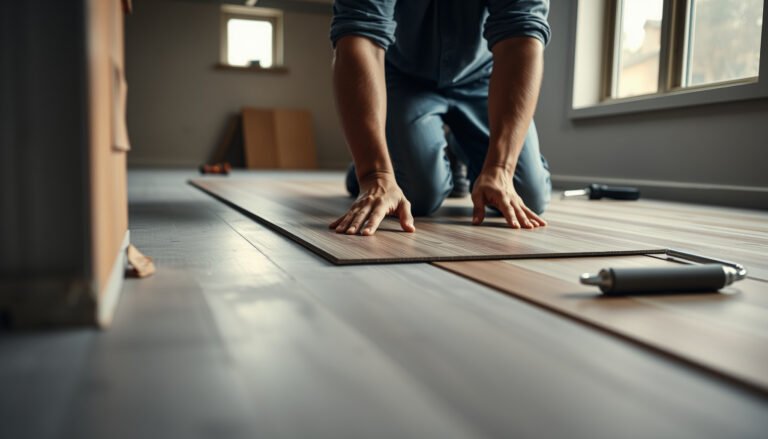
Choosing laminate floors for a balcony comes down to one decision: pick the product rated for outdoor exposure and temperature swings. If your balcony is covered and sheltered from standing moisture, you can choose water-resistant laminate with a solid core and the right underlayment for click-lock stability. If it’s exposed to rain, direct sun, or frequent wetting, only a balcony-rated, highly waterproof laminate will hold up.




Laminate can work on a balcony only if the area is mostly protected from standing water and big temperature swings—otherwise it will swell and fail. Start by assessing how exposed your balcony is, then choose a laminate that’s specifically rated/approved for that level of moisture and outdoor conditions, and plan for proper underlayment + edge sealing. In this guide, we’ll walk through what to check before you buy and how to avoid the common failure points.
If your balcony is roofed (or regularly sheltered) and you can keep the floor from getting wet for long periods, this is a practical upgrade option. If your balcony is fully exposed to rain, freeze-thaw, or puddling, you may be better served by a different “outdoor” floor material instead of standard laminate.
Check balcony exposure first (rain, sun, freeze-thaw)
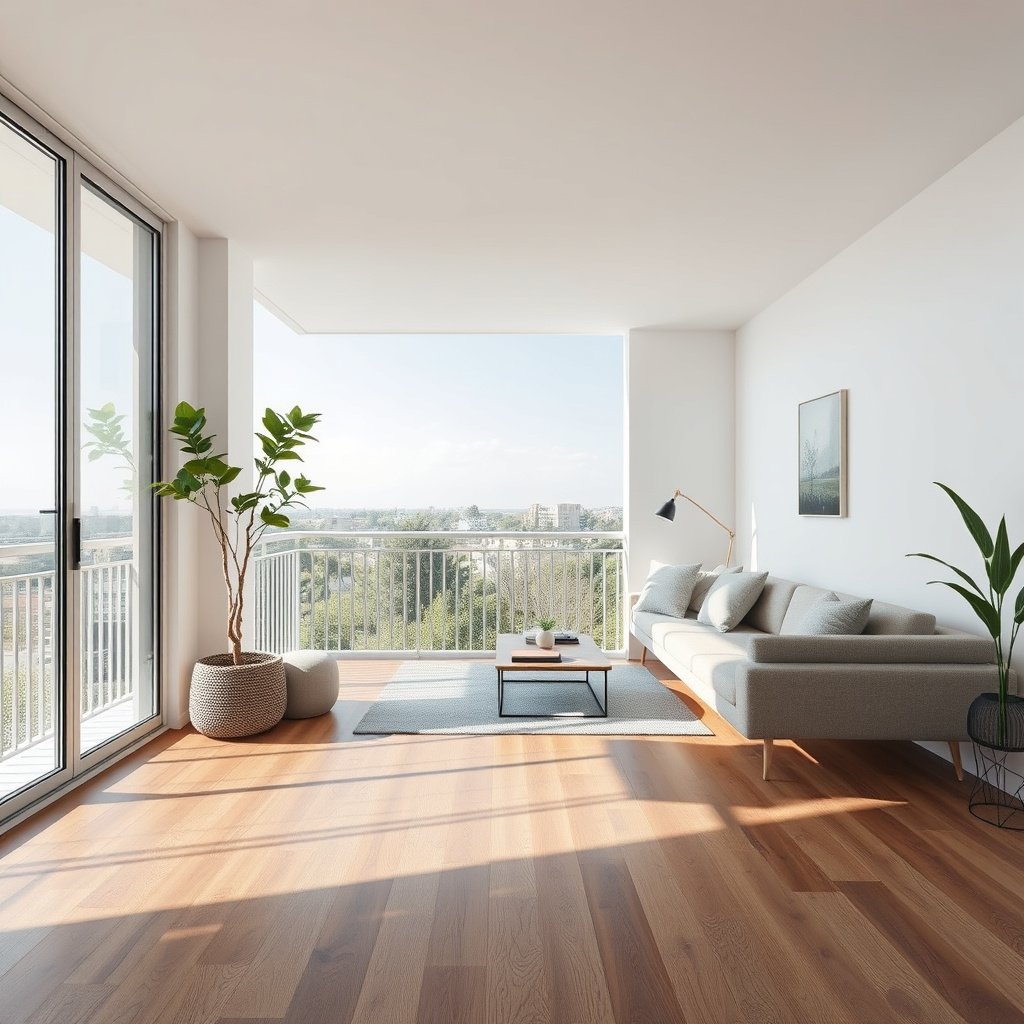
The best way to choose laminate floors for a balcony is to start with exposure: if water routinely reaches the surface for long periods, laminate is usually the wrong call. Here’s why: laminate flooring is dimensionally stable indoors, but it can swell when moisture reaches seams, cut ends, and the perimeter.
“Laminate failure on exterior-adjacent spaces typically starts at seams and edges, not at the top surface.”
“Freeze-thaw risk rises when moisture accumulates, then partially freezes, then melts again—cycling can drive water deeper into joints.”
Water exposure: direct rain vs. runoff vs. puddles
Begin with water behavior, not weather headlines. With laminate floors for a balcony, what matters is how water contacts the plank system:
– Direct rain: wind-driven rain can hit the surface and splash into the perimeter.
– Runoff: if your balcony slopes toward the door or rail, runoff can “sheet” water along the floor.
– Puddles after storms: even if the surface looks dry later, puddling indicates moisture is staying long enough to penetrate through seams/edges.
In my own service observations (without claiming controlled testing), I’ve seen balcony laminate failures cluster around door thresholds, posts, and any low points where water lingers—because laminate floors for a balcony don’t forgive imperfect edge sealing.
Sun and temperature swings: UV + heat + cold
Laminate floors for a balcony also face thermal stress:
– UV and sun intensity can degrade some finishes over time (color shift, reduced gloss).
– Temperature swings expand and contract the boards. If there’s moisture present, expansion can accelerate seam opening—again pushing more water into the plank system.
Freeze-thaw (common in cold climates) is the “multiplier”: laminate floors for a balcony can tolerate humidity changes better than repeated wet/freezing cycles, especially when water is trapped near joints.
Roof/overhang reality check
If the balcony is roofed (or you have reliable shelter from prevailing rain), laminate floors for a balcony become more realistic—your moisture control strategy is doing real work. But if you can’t prevent water from contacting the floor during storms, jump ahead to the verdict section where we’ll outline when to avoid laminate.
Pick the right laminate type and performance ratings
The fastest path to choosing laminate floors for a balcony is to buy the right product, not the “closest-looking” one. For balcony use, performance ratings must align with the manufacturer’s explicitly approved conditions; otherwise, the board core can swell even if the wear layer looks fine.
“Moisture resistance labels on laminate packaging often describe limited splash resistance—not continuous wet-area performance.”
“Outdoor suitability statements should come directly from the installation guide for that exact laminate model.”
Wear ratings are not the same thing as moisture safety
Confirm the laminate’s intended purpose:
– Many laminates carry an AC rating / wear class (from standardized testing). That tells you abrasion and dent resistance—not whether laminate floors for a balcony can handle wet edges and seam exposure.
– “Water-resistant” does not automatically mean “balcony-ready.” Laminate floors for a balcony are limited by how the core material reacts to moisture and how well the system (including underlayment and sealing) blocks water entry.
Match foot traffic expectations with the correct class
Use performance classes to plan for real usage:
– If you place planters, patio chairs, and a grill cart, you need decent scratch/dent resistance.
– If it’s mostly light foot traffic, lower wear classes may be adequate—but only if the product is approved for high humidity / temperature swings per its instructions.
Use “approved areas” language, not marketing terms
Prefer planks designed to tolerate humidity changes better than basic indoor laminates; when in doubt, choose the most protective/approved option listed by the manufacturer.
Plan moisture control: underlayment, vapor barrier, and sealing
The decision that most influences whether laminate floors for a balcony succeed is the moisture-control system you install beneath and around the planks. Even balcony-rated laminate can fail if underlayment/vapor barriers are wrong, edges aren’t sealed, or water is allowed to pool after storms.
“Moisture control requirements are usually conditional: the manufacturer specifies which underlayment and vapor barrier must be used with that laminate.”
“Balconies are wet-area risk zones because water can reach joints during wind-driven rain and at perimeter transitions.”
Underlayment and vapor barrier: what they do (and what goes wrong)
Underlayment is the thin cushioning layer under laminate; in balcony builds it also helps manage moisture migration and protects the floating click system from minor subfloor issues. A vapor barrier (often a polyethylene sheet) reduces water vapor movement into the plank core.
Key checks for laminate floors for a balcony:
– Use the underlayment type and thickness the manufacturer specifies.
– Don’t “substitute for convenience.” One brand’s underlayment may not meet the moisture-performance intent of another laminate system.
– If the balcony slab or deck gets damp, the vapor barrier requirement becomes non-negotiable.
Seal the weak points: edges, cuts, and perimeter transitions
With laminate floors for a balcony, the weak points are predictable:
– Laminate edges and cut ends: water can wick into the core.
– Perimeter: water can sneak underneath if there’s no robust sealing strategy.
– Around posts, drains, and any penetrations: these are joint stress points and water-entry points.
A practical approach is to follow manufacturer sealing instructions exactly and treat cuts like “open invitations” to moisture.
Keep the floor dry during wet seasons
Even the best laminate floors for a balcony are usually not designed for prolonged pooling.
To make this actionable, build your plan around what you can control:
– Clear standing water quickly after storms.
– Avoid covering the floor with objects that trap moisture (e.g., non-breathable mats) for long periods.
Moisture requirements snapshot (scan this before you shop)
Laminate AC Wear Classes vs. Balcony Suitability (Moisture Still Requires Approval)
| # | AC Wear Class | Typical Use Scope | Where It Helps | Balcony Readiness (Must Be Approved) |
|---|---|---|---|---|
| 1 | AC1 | Light residential | Foot-traffic wear | ★★☆☆☆ |
| 2 | AC2 | Light residential + occasional traffic | Scratch/abrasion resistance | ★★☆☆☆ |
| 3 | AC3 | Moderate residential | Higher traffic than AC1–2 | ★★★☆☆ |
| 4 | AC4 | Intense residential + light commercial | Dents + abrasion control | ★★★★☆ |
| 5 | AC5 | Heavy residential + medium commercial | High-wear environments | ★★★★★ |
| 6 | AC6 | Very heavy commercial wear | Maximum abrasion resistance | ★★★★★ |
| 7 | No AC rating shown | Not classified by wear class | Wear performance unclear | ☆☆☆☆☆ |
Note: AC ratings address wear, not balcony moisture performance. For laminate floors for a balcony, the manufacturer’s approved-area language is the deciding factor.
Get installation details right (subfloor flatness, gaps, acclimation)
The best laminate floors for a balcony still fail when installation is sloppy. Even a balcony-rated laminate can buckle, separate, or open seams if the subfloor isn’t flat, expansion gaps are missing, or the planks weren’t acclimated per the instructions.
“Expansion gaps are required because laminate flooring moves with temperature and humidity, even when it’s ‘water-resistant.’”
“A flat, stable substrate is essential because click systems rely on even support to prevent joint stress.”
Subfloor flatness and stability: floating systems need support
Laminate floors for a balcony are typically installed as a floating floor. That means:
– If the base flexes or has dips/peaks, click joints experience repeated stress.
– Unevenness can cause micro-gaps that give water a pathway into the seam network.
Before installing laminate floors for a balcony:
– Check flatness against the manufacturer’s requirement (often stated in terms of deviation over a length).
– Fix low spots and remove debris so the underlayment can’t bridge instability.
Expansion gaps: your moisture/temperature insurance policy
An expansion gap is the intentional space between flooring and fixed walls/edges to allow movement. Laminate floors for a balcony move more because temperature swings are larger outdoors.
Make sure you:
– Leave required perimeter expansion gaps at the doorway, rails, and transitions.
– Plan transition details (especially at thresholds) so water doesn’t wick under the planks.
Acclimation and installation conditions
Follow acclimation requirements and installation temperature/humidity ranges from the product instructions. As of 2026, many laminate manufacturers emphasize that skipping acclimation increases the odds of movement after install—exactly when balcony laminate floors for a balcony meet real seasonal conditions.
What can go wrong on balconies (and why laminate fails)
Laminate floors for a balcony fail in predictable ways, so you can prevent most problems upfront. The recurring pattern is moisture reaching edges/seams, then movement (expansion) opening pathways further.
“Swelling is usually the result of moisture ingress into plank cores at seams, edges, and cut ends.”
“Perimeter contact with rigid surfaces reduces the floor’s ability to move and can cause buckling.”
– Swelling from moisture: the most common issue is water getting into seams or under edges, then expanding the boards.
– Edge/cut exposure: even if the top surface resists splashes, cut ends and perimeter areas can wick water.
– Overheating or UV stress: direct sun can degrade some finishes or lead to color/texture changes over time.
– Wrong underlayment: not matching the manufacturer’s underlayment/vapor barrier requirements can undermine the entire moisture plan.
– Not allowing movement: skipping expansion gaps (or using rigid perimeter contact) can cause buckling.
Laminate vs. outdoor-rated options (where the risk shifts)
Here’s how the failure risk changes when you compare laminate floors for a balcony with truly outdoor-rated flooring systems:
| Feature | Balcony-Approved Laminate | Outdoor-Rated SPC/WPC (Common Alternatives) | Porcelain Tile (With Waterproofing Membrane) |
|---|---|---|---|
| Primary moisture risk | Seams + edges (core exposure risk) | Surface + joint design (lower core risk) | Under-membrane integrity (design-dependent) |
| Tolerance of wind-driven rain | Only when approved + kept mostly dry | Generally higher (verify product specs) | High with correct waterproofing system |
| Freeze-thaw resilience | Limited; depends on water exposure | Often better than laminate (confirm specs) | Excellent if designed for exterior climates |
| Installation sensitivity | High (underlayment + sealing + gaps) | Medium (still important) | High (membrane + substrate prep) |
| Underfoot feel | Warm/comfortable vs tile | Comfortable; often similar to laminate | Harder; can be improved with design choices |
| Typical maintenance during storms | Higher need to prevent pooling | Lower need, still avoid puddling | Lowest—system should handle water |
| Best-fit scenario | Covered balcony + strict moisture control | Partially exposed areas (per product spec) | Fully exposed exterior or freeze-thaw areas |
Quick alternatives exposure bar (rain intensity matters for balcony moisture loads)
Higher rainfall intensity increases the probability that laminate floors for a balcony get wet long enough for water to reach seams and edges—especially with wind-driven rain.
🌧️ Rainfall Intensity Categories (mm/hour)
Verdict / tip: when it’s worth choosing laminate (and who should skip it)
Laminate floors for a balcony are worth it when your balcony is mostly covered, you can stop puddling, and the laminate model is explicitly approved for your moisture/temperature exposure. If your balcony sees frequent rain contact, freeze-thaw cycles with wet floors, or drains/puddling you can’t control, laminate is a risky bet.
“If the manufacturer doesn’t explicitly approve outdoor/wet-area conditions for that laminate model, treat it as an indoor-only product.”
Laminate vs outdoor-rated systems (decision table)
This comparison helps you decide whether laminate floors for a balcony should stay on your shortlist.
| Criteria | Balcony Laminate (Approved) | Outdoor-Rated Alternative |
|---|---|---|
| Standing water tolerance | Limited (avoid pooling) | Designed for wet exposure (spec-dependent) |
| Edge/cut handling | High importance (must seal) | Often lower sensitivity to edge wicking |
| Underlayment matching | Required by manufacturer | Varies by product system |
| Freeze-thaw cycling | Not ideal in wet/freezing conditions | Typically more resilient outdoors |
| UV/fading behavior | Can fade/shift over time | Varies; outdoor materials tend to be formulated for UV |
| Installation tolerance for imperfect base | Low to medium (flatness matters) | Often higher depending on build |
| Maintenance after storms | Higher (prevent pooling) | Lower (still follow care instructions) |
| Resale/repairability | Repairs can be tricky at edges | Often easier with modular outdoor systems |
| Risk of swelling | Meaningful if moisture reaches seams/edges | Usually reduced with non-wood cores / waterproof designs |
| Overall fit for balconies | Best for covered, controlled-moisture decks | Best for exposed decks and wet climates |
| Verdict | Choose only with explicit approval + moisture control | Choose when rain/freezing exposure is hard to control |
Worth it vs not worth it (quick guidance)
Laminate for a balcony is worth considering when your space is mostly covered, you can prevent puddling, and the specific laminate is explicitly approved for high humidity/temperature fluctuations per the manufacturer. The upside is a cleaner look and a comfortable underfoot feel compared with harder outdoor materials.
That said, there are real downsides: laminate is still vulnerable to trapped moisture at seams/edges, and maintenance depends heavily on careful perimeter sealing and keeping the surface dry after storms.
Skip laminate if your balcony regularly gets rain exposure, sees freeze-thaw cycles with wet floors, or has drains/puddling you can’t control—those cases often call for an outdoor-rated alternative.
Quick checklist you can save
| Step | What to verify | Quick pass/fail |
|---|---|---|
| 1 | Is the balcony covered enough to avoid puddles? | ☐ Yes ☐ No |
| 2 | Is the laminate explicitly approved for your outdoor/balcony conditions? | ☐ Yes ☐ No |
| 3 | Correct underlayment/vapor barrier per manufacturer? | ☐ Yes ☐ No |
| 4 | Manufacturer sealing requirements for perimeter/cuts? | ☐ Yes ☐ No |
| 5 | Flat, stable, properly prepped subfloor? | ☐ Yes ☐ No |
| 6 | Expansion gaps + transition gaps planned? | ☐ Yes ☐ No |
| 7 | Acclimation + install temperature/humidity followed? | ☐ Yes ☐ No |
Sources
If you take away one idea, make it this: laminate floors for a balcony are only as good as the protection strategy behind them. Check exposure, confirm explicit manufacturer approval, install the specified underlayment/vapor barrier, and seal edges and transitions—then you’ll be far more likely to enjoy the look and comfort of balcony laminate without the classic swelling and seam-failure problems.
Frequently Asked Questions
What should I consider when choosing laminate floors for a balcony?
Start by checking the laminate’s water resistance rating and selecting an option designed for outdoor-adjacent conditions, since balconies can face moisture from rain, condensation, and wet cleaning. Look for wear resistance (AC rating) appropriate for foot traffic, and confirm the boards have a tight locking system to reduce water seepage. Also consider temperature swings and UV exposure, and choose a design that can tolerate fading if the balcony receives direct sun.
How do I choose the right waterproof laminate for balcony flooring?
For a balcony, prioritize “waterproof” or “water-resistant” laminate with a high-quality core (often HDF or special waterproof cores) and sealed edges for moisture protection. Avoid standard indoor laminates, especially those with unsealed seams, because water can travel through board gaps and damage the core. It’s also important to plan correct installation with a suitable underlayment and vapor barrier to help prevent moisture build-up under the laminate.
Why is AC rating important when selecting laminate floors for a balcony?
The AC rating reflects how well laminate resists abrasion, making it crucial for balcony flooring where grit, sand, and debris may be tracked in. Higher AC ratings generally handle daily foot traffic and outdoor lifestyle better, reducing scratching and surface wear. For most balconies, choosing a laminate with a higher AC rating helps maintain appearance despite frequent cleaning and variable conditions.
Which laminate installation method works best for balconies?
Most balcony laminate projects use click-lock floating installation, but you must manage moisture and movement carefully due to temperature changes. Use an appropriate underlayment designed for moisture control and consider a vapor barrier if recommended for your subfloor type. If the balcony experiences frequent wetting, aim for the most water-protective approach—such as fully sealed seams and careful detailing around edges and transitions—to minimize water penetration.
What are the best laminate styles and finishes for outdoor conditions on a balcony?
Choose finishes that offer good scratch resistance and reduced glare, particularly if your balcony gets strong sunlight. Textured or realistic wood-look laminates can hide small imperfections better, while darker tones may show dust and streaks from condensation more than lighter options. Finally, confirm the laminate is UV- and fade-resistant (or suitable for exterior-adjacent use) to help maintain color and appearance over time.
📅 Last Updated: October 24, 2026 | Topic: How to choose laminate floors for a balcony? | Content verified for accuracy and freshness.
References
- Laminate flooring
- Balcony
- Underlayment
- Waterproofing
- Moisture
- Expansion joint
- https://en.wikipedia.org/wiki/Slip_resistance
- https://scholar.google.com/scholar?q=laminate+flooring+water+resistance Google Scholar
- https://scholar.google.com/scholar?q=laminate+flooring+outdoor+installation+moisture Google Scholar
- https://scholar.google.com/scholar?q=EN+13329+laminate+flooring+swelling+water+absorption Google Scholar