
To clean vinyl plank flooring, start by sweeping or vacuuming daily to remove dirt and dust. Immediately spot clean spills to avoid stains. Mop the floor 1-2 times a week using a microfiber mop and a pH-neutral cleaner specifically made for vinyl. For deep cleaning, consider using a vinegar and water solution or a steam cleaner to sanitize without harsh chemicals. Always avoid abrasive cleaners or tools that can scratch the surface. Regularly check for damage and maintain your floors to keep them looking their best. There's more to explore about caring effectively for your vinyl flooring.




Understanding Vinyl Plank Flooring
Vinyl plank flooring has become a popular choice for homeowners due to its durability and aesthetic appeal. One of the standout features is its exceptional vinyl durability, making it resistant to scratches, dents, and moisture. This resilience allows you to enjoy a beautiful floor without constant worry about wear and tear.
The installation process is another significant advantage. Vinyl planks often come with a click-lock design, allowing for a straightforward, DIY-friendly setup. You won't need specialized tools or extensive experience to achieve a professional-looking result. Whether you're renovating a single room or your entire home, vinyl plank flooring offers you both freedom and style. By understanding these aspects, you can make an informed choice that suits your lifestyle and preferences.
Daily Cleaning Routine
Establishing a daily cleaning routine for your vinyl plank flooring can greatly enhance its longevity and appearance. It's essential for maintaining the beauty of your floor while ensuring it stays dirt-free. Here's a simple guide for your daily maintenance:
| Task | Frequency |
|---|---|
| Sweeping or vacuuming | Daily |
| Spot cleaning spills | As needed |
| Mopping | 1-2 times a week |
| Inspecting for damage | Weekly |
| Removing debris | Daily |
Recommended Cleaning Products
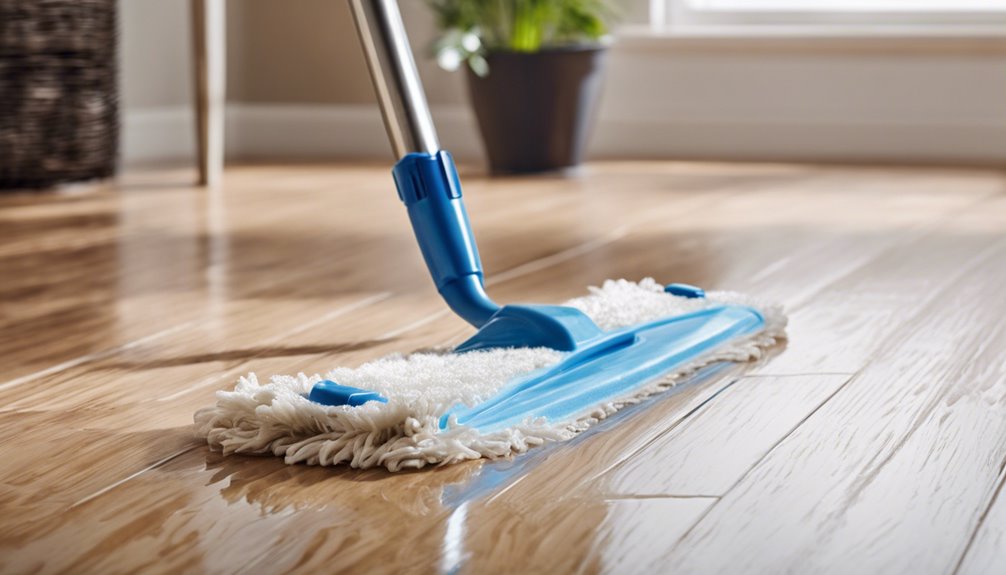
To keep your vinyl plank flooring looking its best, choosing the right cleaning products is crucial. Start with a gentle pH-neutral cleaner specifically designed for vinyl surfaces. Avoid harsh chemicals that can damage the finish. For routine cleaning, consider using microfiber mops or soft-bristle brooms as your cleaning tools; they effectively lift dirt without scratching. Product recommendations include brands like Bona or Armstrong, which offer reliable solutions without residue. If you prefer homemade options, a mix of vinegar and water can work wonders, but always test in a small area first. Regularly using the right products guarantees your flooring remains vibrant and extends its lifespan, giving you the freedom to enjoy your beautiful space.
Deep Cleaning Techniques
When it comes to deep cleaning your vinyl plank flooring, there are two effective techniques you can use: steam cleaning and a vinegar and water solution. Steam cleaning can effectively lift dirt and grime without harsh chemicals, while a simple vinegar solution helps to disinfect and shine your floors. Both methods are straightforward and can help maintain the beauty and longevity of your flooring.
Steam Cleaning Method
Although steam cleaning might seem intimidating at first, it's an effective method for deep cleaning vinyl plank flooring without harsh chemicals. Here are some steam cleaning benefits and precautions to keep in mind:
- Sanitization: Steam kills germs and bacteria, providing a healthier home environment.
- Eco-friendly: Using only water, this method reduces your reliance on chemical cleaners.
- Stain removal: The heat and moisture effectively lift stubborn stains from your floor.
- Quick drying: Steam cleaning helps your floors dry faster than traditional methods.
However, remember to test a small area first to avoid damage, and always follow manufacturer guidelines. Embrace the freedom of a cleaner home with steam cleaning—just make sure you're taking the right precautions!
Vinegar and Water Solution
One of the simplest and most effective methods for deep cleaning vinyl plank flooring is using a vinegar and water solution. To create this cleaning mixture, combine one cup of white vinegar with a gallon of warm water. The vinegar benefits include its ability to break down grime and eliminate odors without leaving harmful residues. When applying the solution, use a damp mop rather than soaking the floor, as excess water can damage the planks. Focus on high-traffic areas, allowing the solution to sit for a few minutes before mopping it up. For best results, follow up with a clean water rinse to remove any remaining vinegar. This method guarantees your floors stay fresh and pristine while maintaining their durability.
Removing Tough Stains
Even if your vinyl plank flooring is designed to withstand everyday wear, tough stains can still pose a challenge. To tackle those stubborn tough spots, follow these steps for effective stain removal:
- Identify the Stain: Determine what caused the stain to choose the right cleaning method.
- Blot, Don't Rub: Gently blot the area with a soft cloth to absorb any excess liquid.
- Use a Suitable Cleaner: Apply a vinyl-safe cleaner or a mix of vinegar and water directly onto the stain.
- Rinse and Dry: Wipe the area with a damp cloth to remove residue, then dry thoroughly with a clean towel.
Avoiding Common Mistakes
When cleaning vinyl plank flooring, it's essential to avoid common mistakes that can damage your floors. Using harsh chemicals can strip away the finish, while skipping regular maintenance leads to buildup that's harder to remove. Additionally, ignoring manufacturer guidelines may void your warranty and compromise your flooring's longevity.
Using Harsh Chemicals
Using harsh chemicals on vinyl plank flooring can lead to costly mistakes that compromise the integrity of your floors. To maintain your flooring's beauty and longevity, prioritize harsh chemicals safety by avoiding the following:
- Ammonia-based cleaners: They can dull your floors and damage the finish.
- Bleach solutions: These can cause discoloration and weaken the material.
- Scrubbing pads: They may scratch the surface, leading to irreversible damage.
- Oil soaps: They can leave a residue that attracts dirt and grime.
Instead, consider using chemical alternatives like vinegar and water or specialized vinyl cleaners. These options guarantee your flooring remains vibrant and protected, allowing you the freedom to enjoy your space without worry.
Skipping Regular Maintenance
Neglecting regular maintenance can be just as damaging as using harsh chemicals on your vinyl plank flooring. If you skip a maintenance schedule, you're opening the door to dirt buildup and scratches that can affect the floor's appearance and longevity. Over time, these long-term effects can lead to costly repairs or replacements. To keep your flooring looking its best, create a regular cleaning routine that includes sweeping, mopping with a gentle cleaner, and addressing spills promptly. Additionally, consider using protective pads under furniture to prevent scratches. By staying on top of maintenance, you'll enjoy the freedom of a beautiful, long-lasting floor without the burden of unexpected issues down the road. Your vinyl plank flooring deserves consistent care for ideal results.
Ignoring Manufacturer Guidelines
Even though it might seem tempting to take shortcuts in cleaning your vinyl plank flooring, ignoring the manufacturer's guidelines can lead to serious issues. By disregarding these important instructions, you risk potential damage that could cost you time and money. Here are four common mistakes to avoid:
- Using harsh chemicals – They can strip the protective finish.
- Neglecting recommended cleaning tools – The wrong tools can scratch or dull the surface.
- Skipping preventive measures – Not using mats can lead to wear in high-traffic areas.
- Overwetting the floors – Excess moisture can seep into seams, causing warping.
Sticking to the guidelines not only maintains your floor's beauty but also extends its lifespan, giving you the freedom to enjoy your space worry-free.
Tips for Preventing Damage
Although vinyl plank flooring is known for its durability, taking proactive steps to prevent damage can greatly extend its lifespan. Start by using preventive measures, like placing doormats at entryways to reduce dirt and debris. Consider using furniture pads under heavy items to avoid scratches and dents. Regularly sweep or vacuum to keep the surface clean and free from abrasive particles. When cleaning, always use a damp mop with a gentle cleaner, as excess water can seep into seams. It's also wise to avoid harsh chemicals that can damage the finish. Finally, try to maintain a consistent indoor temperature and humidity level for ideal flooring protection. With these steps, you can enjoy the beauty and functionality of your vinyl plank flooring for years to come.
Maintaining Shine and Luster
Taking care of your vinyl plank flooring not only involves preventing damage but also maintaining its shine and luster. To achieve effective shine maintenance and luster preservation, follow these steps:
- Regular Sweeping: Remove dirt and dust daily to prevent scratches and dullness.
- Damp Mopping: Use a microfiber mop with a gentle cleaner weekly to enhance shine without damaging the surface.
- Avoid Harsh Chemicals: Steer clear of abrasive cleaners that can strip the finish and reduce luster.
- Use Area Rugs: Place rugs in high-traffic areas to minimize wear and keep your flooring looking fresh longer.
Eco-Friendly Cleaning Solutions
How can you keep your vinyl plank flooring clean while being kind to the environment? You can easily create effective eco-friendly cleaning solutions using natural ingredients. For a simple cleaner, mix equal parts of white vinegar and water in a spray bottle. Vinegar's acidity helps break down dirt and grime without harmful chemicals. Alternatively, consider using castile soap diluted in water as a gentle cleaner that's safe for your floors.
For tougher stains, a paste of baking soda and water works wonders. Always test any solution in a small, inconspicuous area first. Embracing these green alternatives not only protects your flooring but also contributes to a healthier home environment. Enjoy the freedom of cleaning sustainably!
Frequently Asked Questions
Can I Use a Steam Mop on Vinyl Plank Flooring?
You might think of using a steam mop for its benefits, like sanitizing your floors without harsh chemicals. However, it's important to take into account the drawbacks too. Steam can seep into the seams of vinyl plank flooring, potentially causing damage or warping over time. If you decide to use a steam mop, verify it's specifically labeled safe for vinyl. Alternatively, you could stick to regular cleaning methods that won't risk harming your beautiful floors.
How Often Should I Deep Clean My Vinyl Plank Floors?
You should deep clean your vinyl plank floors every few months, depending on foot traffic and activities in your home. Regular cleaning frequency helps maintain their appearance and longevity. For maintenance tips, sweep or vacuum weekly to remove dirt and debris, and mop with a gentle cleaner monthly. By keeping up with this routine, you'll guarantee your floors stay beautiful and functional, allowing you the freedom to enjoy your space without worry.
Will Vinyl Plank Flooring Fade in Sunlight?
Yes, vinyl plank flooring can fade in direct sunlight over time, especially if it lacks adequate UV protection. To guarantee ideal color retention, consider using window treatments or UV-blocking films. Regularly rearranging furniture can also help minimize sun exposure on specific areas. If fading is a concern, look for flooring specifically designed with UV-resistant properties, which can greatly enhance durability and maintain your floor's vibrant appearance for years to come.
Can I Use Vinegar to Clean Vinyl Plank Flooring?
Imagine a sunlit room with gleaming floors, each plank reflecting your style. You might wonder if vinegar's natural cleaning benefits can help maintain that shine. Yes, you can use vinegar as a cleaning solution for vinyl plank flooring. Just mix equal parts vinegar and water, then mop away. This method's gentle yet effective, lifting dirt without damaging your floors. It's a simple, freeing way to keep your space looking its best!
Is It Safe to Use Bleach on Vinyl Plank Floors?
It's not safe to use bleach on vinyl plank floors, as it can cause discoloration and damage. Instead, consider safe alternatives like mild dish soap mixed with water or specialized cleaning solutions designed for vinyl. These options effectively clean without risking your flooring's integrity. Always test any new cleaning solution in a small area first. Keeping your floors looking great doesn't have to involve harsh chemicals—opt for gentler methods to maintain their shine!