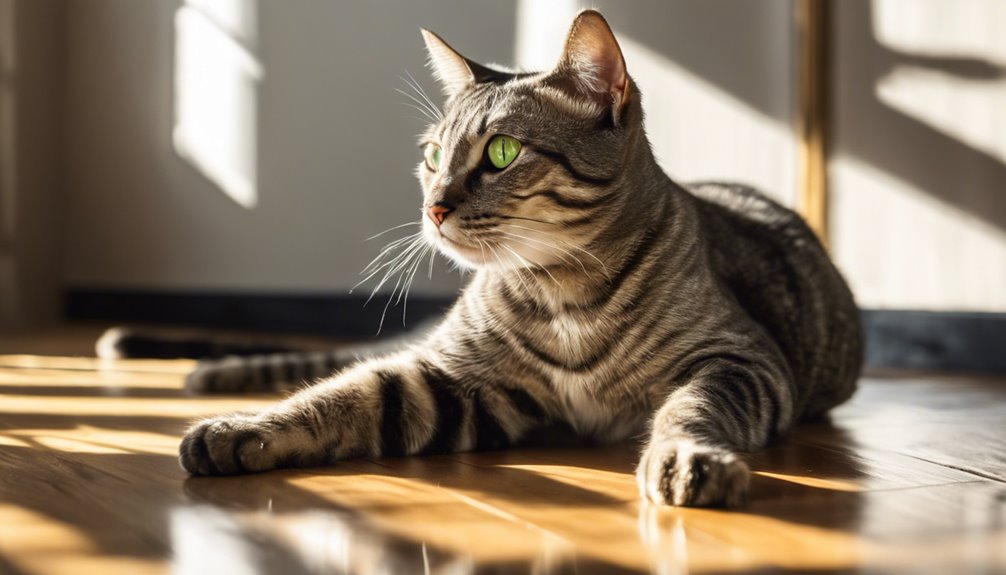

If your cat's scratching the floor, it's likely expressing natural instincts. Cats scratch to mark territory, maintain healthy claws, and simulate hunting behaviors. This behavior also promotes exercise and reduces stress. However, consider that scratching might indicate boredom or anxiety, especially if there have been recent changes in their environment. Providing appropriate scratching surfaces, like cat trees or designated posts, can help redirect this behavior. It's important to observe your cat for signs of discomfort as excessive scratching might point to health issues. Understanding these factors can enhance your bond with your feline friend while ensuring their well-being.
Natural Instincts of Cats
While you might find your cat scratching the floor puzzling, it's important to understand that this behavior stems from their natural instincts. Cats are instinctual hunters, and their scratching serves multiple purposes linked to these hunting instincts. When your cat scratches, it mimics the actions they'd take while hunting prey, like digging and preparing a spot to pounce. This behavior is also tied to their need for exercise and mental stimulation, keeping them agile and engaged. Additionally, scratching helps them shed the outer layers of their claws, promoting healthy claws. Recognizing this aspect of feline behavior allows you to appreciate your cat's natural tendencies, encouraging a more harmonious and understanding relationship between you and your furry companion.
Marking Territory
Since cats are territorial creatures, scratching the floor can be a way for them to mark their domain. This behavior is an expression of their territorial instincts, allowing them to establish boundaries in their environment. When your cat scratches, it's not just about keeping claws sharp; it's also a form of scent marking. Cats have scent glands in their paws, and by scratching, they leave pheromones that signal ownership to other animals. Understanding this territorial behavior can help you appreciate your cat's need for space and security. Instead of seeing it as a nuisance, consider providing designated areas where your cat can scratch freely, satisfying their instinct while protecting your flooring.
Stretching and Exercise
When your cat scratches the floor, it often serves as a form of stretching and exercise that is essential for their physical well-being. This behavior promotes flexibility and muscle strength, contributing to an overall healthy lifestyle. Here are a few key benefits of cat stretching and exercise routines:
- Improved Flexibility: Regular stretching helps maintain your cat's agility.
- Enhanced Muscle Tone: Scratching engages various muscle groups, keeping them toned.
- Stress Relief: Physical activity can alleviate anxiety and promote relaxation.
- Joint Health: Stretching supports joint mobility, reducing the risk of injury.
Encouraging these natural behaviors not only satisfies their instincts but also fosters a more active and content life for your feline friend.
Boredom and Lack of Stimulation
Cats are naturally curious and active animals, and when they don't have enough stimulation, they may resort to scratching the floor out of boredom. This behavior often signals a need for more engaging experiences. Providing interactive toys can help channel their energy and curiosity in a positive way. These toys stimulate your cat's mind and keep them entertained, reducing the urge to scratch. Additionally, incorporating enrichment activities, like puzzle feeders or climbing structures, can create a more stimulating environment. It's important to observe your cat's preferences and rotate the toys to maintain their interest. By acknowledging their need for engagement, you can promote a happier, healthier lifestyle for your feline friend and minimize unwanted scratching.
Stress and Anxiety
If your cat's scratching seems excessive, it might be a sign of stress or anxiety. Various environmental triggers, like changes in routine or new pets, can elevate their stress levels. Understanding these signs and providing effective coping mechanisms is essential for helping your feline friend feel more secure.
Signs of Stress
While many cat behaviors can be attributed to instinct, scratching the floor may also indicate underlying stress or anxiety. Recognizing stress signals in your cat is essential for their well-being. Here are some signs to look for:
- Increased Vocalization: If your cat's meowing becomes more frequent, it might be expressing discomfort.
- Hiding: A cat that suddenly seeks out secluded spots may be feeling overwhelmed.
- Changes in Appetite: A decrease or increase in eating could signal stress.
- Aggressive Behavior: If your usually gentle cat becomes irritable or aggressive, it may be a sign of anxiety.
Understanding these stress signals can help you address your cat's needs and create a more relaxed environment for them.
Environmental Triggers
Understanding the environmental factors that can trigger stress and anxiety in your cat is vital for maintaining their well-being. Cats are sensitive to environmental changes, whether it's a new piece of furniture, a different floor texture, or even new sounds. These disruptions can create uncertainty, leading them to scratch the floor as a way to cope. If you've recently rearranged your home or introduced new pets, your cat might feel overwhelmed. It's important to observe how your cat reacts to these changes, as their behavior can signal discomfort. By recognizing these stressors, you can create a more stable environment, allowing your cat to feel secure and at ease in their surroundings.
Coping Mechanisms
Cats often resort to various coping mechanisms when faced with stress and anxiety, and scratching the floor can be one of these behaviors. This action serves as a behavioral adaptation, helping them manage their feelings. Understanding your cat's coping strategies is vital for their emotional wellbeing. Here are some common ways cats cope:
- Scratching: Relieves stress and marks territory.
- Hiding: Seeks comfort in enclosed spaces.
- Vocalizing: Expresses discomfort or anxiety.
- Play: Engages in activities to distract from stress.
Recognizing these signs allows you to create a supportive environment, helping your feline friend feel more secure and at ease. By addressing their needs, you can foster a happier, healthier cat.
Seeking Attention
When your cat scratches the floor, it might be more than just a quirky behavior; it could be a way for them to seek your attention. Cats are intelligent creatures that use various forms of feline communication to express their needs, and scratching can be an effective method. If you notice this attention-seeking behavior, consider whether your cat might be bored or feeling neglected. Engaging with them through play or simply spending time together can redirect this behavior. It's crucial to understand that your cat's actions are a request for interaction, signaling their desire for connection. By acknowledging this need, you not only strengthen your bond but also reduce unwanted scratching, fostering a happier environment for both of you.
Hunting Behavior Simulation
Although it may seem puzzling, scratching the floor can also be an instinctual behavior linked to hunting simulation. Your cat's floor scratching may stem from its natural hunting instinct, as they engage in activities that mimic stalking and capturing prey. This behavior allows them to practice their skills in a safe environment. Here are some possible reasons behind this:
- Marking Territory: Cats have scent glands in their paws, and scratching helps them mark their territory.
- Exercise: It provides physical activity and helps keep them agile.
- Stress Relief: Scratching can help alleviate stress or boredom.
- Playfulness: It's a way for them to express their playful side.
Understanding this can help you appreciate your cat's natural behaviors.
Texture Preferences
While your cat might seem indifferent to the textures around them, they actually have distinct preferences that influence their scratching behavior. Cats often seek out specific surface varieties to meet their innate needs. For instance, some may prefer rough textures like sisal or carpet, while others might favor softer surfaces like fabric. These texture preferences can be tied to comfort, stimulation, or even instinctual behaviors. By providing a range of surfaces, you cater to their scratching instincts and encourage healthy habits. If you notice your cat scratching the floor, it might be a sign they're looking for a more suitable texture. Understanding these preferences can lead to a happier, more fulfilled feline companion, allowing them the freedom to express their natural behaviors.
Unmet Scratching Needs
If your cat's scratching behavior isn't being met, it can lead to frustration and stress for both of you. Cats need to scratch for various reasons, and when their needs aren't met, they might resort to scratching your floor. To help, consider these scratching alternatives:
- Cat Trees: Invest in cat furniture that provides vertical space for scratching and climbing.
- Scratching Posts: Provide sturdy posts made of materials they enjoy, like sisal or cardboard.
- Interactive Toys: Engage your cat with toys that encourage natural scratching behavior.
- Regular Playtime: Schedule daily play sessions to fulfill their hunting instincts and reduce stress.
Health Concerns to Consider
If your cat's scratching seems excessive, it could signal underlying health issues like allergies or skin irritations. Additionally, consider the possibility of parasite infestations that might cause discomfort. It's crucial to observe any changes in behavior, as pain or discomfort could be the root of the scratching.
Allergies or Skin Irritation
When your cat scratches the floor, it could be a sign of underlying allergies or skin irritation. These issues may stem from various sources, leading to discomfort for your furry friend. It's crucial to recognize potential allergy symptoms and skin conditions that can affect their well-being. Consider these factors:
- Environmental Allergens: Pollen, dust mites, or mold.
- Food Allergies: Ingredients in their diet could trigger reactions.
- Flea Allergies: Even a single flea bite can cause significant irritation.
- Contact Dermatitis: Reactions to surfaces or materials they frequently encounter.
If you notice persistent scratching, it's important to consult your vet for a thorough evaluation. Identifying the cause early can help restore your cat's comfort and happiness.
Parasite Infestation Risks
Persistent scratching can also indicate the presence of parasites, which pose significant health risks to your cat. Common parasite types include fleas, mites, and ticks, all of which can lead to serious infections or allergic reactions. If you notice your cat scratching excessively, it's essential to act promptly.
| Parasite Type | Symptoms | Prevention Methods |
|---|---|---|
| Fleas | Itching, hair loss | Regular grooming, flea treatments |
| Mites | Skin irritation | Keep environment clean, vet check-ups |
| Ticks | Lethargy, fever | Use tick prevention, check after outdoor visits |
Pain or Discomfort Issues
While scratching can often be attributed to behavioral habits or environmental factors, it can also signal underlying pain or discomfort in your cat. It's crucial to conduct a thorough pain assessment and discomfort evaluation to guarantee your feline friend's well-being. Here are some signs that may indicate your cat is in distress:
- Changes in appetite or drinking habits
- Withdrawal from social interactions or play
- Altered grooming behaviors or excessive grooming
- Unexplained vocalizations or changes in purring patterns
If you notice these symptoms alongside scratching, consult your veterinarian. They can help identify potential medical issues, assuring your cat receives the proper care and relief they need. Remember, understanding your cat's needs is key to their happiness and health.
Frequently Asked Questions
Can Scratching Damage My Flooring?
You might find your flooring enduring a little wear and tear from those enthusiastic scratches. While your cat's innate behavior is a natural expression of freedom, it can indeed lead to some unsightly marks. To maintain floor protection, consider scratching alternatives like cat trees or pads, which can satisfy their instincts without wreaking havoc on your surfaces. It's all about balancing their needs with preserving your home's beauty, don't you think?
How Can I Discourage My Cat From Scratching?
To discourage your cat from scratching, consider offering scratching alternatives like cat trees or pads. These provide a designated area for your cat to scratch without damaging your floors. Implementing behavioral training can also be effective; reward your cat when it uses the alternatives instead of the floor. Staying patient and consistent will help your cat learn new habits, allowing it to express its natural behaviors while protecting your home.
Is Floor Scratching a Sign of Illness?
Floor scratching isn't typically a sign of illness, but it can indicate underlying issues related to feline health. Cats often scratch to mark territory or relieve stress. However, if the scratching behavior is excessive or accompanied by other changes, like lethargy or loss of appetite, it's wise to consult a vet. Understanding your cat's needs can help guarantee their well-being and provide them the freedom to express natural behaviors safely.
Do Certain Cat Breeds Scratch More Than Others?
Certain cat breeds do exhibit distinct scratching behavior due to their breed characteristics. For instance, breeds like the Abyssinian and Bengal are often more active and may scratch more frequently as a way to release energy or mark territory. On the other hand, more laid-back breeds like the British Shorthair might scratch less. Understanding these differences can help you appreciate your cat's unique habits and provide appropriate outlets for their natural instincts.
What Age Do Cats Start Scratching the Floor?
As the sun rises on your kitten's world, their scratching instincts awaken, too. Typically, you'll see this behavior emerge around three to four weeks of age. Kittens instinctively scratch to explore their surroundings and develop their muscles, much like a dancer practicing their steps. This behavior is essential for their development, so embrace it as part of their playful journey. Your furry friend's scratching is a sign of their vibrant spirit!