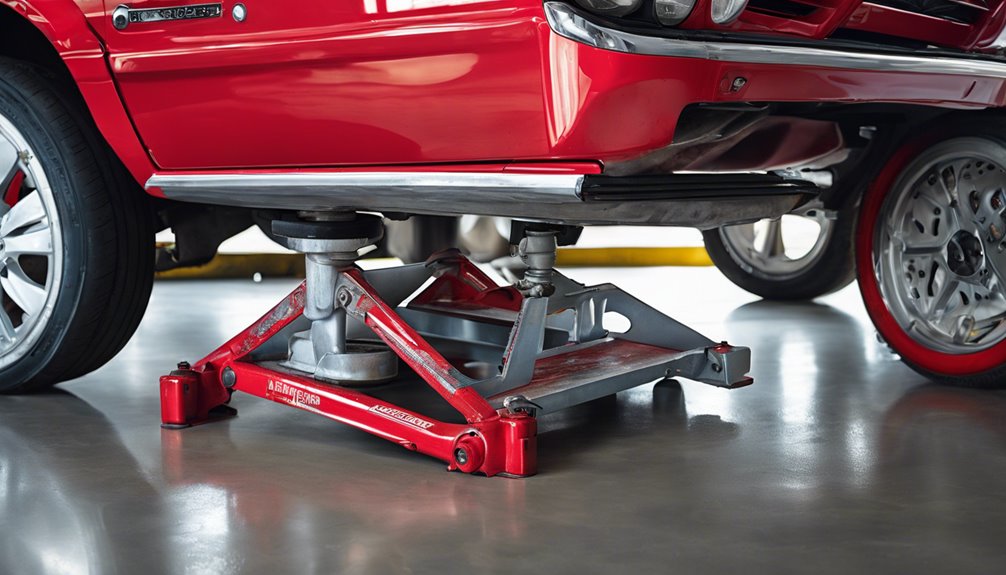

To use a floor jack and jack stands safely, first verify your vehicle is on a flat, stable surface, and engage the parking brake. Inspect the jack for proper function before positioning it under the recommended lifting points. Smoothly pump the jack to lift the vehicle, avoiding exceeding its weight limit. Once elevated, place jack stands under the vehicle near the lift points. Verify the stands are fully extended, locked in place, and positioned on solid ground. Gently push the vehicle to confirm stability. Following these guidelines will help enhance your safety and efficiency, while more detailed tips await.
Understanding Floor Jacks
A floor jack is an essential tool for lifting heavy vehicles safely and efficiently. Understanding the different floor jack types is vital to selecting the right one for your needs. Common types include hydraulic, bottle, and scissor jacks, each designed for specific applications and vehicle sizes. When choosing a floor jack, pay close attention to its jack capacity, which determines the maximum weight it can lift. For example, a jack with a 2-ton capacity is suitable for most cars, while larger vehicles may require a higher capacity jack. Always verify your selected jack meets or exceeds your vehicle's weight to maintain safety and efficiency during lifting. Knowledge of these factors empowers you to work confidently and independently on your vehicle.
Choosing the Right Jack Stands
While using a floor jack is essential for lifting your vehicle, choosing the right jack stands is equally important for guaranteeing safety during maintenance work. There are various jack stand types available, including A-frame, tripod, and hydraulic models. Each type has unique features suited for different tasks. When selecting jack stands, always check their load capacity; verify they can support your vehicle's weight. A general rule is to choose stands with a load capacity exceeding your vehicle's weight by at least 1.5 times. This extra safety margin protects you during maintenance. Additionally, look for stands with wide bases for stability and rubber pads to prevent slippage. Prioritize quality and safety to maintain your freedom while working on your vehicle.
Preparing Your Vehicle
Before using a floor jack, you'll need to properly prepare your vehicle to guarantee a safe lifting process. Start with a thorough vehicle inspection, focusing on the tire condition. Check for any signs of wear, uneven tread, or low pressure. Ascertain your vehicle is parked on a flat, stable surface, and engage the parking brake for added security.
| Inspection Item | Condition Check | Action Required |
|---|---|---|
| Tires | Tread Depth | Replace if worn |
| Suspension | Visual Check | Repair if damaged |
| Fluids | Levels | Top up as needed |
| Brakes | Functionality | Replace if faulty |
| Lights | Operational | Replace bulbs |
Taking these steps will empower you to work confidently and safely under your vehicle.
Lifting Your Vehicle Safely
Lifting your vehicle safely requires careful attention to detail and adherence to proper techniques. Before you start, verify you're on a flat, stable surface, and engage the parking brake. Always wear safety goggles to protect your eyes. When using the floor jack, position it under the manufacturer's specified lifting points to maintain vehicle stability. Pump the jack smoothly and steadily, never exceeding the jack's weight limit. As you lift, monitor the vehicle for any signs of movement or instability. Once elevated, use jack stands to support the vehicle securely, following all safety precautions. Remember, never work under a vehicle supported only by a jack. Prioritize safety to enjoy the freedom of working on your vehicle confidently.
Positioning Jack Stands Correctly
When positioning jack stands, it's essential to select ideal locations that align with your vehicle's structure. Verify that the stands are placed on a firm, level surface to maximize stability and safety while working underneath. Always consult your vehicle's manual for specific recommendations on jack stand placement.
Ideal Jack Stand Locations
To guarantee maximum safety and stability while working beneath a vehicle, it's crucial to position your jack stands at the correct locations. Start by locating the manufacturer's recommended jacking points, typically found in the owner's manual. These points are designed to handle the vehicle's weight and guarantee ideal load capacity. Depending on the jack stand types you're using—be it A-frame, tripod, or ratchet—verify they fit snugly under these points. Additionally, avoid placing jack stands on soft ground or uneven surfaces, as this can compromise stability. Always double-check that the stands are properly locked and secure before working underneath. This careful positioning will provide the freedom to work safely and efficiently on your vehicle.
Ensuring Stability and Safety
Ensuring stability and safety requires careful attention to how you position your jack stands. First, place the stands on a flat, solid surface to prevent shifting. Make sure to extend the stands fully and lock them in place. Perform stability checks by giving the vehicle a gentle push; it shouldn't wobble or shift. Position the jack stands as close as possible to the lift points, ensuring they support the vehicle's weight evenly. Always follow safety precautions: never rely solely on the jack for support, and avoid working under a vehicle that's not secured by jack stands. If you notice any instability, reassess your setup before proceeding. Your safety depends on these careful measures.
Performing Maintenance Under Your Vehicle
Before starting any maintenance under your vehicle, it's crucial to verify the floor jack is positioned correctly and securely. Once you're set up, follow these safety precautions to guarantee a smooth vehicle maintenance experience:
- Always use jack stands to support the vehicle after lifting.
- Keep your workspace well-lit and organized.
- Wear appropriate safety gear, like gloves and goggles.
- Be aware of your surroundings and avoid distractions.
Tips for Safe Usage
While using a floor jack, it's important to follow specific guidelines to confirm safety and effectiveness. First, always inspect your jack and jack stands before use; damaged equipment can lead to accidents. Verify you're on a level surface and never work on an incline. Use safety precautions like wheel chocks to prevent vehicle movement. When positioning the jack, avoid common mistakes such as placing it under weak points of the vehicle. Always lift the vehicle slowly and never get under it without securing it with jack stands. Remember, never rely solely on the floor jack for support; it's not designed for that. By adhering to these tips, you can enjoy a safer and more efficient lifting experience.
Frequently Asked Questions
Can I Use a Floor Jack on Uneven Surfaces?
You shouldn't use a floor jack on uneven surfaces. It can cause instability, risking your safety and damaging your vehicle. A floor jack needs a flat, solid ground to operate effectively; otherwise, it might tip over or fail to lift your vehicle properly. Always verify the area is level before attempting any lifting. If you encounter uneven surfaces, consider using leveling blocks or find a flatter spot to work safely.
How Often Should I Replace My Jack Stands?
If you want your jack stands to last longer than a superhero's sidekick, you'll need to keep an eye on their condition. Regular jack stand maintenance is essential; inspect them for dents, rust, or wear every few months. Generally, a jack stand's lifespan is about 5 to 10 years, but if you notice any signs of damage, replace them immediately. Safety's paramount, so don't take chances with equipment that supports your vehicle!
What Weight Capacity Do I Need for My Floor Jack?
When choosing a floor jack, you need to take into account the weight ratings and capacity guidelines for your specific vehicle. Typically, a jack should have a capacity that exceeds your vehicle's weight by at least 1.5 times. For example, if your car weighs 3,000 pounds, opt for a jack with a minimum capacity of 4,500 pounds. This guarantees safety and efficiency when lifting your vehicle for maintenance or repairs, giving you the freedom to work confidently.
Is It Safe to Work Under a Vehicle Without Jack Stands?
Working under a vehicle without jack stands is like walking a tightrope without a safety net—it's a risky gamble. Vehicle safety is paramount, and jack stands play an essential role in ensuring stability. Without them, you're relying solely on the floor jack, which can fail. To protect yourself, always use jack stands when lifting a vehicle. They provide the necessary support and peace of mind, allowing you to work safely and confidently below.
Can I Use a Floor Jack for Lifting Other Objects?
You can use a floor jack for lifting objects, but it's crucial to understand its intended purpose. Floor jack usage is primarily designed for vehicles, so if you're lifting other items, verify they're within the jack's weight capacity and stability limits. Always check the surface you're working on; it should be flat and solid. Improper use can lead to accidents, so prioritize safety and stability when lifting any objects.