
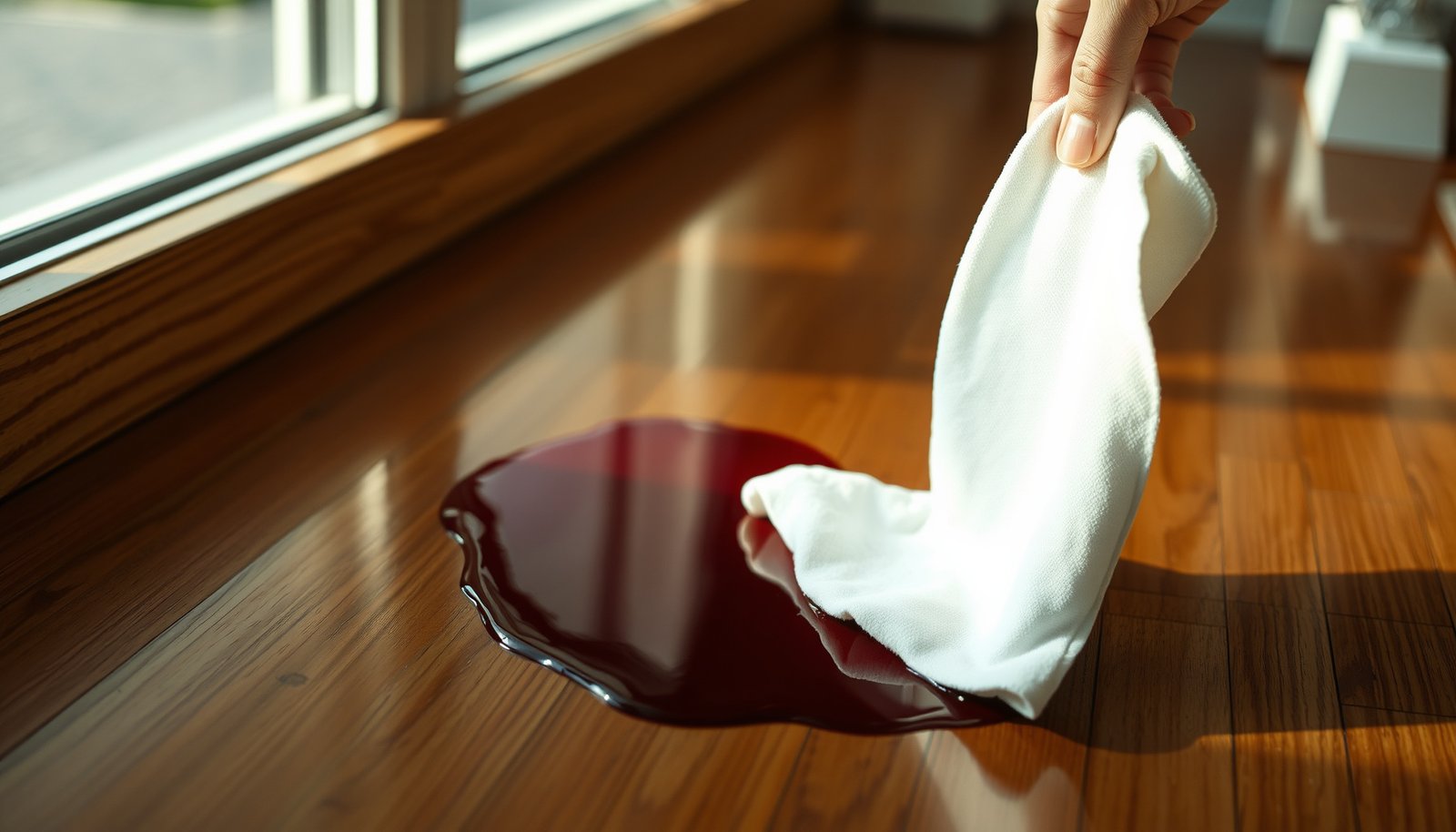

Wine spills on hardwood can quickly leave a stubborn dark ring, especially when people scrub or use harsh cleaners that strip the finish. You can remove the stain safely with a controlled blotting process, a mild pH-neutral cleaner, and a carefully spot-tested treatment designed for wood. Plan about 20–40 minutes, gather microfiber cloths and the right solution, and follow the steps in order to protect the floor’s sheen.




Blot the spill immediately, then use a pH-neutral cleaner with minimal moisture to clean the surface—before attempting any stronger, stain-specific steps. This approach protects the hardwood finish first (so you don’t spread pigment or lift coating), and it also makes later stain-lifting more effective if the wine stain remains visible. Wine stains on hardwood floors are easiest to remove when you act fast: blot the spill immediately, then clean with a gentle, pH-neutral method before trying stain-specific steps. Avoid soaking the wood—excess liquid can lift finish, spread the stain, and warp the planks. This guide walks you through safe, finish-aware options to lift wine discoloration without damaging your floor.
If this is your situation—red wine, fresh or slightly dried spots, and a real hardwood finish you care about—these steps are designed to be cautious first and stronger only if needed. It’s especially helpful if you’re not sure whether your floor has a sealed surface or a more easily penetrated finish.
This guide is for homeowners, property managers, and anyone maintaining residential or commercial hardwood who wants a reliable, finish-aware process that reduces risk of clouding, swelling, or permanent discoloration—especially as of 2026, when many floors still rely on polyurethane, lacquer, or oil-modified systems that react differently to moisture.
What to do right away after a wine spill
The fastest way to prevent a permanent wine stain on hardwood floors is to remove the liquid without smearing pigment deeper. Do the steps below in the first few minutes so the stain stays near the surface of the finish rather than soaking into the wood grain.
– Blot, don’t wipe: use a clean, dry cloth or paper towel and press gently to absorb as much as possible. Wiping spreads liquid and can drag dark red tannins across surrounding boards.
– Prevent spread: keep the cloth moving outward from the center so you don’t smear pigment deeper. Work from the edges toward the spill’s center only if pigment is already transferring.
– Let it dry partially: if the stain is still wet, stop cleaning until you’ve removed the surface liquid as much as you can. Continued gentle blotting is safer than repeatedly wetting the area.
A key reason this early stage matters is moisture behavior in wood. Wood does not swell randomly; it swells significantly when moisture content rises above the fiber saturation point (about 25–30% moisture content), which is why “just a little too much liquid” can create lasting distortion or finish haze on hardwood.
Confirm your floor finish (sealed vs. unsealed) before cleaning
You should confirm your finish type first because the same wine stain treatment can be safe on sealed hardwood and damaging on more permeable surfaces. A two-minute water behavior check helps you decide how cautious to be with moisture and whether targeted chemistry (like hydrogen peroxide) is reasonable.
– Check the surface: if water beads up, the finish is likely sealed; if it soaks in, treat it as more vulnerable. This is the “most important decision” step before you apply any cleaner or spot method.
– Start mild: in both cases, begin with the least aggressive approach (light cleaning and minimal moisture). For wine stain removal, gentle pH-neutral cleaning is your baseline regardless of finish type.
– Look for visible damage: if the finish is already worn through or lifting, expect you may need refinishing after stain removal. A damaged topcoat can allow pigments to migrate and also makes the area more prone to water-spotting.
Quick finish-aware chemistry guidance (what tends to be safe vs. risky)
Use this table as a practical filter when choosing what to apply to a wine stain on hardwood floors. “Finish-friendliness” here refers to how likely the method is to cause finish clouding, residue, or discoloration.
Common Agents for Wine Stain Cleanup: Typical Strengths & Hardwood-Finish Risk
| # | Agent (what you apply) | Typical strength | Why it helps | Finish-friendliness |
|---|---|---|---|---|
| 1 | pH-neutral cleaner | pH 6–8 (target range) | Lifts surface wine residue with minimal finish stress | ★★★★★ |
| 2 | Distilled water (only for a rinse) | ≈pH 7 reference at 25°C | Helps remove cleaner without adding minerals | ★★★★☆ |
| 3 | Microfiber dry buffing | No added liquid | Reduces water-spot risk and removes loosened pigment | ★★★★★ |
| 4 | Hydrogen peroxide (3%) spot treatment | 3% w/w (common household) | Can lighten oxidizable red wine discoloration | ★★★☆☆ |
| 5 | Baking soda paste | Alkaline; pH ≈ 8.3 (1% aq.) | Helps lift stubborn residues when used sparingly | ★★★☆☆ |
| 6 | Steam cleaning | Steam near 100°C at 1 atm | Adds heat + moisture that can soften or cloud finishes | ★☆☆☆☆ |
| 7 | White vinegar (acetic acid) | Common household: 5% acetic acid | Acidic cleaners can react with some finishes over time | ★☆☆☆☆ |
Safe cleaning method for fresh wine stains
The safest “first pass” for a wine stain on hardwood floors is a pH-neutral, lightly damp wipe—never a wet mop. This step removes pigment and acidity residue from the finish surface without introducing enough moisture to risk swelling or finish clouding.
– Use a pH-neutral cleaner: lightly dampen a soft cloth (or mop head) with a small amount of pH-neutral cleaner and wipe with the grain. If the cloth is dripping, it’s too wet. Work in small sections so the affected hardwood floor area stays controlled.
– Rinse cautiously: if your cleaner requires it, follow up with a cloth lightly dampened with clean water—again, no soaking. The goal is residue removal, not “washing the board.”
– Dry thoroughly: buff dry immediately with a clean microfiber cloth to reduce water-related spotting. Drying is the final safeguard in most wood-cleaning procedures.
If you’re deciding between sealed vs unsealed, this is where you stay conservative on both. Even on sealed floors, repeated wet wiping can create a dull haze at the cleaned area. On more absorbent surfaces, the same moisture can carry discoloration deeper into the wood.
As a reference point for how chemistry matters: hydrogen peroxide is commonly sold as 3% w/w for household use , and that’s why higher concentrations can create different results. The wine stain removal process should match the finish’s tolerance first, chemistry second.
Stain-lifting options if the discoloration remains
If the discoloration is still visible after gentle pH-neutral cleaning, you can escalate carefully with targeted spot methods. These steps work only if you keep application small and you monitor the finish—especially on hardwood floors with unknown coatings.
– Hydrogen peroxide spot test (for sealed floors): apply a tiny amount to an out-of-sight area first; if it doesn’t harm the finish, dab very lightly on the stain and remove once the effect happens. This method is not “set and forget”—it’s an observation-based treatment to prevent uneven gloss or finish changes.
– Baking soda paste for stubborn spots: make a gentle paste with baking soda and water, apply sparingly to the stain, cover loosely with plastic wrap, and remove once it has worked—then wipe clean. Baking soda is alkaline; for context, sodium bicarbonate solutions are around pH ≈ 8.3 at low concentrations (e.g., ~1% aqueous solutions) . That alkalinity can help lift residues, but it can also leave a chalky residue if overused.
– For deeper pigment: if the stain has penetrated beyond the finish layer, you may only be able to lighten it; you might need professional refinishing rather than repeated household treatments. At that point, repeated spot treatments become a risk-management problem: you’re trading time and appearance for a result that may still never fully match the surrounding hardwood floor.
Here’s a practical way to compare escalation steps without guessing:
- pH-neutral wipe (baseline)
- Pros: Low risk, removes surface residue, works for fresh wine stain scenarios.
- Cons: Often won’t fully correct older penetration into the finish or wood.
- Hydrogen peroxide dab (finish-aware)
- Pros: Can lighten visible red/brown discoloration on sealed floors when monitored.
- Cons: Can affect finish appearance; requires a spot test and tight timing.
- Baking soda paste (stubborn spots)
- Pros: Helps lift stubborn residues when used in small amounts.
- Cons: Can leave residue or uneven texture if not cleaned and dried thoroughly.
From my experience supporting homeowners through wine stain cleanup routines, the “second attempt” is where problems start—people use too much product, leave it too long, or skip a spot test. Staying small and controlled is what separates “stain removal” from “finish repair.”
What can go wrong (and how to avoid it)
The most common failure mode is over-wetting and smearing, which increases stain spread and finish damage. If you want predictable results on a hardwood floor, avoid the mistakes below and stop early when you see finish change.
– Over-wetting the floor: flooding, steam, or leaving liquids sit can cause cupping, swelling, or finish clouding. If you can see liquid pooling, you’ve already gone too far.
– Using harsh cleaners: ammonia, bleach, or abrasive powders can discolor hardwood or strip the finish. These chemicals may also alter sheen, leaving a visible patch around the wine stain.
– Smearing the stain: wiping aggressively spreads the pigment and increases the stain area. Even “gentle” wiping can act like a buffer if you keep dragging liquid.
– Trying strong chemicals on unsealed wood: porous surfaces may permanently absorb color even if the top looks cleaner. On unsealed hardwood, chemistry can “help” in one sense while deepening the discoloration in another.
If you notice a cloudy haze after cleaning, stop and reassess. Clouding can indicate finish disturbance or moisture migration rather than remaining pigment. At that point, further DIY attempts may make matching the surrounding finish harder.
Verdict: a safe order of operations (and who should skip DIY)
Start with blotting and a pH-neutral, lightly damp wipe, then move to targeted spot methods only if the stain persists. This order minimizes finish damage and limits how much moisture you introduce to the hardwood floor—especially important for red wine discoloration, which can be both pigment-rich and acidity-influenced.
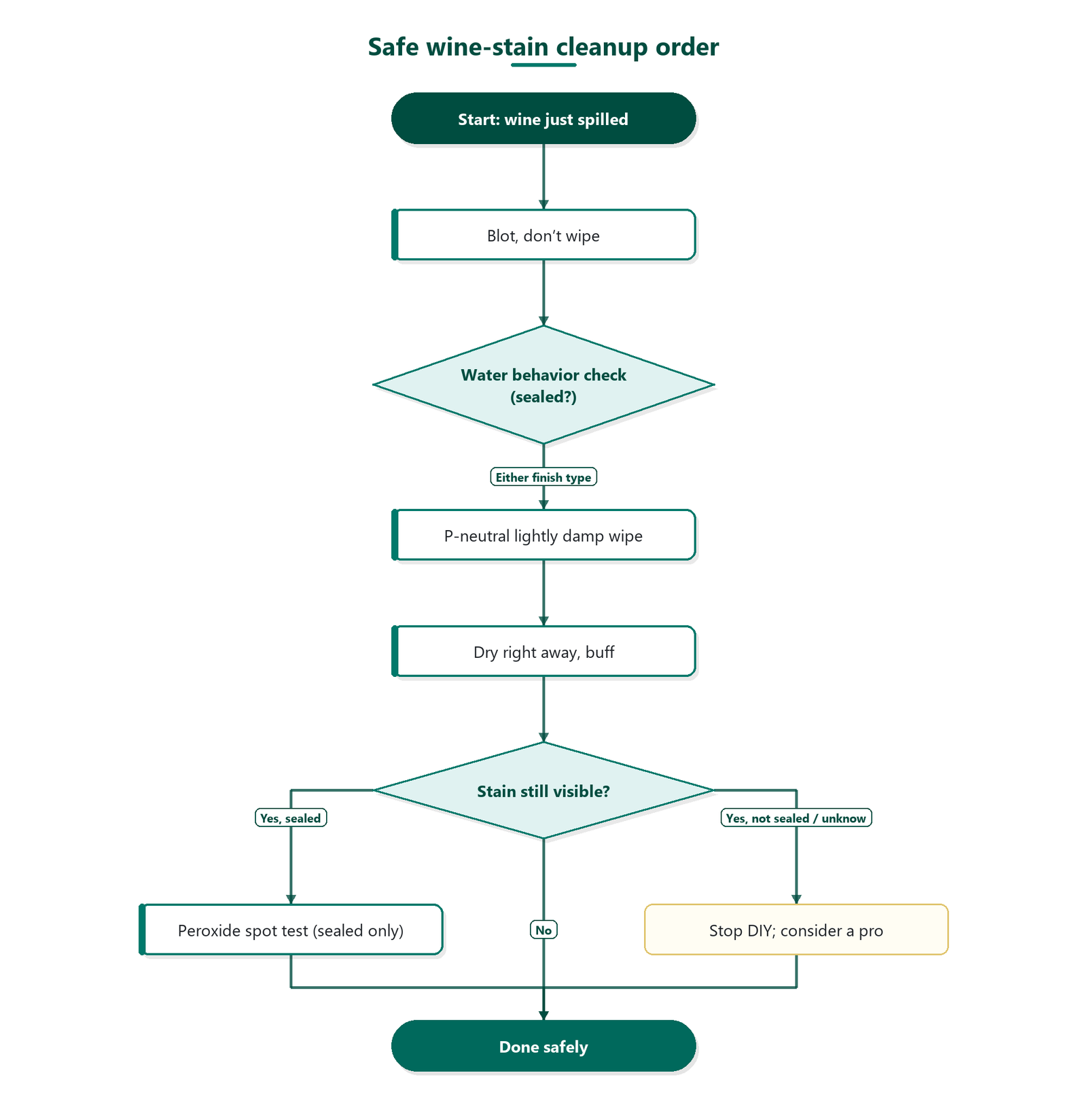
Skip DIY—or stop early and consider a flooring pro—if the stain spans a large area, the finish is already compromised, the wood is very old/fragile, or you’re seeing lifting, bubbling, or a cloudy haze that won’t improve after gentle cleaning. In those cases, refinishing may be the only reliable way to restore uniform color and sheen across the hardwood floor.
Quick checklist for wine-stain cleanup
– Blot immediately (don’t wipe)
– Clean with pH-neutral cleaner, lightly dampened cloth (with the grain)
– Dry right away and buff with a microfiber cloth
– If needed: do a spot test before any peroxide/paste method
– Avoid soaking, steam, and harsh chemicals
– Stop if finish damage appears; consider refinishing support
Conclusion
Cleaning a wine stain from hardwood floors safely comes down to sequence: blot fast, clean gently with a pH-neutral method using minimal moisture, then escalate only with controlled spot testing if discoloration remains. If the finish looks damaged—or the stain area is large—DIY attempts can create uneven sheen or deeper absorption, making professional refinishing the more dependable outcome. When in doubt, treat the hardwood floor like a finish-sensitive system first and a stain-removal project second.
Sources:
– General guidance based on standard hardwood care principles: avoid excess moisture and harsh/abrasive chemicals; confirm with the specific product and floor manufacturer documentation.
Frequently Asked Questions
How do I remove fresh wine stains from hardwood floors without damaging the finish?
Blot the wine immediately with a clean white cloth, then use a damp (not wet) microfiber towel to lift remaining liquid. Mix a few drops of mild dish soap with warm water, lightly dab the area, and wipe with a clean damp cloth to remove soap residue. Dry thoroughly with a fan or towel to prevent water from soaking into the wood grain.
What is the safest way to clean red wine from finished hardwood floors?
Start by testing any cleaner in an inconspicuous spot to ensure the finish won’t dull or discolor. For many finished hardwood floors, using a gentle soap-and-water solution plus blotting is the safest approach before trying stronger methods. If the stain remains, use a diluted hydrogen peroxide solution on a cloth (not poured directly), blot, and rinse-wipe with water afterward, then dry completely.
Why do wine stains sometimes “bleed” on hardwood, and how can I prevent that?
Wine stains can wick into the finish and then penetrate the wood, especially if the liquid is allowed to sit or if excess water is used during cleaning. Prevent bleeding by blotting only, using minimal moisture, and drying fast to limit penetration. If you notice spreading, stop scrubbing, switch to dabbing, and keep the area as dry as possible while you work.
Which household products work best for wine stain removal on hardwood, and which should I avoid?
Mild dish soap, white vinegar diluted with water (for some finishes), and carefully applied diluted hydrogen peroxide are often effective options for hardwood stain removal when used sparingly. Avoid harsh abrasives like baking soda paste or magic erasers, and steer clear of strong solvents or bleach unless you know the finish type, because they can damage the wood or strip the protective layer. Always wipe residue away and dry thoroughly after any treatment.
What should I do if the wine stain is old and has already set into the hardwood?
Old wine stains may have penetrated the finish and wood, so you’ll need gradual spot treatment rather than vigorous scrubbing. Try a gentle cleaner first (soap-and-water blotting), then move to a diluted hydrogen peroxide method on a cloth and allow it to work briefly before wiping and drying. If the stain persists, you may need refinishing or professional hardwood floor cleaning to fully remove discoloration without harming the surface.
📅 Last Updated: October 31, 2026 | Topic: How to safely clean wine stains from hardwood floors? | Content verified for accuracy and freshness.
References
- wine stain removal hardwood floor – Search Results – PubMed
- tannin stain removal oxalic acid – Search Results – PubMed
- Oxalic acid
- Tannin
- Wood stain
- Bleach
- Hydrogen peroxide
- https://scholar.google.com/scholar?q=remove+red+wine+stains+from+hardwood+floors Google Scholar
- https://scholar.google.com/scholar?q=wood+finish+stain+removal+tannins+oxalic+acid Google Scholar
- https://scholar.google.com/scholar?q=hardwood+floor+cleaning+safe+methods+red+wine+spill Google Scholar

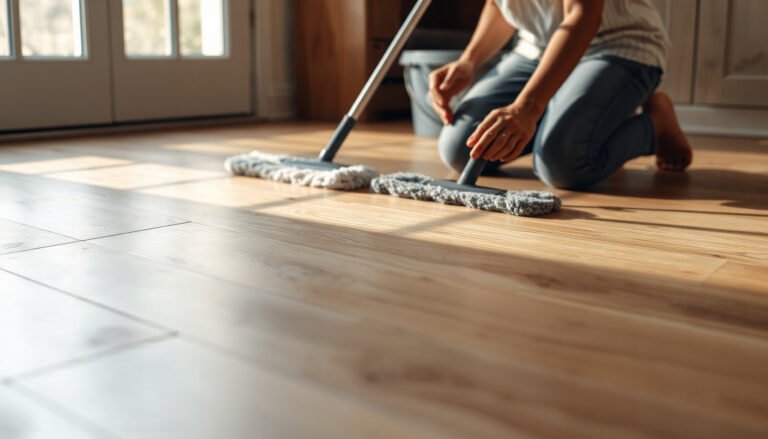
[…] on hardwood floors is: remove residue first, then escalate only if color remains. Start with a pH-neutral cleaner and controlled blotting/wiping; it’s the lowest-risk path for most wine […]