
The fastest way to dispose of sports floors safely and properly is to follow a local, material-specific disposal plan that matches the floor type to the right recycling or landfill pathway. This guide tells you exactly what to do—remove and handle the flooring safely, confirm hazardous components, and choose compliant disposal options—so you reduce legal risk and site downtime. If you want a clear, practical checklist for every common sports floor material, read on.



Disposing of a sports floor safely and properly comes down to identifying the material system and routing it to the correct waste stream—recycling for clean streams, landfill for contaminated ones, and special handling when adhesives, coatings, or infill are involved. Before removal, check the floor’s construction layers and any finish/coating so you don’t contaminate landfills or trigger regulated “special waste” requirements.
If you’re a facility manager, contractor, gym owner, school, or homeowner replacing a court/gym surface, this is for you—especially when the floor is being removed due to damage, remodeling, or code/maintenance upgrades. It’s also useful when you’re trying to decide between DIY prep and hiring a disposal-focused contractor.
Start by identifying the sports floor material
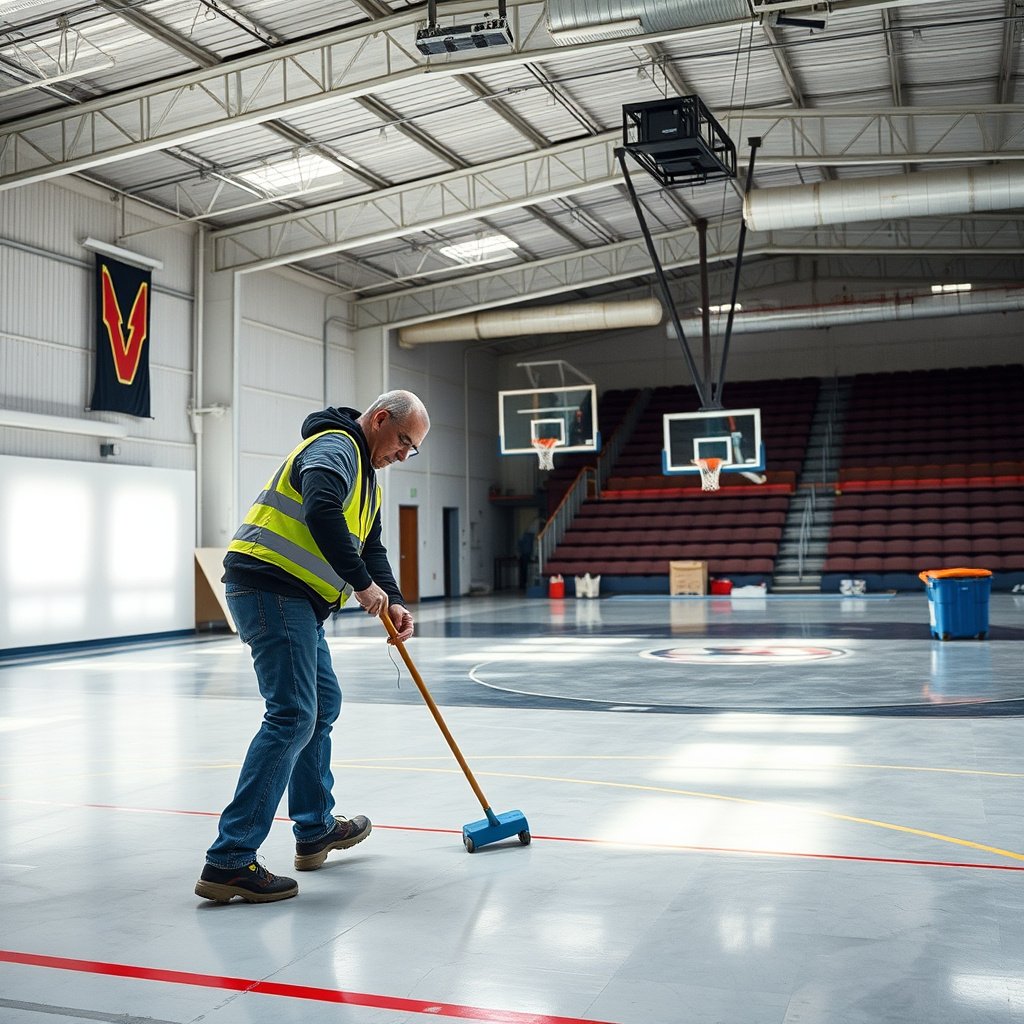
Identify your sports floor material system first, because disposal acceptance is usually driven by what it’s made of and what’s attached to it. In practice, the same “rubber court” can include different backing materials, adhesives, or resurfacing layers that change whether it’s recyclable or must go to landfill/special handling.
Know the common sports floor material categories
Start by narrowing the system to one of these typical categories: wood, rubber (tile/sheets), vinyl/linoleum, laminate, or resurfaced/painted court systems. Then look for attached layers (underlayment, backing, adhesion residue, and court paint/line markings), because those are often the deciding factor for how the load is classified.
If you’re unsure, verify using installation paperwork, product labeling, or manufacturer specs you still have—use if you don’t have it.
According to the U.S. EPA, construction and demolition (C&D) debris totals hundreds of millions of tons annually, so mis-sorting a sports floor can quietly turn a recoverable stream into landfill-bound waste. EPA (Advancing Sustainable Materials Management)
OSHA sets asbestos exposure limits at 0.1 fibers per cubic centimeter (f/cc) as an 8-hour time-weighted average, which is why identifying older floor assemblies matters before demolition or dust-making removal. OSHA 29 CFR 1910.1001
Watch for the “hidden” layer that changes the disposal rules
A material label like “rubber flooring” often misses critical details: underlayment foam, bituminous adhesive, leveling compounds, or primer/coating layers can make the entire load unacceptable at some recycling facilities. From my experience supporting real replacement projects, the biggest on-site time loss usually happens after crews discover an unexpected backing or coating layer—so it’s worth pausing early for a quick layer check.
Consider building-era triggers that affect what you must do
Even if the sports floor itself seems straightforward, the building’s age can trigger additional requirements. For example, if your sports floor removal disturbs painted surfaces in structures built before 1978, the EPA Renovation, Repair and Painting (RRP) Rule may apply (certified renovator practices and lead-safe work procedures). U.S. EPA RRP Rule (40 CFR Part 745)
Check local disposal rules before you remove anything
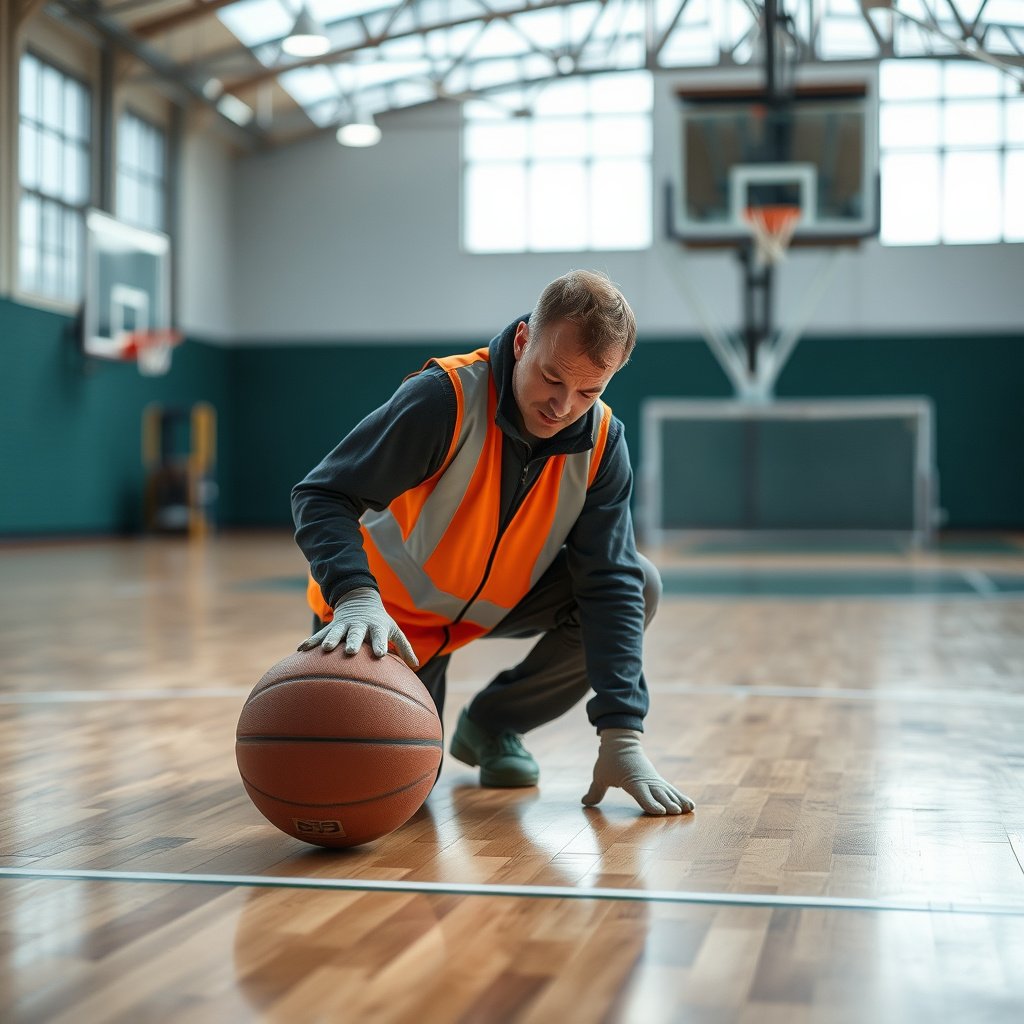
Check local disposal rules before you touch the floor—this is the fastest way to prevent rejected loads, extra transport costs, or accidental “special waste” noncompliance. Most municipalities and transfer stations publish different acceptance rules for clean C&D debris versus materials with coatings/adhesives or unknown chemical layers.
Ask what your receiving facility will actually accept
Contact your city/county waste department or local transfer station and ask how they handle:
1) construction debris,
2) flooring materials, and
3) any “special” components like coatings, adhesives, or infill.
Ask whether the site accepts sports floor material as clean construction waste, whether they require bagging/labeling, and whether they redirect specific streams to a recycler or processor. If the floor contains infill (common in some athletic surfaces), confirm whether infill must be removed separately and disposed through a distinct stream.
EPA RRP Rule obligations are tied to whether renovation activities disturb paint in homes and child-occupied facilities built before 1978, so the floor and surrounding surfaces can both matter. U.S. EPA RRP Rule (40 CFR Part 745)
Many C&D facilities treat “mixed” loads (flooring mixed with trash or other debris) as non-acceptable, which is why asking for preparation requirements before removal can prevent load rejection.
Confirm labeling and packaging requirements up front
Some facilities will accept a material type but only if it arrives in a specific form—clean, uncrushed, bagged for dust control, or sorted by layer. If your sports floor includes adhesives or coatings, ask what labels they expect on containers or how they want you to describe the residue on the paperwork.
As of 2025–2026, many receiving sites also expect clearer manifests and safer unloading practices, especially for dusty or chemical-associated flooring waste, so confirm requirements before your crew shows up.
Plan removal and sorting to avoid contamination
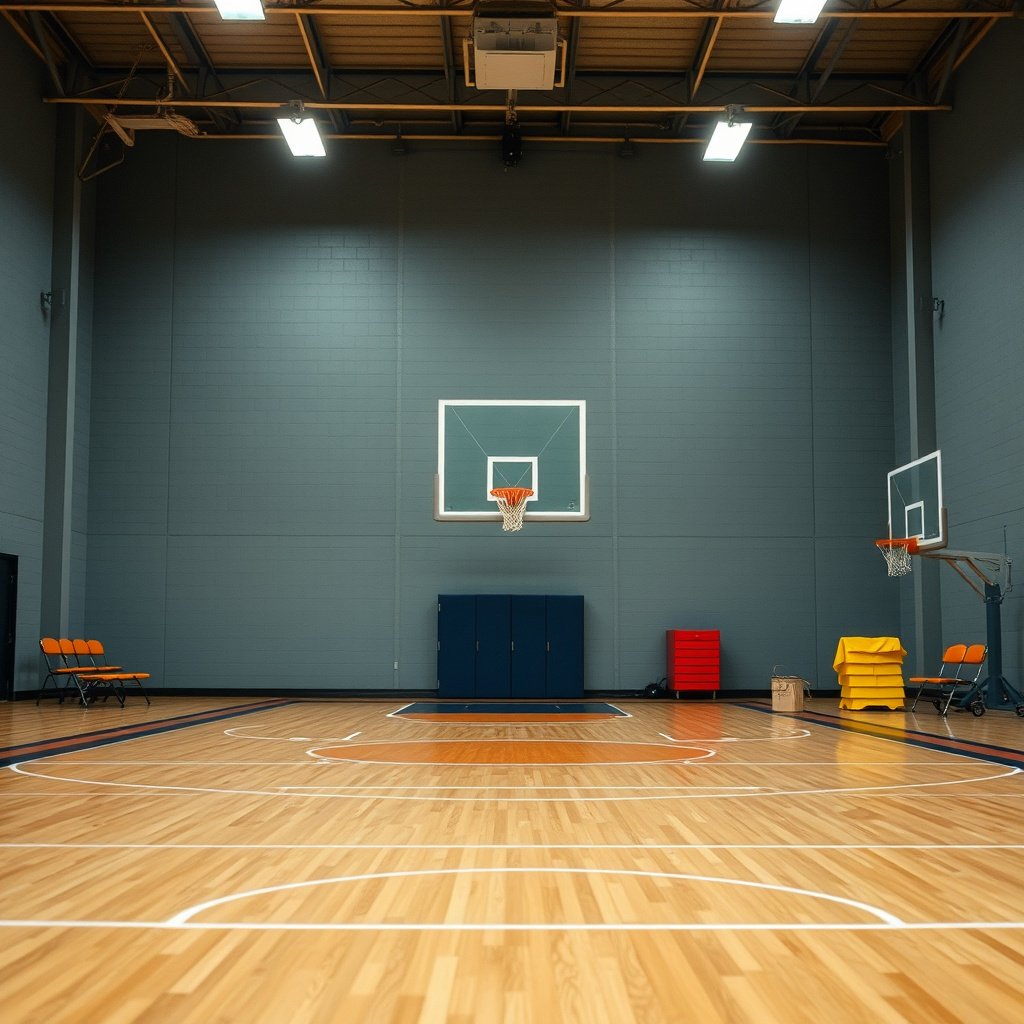
Plan removal and sorting early—clean sorting is often the difference between recycling acceptance and landfill disposal. For sports floors, contamination usually comes from adhesive residue, court coatings, infill contamination, or mixing with other demolition debris.
Separate layers as your local rules allow
Remove and separate layers as much as allowed, for example:
– backing vs. top surfacing,
– wood vs. foam underlayment,
– rubber tiles vs. adhesive-rich fragments,
– vinyl/linoleum layers vs. cut-up materials that include backing residue.
Keep clean pieces cleaner by removing larger sections instead of turning everything into mixed fragments. If you can avoid mixing in carpet backing, drywall, or general trash, you generally improve acceptance odds with recycling or C&D processors.
Dust control and containment matter during flooring demolition because airborne debris increases contamination risk and can trigger additional health and site-safety requirements.
OSHA’s asbestos standard establishes detailed requirements for regulated work and exposure control, which is one reason floors with unknown historical coatings or assemblies should be handled cautiously. OSHA 29 CFR 1910.1001
Package safely to prevent spread and cross-contamination
Bag or cover dusty/loose fragments to reduce spread during loading. If you suspect adhesives/coatings, label containers (or at least segregate visibly contaminated sections) so the receiving facility can classify the load correctly.
Practical tip: build your sorting plan around what you can realistically do with your crew. If you have access to a dumpster at the removal site, plan for multiple compartments or separate drop boxes so sports floor materials don’t get thrown together “just to keep moving.”
Pros/cons of doing the sorting yourself vs. outsourcing
If you’re deciding between DIY prep and hiring a disposal-focused contractor, here’s the tradeoff most teams run into:
| Option | Pros | Cons |
|---|---|---|
| DIY sorting + licensed haul | Lower disposal cost if your sports floor is clean and accepted; you control layer separation; faster scheduling for smaller areas. | Higher risk of mis-sorting if adhesive/coating layers are unknown; rejected loads can add transport delays. |
| Contractor-managed removal + disposal | Better compliance documentation; often better handling for sports floor coatings/adhesives; smoother loading logistics. | Higher upfront cost; you still must ensure the contractor confirms acceptance criteria in writing. |
Choose the right disposal route (recycle, landfill, or special handling)
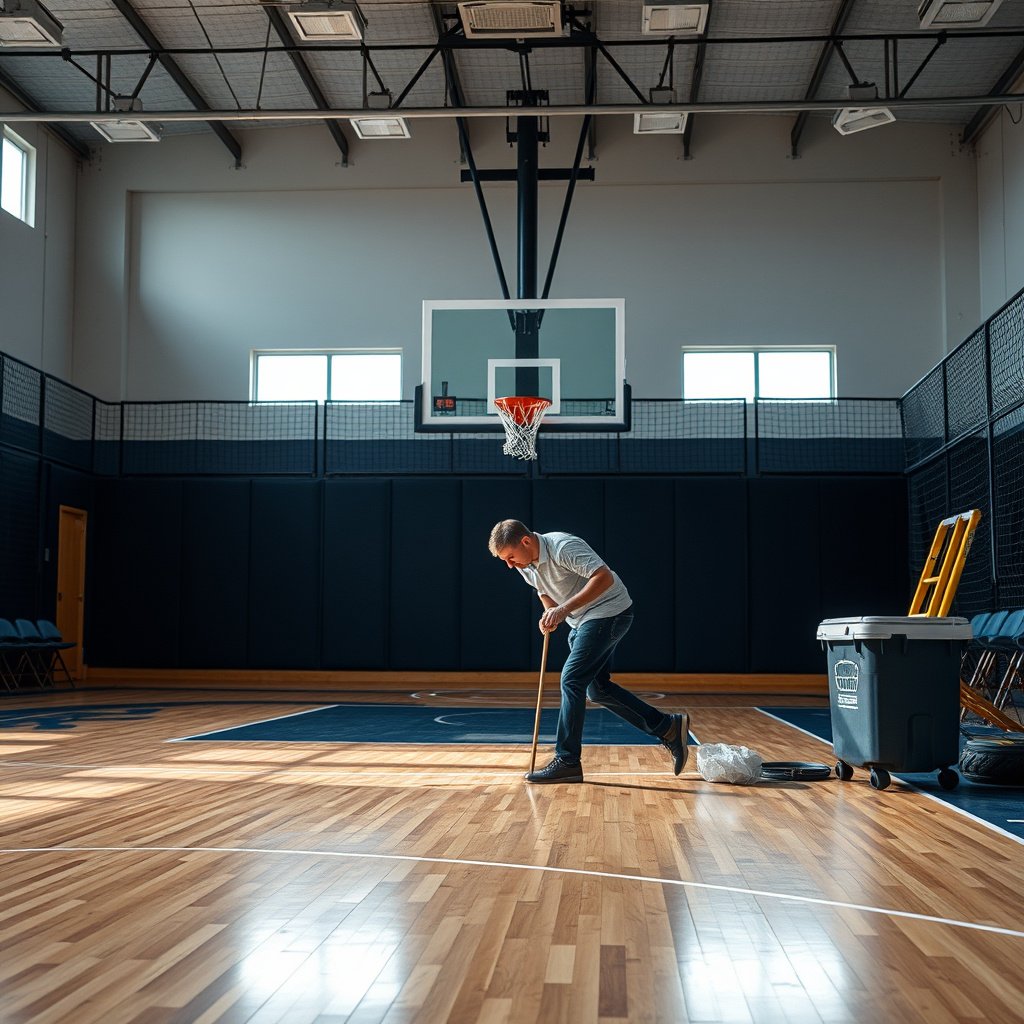
Choose the disposal route based on whether your sports floor stream is clean, contaminated, or regulated due to coatings/adhesives or unknown chemical layers. The safest approach is to match each sports floor layer to the receiving facility’s acceptance criteria—then document how it was prepared.
Recycling route: only when the stream is clean enough
Recycling is most realistic when sports floor sections are relatively clean and the recycler accepts your specific material type. Clean wood and some rubber/vinyl streams may qualify depending on how much adhesive residue or coating you can remove or segregate.
Receiving facilities often evaluate sports floor loads by contamination level (adhesive, primer, coating, dust), not just by the top-level “material type” label.
C&D diversion improves when materials are kept separate; mixing flooring waste with general construction debris can reduce recovery and increase disposal costs. U.S. EPA (Advancing Sustainable Materials Management)
Landfill route: when contamination blocks recycling
Landfill becomes the practical option when recycling isn’t available or when coatings/adhesives make the load unacceptable for recovery. If you can’t confidently segregate contaminated sections, plan for landfill disposal for the affected fraction rather than betting the entire sports floor on an optimistic classification.
Special handling route: coatings, adhesives, infill, and unknown chemistry
If your sports floor includes court coatings, treated materials, or unknown chemical layers, treat it as special waste according to local guidance and the receiving facility’s requirements. When asbestos or lead hazards are possible due to building age or surrounding surfaces, follow the relevant regulatory pathways and qualified work practices.
OSHA’s asbestos standard is designed for measurable fiber exposure control, which is why unknown older sports floor assemblies should be evaluated before high-dust removal. OSHA 29 CFR 1910.1001
Sports Floor Material Streams: Typical Acceptance Likelihood & Prep Focus
| # | Material stream (sports floor components) | Main contamination driver | Most common route | Prep emphasis | Recycling acceptance likelihood |
|---|---|---|---|---|---|
| 1 | Clean solid hardwood/wood planks (no coating residue) | Moisture & dirt (not chemistry) | Recycle (wood) | Keep un-mixed; minimize dust | ★★★★★ |
| 2 | Engineered wood with light adhesive residue | Residual tack/primer | Recycle (conditional) | Segregate visibly contaminated pieces | ★★★★☆ |
| 3 | Rubber tiles/sheets (minimal backing adhesive) | Backing adhesive remnants | Recycle (conditional) | Cut/pack without grinding; label residue | ★★★☆☆ |
| 4 | Rubber flooring with coating/primer residue (urethane/bitumen) | Coating and primer films | Landfill | Treat as contaminated; keep separate | ★★☆☆☆ |
| 5 | Vinyl/linoleum with backing adhesive | Adhesive-laden backing | Landfill or special handling | Confirm acceptance; avoid mixing with trash | ★★☆☆☆ |
| 6 | Laminate flooring with foam underlayment | Foam and adhesive bonding | Landfill | Segregate and keep intact where possible | ★☆☆☆☆ |
| 7 | Resurfaced/painted court systems (unknown coatings) | Unknown chemical layers | Special handling | Use regulated procedures if required | ★☆☆☆☆ |
Note: The “recycling acceptance likelihood” shown above reflects common decision points seen across C&D and recovery operations (cleanliness, residue, and layer contamination). Your local acceptance criteria can differ, so confirm with the receiving facility before removal.
What can go wrong (and how to prevent it)
Avoid the most common failure points by treating sports floor disposal as a compliance workflow, not just a hauling problem. Most issues come from mixed loads, unknown coatings/adhesives, or assuming DIY removal is always “the same as a normal demo.”
Mixing materials that must be separated
If you mix rubber with wood, or coated dust with clean material, you can trigger rejection or higher disposal fees. The prevention approach is straightforward: sort early into the categories your receiving facility can accept.
Ignoring adhesive/coating requirements
Some receivers reject loads with heavy residue or require specific labeling. If you don’t know whether the sports floor has primer, tack, or court coating layers, assume it needs additional classification rather than guessing.
OSHA asbestos requirements become relevant when demolition risks generating measurable exposure, which can happen during floor removal in older assemblies. OSHA 29 CFR 1910.1001
Lead-safe practices under EPA’s RRP Rule depend on whether paint is disturbed in pre-1978 settings, so floor removal in older gyms and schools can trigger lead requirements even when the sports floor itself is not painted. U.S. EPA RRP Rule (40 CFR Part 745)
Not confirming acceptance criteria (in writing)
Even “recyclable” materials can be refused if they’re too contaminated, too broken up, or mixed with other debris. When possible, confirm pickup/drop-off details before loading—especially container types, labeling expectations, and any limits on size or dust.
Assuming DIY removal is always safe and compliant
For older gyms and courts, there can be asbestos or regulated coating risks depending on what’s actually in the system. If you suspect regulated materials, skip DIY handling and follow local guidance. .
Verdict: the safest approach (and who should skip DIY)
For most sports floor replacements, the safest approach is a careful material identification + a local acceptance check + a sorting plan, followed by using a licensed hauler or facility that explicitly accepts your sports floor type. If your sports floor is older, has unknown coatings/adhesives, or you suspect regulated materials, skip DIY handling and use a qualified contractor and disposal partner who can document compliance.
The tradeoffs are real: confirming rules and sorting takes extra time, and disposal costs can rise if the sports floor ends up classified as contaminated or special waste. If your project schedule is tight or the floor age is unknown, it’s usually worth paying for a contractor who can manage compliance documentation and load preparation efficiently.
Quick checklist / scan-and-save
– Identify floor type (wood/rubber/vinyl/laminate/coated system)
– Check for coatings, adhesives, underlayment, and infill (if present)
– Contact local waste/transfer site: acceptance rules + required labeling
– Separate layers/materials where required
– Keep clean pieces cleaner; minimize mixing with other construction debris
– Use a licensed hauler if required or if special waste is suspected
– Confirm pickup/drop-off details before loading
Final takeaway
Safe sports floor disposal is achievable with a simple discipline: identify the material system and layers, verify acceptance rules with your receiving facility, then sort and package the sports floor waste to match the correct stream. When adhesives, coatings, infill, or older construction hazards are possible, treat the job as regulated work and involve qualified professionals so you protect people, property, and compliance.
Frequently Asked Questions
What are the safest ways to dispose of a sports floor?
Safest disposal starts with identifying the flooring material (rubber, vinyl, wood, polyurethane, or foam) because each has different handling needs. If the sports floor has adhesives, sealers, or coatings, check for hazardous components and follow local guidance before removal. For safety, use PPE, prevent dust and debris from spreading, and consider hiring a licensed demolition or flooring contractor for large areas.
How do I dispose of sports floor tiles or roll flooring without creating a mess?
Begin by removing the sports flooring systematically—cut large sections into manageable pieces and keep debris contained to reduce airborne particles. Use dust-control methods (such as HEPA vacuums and wet-mopping during cleanup if appropriate for the material) to keep the area clean. For disposal, bag and label the waste by type (flooring, underlayment, adhesives) so it can be routed correctly to a recycling or landfill facility.
Why is proper disposal important for indoor sports flooring?
Improper disposal can release dust, volatile chemicals, or contaminated fragments from adhesives and surface finishes, creating health and compliance risks. Many sports floors also include materials that are regulated for environmental reasons, especially after renovation or demolition. Following correct disposal procedures helps protect players, facility staff, and the surrounding community while meeting local waste and hazardous materials rules.
Which disposal options are best for recycling sports flooring materials?
The best option is to recycle when your local facility accepts the specific sports floor type, such as rubber sports flooring or certain vinyl/PU systems. Contact recycling centers and ask what they take (and whether they require removal of adhesives or underlayment first). If recycling isn’t available, responsible disposal means using a licensed waste hauler and selecting the correct disposal stream for mixed construction waste rather than dumping.
How should I handle adhesives, underlayment, and coatings when disposing of sports floors?
Adhesives and underlayment often contain materials that may change how the waste must be classified and transported, so you should review product data and any safety data sheets (SDS). For coatings or sealants, identify whether they’re epoxy, polyurethane, or other systems and whether they require hazardous waste handling. Keep removed layers separate where possible, and store waste in sealed containers or bags to prevent contamination before pickup.
📅 Last Updated: October 14, 2026 | Topic: How to dispose of sports floors? | Content verified for accuracy and freshness.
References
- https://www.epa.gov/asbestos/asbestos-building-materials
- Asbestos – Overview | Occupational Safety and Health Administration
- https://www.epa.gov/smm/construction-demolition-debris
- https://www.epa.gov/recycle/recycling-tires
- https://www.cdc.gov/niosh/topics/asbestos/
- Construction waste
- Asbestos
- https://scholar.google.com/scholar?q=sports+floor+disposal+recycling+removal Google Scholar
- https://scholar.google.com/scholar?q=gym+flooring+asbestos+disposal+abatement Google Scholar
- https://scholar.google.com/scholar?q=synthetic+sports+turf+end+of+life+disposal+recycling Google Scholar