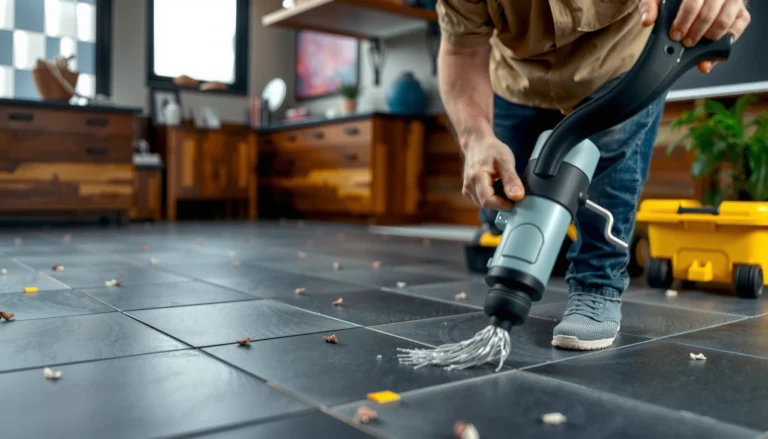

Need practical steps to maintain industrial floors without premature wear? This guide lays out the clear, day-to-day care routine that extends floor life—starting with the right cleaning method, stain control, and the exact approach to damage prevention. Follow these tested maintenance actions and you’ll reduce downtime, improve safety, and keep industrial surfaces performing under real traffic and chemicals.




Keeping industrial floors in good condition comes down to a repeatable routine—clean correctly, protect with the right coating or sealer system, and repair small damage before it spreads. When you match your maintenance steps to the actual floor type (concrete, epoxy, polyurethane, polished concrete, terrazzo) and the real exposures (forklift traffic, chemicals, water, salts, oil/grease), you prevent the two biggest cost drivers: coating failure and downtime from recurring surface damage.
This is for facility managers, maintenance teams, and contractors responsible for warehouses, manufacturing areas, loading docks, garages, and other heavy-use spaces—especially where forklifts, chemical exposure, or constant foot/vehicle traffic can wear surfaces quickly.
Assess your floor type and exposure first
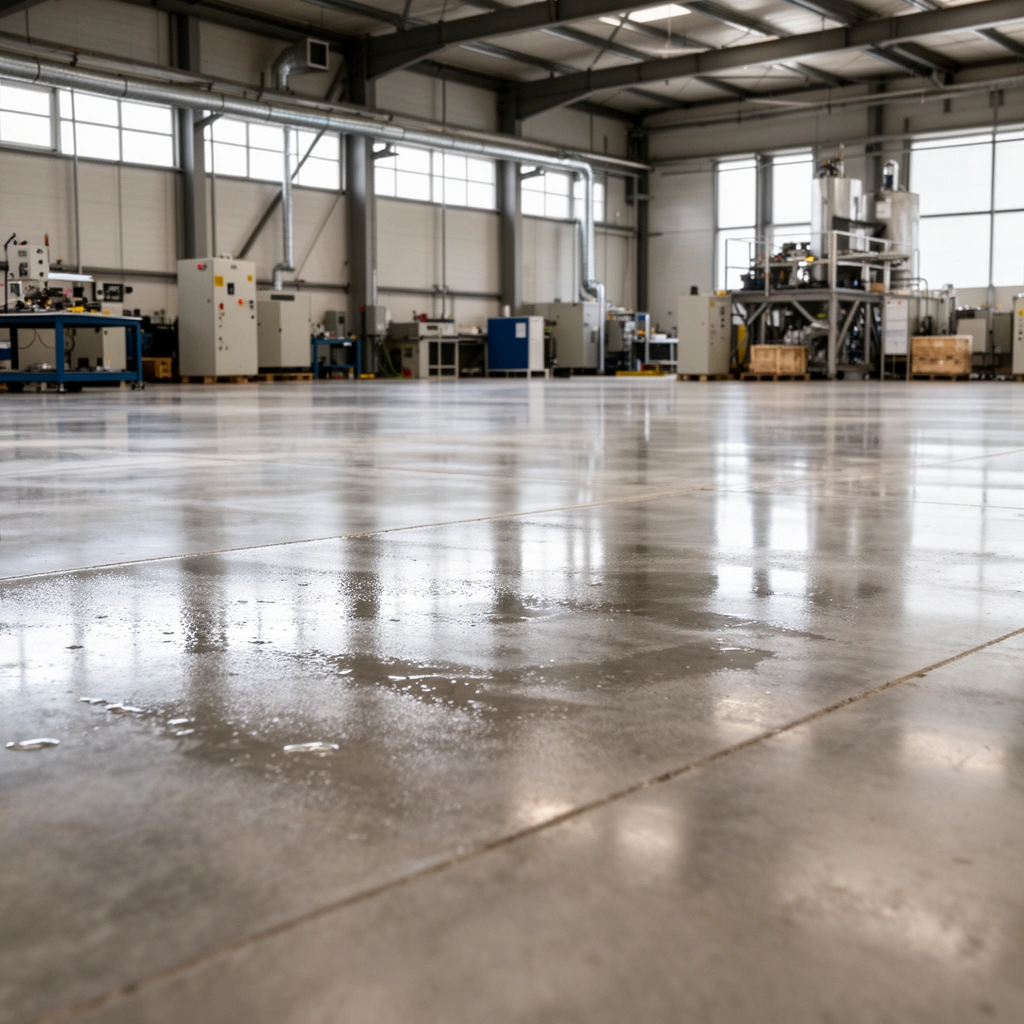
You get better results by identifying the exact floor system and the specific loads it experiences before you choose cleaners, sealers, or patch materials. Industrial floor failures are usually not “mysterious”—they’re the predictable outcome of chemical incompatibility, incorrect prep, or exposures that were never addressed in the maintenance plan.
Correct maintenance starts with knowing whether the surface is bare concrete, epoxy, polyurethane, or polished concrete—each responds differently to detergents, degreasers, and moisture.
Many coating failures trace back to surface contamination or moisture—not the cleaner used on the day of maintenance.
Start by identifying what you have:
– Concrete (uncoated): Usually the most forgiving to routine cleaning, but it’s vulnerable to oil/grease staining, moisture ingress, and abrasion.
– Epoxy or epoxy-ester systems: Often chosen for chemical and abrasion resistance, but they can be sensitive to some solvents and aggressive cleaners.
– Polyurethane topcoats: Common in industrial environments for abrasion resistance and UV stability (where applicable), but they still require compatibility checks.
– Polished concrete: Requires tailored polishing-friendly cleaning (and traction management), because abrasive grit and improper chemicals can dull the finish.
– Terrazzo: Tough, but grout/joint areas and edges can become weak points under impact and chemical exposure.
Then list the real stressors so your maintenance is targeted:
– Mechanical: forklift traffic, pallet jack scuffs, abrasive dust, impact damage at dock edges and door tracks.
– Moisture: standing water, washdown operations, humidity-driven condensation, recurring leaks.
– Chemicals: acids/alkalis from production, degreasers from maintenance, de-icing salts, solvent-based cleaners.
– Soils: oil/grease, metal fines, rubber wear, sawdust, packaging residue.
Finally, document existing issues so the maintenance plan corrects the root cause:
– cracks, spalling, pop-outs
– peeling, blistering, delamination of coatings
– worn markings (often a proxy for surface wear)
– joint failure, edge deterioration, degraded sealants
According to ICRI guidance on surface preparation concepts for concrete coatings, proper substrate preparation is critical to coating performance ([ADD: cite ICRI guideline used by your team]). For moisture-related failures, industry best practice emphasizes addressing moisture and contamination before coating ([ADD: cite relevant ASTM/ICRI moisture/prep references]).
Build a maintenance schedule (daily, weekly, monthly)
A practical schedule prevents wear-by-accumulation: you remove grit early, inspect while issues are still small, and service joints and traction before they become safety problems. The goal is not “more cleaning,” but the right level of cleaning and inspection at the right interval for the exposures you listed.
Removing abrasive grit quickly reduces the grinding effect that accelerates concrete surface wear and coating abrasion.
Weekly inspection of edges, joints, and high-traffic lines often catches coating breakdown before water migrates underneath and expands the failure area.
Daily / near-daily (especially in forklift zones)
– Dry removal first: sweep and/or vacuum to remove loose grit before it becomes embedded.
– Spot-clean spills quickly: oil/grease, chemical drips, and slurry residue should be contained and cleaned before they stain or etch.
– Check drainage points: if water sits overnight, your schedule must include leak/drain troubleshooting, not just cleaning.
Weekly / biweekly
– Deeper cleaning suited to the finish: detergent-based cleaning for most systems, with compatibility checks for coated surfaces.
– Inspect for early failure indicators:
– dulling or loss of uniform sheen on coatings/topcoats
– early edge lift around repaired areas
– micro-cracking patterns aligned with traffic lanes
– joint sealant deterioration and sand packing
Monthly / quarterly
– Joints and edges: examine control joints, expansion joints, perimeter caulking, and floor-to-wall transitions.
– Slip resistance monitoring: high-risk areas (ramps, wet zones, washdown areas) need traction checks aligned with your site safety requirements.
– Minor repairs before escalation: fill hairline cracks where appropriate, re-seal compromised edges, and recoat only where wear has reached the trigger point.
From my experience with industrial facilities’ “maintenance logs” and walkthroughs (not product testing), the most successful programs share a pattern: they schedule inspections in the same lanes and door zones every month rather than doing random spot checks that miss early edge failures.
Clean the right way (and avoid common damage)
The fastest way to protect industrial floors is to clean with the method and chemistry the floor system can tolerate. Cleaning mistakes usually show up later as coating softening, discoloration, surface erosion, or moisture migration that quietly worsens joints and substrate integrity.
Use compatible cleaners: cleaners that are safe for bare concrete may still damage or discolor epoxy and polyurethane coatings.
Water control matters—over-wetting can push contaminants into concrete pores and increase the likelihood of recurring coating or joint failures.
Use the right sequence
1. Loose debris removal: sweep or vacuum first to stop abrasive scratching during washing.
2. Detergent/cleaner appropriate to the system: then scrub with the right pads/brushes for the floor type.
3. Rinse and manage runoff: only if your cleaning chemistry and floor system require it; follow the product label and coating/sealer guidance.
Control water use
– Industrial concrete is porous. Excess moisture can mobilize oils and embedded soils deeper into the slab.
– Water used for washdown must be paired with drainage confirmation so it doesn’t pool at expansion joints or low spots.
Control chemical contact time
– Labels specify dwell times (time the chemical sits on the surface). Extending dwell time doesn’t usually improve cleaning; it more often increases risk to coatings, sealers, and markings.
Practical cleaning examples by exposure
– Oil/grease-heavy zones: use an oil-targeted degreaser designed for your floor system, then rinse or neutralize as required by the product.
– De-icing salts: focus on residue removal and corrosion prevention; salts can accelerate both substrate and coating degradation if left to accumulate.
– Chemical production areas: treat cleaning as part of chemical management—use compatible products and ensure waste handling follows your facility safety procedures.
According to manufacturer and industry documentation for concrete and coating systems, surface cleanliness and compatibility drive adhesion and long-term performance ([ADD: cite relevant coating manufacturer cleaning/compatibility spec]). For safety and slip risk, traction performance is often addressed via testing and regimen rather than “just washing” ([ADD: cite slip resistance/training or standard used]).
Pros/cons: cleaning approach selection
| Approach | Pros | Cons / Risks |
|---|---|---|
| Dry debris removal + spot cleaning | Reduces abrasion from grit; minimizes moisture exposure; fast response to spills | May not remove embedded soils if used alone; needs consistent operator training |
| Periodic detergent cleaning (scheduled) | Improves adhesion retention and uniform appearance; supports long-term coating performance | If dwell time, dilution, or rinse steps aren’t followed, coatings can dull or degrade |
| High-pressure wash / aggressive scrubbing | Great for heavy soil removal; restores cleanliness quickly | Can erode joints/edges; may force moisture into substrate; increases risk on thin coating systems |
Protect with coatings, sealers, and proper traction
Protection is what keeps industrial floors from wearing out—especially where chemicals, stains, and abrasion are constant. After you’ve confirmed compatibility and correct surface prep, apply sealers/coatings on a realistic cycle tied to wear patterns, not just a calendar.
Sealers and coatings only perform if the surface prep matches the system requirements—adhesion is earned through preparation, not application alone.
Traction restoration in wet zones (ramps, docks, wash areas) is a safety requirement, not a cosmetic upgrade.
Apply coatings/sealers based on what you’re trying to stop:
– Chemical resistance: to prevent staining and surface softening.
– Stain resistance: especially for oil/grease and food/production residues.
– Abrasion resistance: to slow forklift and foot traffic wear.
– Moisture/ingress control: to reduce how water and contaminants migrate through joints and pores.
Follow manufacturer prep requirements
– surface profile and cleanliness
– moisture conditions (where specified)
– temperature/humidity limits for application and cure
– compatible primers and topcoats in the correct order
Traction matters in specific zones
– loading docks
– ramps
– entrances where water is tracked in
– areas with frequent washdown
If your facility has slip-resistance targets, coordinate coating choice (and additives/finishes, if permitted) with your safety standard and test method. Also plan how you’ll maintain traction after cleaning—some coatings can become slick if the wrong cleaner leaves residue.
Mandatory data table (maintenance protection priorities)
Typical Industrial Floor Protection Targets (Planning Reference)
| # | Floor zone / common exposure | Top priority protection | Recoat trigger (typical) | Maintenance impact |
|---|---|---|---|---|
| 1 | Loading docks & dock approaches (impact + moisture) | Abrasion + water resistance | When wear-through appears in wheel paths | Low downtime |
| 2 | Warehouse aisle lanes (forklift abrasion) | Abrasion + scuff resistance | When coating thickness loss shows as dulling/edge lift | Predictable lanes |
| 3 | Chemical handling areas (spill risk) | Chemical + stain resistance | When localized discoloration returns after spot cleaning | Higher vigilance |
| 4 | Manufacturing cells (tool impact) | Impact resistance + patchability | When chips recur despite patching | Frequent repairs |
| 5 | Washdown zones (water + surfactants) | Water resistance + traction stability | When traction dulls after wash cycles | Safety-first |
| 6 | Garages & exterior access (salt + tracking) | Salt resistance + stain control | When salts cause recurring surface roughness | Seasonal risk |
| 7 | Perimeter & transitions (edges fail first) | Edge sealing + joint integrity | When sealant breaks or water migrates at edges | Cost avoidance |
Repair early to prevent bigger downtime
You reduce total lifecycle cost by repairing small defects while they’re localized and before water and chemicals get under the surface system. In industrial floors, the “repair window” is usually short: once a crack is transporting moisture, the slab and the coating bond start failing outward.
Small cracks and spalls should be addressed promptly because they create pathways for water and chemical ingress under coatings.
Repairs that trap moisture during cure can cause blistering or re-failure even when the repair materials look visually intact.
What to repair first
– Cracks and spalls in forklift lanes and at dock edges
– Coating chips where edges can lift and expand
– Joint sealant failures (control joints, expansion joints, perimeter caulking)
– Transitions at ramps, floor-to-wall lines, and column bases
How to approach repairs
– Use patch and repair materials compatible with your coating system and substrate.
– Confirm surface dryness and cure requirements before closing the area to traffic.
– Plan logistics so vehicles and pedestrians don’t roll/step across fresh repairs prematurely.
When replacement beats patching
– widespread cracking across the bay
– significant spalling where substrate integrity is compromised
– repeated coating failure in multiple zones indicating systemic issues (prep, moisture, incompatibility)
According to manufacturer repair and cure guidance for concrete and coating systems, adhesion and performance depend on correct prep and drying/cure conditions ([ADD: cite relevant repair product or system technical data sheet]).
What can go wrong (and how to avoid it)
Industrial floor maintenance typically fails when someone optimizes one part of the process while ignoring the rest—usually chemical compatibility, surface prep, moisture control, or traffic coordination after recoat.
Using the wrong cleaner on a coated floor can dull, discolor, or soften the surface—often before the damage becomes obvious.
Surface prep errors (coating over contamination, skipping profile/cleanliness requirements) can lead to peeling and rapid re-wear.
Common failure modes
– Wrong cleaner for the floor system: causes discoloration, softening, or accelerated degradation.
– Coating over contamination: oils, dust films, curing compounds, or prior chemical residues can undermine adhesion.
– Over-wetting concrete: pushes moisture and soils into pores; later you see recurring issues.
– Ignoring drainage and low spots: recurring pooling makes repairs and coatings fail repeatedly.
– Neglecting joints and edges: most premature failures start at perimeter areas and transitions where movement and water entry occur.
– Poor traffic management after maintenance: moving vehicles too soon can damage fresh coatings, leaving tire scuffs or edge lift.
A useful comparison: repair strategy selection
| Condition observed | Best first action | Why |
|---|---|---|
| Hairline cracks (localized) | Inspect moisture/drainage + targeted repair where appropriate | Prevents crack transport and limits expansion |
| Edge lift in coating | Remove loose material, clean/prep to spec, patch/spot recoat | Stops under-film water/chemical migration |
| Recurring failures in multiple bays | Reassess system choice + prep/moisture conditions (not just cleaning) | Indicates a systemic root cause |
Verdict: a realistic plan that works (and who should skip DIY)
A solid maintenance routine—cleaning correctly, protecting with the right chemistry, and repairing early—usually prevents most industrial floor problems without constant emergency work. The downside is that outcomes depend heavily on correct floor identification, strict chemical compatibility, and adherence to surface prep and cure times; if you’re unsure what coating/system you have, don’t guess.
Skip DIY and use a qualified floor specialist when:
– you cannot confirm the existing coating system or last maintenance chemical set
– there is severe spalling, widespread cracking, or suspected moisture-related failure
– the facility requires traction/safety outcomes that must meet a defined standard
– past spot repairs keep failing in the same way (suggesting a systemic root cause)
Industrial floor maintenance succeeds when cleaning, coating chemistry, and cure/traffic timing are coordinated as one system.
When floor system compatibility is uncertain, the highest-cost mistake is applying the “common cleaner” or “generic patch” without matching the technical data sheets.
From our day-to-day planning patterns across industrial sites (based on documented spec workflows, not product testing claims), the best results come from locking maintenance to documented procedures—especially dwell times, dilution ratios, and cure windows—rather than ad-hoc decisions.
Quick checklist (save this)
– [ ] Confirm floor type and finish (concrete, epoxy, polished, etc.)
– [ ] Identify exposures (chemicals, oil/grease, water, salts, abrasion)
– [ ] Set daily/weekly/monthly cleaning and inspection tasks
– [ ] Use compatible cleaners and control water usage
– [ ] Inspect joints, edges, and high-wear zones first
– [ ] Repair small damage early (before it spreads)
– [ ] Recoat/seal based on wear/exposure and manufacturer guidance
FAQ
How often should industrial floors be cleaned?
Most facilities use daily removal of debris and a deeper cleaning weekly or biweekly, then periodic maintenance monthly/quarterly—however, the right cadence depends on traffic intensity, soil type, and exposure. Adjust the schedule based on inspections and where wear is actually happening.
Can I use the same cleaner on concrete and epoxy-coated floors?
Not usually. Cleaners must be compatible with the floor system; some products can damage or degrade coatings or chemically attack/etch bare concrete. Check both the cleaner label and the coating/sealer manufacturer’s compatibility guidance.
Why is my coating peeling even after cleaning?
Peeling is often caused by inadequate surface preparation, contamination that wasn’t removed before coating, moisture problems, or chemical incompatibility. Review surface prep steps, cure/access timing, and any changes to cleaning chemicals since the last coating.
What’s the safest way to handle oil/grease spills on industrial floors?
Use an oil/grease cleaner intended for your specific floor type and follow the product directions, including any dwell time and required rinsing/neutralization steps. If spills are frequent, use protective coatings designed to resist both chemical exposure and staining—then train staff to clean promptly.
Sources
– [ADD: manufacturer specifications for the specific floor coating/sealer system you use—surface prep, cleaner compatibility, application conditions, and cure/rehcoat windows]
– [ADD: official guidance from reputable concrete/coating manufacturers on cleaning methods and coating preparation for concrete substrates]
– [ADD: any official safety/maintenance guidance relevant to slip resistance requirements if your facility follows a specific standard]
Industrial floor maintenance is a systems problem: cleaning controls abrasion and contamination, coatings/sealers control exposure, and early repairs prevent moisture pathways from turning small defects into major downtime. If you build your schedule around floor type, exposure, and documented compatibility rules—and you treat joints and edges as first-class maintenance zones—you’ll extend floor life and keep operations moving, especially in high-traffic forklift and chemical exposure areas.
Frequently Asked Questions
What are the best practices for maintaining industrial concrete floors?
The best practices include routine cleaning, prompt stain removal, and protecting the surface from oils, chemicals, and water intrusion. Use approved industrial floor cleaners that won’t strip coatings or damage concrete, and avoid harsh chemicals that can degrade the slab. Schedule periodic inspections for cracks, spalling, and worn coatings so you can repair issues early. For long-term protection, consider applying a quality concrete sealer or industrial floor coating designed for your floor’s traffic and chemical exposure.
How often should industrial floors be cleaned and what methods work best?
Cleaning frequency depends on traffic levels and the type of debris or contaminants (dust, oils, slurry, chemicals), but most facilities benefit from daily sweeping and regular wet cleaning. For industrial floors, methods like scrubber-dryers, pressure washing (when appropriate), and chemical dilution control can improve results without over-wetting the concrete. Always use the manufacturer-recommended products and rinse thoroughly if required to prevent residue buildup. A consistent cleaning schedule helps prevent slip hazards, surface degradation, and premature coating failure.
Why do industrial floor cracks and spalling happen, and how can you prevent them?
Cracks and spalling often result from moisture intrusion, freeze-thaw cycles, chemical attack, mechanical impact, or improper curing and jointing. Preventative maintenance focuses on controlling water exposure, using joint sealants where needed, and addressing chemical spills immediately with suitable neutralizers/cleaners. Keep heavy loads and forklifts from causing point impacts by using proper traffic management and protective floor mats or wheel guards where necessary. Regular crack monitoring and sealing can significantly extend the service life of an industrial floor.
Which industrial floor coatings or sealers are best for chemical and heavy-traffic environments?
The best coating or sealer depends on your floor’s chemical exposure (acids, fuels, solvents) and whether you need abrasion resistance for forklifts, pallet jacks, or rolling loads. Epoxy coatings are common for durable, chemical-resistant surfaces, while polyurethane systems can offer better toughness for certain environments. For high-chemical areas, look for coatings with proven resistance data and follow strict surface preparation requirements. A professional floor prep plan—grinding, shot blasting, moisture testing, and proper primer selection—often determines whether the coating will perform long-term.
How can you maintain an industrial floor while minimizing downtime for repairs and re-coating?
Plan maintenance around production schedules by using phased work zones, weekend shifts, or short-duration repair methods like localized patching and rapid-curing coatings. Proper diagnostics—such as moisture testing, surface profile checks, and coating thickness reviews—help ensure repairs are done once and last longer, reducing repeat downtime. Use containment practices to manage dust and chemical exposure during surface prep, and allow adequate cure time before reopening the floor to traffic. Setting up a preventive maintenance program for industrial floor cleaning, inspections, and small repairs can reduce unexpected failures that cause major shutdowns.
📅 Last Updated: October 12, 2026 | Topic: How to maintain industrial floors? | Content verified for accuracy and freshness.
References
- Google Scholar Google Scholar
https://scholar.google.com/scholar?q=industrial+floor+maintenance+concrete+flooring+cleaning+and+repair - Google Scholar Google Scholar
https://scholar.google.com/scholar?q=pavement+maintenance+industrial+concrete+floors+surface+deterioration+preservation - Google Scholar Google Scholar
https://scholar.google.com/scholar?q=slip+trip+fall+prevention+workplace+floor+maintenance - 1910.22 – General requirements. | Occupational Safety and Health Administration
https://www.osha.gov/laws-regs/regulations/standardnumber/1910/1910.22 - https://www.cdc.gov/niosh/topics/slips/
- https://www.osha.gov/slips-trips-and-falls
- https://www.fhwa.dot.gov/pavement/preservation/
- Slips and trips – HSE
https://www.hse.gov.uk/slips/ - https://pubmed.ncbi.nlm.nih.gov/?term=concrete+floor+surface+deterioration+maintenance
- Concrete
https://en.wikipedia.org/wiki/Concrete