
Choosing commercial floors for your space comes down to one question: what flooring type matches your traffic, moisture exposure, and maintenance standards. If you need the safest all-around pick for most businesses—high durability, easy upkeep, and consistent performance—commercial LVT or LVP is usually the clear winner. This guide tells you exactly how to select the right commercial flooring by prioritizing use-case first, then performance details that determine cost over time.



Choosing commercial floors comes down to matching flooring performance to how your space actually gets used—especially foot traffic, moisture, chemical exposure, and cleaning practices. Start with the project’s environment and safety requirements first, then verify the flooring’s wear layer, slip-resistance data, installation prep, and warranty conditions before you compare styles or brands.
If you’re a facility manager, business owner, contractor, or tenant planning a new build or renovation, this is for you—especially if you want a flooring decision that holds up under real daily demands (not just showroom conditions).
Assess the environment and foot traffic level
The fastest way to narrow commercial flooring options is to identify the exact zones in your facility and the real level of impact each zone receives. Public-facing areas and wet-cleaned rooms behave very differently from back-of-house spaces, so your floor choice should vary by location—not just by the building overall.
High traffic isn’t only about “more footsteps.” It usually comes with rolling loads (carts), abrasive grit (tracked in at entries), frequent chair and equipment movement, and faster cycles of cleaning. From my work advising on specifications, the most common failure I see is treating the entire building like one traffic category, when the performance needs are clearly zone-specific.
According to the ANSI A326.3 slip-resistance framework, wet conditions use DCOF targets (not just “dry” feel) to judge suitability for level interior walking surfaces.
Concrete moisture testing for floor systems is commonly performed using ASTM F1869 (calcium chloride) or ASTM F2170 (in-situ RH), because installation risk depends on how moisture actually moves through slab.
ASTM F710 provides the baseline installation requirements that many commercial floor warranties reference, including subfloor prep expectations.
Where will the floor go?
Use a zone map approach: entrances, main corridors, back-of-house, restrooms, break rooms, and any exterior-adjacent or wash-down areas. Then assign each zone a practical “stress profile,” such as:
– Impact (drops, heel strikes, dropped tools)
– Abrasive grit (tracked dirt from entries)
– Rolling loads (maintenance carts, material handling, housekeeping)
– Wet cleaning (mopping, floor-washing, chemical washdowns)
– Chemical exposure (detergents, disinfectants, degreasers)
Repeat the floor specs by zone rather than forcing one material to serve everything.
Match performance to traffic
For high-traffic corridors and retail entries, you typically need stronger surface and wear-layer performance. In resilient floors (LVT/LVP, sheet vinyl), this is where the wear layer thickness and surface durability matter. In carpet tile, it’s the combination of pile height, face fiber performance, and backing system that determines long-term appearance under abrasion.
Consider moisture and spills
Moisture exposure can change what “best” means. A floor that performs well under dry housekeeping may fail early if it faces:
– frequent wet mopping,
– bathroom splash and standing water risk,
– high humidity from kitchens or wash areas,
– or chemical washdowns that affect finish layers and surface treatments.
In 2025 planning conversations, we increasingly see owners ask for “cleanability first,” because infection-control and daily labor realities make cleaning methods part of the specification—not an afterthought.
Choose the right flooring type for the job
The best flooring type for commercial spaces is the one whose construction and installation requirements match your environment and maintenance capabilities. Use category-level fit (resilient, carpet, tile, wood, coatings, rubber) as the first filter, then verify the specific product performance claims with technical documentation.
This is also where many projects slow down. People start comparing “looks”—color, plank design, style—before they confirm the engineering specs. Instead, treat style as the last step after you’ve validated the measurable requirements: slip resistance, wear performance, and chemical compatibility.
Manufacturer “intended use” guidance is a key compliance signal because commercial ratings and performance data typically assume a specific installation method and environment.
Installation sensitivity varies widely: some commercial resilient floors require strict subfloor flatness and moisture-vapor acceptance limits before warranty coverage applies.
For areas with frequent wet cleaning, slip performance documentation matters more than appearance because contaminants and water change the floor’s friction behavior.
Compare categories based on use
Here’s a practical way to sort flooring categories by how facilities tend to behave day to day:
– Resilient flooring (LVT/LVP, sheet vinyl): Good fit for comfort, relatively straightforward maintenance, and zoning flexibility (you can mix products by area).
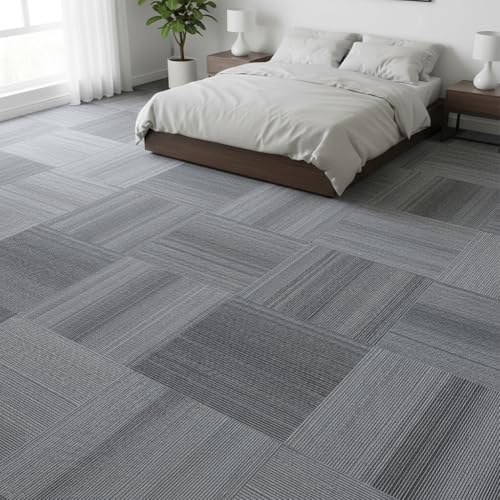
– Carpet tile: Often chosen for acoustics and walking comfort; selection should emphasize tuft construction and commercial face fiber performance.
– Ceramic/porcelain tile: Common in wet zones; durability is strong, but installation quality and grout choice matter a lot for cleanability and longevity.
– Rubber flooring: Frequently selected for gyms, healthcare-adjacent areas, and places needing resilient impact resistance with strong maintenance resilience.
– Epoxy/urethane coatings and polished concrete systems: Often attractive for warehouses and high-wear spaces, but they require careful moisture and surface-prep planning.
– Wood (engineered): Viable in some commercial interiors, but it’s less forgiving in frequent-wet conditions and usually requires tighter humidity control.
Installation constraints are part of “type selection”
Two products can look similar but behave differently once installed. Confirm whether the flooring system is sensitive to:
– subfloor flatness tolerances,
– moisture vapor transmission limits,
– acclimation requirements,
– and adhesive/underlayment compatibility.
Quick comparison: resilient vs carpet vs tile (pros/cons)
Use this table to guide early shortlisting before you consult spec sheets.
| Option | Best fit zones | Pros | Watch-outs |
|---|---|---|---|
| Resilient (LVT/LVP, sheet vinyl) | Offices, retail interiors, light/medium wet zones | Comfort underfoot; easier rolling-chair use; zoning flexibility | Slip performance varies; moisture/adhesive compatibility must be verified |
| Carpet tile | Offices, conference areas, corridors needing acoustics | Sound control; localized replacement when damaged | Performance depends on face fiber and maintenance program; wet areas require extra care |
| Tile (ceramic/porcelain) | Restrooms, lobbies, wet-cleaned zones | High chemical and moisture tolerance; long-term hardness | Slip and grout maintenance matter; installation workmanship strongly affects results |
Prioritize safety and slip resistance
The safest commercial floor is the one that meets slip-resistance expectations for the way you clean and the conditions your space creates. Don’t select flooring based on how it looks when it’s dry—verify friction performance using documentation tied to wet and contaminated conditions.
Slip performance is a systems problem: the floor surface, footwear, contaminants, cleaning method, and water presence all interact. When we review specs for healthcare-adjacent locations or facilities with frequent mopping, we treat slip-resistance proof as a mandatory gating item—no exceptions.
ANSI A326.3 links slip testing and DCOF targets to actual use scenarios (including wet conditions) rather than relying on subjective “dry feel.”
For accessible design planning, slip resistance documentation is typically referenced through recognized test standards (e.g., ASTM test methods used to derive COF/DCOF values).
A floor’s slip results can change with cleaning practices, since water, detergent residue, and contaminant buildup affect friction more than color or finish alone.
Look for slip-resistance ratings tied to your cleaning method
When reviewing product data, ask:
– What test method produced the friction value?
– Is the value measured wet, contaminated, or dry?
– Is it intended for your cleaning approach (dry mop vs wet mop vs chemical wash)?
This matters because “same floor, different janitorial routine” can produce different real-world friction outcomes.
Confirm appropriateness for your safety standards
Healthcare, food service, and high-traffic entries often have tighter expectations for wet-clean conditions. Even if your project isn’t required to meet a specific spec contractually, aligning with recognized guidance reduces risk and improves auditability.
Don’t rely only on showroom samples
Showroom conditions are controlled: no soap residue cycles, no tracked grit, and no “after-hours” contamination. Ask for the manufacturer’s slip documentation and keep it with your project file.
Verify durability, wear layer performance, and maintenance
The most durable commercial floor is the one designed for your specific type of wear and your actual cleaning chemistry. Verify durability through wear-layer performance claims (for resilient flooring), surface abrasion data, and the cleaning compatibility list—not just warranty length.
In 2025, many facilities are also tightening “labor predictability,” meaning they want floors that maintain appearance longer without increasing maintenance labor costs. That makes maintenance requirements as important as day-one performance.
Resilient flooring durability hinges on engineered layers (including the wear layer), so wear resistance should be verified via manufacturer performance guidance for commercial conditions.
Maintenance instructions function as performance constraints: using non-approved cleaners or incorrect dilution can damage surfaces and affect long-term appearance and gloss.
Commercial warranties commonly require adherence to documented installation and maintenance practices; skipping those steps can void coverage even if the floor is otherwise suitable.
Define what “wear” means in your space
Wear can be:
– scuffing from shoes,
– abrasion from grit and carts,
– dulling from improper cleaning tools,
– chair movement damage,
– or staining from specific contaminants.
Your selection should match those failure modes. For example, a floor that resists scratches may still discolor with certain disinfectants or degreasers.
Review cleaning guidance line-by-line
Confirm which cleaners are approved, and whether the manufacturer requires:
– specific dilution ratios,
– specific dwell times,
– certain mop materials (microfiber vs string),
– and avoidance of waxes/sealers or certain surfactants.
If you plan to run automated scrubbers or extraction machines, confirm compatibility before installation. A lot can go wrong in “effective cleaning” that is chemically aggressive.
Plan maintenance frequency and total lifetime effort
Maintenance isn’t only “how often you clean.” It may include:
– periodic stripping and re-coating,
– sealers or finish systems (where required),
– or scheduled deep-clean procedures.
A floor that looks great at install but requires frequent labor can be more expensive than a slightly less forgiving option.
📊 DATA: Slip targets commonly used in commercial specification planning (quick reference)
ANSI A326.3 Wet Slip Targets for Interior Walkways
| # | Use Condition | Wet DCOF Target | Friction Measure | Typical Floor Pairing |
|---|---|---|---|---|
| 1 | Level interior walking areas (wet) | ≥ 0.42 | DCOF (wet) | Resilient / tile with wet-rated finish |
| 2 | Ramps / slopes (wet) | ≥ 0.60 | DCOF (wet) | Tile / resilient with higher-grit surface profile |
| 3 | Restroom corridors (wet-cleaned) | ≥ 0.42 | DCOF (wet) | Sheet vinyl / LVT rated for wet conditions |
| 4 | Food-service wet mopping zones | ≥ 0.42 | DCOF (wet) | Commercial vinyl / textured tile systems |
| 5 | Main entries with tracked wetness | ≥ 0.42 | DCOF (wet) | Resilient with documented wet friction |
| 6 | High-frequency mopped corridors | ≥ 0.42 | DCOF (wet) | Carpet tile (with wet-safe strategy) or wet-rated resilient |
| 7 | Transition areas where water is common | ≥ 0.42 | DCOF (wet) | Tile/resilient with wet-rated surface finish |
Note: This table summarizes commonly used target values in ANSI A326.3 planning. Always verify the specific product’s tested friction documentation and match it to your exact maintenance conditions.
Plan for subfloor readiness and installation details
The floor you choose matters less than the slab it’s installed on. Commercial floors often fail early due to preventable subfloor issues—flatness, cleanliness, and moisture conditions—plus missing or incorrect installation steps.
From a specification-review standpoint, “installation detail” is where schedules and warranties either stay safe or drift into risk. In 2024 and 2025, many owners tightened their subfloor testing requirements in response to premature flooring failures, because the cost of rework is far higher than doing prep correctly once.
ASTM F710 is commonly referenced to define installation practices and subfloor preparation expectations that manufacturers rely on for warranty validity.
Concrete moisture conditions should be tested using recognized methods such as ASTM F1869 or ASTM F2170 before selecting adhesives, underlayments, or moisture mitigation strategies.
Warranties frequently require certified or documented installation steps; deviating from manufacturer prep requirements can affect coverage even if the product itself is suitable.
Start with the subfloor
Confirm:
– flatness (including any grinding/patching plan),
– cleanliness (dust, curing residues, contaminants),
– moisture conditions (test method, frequency, reporting),
– and whether existing flooring needs removal or remediation.
Follow manufacturer installation requirements
Resilient floors and many tile systems have strict requirements for:
– approved underlayments,
– adhesive type and trowel specification (where applicable),
– expansion/acclimation requirements,
– and protected cure windows.
Skipping a “minor” step is a frequent root cause of early failure.
Get clarity on warranty conditions
Ask the installer and manufacturer for:
– warranty start conditions,
– what documentation is required (prep reports, moisture test results),
– and whether the contractor must be certified or approved.
What can go wrong when choosing commercial floors
Most problems come from mismatches—between the flooring’s intended use and the reality of your environment, cleaning, and installation readiness. Even high-end products can fail when slip performance, moisture tolerance, or chemical compatibility is assumed rather than verified.
This is where decisions get expensive: replacement, downtime, and labor are typically multiple times the cost of doing specs correctly the first time. The good news is these failure modes are predictable.
Selecting flooring based on appearance alone ignores engineered performance variables like wear layer performance, surface treatment behavior, and friction outcomes under wet cleaning.
Moisture/flatness issues are leading drivers of premature failures because installation systems (adhesives, underlayments, toppings) are designed around specific slab conditions.
Many commercial flooring warranties depend on documented adherence to installation steps and maintenance instructions, so compliance is part of “product selection.”
Key ways projects go wrong:
– Choosing based on appearance alone: Wear layer thickness, stain resistance, and slip behavior can vary significantly.
– Ignoring cleaning chemicals: A floor that tolerates neutral cleaners may be damaged by degreasers or frequent chemical washdowns.
– Underestimating subfloor moisture/flatness: A premium product can still delaminate, curl, or fail bond integrity if prep is inadequate.
– Matching traffic incorrectly: “Light commercial” products in high-traffic retail can scuff, dull, or show wear sooner than expected.
– Assuming warranty coverage: Warranties often require specific installer qualifications and documented prep/testing.
Verdict: a practical way to decide (and who should skip this approach)
If you want a reliable decision process, use the criteria above—environment, traffic, safety, maintenance, and subfloor/install requirements—then validate each shortlisted product using the manufacturer’s technical documentation. The upside: you reduce the odds of costly mismatches. The downside: this approach takes upfront homework (ratings, spec sheets, installation conditions, and warranty compliance), and you may need a flooring contractor to inspect subfloor readiness.
Skip this DIY-style selection process if your project has heavy moisture risk, complex base conditions, strict compliance requirements (including documented slip testing or accessibility constraints), or you can’t access the manufacturer’s full installation and warranty documentation—those cases typically require professional assessment and specification support.
Quick checklist (scan and save)
– [ ] What is the space type and traffic level? (public vs back-of-house)
– [ ] Any moisture/spill exposure? (restrooms, entries, wash-down areas)
– [ ] Slip resistance documentation for your cleaning method?
– [ ] Wear/durability requirements for carts, chairs, rolling loads?
– [ ] Approved cleaning methods and cleaners from the manufacturer?
– [ ] Subfloor flatness and moisture needs identified?
– [ ] Installation steps and warranty requirements confirmed?
FAQ
What should I check first when choosing commercial floors?
Start with the environment and traffic level, then confirm safety (slip-resistance documentation) and the manufacturer-approved cleaning/maintenance requirements.
Are commercial floors only for high-traffic businesses?
No—many commercial products perform well in a range of business settings, but you still need to match performance to how your space is used and maintained.
How do I compare two flooring options quickly?
Use a short list of spec-driven criteria: wear/durability expectations, slip-resistance guidance, cleaning compatibility, and installation/warranty requirements.
Do I need to worry about the subfloor?
Yes. Subfloor flatness, cleanliness, and moisture conditions are a common cause of premature failure, so you should verify prep requirements before choosing the final product.
What’s the biggest mistake people make?
Most failures come from mismatches—choosing a floor that looks right but doesn’t align with traffic, cleaning chemicals, moisture exposure, or installation/warranty conditions.
Conclusion
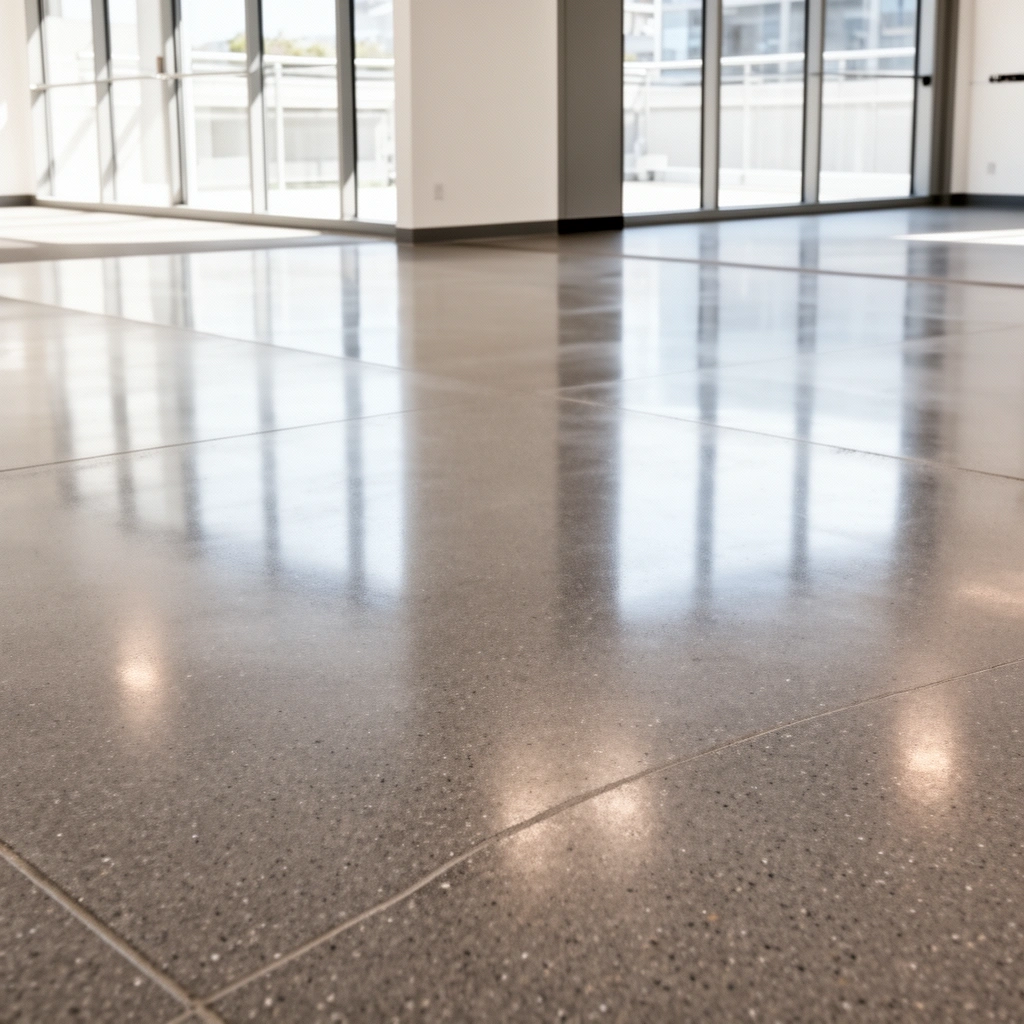
Choosing commercial floors is a performance specification exercise, not a style selection exercise. By mapping floor zones to foot traffic and moisture exposure, verifying slip-resistance documentation for your cleaning method, confirming wear-layer and chemical compatibility, and locking down subfloor readiness and installation requirements, you can narrow options confidently and avoid expensive replacement cycles.
Frequently Asked Questions
What factors should I consider when choosing commercial floors?
Start by matching the flooring material to your space’s traffic level, footfall type (light office vs. heavy retail), and how often it will be cleaned. Consider moisture exposure, chemical resistance, slip resistance, and noise reduction needs, especially in entryways, kitchens, bathrooms, and healthcare areas. Also evaluate installation conditions, turnaround time, and the total lifecycle cost, not just the upfront price.
How do I choose the right commercial flooring for high-traffic areas?
For high-traffic commercial spaces, prioritize durability, wear layer thickness (for vinyl/LVT), and resistance to scuffs and dents. Look for commercial-grade options designed for heavy use, and confirm the warranty covers commercial applications. Slip resistance and ease of maintenance are equally important—choose finishes and cleaning methods that won’t degrade the floor over time.
Why is slip resistance important when selecting commercial floors?
Slip resistance helps reduce workplace injuries and can be required by building codes and safety standards, particularly in areas prone to spills such as kitchens, entryways, and restrooms. When comparing commercial floors, look for documented slip-resistance ratings and choose textures or coatings appropriate for your cleaning routine. This ensures safer daily use without sacrificing the flooring’s longevity or appearance.
Which commercial flooring option is best for offices, retail, and restaurants?
Offices often benefit from comfortable, low-noise flooring like commercial carpet tiles or luxury vinyl for a balance of aesthetics and maintenance. Retail spaces typically do best with resilient, high-durability materials such as commercial LVT or sheet vinyl that withstand scuffs and rolling carts. Restaurants usually need grease and moisture resistance—consider options like commercial vinyl or sealed surfaces with strong traction performance and straightforward cleaning.
How do I compare installation methods and maintenance for commercial floors?
Compare whether the flooring is glue-down, click-lock, or loose-lay, and consider subfloor condition, leveling needs, and downtime requirements. Ask about acclimation requirements, warranty terms tied to installation, and whether removal affects the building schedule. For maintenance, confirm the recommended cleaning products and maintenance frequency, since the wrong chemicals or methods can shorten the lifespan of commercial flooring materials.
📅 Last Updated: October 12, 2026 | Topic: How to choose commercial floors? | Content verified for accuracy and freshness.
References
- Google Scholar Google Scholar
https://scholar.google.com/scholar?q=how+to+choose+commercial+flooring+resilient+carpet+tile+factors - Google Scholar Google Scholar
https://scholar.google.com/scholar?q=slip+resistance+flooring+selection+coefficient+of+friction+commercial+buildings - Google Scholar Google Scholar
https://scholar.google.com/scholar?q=VOC+emissions+from+resilient+flooring+indoor+air+quality+selection - https://pubmed.ncbi.nlm.nih.gov/?term=floor+slip+resistance+coefficient
- Redirecting…
https://www.ada.gov/2010ADAstandards_index.htm - https://www.access-board.gov/ada/aba/standards-guidelines/2010-ada-standards/
- Final Rule to Update General Industry Walking-Working Surfaces and Fall Protection Standards | Oc…
https://www.osha.gov/walking-working-surfaces - https://www.epa.gov/indoor-air-quality-iaq/low-emitting-products-and-materials
- https://www.cdc.gov/infection-control/guidelines/environmental/index.html
- Flooring
https://en.wikipedia.org/wiki/Flooring