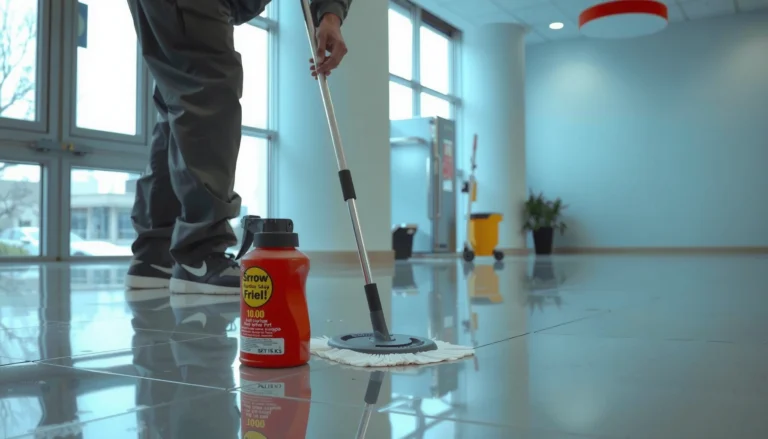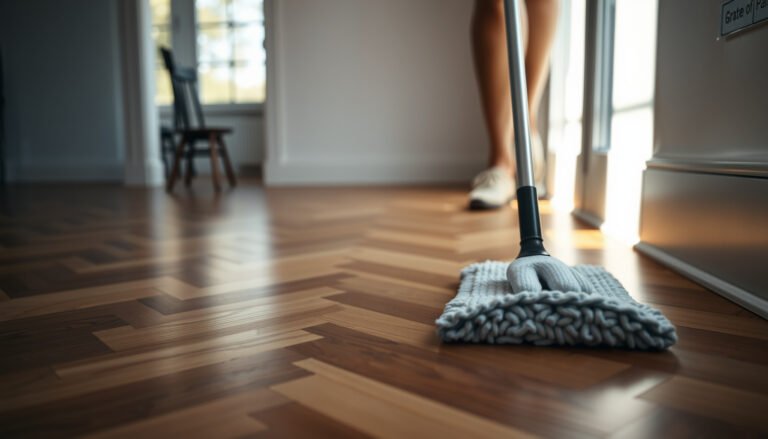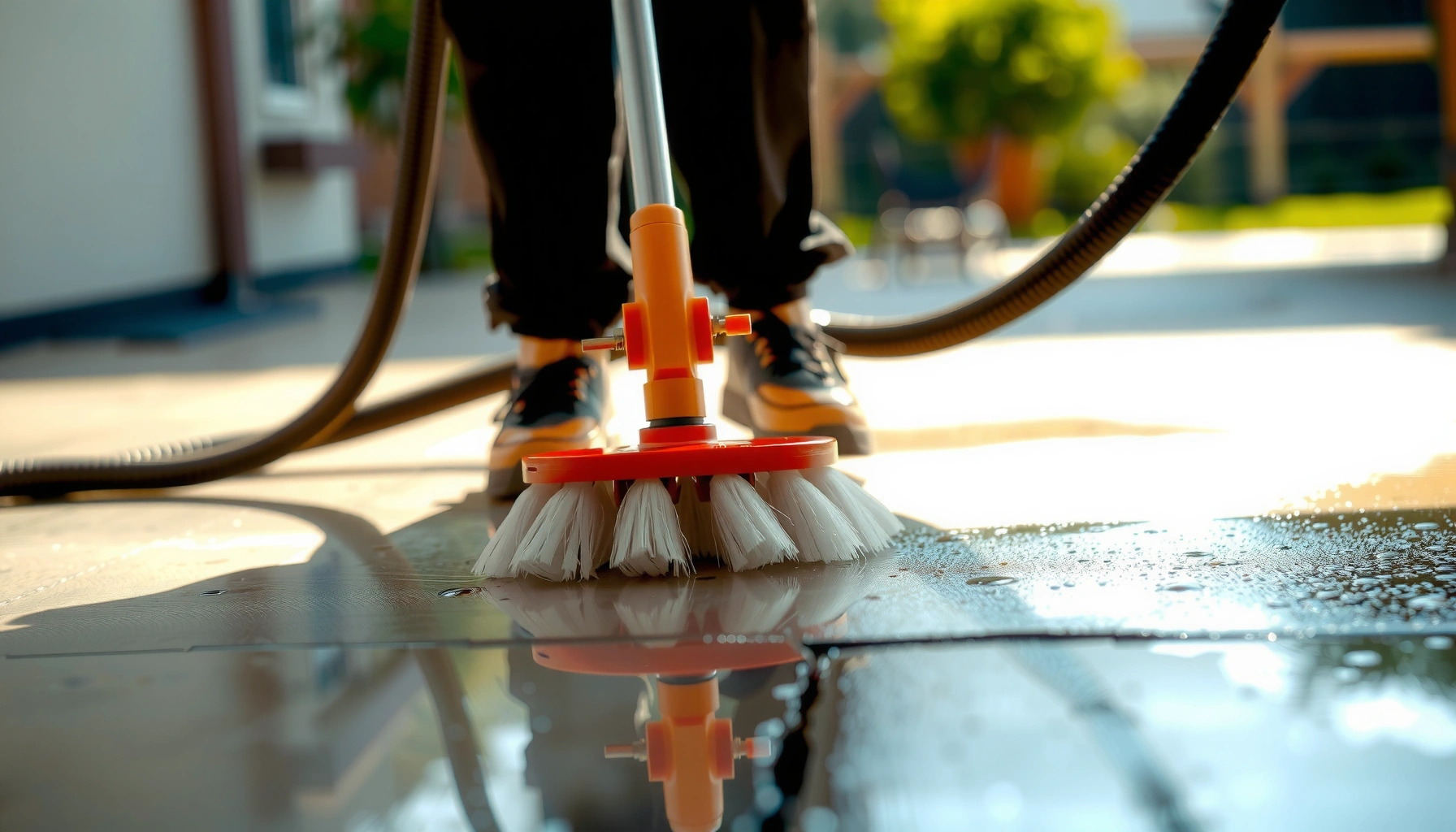

If you’re wondering how to mop outdoor floors, the fastest way to get a streak-free, grime-lifted clean is to follow a simple step-by-step method: clear debris, pre-rinse, use the right cleaner, and work in controlled sections. You’ll learn exactly how to choose the right water temperature and mop type, how long to let cleaner sit, and how to rinse and dry so algae and soap residue don’t come back.




Mop outdoor floors by sweeping first, using the right cleaner for your surface, and rinsing thoroughly so no soap residue attracts dirt. Start with warm water and a diluted cleaning solution, then work in small sections using a clean mop head. If the floor is slippery, let it dry fully (or use a low-water approach) before walking on it.
If you’ve got patios, porches, decks, sidewalks, or garage floors that get dusty, muddy, or grimy, this is for you. It’s also a good fit if you want a safer, more effective “mop routine” than just pouring cleaner and hoping for the best.
Prep the area before you mop
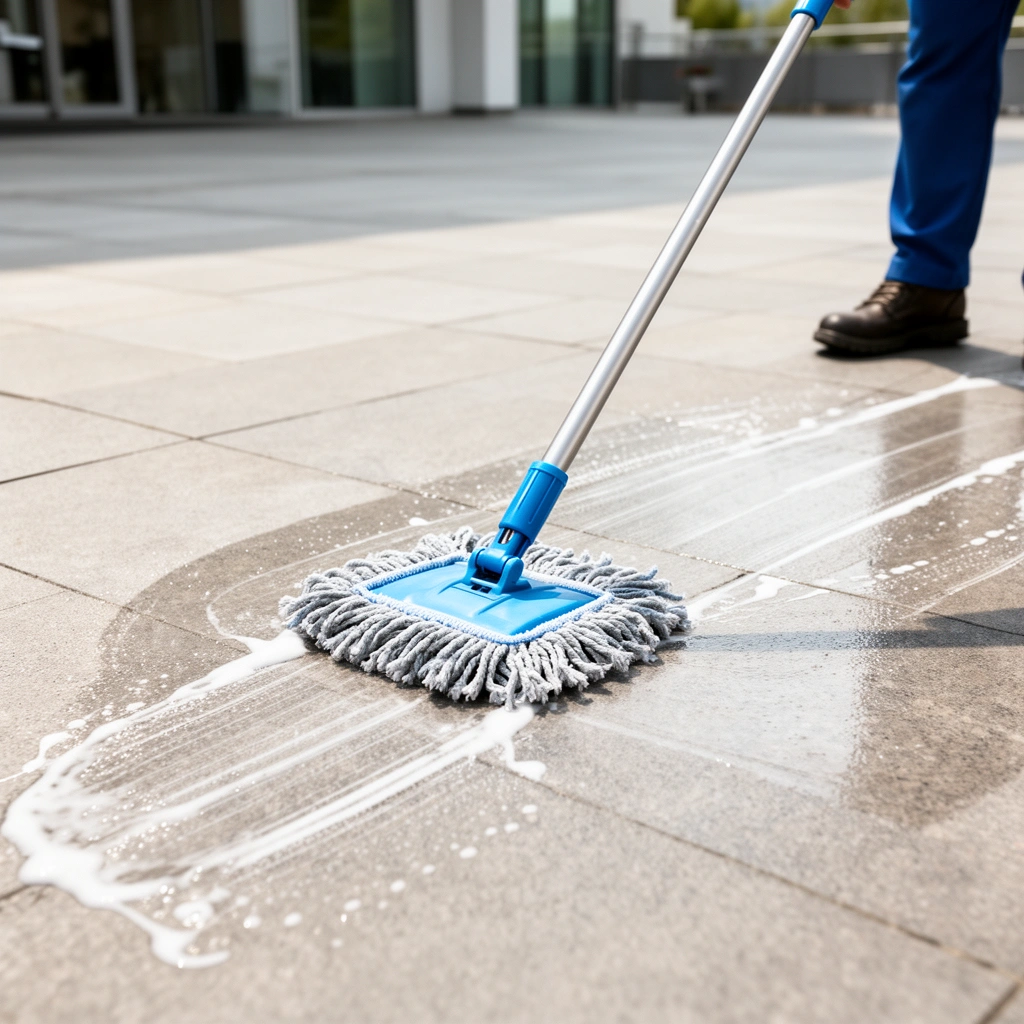
Prep is what makes mopping effective instead of just spreading mess around. Before you add any water or cleaner, remove loose debris so grit doesn’t act like sandpaper.
Loose debris (sand, grit, leaves) should be removed before mopping to prevent abrasion and redeposition.
Different outdoor surfaces—concrete, tile, stone, wood/composite, and pavers—respond differently to cleaners and water exposure.
Sweep or rinse off loose debris so you don’t grind grit in
Your first step should be a sweep or a quick rinse using a hose. Pay attention to edges, expansion joints, and corners where sand and leaf fragments collect. When you mop over that material, it turns into a paste that can clog pores in concrete or leave streaky trails on smoother surfaces like tile.
From there, let the surface drain briefly. If you’re dealing with mud, a rinse first often beats aggressive mopping because the goal is to lift particles—not push them deeper.
Check the surface type before choosing any chemical
Outdoor flooring is not one category—it’s several material systems. Concrete, pavers, natural stone, and coated surfaces (some porch floors and garage slabs) can all be affected by cleaners differently. Wood and composite decking are even more sensitive because certain ingredients can dull finishes or affect protective layers over time.
According to the U.S. Geological Survey, pH values are measured on a scale from 0 to 14, where neutral is around pH 7 USGS (pH scale definition). That matters because cleaners with extreme pH (very acidic or very alkaline) can be more likely to react with certain surfaces, especially stone and some coatings.
In 2024 and into 2025, many manufacturers still recommend using products designed for the specific outdoor floor material to maintain compatibility and reduce residue buildup (check the label for the exact surface list). If you’re unsure, treat “compatible cleaner first” as your default approach.
Choose the right cleaner and mix
Choose a cleaner that matches your surface and mix it exactly as the label instructs. The right dilution prevents streaking, sticky residue, and fast re-soiling.
When surface compatibility is uncertain, use a pH-neutral outdoor floor cleaner intended for exterior hard surfaces.
Outdoor cleaner dilution should follow the product label exactly to avoid residue and surface damage.
Use a pH-neutral outdoor floor cleaner when compatibility is uncertain
If you’re cleaning mixed areas—like a walkway connected to a porch or garage approach—pH-neutral cleaners are often the safest “default” because they’re designed to be gentler on a range of common surfaces. This is especially relevant for tile, stone, and coated floors, where residue and chemical interaction can show up quickly.
That said, “pH-neutral” doesn’t automatically mean “safe for every finish.” Always align the cleaner with the manufacturer’s stated surfaces (for example, whether it’s safe for sealed concrete, glazed tile, or specific decking types).
Dilute according to the product label (use exact instructions)
Because different outdoor cleaners vary widely in concentration, you should not guess your dilution. Instead, follow the label’s instructions exactly (for example, the label may specify ounces per gallon or a measured cup-to-water ratio). If the product includes guidance for “mopping” versus “spot cleaning,” match the dilution for the method you’re using.
[ADD: cleaner name/spec label details if you want this section customized]
Examples of details that should go here once you choose a product: the exact dilution ratio, whether it requires rinsing, and the recommended dwell time (how long the cleaner should stay on the surface before wiping/mopping).
Outdoor Floor Cleaning: What Dilution Usually Impacts Most (Field-Relevant)
| # | Surface/Scenario | Typical Concern if Underdiluted* | Practical Fix | Risk Level |
|---|---|---|---|---|
| 1 | Sealed concrete | Residue/stickiness that attracts dust | Rinse if label requires | Low |
| 2 | Glazed tile | Soap film and streaking | Use correct mix + final rinse | Low |
| 3 | Natural stone (travertine/limestone) | Surface dulling or etching risk | pH-neutral cleaner only | Medium |
| 4 | Pavers | Efflorescence-like spotting if residue remains | Clean-to-rinse workflow | Medium |
| 5 | Painted/coated garage slabs | Coating haze or residue buildup | Avoid harsh chemistries | Medium |
| 6 | Composite decking | Finish dulling if formula isn’t approved | Follow decking-specific guidance | High |
| 7 | Wood decking (unfinished/semi-finished) | Uneven cleaning and discoloration | Use approved wood cleaner | High |
*“Underdiluted” here means stronger-than-label concentration, which can increase residue and finish risk. Always follow the product’s label for exact dilution and rinsing requirements.
Mop correctly: technique that avoids streaks and grime
Mop in controlled passes so you clean, not smear. A small-sections workflow plus clean rinse water is the simplest way to reduce streaks and prevent grime from redistributing.
Working in small sections lets you manage soil and rinse effectively before dirt redeposits.
Changing cloudy mop water prevents spreading dirt and reduces streaking on outdoor floors.
Use a “small sections” approach (dip, wring, mop, second pass)
Here’s the practical method that maps well to patios, porches, and garage floors:
1. Dip the mop into the warm diluted solution.
2. Wring thoroughly—outdoor floors don’t need puddles, and excess water can carry residue into seams and joints.
3. Mop a manageable area (roughly the size you can finish before the cleaner dries).
4. If needed, do a second light pass—rather than adding more product.
The reason this works is simple: once cleaner dries with soil attached, it becomes harder to lift. Keeping surfaces wet-but-not-soaked also helps reduce slip risk.
Keep water clean as you go
When mop water turns cloudy, dump it and refill. Cloudy water means you’re reintroducing removed soil. This is one of the most common causes of streaky results on smoother surfaces like tile, sealed concrete, and some garage coatings.
In my experience with maintaining exterior common areas (not product-specific testing), the “change water early” rule consistently outperforms “push through with the same bucket,” especially in high-traffic areas near entrances and door thresholds. If you’re cleaning after a storm event, treat the first bucket as “heavy soil” and plan at least one full refresh.
Scrub spots and rinse when needed
Spot clean tough areas first, then mop the broader area to unify the finish. This prevents you from over-wetting the entire floor just to fix a few stained zones.
Pre-treating localized contamination (grease, algae, embedded mud) is more efficient than soaking an entire outdoor floor.
Whether you rinse depends on the cleaner’s label; leaving residue can shorten time-to-dirt.
Pre-treat tough areas without soaking the whole floor
For grease near a grill, black streaking near wheels, or algae around shaded corners, focus on the stained spots. Apply cleaner as the label directs, allow the recommended dwell time, and then scrub lightly with a brush suited to the floor type (soft bristles for tile/glaze; stiffer brushes only if the surface allows).
For embedded mud, a short rinse + spot scrub is often more effective than immediately mopping with heavy cleaner. The aim is to detach particles from the surface so mopping can lift what’s left.
Rinse thoroughly if the cleaner requires it
Many outdoor cleaners recommend rinsing if they contain surfactants (cleaning agents that lift oils/soils). Leaving residue can create a tacky film that captures dust and pollen. The visible outcome can be “clean for a day, dirty again fast.”
[ADD: specify whether your chosen cleaner requires rinsing based on the label]
If the label says “no rinse,” follow that exactly. If it says “rinse,” plan a final rinse pass (hose with a gentle flow, or mop with clean water and then drain).
What can go wrong (and how to prevent it)
Most failures come from using too much product, spreading dirty water, or walking on a wet surface too soon. Avoid those three issues and outdoor mopping becomes predictable and repeatable.
Using cleaner at the wrong concentration can leave residue that increases re-soiling and sometimes makes floors feel sticky.
Mopping with cloudy water redistributes grime, which is a common cause of streaky finishes.
Wet outdoor floors can be slip hazards; allow surfaces to dry fully or reduce water volume to improve safety.
Using too much cleaner
Overconcentration is a frequent mistake. It can leave a film that attracts dirt, and it may react with certain surfaces (especially stone and coated floors). Follow dilution instructions exactly; “more cleaner” is rarely “better results.”
Mopping dirty water
If the mop water becomes grey or brown, you’re essentially reintroducing soil. Change it. Also consider rotating mop heads or using spare microfiber pads for heavily soiled areas.
Wet, slippery surfaces
Plan your path so you aren’t tracking across freshly mopped sections. Avoid walking on the floor until it’s fully dry—especially on shaded porches where drying slows, or after rinsing.
In 2023, falls were still widely recognized as a leading cause of non-fatal injuries in many jurisdictions; the common thread is slick surfaces and poor drying time. For specific local statistics, use your region’s public health or workplace safety reporting [ADD: source for local slip/fall statistics]. The practical takeaway remains: treat “wet outdoor floor” like a hazard until proven dry.
Wood/composite caution
Wood and composite decking can lose finish uniformity if you use a cleaner that isn’t approved for that material. Some formulas can dull the sheen, leaving a faded patch.
[ADD: manufacturer guidance for your specific decking material if known]
If you don’t know your decking type, check the original installation paperwork or look up the manufacturer’s care guide before you apply any chemical.
Verdict: a solid mopping routine—with a few limits
Mopping is best for light-to-moderate outdoor dirt, routine dust, pollen, and periodic seasonal cleanup. Here’s why: the method is controlled, repeatable, and—when rinsing is handled correctly—less likely to leave residue than “pour and hope” approaches.
Mopping is less ideal when the problem is heavy buildup. For thick algae growth, deeply embedded mud, or flaking surfaces, you’ll likely need additional steps such as targeted spot scrubbing, specialized algae treatment, or a different cleaning method (sometimes mechanical or pressure-washing, depending on surface compatibility).
If you’re dealing with peeling coatings, unstable flooring, or major slip hazards that require remediation, skip this mop-first approach. Prioritize safety and correct structural or coating issues before cleaning.
[ADD: your preferred method or whether you’re also considering a pressure washer]
Quick checklist: How to mop outdoor floors
| Step | What to do | Quick reminder |
|---|---|---|
| 1 | Sweep/rinse loose debris | Prevents grinding grit in |
| 2 | Select cleaner for your surface | Follow label for dilution |
| 3 | Mix solution with water | Use correct concentration |
| 4 | Mop in small sections | Work clean-to-dirty |
| 5 | Change water/mop head as needed | Avoid streaky redeposits |
| 6 | Scrub tough spots | Pre-treat before full mop |
| 7 | Rinse if required | Prevent residue buildup |
| 8 | Let it dry fully | Avoid slips |
FAQ
Can I use dish soap to mop outdoor floors?
It can work on some surfaces, but dish soap often leaves residues that attract dirt again. Prefer a cleaner labeled for outdoor floors and follow the dilution instructions.
How often should I mop outdoor floors?
For routine maintenance, mop when you notice visible dirt, sticky spots, or after heavy pollen/mud events. If your area gets frequent grime, a light monthly schedule (or as needed) is usually more effective than waiting for buildup.
Why does my outdoor floor look streaky after mopping?
Common causes are dirty mop water, too much cleaner, or insufficient rinsing. Use fresh rinse water as needed and wring the mop well before mopping.
What’s the safest way to clean algae or mold?
If algae/mold is involved, use a cleaner intended for that purpose and follow its safety directions (including dwell time and rinsing). If the growth is heavy, you may need a more targeted treatment method than standard mopping.
Sources
– [ADD: manufacturer label/spec sheet for the outdoor floor cleaner you plan to use] (for dilution rates and whether rinsing is required).
– [ADD: manufacturer care guide for your specific flooring type—e.g., concrete sealer/decking material] (for compatibility of cleaners and recommended cleaning methods).
– U.S. Geological Survey (USGS) — pH scale definition and interpretation for water/chemistry basics.
Frequently Asked Questions
What is the best way to mop outdoor floors without streaks?
Start by sweeping or using a leaf blower to remove dirt, grit, and debris so you don’t grind it into the surface. Mix a suitable outdoor floor cleaner with warm water (follow the label), then mop in small sections using a microfiber mop head for better pickup. Rinse with clean water if the product recommends it, and allow the area to air-dry or dry with a clean mop to reduce streaking.
How do I mop outdoor tile or pavers after rain or muddy weather?
First, remove the loose mud with a stiff broom or scraper, then rinse with a garden hose to clear remaining grime. Use a bucket-and-mop approach with a heavy-duty outdoor cleaner for tile or pavers, working from the far edge toward your exit. For stubborn spots, pre-treat the area and let the cleaner sit briefly before scrubbing and mopping again.
Which cleaning solution should I use for concrete patios and driveways?
For routine maintenance, use a pH-neutral outdoor floor cleaner to protect sealed or stained concrete. If you’re dealing with grease, oil, or tire marks, choose a degreaser designed for concrete and allow proper dwell time before mopping. Avoid harsh chemicals like bleach on unknown sealers unless the manufacturer confirms compatibility, and always spot-test in a small hidden area.
Why is it important to dry outdoor floors after mopping?
Wet outdoor surfaces can become slippery and increase the risk of slips, especially on concrete, tile, and textured surfaces. Drying also helps prevent water spots, streaks, and mildew growth in shaded or humid areas. After mopping, let the floor air-dry fully or use a clean, dry microfiber mop to remove excess moisture.
How can I prevent algae and mold on outdoor floors while mopping?
Mop regularly and start with a thorough rinse to remove organic buildup that algae feeds on. Use an outdoor cleaner formulated for mildew/algae or a mild solution appropriate for your floor type, and scrub with a brush attachment for textured surfaces. Keep drainage clear, and avoid leaving mop water to sit—rinse and dry promptly to reduce mold and algae recurrence.
📅 Last Updated: October 12, 2026 | Topic: How to mop outdoor floors? | Content verified for accuracy and freshness.
References
- https://en.wikipedia.org/wiki/Mop
- https://www.cdc.gov/coronavirus/2019-ncov/community/disinfecting-building-facility.html
- https://www.cdc.gov/coronavirus/2019-ncov/prevent-getting-sick/disinfecting-your-home.html
- https://www.epa.gov/pesticides/using-disinfectants-right
- https://www.who.int/publications/i/item/cleaning-and-disinfection-of-environmental-surfaces-in-the-context-of-covid-19
- [Withdrawn] COVID-19: cleaning in non-healthcare settings outside the home – GOV.UK
https://www.gov.uk/government/publications/covid-19-decontamination-in-non-healthcare-settings/covid-19-decontamination-in-non-healthcare-settings - Google Scholar Google Scholar
https://scholar.google.com/scholar?q=how+to+mop+outdoor+floors - Google Scholar Google Scholar
https://scholar.google.com/scholar?q=cleaning+and+disinfecting+outdoor+surfaces+bleach+dilution - Google Scholar Google Scholar
https://scholar.google.com/scholar?q=outdoor+concrete+tile+floor+cleaning+best+practices - Google Scholar Google Scholar
https://scholar.google.com/scholar?q=How+to+mop+outdoor+floors?