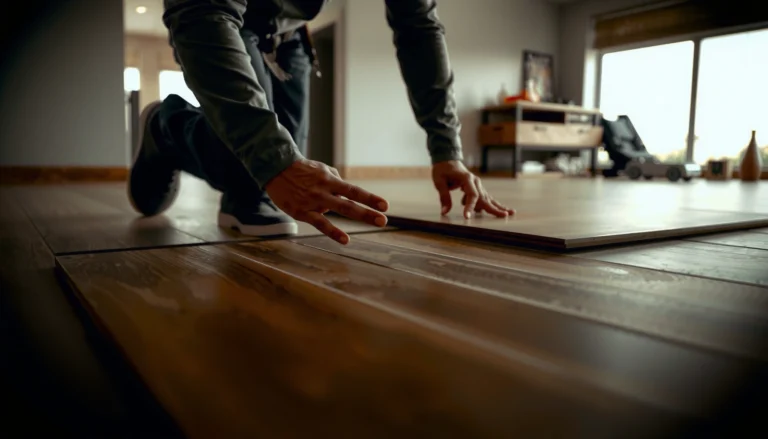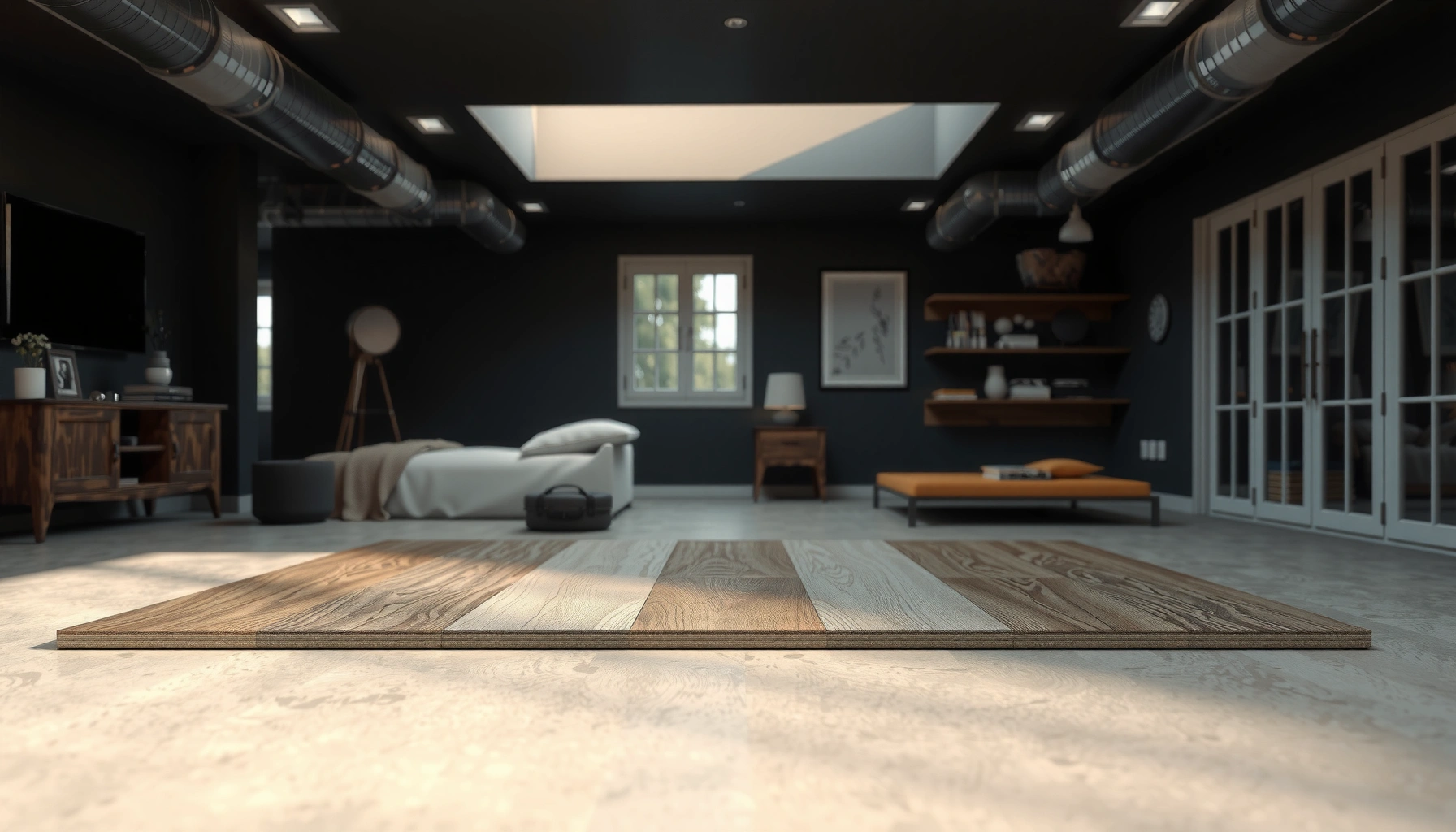

Choosing basement floors comes down to one question: what material will handle moisture, foot traffic, and your room’s use without buckling or smelling? If your basement is prone to dampness, waterproof vinyl plank is the safest overall pick because it resists water, installs faster, and stays comfortable underfoot. Need maximum durability for a workshop or gym? Choose epoxy-coated concrete, but only after you’ve confirmed the slab is properly sealed and the moisture problem is solved.




Choosing basement floors comes down to two things: controlling moisture at the slab and choosing a finish that matches how the space is used. If you get the moisture strategy wrong, even “waterproof” flooring can fail—so start with vapor control and subfloor condition before you fall in love with the look.
If you’re renovating a finished basement, planning a future remodel, or upgrading a cold/damp existing floor, this guide will help you narrow down the best flooring options and the key checks to do before you buy anything.
Start with moisture: the biggest basement deciding factor
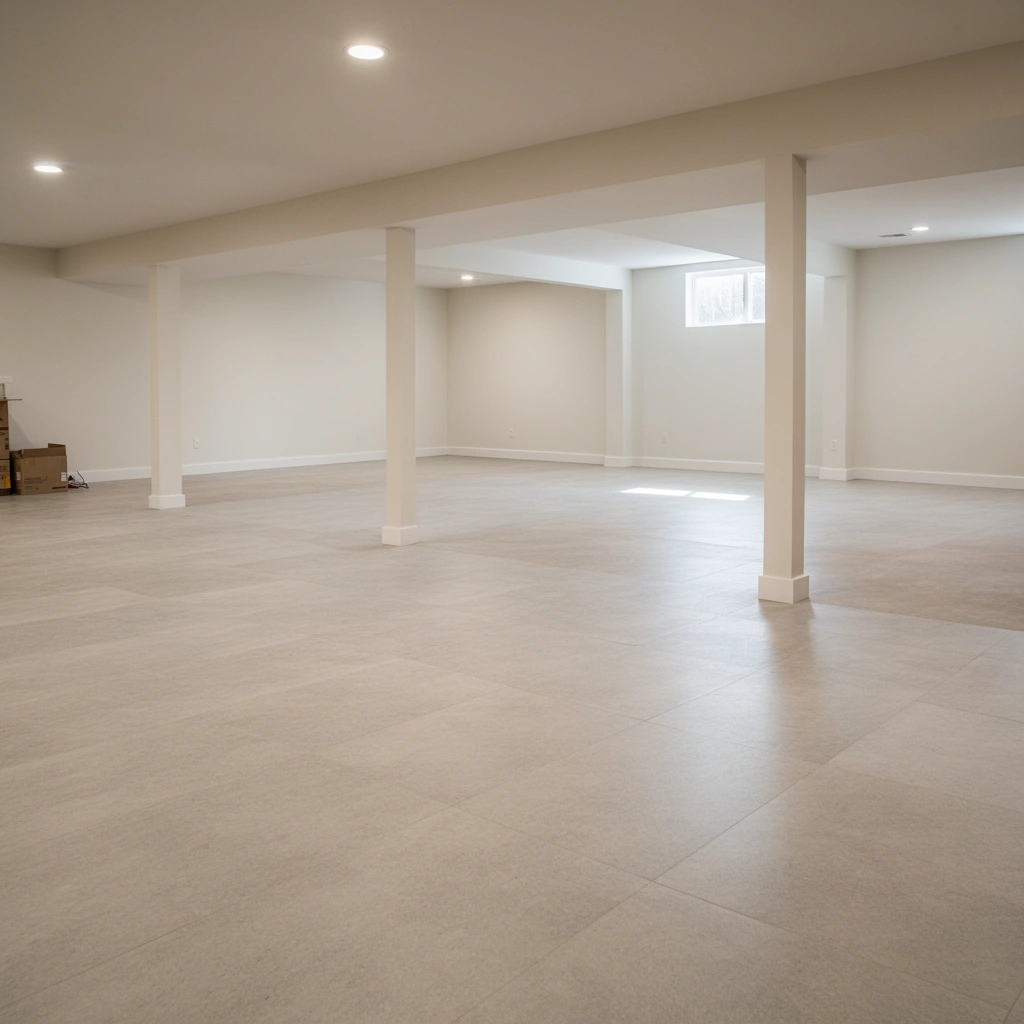
Moisture is the primary variable behind basement floor failures—warping, separation, musty odor, and moldy underlayers. The best-performing flooring in the world won’t outperform an unresolved water source, so you want a moisture-first plan: fix the problem, then pair the right vapor control with the right surface system.
EPA guidance notes that mold can begin growing within 24–48 hours after materials get wet, which is why moisture control must come before finishes. EPA (mold/water-damage guidance)
ASHRAE moisture/condensation guidance commonly targets indoor relative humidity around 30–50% to reduce condensation risk on cooler surfaces. ASHRAE humidity/condensation guidance
ASTM testing methods (like in-slab RH testing) exist specifically because concrete can release moisture for long periods—even when there’s no active leak. ASTM F2170 (in-slab RH testing method)
A Class I vapor retarder is defined as very low permeability (≤ 0.1 perm), which is typically achieved with standard 6-mil polyethylene sheeting in many systems. ASTM E1745 vapor retarder classification
Identify moisture sources (then fix them)
Most basement moisture issues fall into three categories: water intrusion (leaks, seepage, hydrostatic pressure), high humidity (airborne moisture that condenses), and condensation at the slab or on cooler assemblies. From my experience helping homeowners assess basements, the most expensive mistakes happen when people treat symptoms—like replacing flooring—before addressing drainage, grading, gutters, or dehumidification.
Actionable steps:
– Check for obvious leaks: plumbing penetrations, sump failure, foundation cracks, window wells, and exterior downspouts.
– Confirm basement humidity: use a hygrometer (or a building monitor) and watch for sustained high RH.
– Look for condensation patterns: darker spots, damp edges, or repeated wetness after HVAC runs.
Use a moisture-appropriate system, not just a surface
“Vapor control” is the system, not a buzzword. In practice, you’re matching:
– the concrete slab’s moisture behavior (including how much vapor it emits),
– the underlayment’s perm rating and material behavior,
– and the flooring’s installation method (direct glue-down vs. floating vs. mechanical fasteners).
Because basements often run cooler, even “dry” slabs can create condensation cycles. That’s why underlayment and vapor barrier choice can matter as much as the flooring material itself.
Check your subfloor before picking a material
Your subfloor determines what can safely bond, float, or fasten—and how evenly the new floor will perform. Before choosing a finish, you should verify the subfloor type, surface flatness, integrity, and any residue that could block adhesion or create telegraphing.
Concrete surface prep standards emphasize that adhesives and coatings perform only when the surface is properly prepared and clean. ASTM and manufacturer installation requirements for flooring adhesives/coatings
Even floating floors can fail early if the base is uneven enough to create movement and joint stress. Manufacturer installation instructions for floating floors (flatness tolerances)
Existing residue from previous adhesives can prevent proper bonding, so removal is part of many concrete prep instructions. Manufacturer concrete prep guidance for resilient floors/adhesives
Subfloor material differences (concrete slab vs. wood subfloor) change failure modes for the same top layer—so compatibility checks must start at the base. Manufacturer system compatibility documentation
Inspect for flatness and integrity
Start with a visual and hands-on check:
– cracks, spalling, or flaking material on the slab,
– uneven ridges/low spots that cause rocking or click-joint stress,
– moisture staining, efflorescence (white mineral deposits), or damp patches,
– prior flooring residue (adhesive, paint overspray, or thinset remnants).
If you’re working over concrete, you’re also thinking about surface profile and dust control. If you’re working over wood, you’re thinking about shrinkage, deflection, and whether any areas are already cupping or delaminating.
Confirm what you’re working over
Basements commonly involve either:
– a concrete slab (most frequent), or
– wood framing with a subfloor layer (common in older homes or remodeled basements).
Same brand, different system rules: a flooring line that’s “approved over concrete” may require a different underlayment, flatness range, or moisture test protocol than it does over wood. Treat the manufacturer’s installation instructions as part of the product—not optional reading.
Match flooring type to how the basement will be used
The best basement floor type depends less on the basement label (“finished” vs. “unfinished”) and more on day-to-day use. A home office needs comfort and quiet; a storage zone needs dimensional stability and moisture tolerance; a laundry area needs cleanability and water-resistance.
Moisture-sensitive flooring failures (cupping, separation, odor) are strongly tied to how water and humidity enter the assembly in daily use, not only to aesthetics. Building science guidance on moisture in floor assemblies
Resilient and vinyl-based systems are frequently chosen for basements because they tolerate incidental spills and can be installed with appropriate vapor control. Manufacturer installation instructions for LVP/LVT and underlayment/vapor requirements
Engineered wood in basements is typically limited by humidity and requires a tested moisture strategy to avoid gapping and finish damage. Manufacturer guidance for engineered wood in basements
Carpet can trap moisture if the pad and underlay aren’t compatible with basement vapor conditions, making it highly dependent on the moisture system. Manufacturer guidance for carpet systems and pad/vapor behavior
Decide what “use” means for your space
Consider these scenarios:
– Living area / office / guest room: prioritize underfoot comfort, sound control, and easy daily cleaning. You’ll often lean toward LVP with a compatible underlayment, engineered products designed for concrete, or carpet systems that include a moisture-safe pad strategy.
– Laundry / utility / frequent-bag-traffic: prioritize water resistance and cleanability. Modular tile (porcelain/ceramic with proper grout selection) or resilient systems designed for wet-prone zones are typical fits.
– Storage / gym equipment / occasional access: prioritize stability and moisture tolerance. Here, rigid vinyl, epoxy coatings, or tile can outperform softer materials because they tolerate movement and dampness better when paired with vapor control.
– Cold basements: comfort is the silent failure mode—some floors feel “ice-cold” even when they’re technically dry. If you spend long hours down there, plan for thermal comfort through underlayment selection or mat systems compatible with your flooring.
Quick comparison: pros/cons by use case (scannable)
Below is a practical way to match flooring to basement behavior. Always confirm your specific product’s approved installation and moisture limits in its instructions.
| Use case | Best-fit flooring approach | Main downside to plan for |
|---|---|---|
| Living/office | LVP/LVT with an approved vapor-control underlayment | Can feel harder/cooler than carpet if you don’t plan underlayment |
| Laundry/utility | Porcelain/ceramic tile or resilient system rated for damp environments | Grout maintenance and subfloor leveling still matter for tile |
| Storage | Rigid vinyl, epoxy, or protective coatings over a prepared slab | Less underfoot comfort; surface prep is critical |
| Gym / equipment | Tiles or resilient flooring designed for impact and rolling loads | Joints and edges can show wear if the base isn’t flat |
Choose underlayment and surface protection intentionally
Your underlayment choice is where most “basement flooring” problems get prevented—or caused. The right underlayment manages vapor, smooths minor irregularities, improves acoustics, and supports the installation method (floating click-lock, glue-down, or direct-to-slab).
Floating click-lock floors still require strict flatness tolerances; underlayment is not a cure for major low spots. Manufacturer installation instructions (flatness requirements)
Vapor barriers and underlayments are designed with specific permeance (perm) goals, which must match the flooring system and slab conditions. ASTM E1745 (vapor retarder classification)
Basements experience temperature swings, which can change comfort and humidity-related performance in the floor assembly. ASHRAE moisture/condensation and building envelope guidance
Some underlayments are “moisture blocking” while others are primarily acoustic—confusing those roles can cause odor and separation. Manufacturer underlayment technical data sheets
Decide if you need added vapor control
Not all products need an additional vapor layer, but many do—especially over concrete slabs. Pay attention to:
– whether the flooring already has an attached backing,
– whether the manufacturer requires a separate vapor barrier in specific RH/MC conditions,
– overlap/edge sealing requirements at seams and perimeter walls.
If your product instructions require a 6-mil poly or similar barrier, don’t replace it with “something close.” Vapor control is a performance specification, not a guess.
Plan for temperature and feel
Basements are often cooler because the slab and surrounding soil act like a heat sink. That can make:
– some rigid surfaces feel cold underfoot,
– carpet feel warmer, but only if the carpet pad and backing don’t trap moisture.
In real-world remodels, I’ve seen homeowners choose beautiful engineered wood only to dislike the cool feel and worry about humidity movement. If you want that look, you can still pursue it, but you should treat the humidity plan (dehumidifier + monitoring) as part of the “flooring purchase.”
What can go wrong when choosing basement floors
The most common basement floor failures aren’t mysterious—they’re predictable consequences of moisture, prep, and system mismatch. If you plan around the known failure points, you reduce the chance of cupping, seam separation, bubbling, odor, and early wear.
EPA notes that moisture control is essential because mold growth can begin quickly after wetting, and hidden dampness can persist under floors. EPA mold/water-damage guidance
Concrete moisture emissions are measurable, and flooring failures often correlate with the difference between “dry to the eye” and acceptable moisture at installation time. ASTM F2170 moisture testing method and guidance
Many flooring warranties require installation per published instructions, including subfloor prep, flatness, and approved vapor control—otherwise coverage can be denied. Manufacturer warranty/install requirements (general)
Adhesive and coating systems depend on surface condition; contamination or incorrect surface profile increases bond failure risk. Manufacturer adhesive/coating surface prep instructions
Common mistakes that derail performance
– Buying based on looks only: Basements often have higher humidity exposure and cooler surfaces, which can lead to odor, joint stress, and separation if the system isn’t moisture-rated.
– Skipping prep: poor leveling, dusty concrete, or unremoved adhesive residue can cause premature failure—even if the flooring claims “waterproof” at the top layer.
– Misreading “waterproof” claims: “Waterproof flooring” usually describes the top surface. Long-term standing moisture at the perimeter, under seams, or through inadequate vapor control can still compromise the assembly.
Limits to the advice (when extra caution is needed)
Even the best flooring strategy can struggle if you have ongoing:
– active leaks or recurring seepage,
– uncontrolled humidity (e.g., consistently high RH),
– significant slab cracking or structural movement.
In those cases, flooring selection becomes secondary to remediation. Also, product approvals vary: two “similar” basement products may have very different installation requirements.
Verdict: a practical way to choose (and when to skip it)
The safest way to choose basement floors is to build a moisture-first system that matches your slab and installation method, then select the finish for the room’s use. Here’s how I’d approach the decision with honesty about the uncertainty: confirm moisture risk, confirm subfloor readiness, then only finalize the finish after you verify underlayment/vapor compatibility in the manufacturer’s instructions.
ASTM moisture testing methods (such as in-slab RH) exist because slab moisture can persist without visible wetness, which directly affects flooring system performance. ASTM F2170
ASHRAE moisture/condensation guidance emphasizes controlling indoor humidity to reduce condensation risk on cooler surfaces. ASHRAE humidity/condensation guidance
Class I vapor retarder performance (≤0.1 perm) is a useful benchmark when you need strong vapor control over concrete. ASTM E1745
When to start with measuring (or call a pro)
If you’re unsure about moisture levels, start with a moisture-first approach and consider a system designed for concrete + vapor control; [ADD: whether you’re comfortable measuring moisture or need a pro assessment].
From my experience reviewing installation outcomes, the best decisions are the ones tied to documented moisture readings and written compatibility—not marketing. If you have persistent dampness, plan to get specific: concrete RH testing (commonly per ASTM F2170) or another method your flooring manufacturer accepts.
When to skip DIY-only decisions
Skip DIY-only decisions if you suspect active leaks, persistent dampness, or repeated condensation—those issues typically need remediation before flooring. In those situations, replacing the floor without fixing the cause can trap moisture and delay the real solution.
Also consider pro help if:
– there’s visible cracking, water staining, or prior patching on the slab,
– you can’t achieve flatness within the manufacturer’s tolerances,
– you’re planning a glue-down or epoxy-based system (prep and moisture requirements are usually stricter).
Quick checklist: choose basement floors safely
– Moisture source checked and addressed: [CHECK]
– Subfloor/concrete condition inspected for flatness and integrity: [CHECK]
– Flooring type chosen for basement use (living vs. storage): [CHECK]
– Vapor barrier/underlayment compatibility confirmed: [CHECK]
– Installation method fits the base (glue-down, floating, direct-to-subfloor): [CHECK]
– Plan for cleaning/maintenance that matches your material: [CHECK]
Moisture-tolerance of basement flooring systems (when paired with correct vapor control)
| # | Basement flooring system | Typical moisture performance goal | Best when used for | Moisture tolerance rating |
|---|---|---|---|---|
| 1 | Porcelain/ceramic tile + proper under-slab vapor control | Resists standing moisture at the surface | Laundry, utility, and high-wet zones | ★★★★★ |
| 2 | LVP/LVT (rigid or flexible) with approved vapor barrier | Top-surface waterproofing with seam/edge awareness | Living areas, offices, and busy families | ★★★★☆ |
| 3 | Epoxy coating or cementitious floor system (with moisture-approved prep) | Barrier-like performance when installed to specs | Storage, workshop-like basements | ★★★★☆ |
| 4 | Laminate (only if the full system is approved for concrete moisture) | Sensitive core if moisture control is weak | Low-to-moderate humidity basements | ★★★☆☆ |
| 5 | Engineered wood (with strict humidity and moisture limits) | Can move as RH changes; needs a controlled assembly | Finished living spaces | ★★★☆☆ |
| 6 | Carpet tile or carpet (pad/underlay must be moisture-safe) | Moisture can get trapped if the pad isn’t compatible | Comfort-focused rooms with controlled RH | ★★☆☆☆ |
| 7 | Solid hardwood (rarely recommended over damp concrete) | High dimensional change risk without strict conditions | Only with approved base + controlled humidity | ★☆☆☆☆ |
Note: Moisture tolerance depends on your exact slab conditions, underlayment/vapor strategy, and installation method. Always defer to the specific product’s installation and warranty requirements.
FAQ
What’s the best basement flooring for moisture?
Look for flooring systems that include appropriate vapor control and are compatible with your slab/subfloor type. If you’re dealing with ongoing dampness, moisture remediation should come before flooring.
Can I install “waterproof” flooring in a damp basement?
Sometimes, but “waterproof” typically refers to the top surface; the full assembly (including underlayment and edges) still matters. If moisture is persistent, you’ll need the right vapor strategy—and possibly remediation.
Do I need an underlayment in a basement?
Often yes, but the “right” underlayment depends on your flooring system and how your concrete handles moisture. Always confirm compatibility with the product’s installation instructions.
How do I know if my concrete slab is ready for flooring?
Check for flatness, cleanliness, and any signs of moisture issues or surface problems that can affect bonding and performance. Use the flooring manufacturer’s prep requirements as your baseline—[ADD: exact prep checklist from the product you’re considering].
Sources
– [ADD: manufacturer installation instructions/spec sheets for the specific basement flooring product(s) you’re considering]
– [ADD: primary guidance from concrete/vapor barrier product manufacturers on moisture/vapor control requirements]
– [ADD: any applicable building science references or official manufacturer technical bulletins about basement moisture and slab prep]
[If you share what your basement is like (unfinished vs. finished), whether there’s any history of leaks, and what your subfloor is (concrete slab vs. wood), we can narrow this to 2–3 best-fit flooring options.]
Choosing basement floors is ultimately a risk-management decision: control moisture first, verify subfloor condition and flatness, then select a finish and underlayment that match your basement’s real use. If you treat the flooring system (surface + vapor control + installation method) as one engineered assembly, you’ll get better durability, fewer odors, and a basement you’ll actually want to spend time in—even in 2026.
Frequently Asked Questions
What basement flooring options work best for damp or high-moisture basements?
For damp areas, prioritize moisture-resistant basement floors like luxury vinyl plank (LVP), engineered vinyl, ceramic or porcelain tile, or sealed laminate designed for below-grade use. Avoid traditional solid hardwood unless it’s installed with an approved moisture mitigation system. Always check your basement’s humidity and consider a vapor barrier to reduce the risk of mold and floor damage.
How do I choose the right thickness and underlayment for basement floors?
Basement floor thickness affects stability, comfort, and sound control, especially on concrete subfloors. For floating LVP or laminate, use an underlayment rated for concrete and moisture control (often with an attached vapor barrier) to prevent water vapor from reaching the flooring. If you’re installing tile or glued-down flooring, focus on the correct subfloor flatness and an appropriate leveling system rather than cushioning.
Which basement flooring is easiest to install and maintain for homeowners?
If you want a DIY-friendly option, floating luxury vinyl plank and click-lock laminate are popular because they install faster and require fewer specialized tools. For maintenance, LVP and tile are typically easier to clean and resist stains, while carpets can trap moisture and odors in basements. Choose products with a wear layer for high-traffic areas and follow manufacturer care instructions to protect the finish.
Why is moisture testing important before installing basement floors?
Moisture testing helps you understand whether your basement floors will be exposed to water vapor, which can cause warping, buckling, musty odors, and mold. Even “dry” basements can experience seasonal humidity swings that damage certain flooring types. If moisture levels are high, address drainage, seal cracks, or use a vapor barrier system before installing basement flooring to ensure long-term performance.
What’s the best way to match basement floor choice to my budget and basement condition?
Start by assessing basement conditions—moisture level, temperature stability, and how level the concrete subfloor is—because these factors narrow your best basement flooring options. In tighter budgets, LVP often offers strong value and moisture resistance, while tile costs more but provides excellent durability for humid spaces. Consider long-term costs too: easier-to-maintain floors may reduce future replacement and repair expenses, especially in below-grade rooms.
📅 Last Updated: October 11, 2026 | Topic: How to choose basement floors? | Content verified for accuracy and freshness.
References
- https://www.epa.gov/mold/mold-and-moisture-basements-and-other-indoor-spaces
- https://www.cdc.gov/mold/indoor-dampness/index.html
- https://www.hud.gov/program_offices/healthy_homes/mold
- https://www.who.int/teams/environment-climate-change-and-health/air-quality/health-topics/mould-and-dampness
- https://en.wikipedia.org/wiki/Basement
- Mold
https://en.wikipedia.org/wiki/Mold - Google Scholar Google Scholar
https://scholar.google.com/scholar?q=basement+flooring+moisture+control - Google Scholar Google Scholar
https://scholar.google.com/scholar?q=concrete+basement+floor+slab+moisture+vapor+barrier+choice - Google Scholar Google Scholar
https://scholar.google.com/scholar?q=dampness+and+mold+health+effects+basement+indoor+environment - Google Scholar Google Scholar
https://scholar.google.com/scholar?q=How+to+choose+basement+floors?