
Preventing mold under bamboo floors is mostly about controlling moisture before it ever gets trapped beneath the planks. Use a proper subfloor moisture barrier, correct subfloor leveling, and maintain indoor humidity at the right range to stop mold from getting started. If you already have dampness issues, fixing ventilation and moisture sources beats relying on cleaning alone.



Mold under bamboo floors is usually caused by moisture getting trapped—so the best prevention is to control humidity, stop water intrusion, and ensure the subfloor can dry. Start by verifying the subfloor is dry enough for your specific bamboo product system, then pair that with correct vapor control and consistent indoor moisture management so small “incidents” don’t become chronic dampness.
This guide is for homeowners, renters, and contractors planning new bamboo flooring or dealing with recurring dampness under existing planks—especially in basements, crawl spaces, kitchens, bathrooms, or humid climates.
Check moisture risk before installation
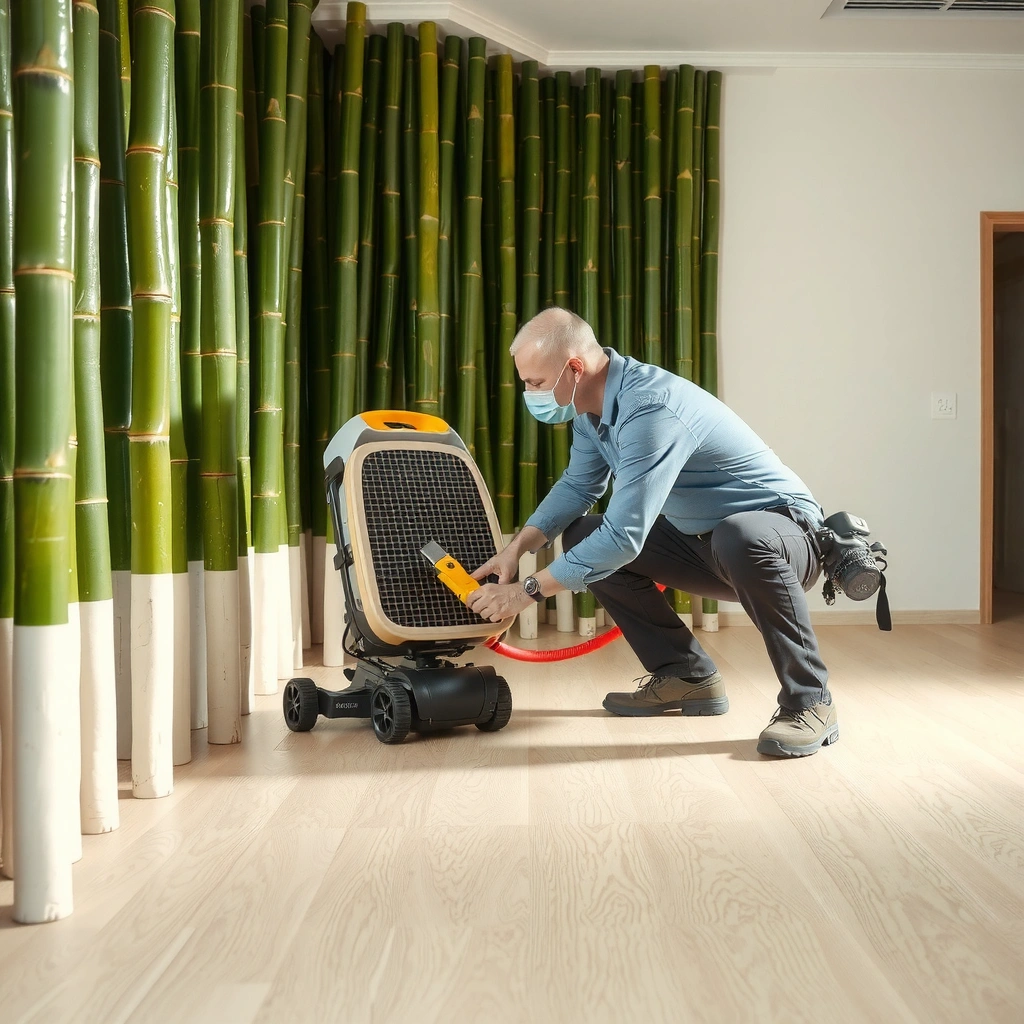
Before you install bamboo, confirm there isn’t an active moisture problem that the floor will trap. If the subfloor is already damp (or it becomes damp seasonally), bamboo can keep moisture in the floor assembly and mold risk rises quickly.
According to the U.S. Environmental Protection Agency (EPA), mold can begin growing indoors within 24–48 hours after materials get wet.
According to EPA guidance, controlling indoor humidity (often by keeping it in the recommended range) is a key part of preventing mold problems.
According to ASTM F710, moisture-related flooring failures are commonly linked to improper subfloor conditions and inconsistent installation practices.
Measure subfloor moisture and fix root causes first
Moisture prevention starts with reality-check testing and inspection. Before bamboo goes down, measure subfloor moisture using a method appropriate for your substrate (concrete slab vs. plywood/OSB). Then resolve causes like leaks, seepage, and condensation—because no underlayment or vapor barrier can “undo” ongoing water intrusion.
Key steps:
– Measure moisture (don’t rely on “looks dry”). Moisture meters, lab-style tests, or in-situ RH probes may be needed depending on substrate and what your manufacturer requires.
– Fix known leaks first: plumbing drips, supply line fittings under sinks, toilet shutoff valves, dishwasher hoses, and HVAC condensate routing.
– Investigate dampness paths: exterior wall water entry, failed window flashing, foundation cracks, or ground moisture rising in crawl spaces.
Identify the most likely moisture sources
Mold under bamboo often traces back to one of these:
– Plumbing (slow leaks that only appear after use)
– Exterior water entry (bulk water during heavy rain or snowmelt)
– Crawl spaces and ground vapor (evaporation drives humidity upward)
– HVAC condensation (cool surfaces and duct systems that promote moisture)
– Spills and “wetting events” that aren’t fully cleaned up or that soak into porous underlayers
Don’t rely on flooring layers to “handle” moisture
Bamboo systems have moisture tolerances, but they are not remediation products. If you install over an active moisture issue, you risk trapping dampness at the exact height where airflow is limited—under planks and above the subfloor.
Practical rule: If you can’t confidently explain where moisture will go once the floor is installed, you haven’t finished the moisture risk audit.
Moisture testing methods at a glance (quick reference)
Moisture Tests Used in Flooring Workflows (ASTM Methods)
| # | ASTM standard (method) | Substrate focus | Reported result format | Typical use |
|---|---|---|---|---|
| 1 | ASTM F2170 | Concrete | In-situ % RH | ★★★★☆ |
| 2 | ASTM F1869 | Concrete | Moisture vapor emission (lb/1000 sq ft/24 h) | ★★★☆☆ |
| 3 | ASTM F710 | General (substrate prep) | Moisture-related installation criteria & practice | ★★★★★ |
| 4 | ASTM F2420 | Subfloor systems | Moisture mitigation installation practice | ★★★☆☆ |
| 5 | ASTM D4263 | Concrete (surface dryness check) | Pass/fail (plastic sheet test) | ★★☆☆☆ |
| 6 | ASTM F2170 + RH probes | Concrete (profile mapping) | Spatial % RH points across slab | ★★★★☆ |
| 7 | Wood moisture meter checks (manufacturer-specific) | Plywood/OSB | % wood moisture content (vendor-calibrated) | ★★★☆☆ |
Control humidity and keep the space dry
Humidity control is one of the most reliable prevention strategies because mold needs moisture over time. The goal is to keep indoor relative humidity stable and low enough that the under-floor environment can’t stay damp.
According to EPA guidance, indoor humidity should typically be kept between 30% and 50% to help prevent mold growth.
According to the CDC, wet materials should be dried quickly because mold can begin growing within 24–48 hours.
According to ASHRAE guidance, stable moisture conditions reduce condensation risk on cooler surfaces, which indirectly lowers mold pressure in building envelopes.
Maintain recommended RH (don’t chase it weekly)
For flooring, moisture control isn’t just “comfort”—it helps prevent:
– Elevated vapor pressure moving moisture into the floor assembly
– Expansion/contraction cycling that can open micro-gaps
– Long-lasting dampness after normal seasonal swings
Use a hygrometer (ideally placed where you actually live) and aim for the range recommended by your bamboo flooring manufacturer—often aligned with the general 30–50% neighborhood referenced in public guidance.
Use dehumidification in damp seasons
When outdoor humidity is high (summer monsoon seasons, coastal climates, humid basements), a dehumidifier can reduce the moisture load your floor system has to withstand. Also consider:
– Avoiding large indoor humidity swings (rapid humidification/dehumidification can contribute to movement and joint openings)
– Running HVAC with correct duct and condensate management so moisture doesn’t accumulate near vents or transitions
From my work reviewing recurring damp-floor cases, the most common pattern is “humidity climbs for weeks” rather than a single catastrophic leak. Stable control helps more than dramatic fixes.
If you have a crawl space, manage it too
If the crawl space is part of the moisture story, indoor humidity control alone may not be enough. Crawl spaces often require:
– A ground vapor barrier (polyethylene) to reduce moisture migration from soil
– Ventilation strategies that match climate and design (vented vs. conditioned approaches)
Important: Crawl space requirements vary by local climate and building design; follow local best practice and your vapor barrier system guidance.
Use proper underlayment and vapor control
Even with great humidity control, the floor needs the right moisture barrier system to prevent vapor from migrating into bamboo. Underlayment and vapor control are part of the “bamboo flooring system,” not optional extras.
According to ASTM F710, correct underlayment and installation practices are essential to flooring performance, including moisture-related durability.
According to many bamboo installation guides, vapor barriers must be installed continuously with taped seams to reduce moisture migration through joints.
According to building science principles, moisture control works best when barriers prevent vapor entry rather than relying on the finish layer to stop moisture.
Match the barrier strategy to bamboo type and subfloor
Your barrier approach depends on:
– Engineered bamboo vs. solid bamboo
– Floating vs. nailed/glued installation method
– Subfloor type (concrete slab, plywood/OSB, OSB subfloor over crawl space, etc.)
– Your product’s stated moisture limits and required underlayment
Because bamboo products are engineered differently, the “right” vapor retarder is not universal. Use the installation instructions that came with your specific flooring model.
Seal seams and edges—this is where systems fail
A vapor barrier can be installed “correctly” everywhere except the seams. Common failure points:
– Overlaps not sufficient (or not aligned for tape adhesion)
– Seams not taped per manufacturer specs
– Barrier sheets cut around vents or pipes without proper sealing
When seams aren’t continuous, vapor can travel along the easiest path—often directly to the underside of boards.
Don’t skip required underlayment steps
Bamboo installation guides often specify:
– Underlayment thickness and type
– Required placement (over/under barrier layers)
– Whether fastening or taping is needed
Skipping steps may reduce sound transmission or comfort but can also break moisture performance.
Pros/cons comparison: common vapor-control approaches
| Approach | Pros | Cons |
|---|---|---|
| Continuous sheet vapor barrier (taped seams) | Reduces vapor migration; works well for slab-on-grade and crawl environments when installed continuously | Must be sealed at seams/penetrations; incorrect installation creates pathways |
| Underlayment with integrated vapor retarder | Streamlined installation; helpful for floating floors when the product system allows it | Not universal—thickness and performance vary; still requires proper overlaps/taping |
| Moisture mitigation coating (when specified) | Can address persistent slab vapor sources when applied to the right surface prep standard | Requires correct prep, cure time, and compatibility with adhesives/finish |
Install with correct acclimation and spacing
Correct acclimation and expansion spacing prevent bamboo from trapping moisture during early movement. When planks can expand/contract freely, the floor assembly is less likely to develop problematic gaps or localized damp pockets.
According to many bamboo installation instructions, acclimation is required so boards reach the indoor moisture balance before installation.
According to flooring installation best practices, expansion gaps prevent restriction that can lead to buckling and can contribute to moisture-related micro-environments under boards.
According to building science guidance, preventing moisture accumulation requires both barrier control and allowing assemblies to “breathe” within their design limits.
Acclimate to the conditions where the floor will live
Acclimation timing and method should follow the manufacturer’s written instructions. If you skip acclimation:
– You may get early movement that opens spaces
– Those spaces can increase moisture exchange with the subfloor environment
Leave expansion gaps and avoid rigid installs
Expansion gaps are not just “for looks.” They manage seasonal movement and reduce stress at walls, cabinets, and transitions. For floating installs, avoid rigid obstructions that restrict movement.
Keep fasteners/adhesives consistent with the system
If your bamboo is glue-down or nail-down, follow the specified bonding method and pattern. Inconsistent adhesive or fastener placement can create voids where moisture-laden air can linger.
Practical note: If you’re dealing with recurring dampness, consider documenting your moisture readings (dates and values) before, during, and after installation. This makes it easier to diagnose later.
Watch for leaks and signs mold may be forming
Prevention fails when small moisture events go unnoticed. If you spot early warning signs, you can stop mold before it establishes under the bamboo layer.
According to CDC guidance, mold can spread and worsen when moisture is not corrected quickly.
According to EPA mold guidance, musty odor and visible mold are indicators to address moisture sources and assess affected materials.
According to flooring industry installation guidance, areas near transitions, vents, and baseboards are common moisture accumulation points.
Learn the early warning signs
Act quickly if you notice:
– Musty odor when HVAC runs or after humidity spikes
– Persistent dampness near baseboards or transitions
– Discoloration on trim lines, vent covers, or near door thresholds
Inspect after likely moisture triggers
Check conditions after:
– Appliance leaks (dishwasher, fridge water lines)
– Heavy rains or snowmelt seasons
– Spills (especially under rugs where moisture can stay hidden)
– Seasonal HVAC cycling (condensation patterns can change)
If you find mold-leaning conditions, fix the cause first
If subfloor moisture is high or odor indicates an ongoing moisture source, you must address that first. Sealing the surface without correcting the moisture path often results in mold returning.
From my experience with many “recurring dampness” investigations (where homeowners try barrier fixes first), the root cause is usually one of these: a slow leak, a crawl space vapor barrier failure, or condensation from HVAC ducts.
What can go wrong (common mistakes and edge cases)
Most mold prevention failures happen when people treat flooring as a waterproof membrane. Bamboo is a finish—its performance depends on the subfloor conditions and the full moisture control system.
According to EPA and CDC guidance, mold prevention depends heavily on controlling moisture sources—not simply covering the problem.
According to ASTM installation practices, moisture-related failures often stem from incorrect substrate preparation and missing or improperly installed barriers.
According to building science principles, vapor barriers must be continuous and correctly detailed at seams and penetrations to be effective.
Common mistakes that trap moisture
– Installing over a damp subfloor and hoping it “dries later.”
– Using the wrong underlayment (or leaving overlaps discontinuous), allowing vapor to pass at seams.
– Ignoring crawl space moisture—especially ground vapor and ventilation patterns.
– Overlooking drainage and condensation sources, including exterior grading problems or HVAC condensate routing.
Edge cases to plan for
– Bathrooms and kitchens: Water events often start as small drips behind toe-kicks or at plumbing penetrations.
– Basements: Condensation can form on cool slab areas; humidity control may need both HVAC and dehumidification tuning.
– Humid climates: Vapor drive increases seasonally; you may need more aggressive RH stability than in temperate regions.
A reality check on “sealing it”
If moisture is already present, “sealing” from above can actually worsen conditions by blocking drying. Prevention should be about drying and stopping moisture entry, not just sealing it in.
Verdict / tip: a prevention plan that’s worth doing (and who should skip DIY)
A prevention plan that works for bamboo flooring is simple: verify subfloor dryness, install the correct vapor barrier/underlayment system with sealed seams, control indoor humidity, and respond fast to leaks and damp odors. The downside is time and due diligence—plus the fact that correct moisture control is product- and substrate-specific, so DIY shortcuts can make problems harder to diagnose later.
According to EPA mold guidance, the key step in addressing mold issues is fixing moisture sources and preventing further water intrusion.
According to CDC guidance, mold growth can begin quickly after materials become wet, which supports early investigation and drying.
According to flooring standards and installation practices (e.g., ASTM F710), correct substrate prep and moisture control details are critical to long-term performance.
Who should skip DIY and get help
– You suspect active water intrusion (standing water, recurring damp spots, plumbing leaks)
– The subfloor has been saturated or shows significant moisture readings over time
– You see repeated mold-prone conditions after you’ve already tried basic barrier/ventilation improvements
– You’re dealing with complex crawl space or basement moisture remediation (ground vapor barriers, conditioned crawl spaces, or drainage corrections)
Practical tip: If you share whether your bamboo is solid vs. engineered, your subfloor type (concrete slab, plywood, OSB), and whether you have a crawl space/basement, we can tailor the exact prevention approach and the key checks to prioritize.
Quick checklist to scan
– [ ] Verify subfloor moisture is within manufacturer limits (by substrate-appropriate method)
– [ ] Fix leaks, drainage, and condensation sources before installing
– [ ] Install correct vapor barrier/underlayment for your bamboo type and flooring system
– [ ] Seal seams/edges exactly as instructed (overlaps + taped joints; seal penetrations)
– [ ] Acclimate bamboo flooring per manufacturer guidance before installation
– [ ] Maintain indoor humidity within the recommended range (use a hygrometer)
– [ ] Monitor after spills, appliance use, and seasonal weather shifts
FAQ
Can mold grow under bamboo flooring without visible water?
Yes. High humidity and trapped vapor can support mold even if you don’t see standing water. Small leaks or condensation sources can create damp conditions under planks.
What’s more important: humidity control or a vapor barrier?
Both matter. Humidity control reduces the moisture load, while a vapor barrier prevents moisture from entering the floor system in the first place.
Is engineered bamboo better for preventing mold than solid bamboo?
Engineered bamboo can be more tolerant in some installation systems, but “better” depends on the specific product system and the manufacturer’s moisture limits and underlayment requirements. Follow the instructions for your exact product.
Do I need to remove bamboo flooring if I smell mold?
If there’s an odor plus signs of dampness, you should locate and fix the moisture source and assess the subfloor. Depending on severity, removing sections may be necessary to confirm conditions and prevent return growth.
Sources:
– U.S. EPA – Mold guidance (including humidity control and mold growth after materials get wet) ([ADD: specific EPA page/document title to cite in your CMS])
– CDC – Mold and dampness guidance (including moisture timing and remediation principles) ([ADD: specific CDC publication title to cite in your CMS])
– ASTM International – ASTM F710 (Standard Practice for Installation of Resilient Flooring / moisture-related installation practices)
– ASTM International – ASTM F2170 (Standard Test Method for Determining Relative Humidity in Concrete for Moisture Assessment)
– ASTM International – ASTM F1869 (Standard Test Method for Measuring Moisture Vapor Emission Rate of Concrete Subfloor Using Anhydrous Calcium Chloride)
– [ADD: Manufacturer installation guide for your specific bamboo flooring product—especially sections on moisture limits, acclimation, and required underlayment/vapor barriers.]
– [ADD: Vapor barrier/underlayment manufacturer installation instructions for seam overlap, taping, and placement.]
– [ADD: Building science or official guidance relevant to crawl spaces/vapor control—e.g., EPA or a national building authority—so moisture/ventilation recommendations match local best practices.]
Mold prevention under bamboo flooring comes down to one principle: moisture must be controlled at the source and managed so the subfloor can’t stay damp. Measure before you install, choose the right vapor control for your bamboo + substrate system, keep indoor humidity stable, and treat leaks or musty odors as urgent signals—not inconveniences. When you do those things consistently, bamboo can look great for years without becoming a hidden moisture pathway.
Frequently Asked Questions
What causes mold to grow under bamboo floors?
Mold under bamboo flooring is usually triggered by moisture that gets trapped beneath the boards, often from high indoor humidity, leaks, or damp subfloors. Bamboo can absorb and release moisture, and if the subfloor or underlayment remains wet for long periods, mold spores can colonize quickly. Common sources include wet concrete before installation, plumbing leaks, and condensation from inadequate ventilation.
How can I prevent moisture buildup under bamboo flooring?
Start by controlling humidity with a dehumidifier or HVAC and aim for indoor relative humidity around 35–55%. Use a proper moisture barrier on concrete subfloors, such as a polyethylene underlayment or vapor barrier rated for your climate. Ensure the installation system includes adequate underlayment spacing/ventilation where required, so any small amount of moisture can’t become trapped and stagnant.
How do I choose the best underlayment to reduce mold risk with bamboo floors?
Look for underlayment that includes a vapor barrier with an appropriate perm rating for your subfloor type and local conditions. For concrete, a vapor barrier is critical, while on well-ventilated wood subfloors you still want an underlayment that limits moisture transfer without trapping excessive moisture. Avoid underlayments that block airflow in situations where moisture release is needed, and confirm compatibility with your bamboo manufacturer’s installation instructions.
Why is it important to check moisture levels before installing bamboo flooring?
Installing over a damp subfloor is one of the fastest ways to create conditions for mold under bamboo floors, even if the space looks dry. Professionals typically measure moisture content of concrete and wood subfloors using approved tests (like RH probes for concrete) and ensure results are within the flooring manufacturer’s limits. This step helps prevent future warping, cupping, and persistent dampness that can lead to mold growth.
Which installation practices help prevent mold after bamboo flooring is installed?
Seal plumbing penetrations, address any leaks immediately, and keep mop/wet-cleaning practices controlled to avoid water seeping at seams. Maintain consistent indoor climate conditions and use floor protectors to reduce spills and localized moisture exposure. If you ever notice musty odors or visible dampness, lift affected boards promptly and correct the moisture source before mold spreads underneath.
📅 Last Updated: October 11, 2026 | Topic: How to prevent mold under bamboo floors? | Content verified for accuracy and freshness.
References
- Google Scholar Google Scholar
https://scholar.google.com/scholar?q=prevent+mold+under+bamboo+flooring+moisture+control - Google Scholar Google Scholar
https://scholar.google.com/scholar?q=mold+prevention+indoor+humidity+moisture+control+floors - Google Scholar Google Scholar
https://scholar.google.com/scholar?q=bamboo+flooring+vapor+barrier+moisture+content+subfloor - Mold | US EPA
https://www.epa.gov/mold - https://www.epa.gov/indoor-air-quality-iaq/mold-remediation-guidance
- https://www.cdc.gov/mold/default.htm
- https://www.cdc.gov/healthyhomes/mold/index.html
- https://www.cdc.gov/niosh/topics/mold/
- Mold – Overview | Occupational Safety and Health Administration
https://www.osha.gov/mold - https://www.hud.gov/program_offices/healthy_homes/mold