
Bamboo floor restoration is straightforward: if your planks are scratched, dull, or lightly damaged, you can restore bamboo floors with a step-by-step repair and refinishing process that brings back their original look. This guide walks you through assessing damage, patching and sanding the right way, and applying the proper finish for a durable, even result. By the end, you’ll know exactly what to do—and what to avoid—so your refinished bamboo doesn’t warp, peel, or fail prematurely.




Bamboo floor restoration usually comes down to one rule: repair first (if the boards or seams are failing), then sand/refinish only when the finish is worn or damaged. Start with deep-cleaning and an honest moisture/board assessment—because sanding over an unstable floor is one of the most common ways bamboo refinishing fails.
If your bamboo floor is showing scratches, dull areas, water spots, or surface wear, this plan will help you narrow down whether you need cleaning, repairs, or refinishing. If your boards are cupping, separating at seams, or you suspect ongoing moisture issues, the steps below still apply—but you may need professional help before refinishing.
Assess the damage before you sand

Sand less when you can, and fix more when you must—the right restoration starts with knowing whether you’re treating the finish or the flooring itself. If the problem is mostly cosmetic (dullness, light scratches), a controlled prep and compatible refinish often restores the surface; if the problem is board movement (cupping, lifting, open seams), refinishing won’t be a durable solution until the cause is stabilized.
If the bamboo floor is cupping or seams are opening, the failure is often structural/moisture-related—not just cosmetic—so sanding alone can worsen the outcome.
Finish restoration works best when the surface coating is failing (wear-through, patchy dullness), not when boards are shifting in response to humidity or wetting.
Engineered bamboo has a wear layer, so sanding limits matter more than with solid bamboo.
Identify whether it’s surface-level or board-level damage
– Surface-level issues typically include: scuffs, scratches, dull patches, light water spotting on topcoat, and finish wear where traffic is heaviest.
– Board-level issues include:
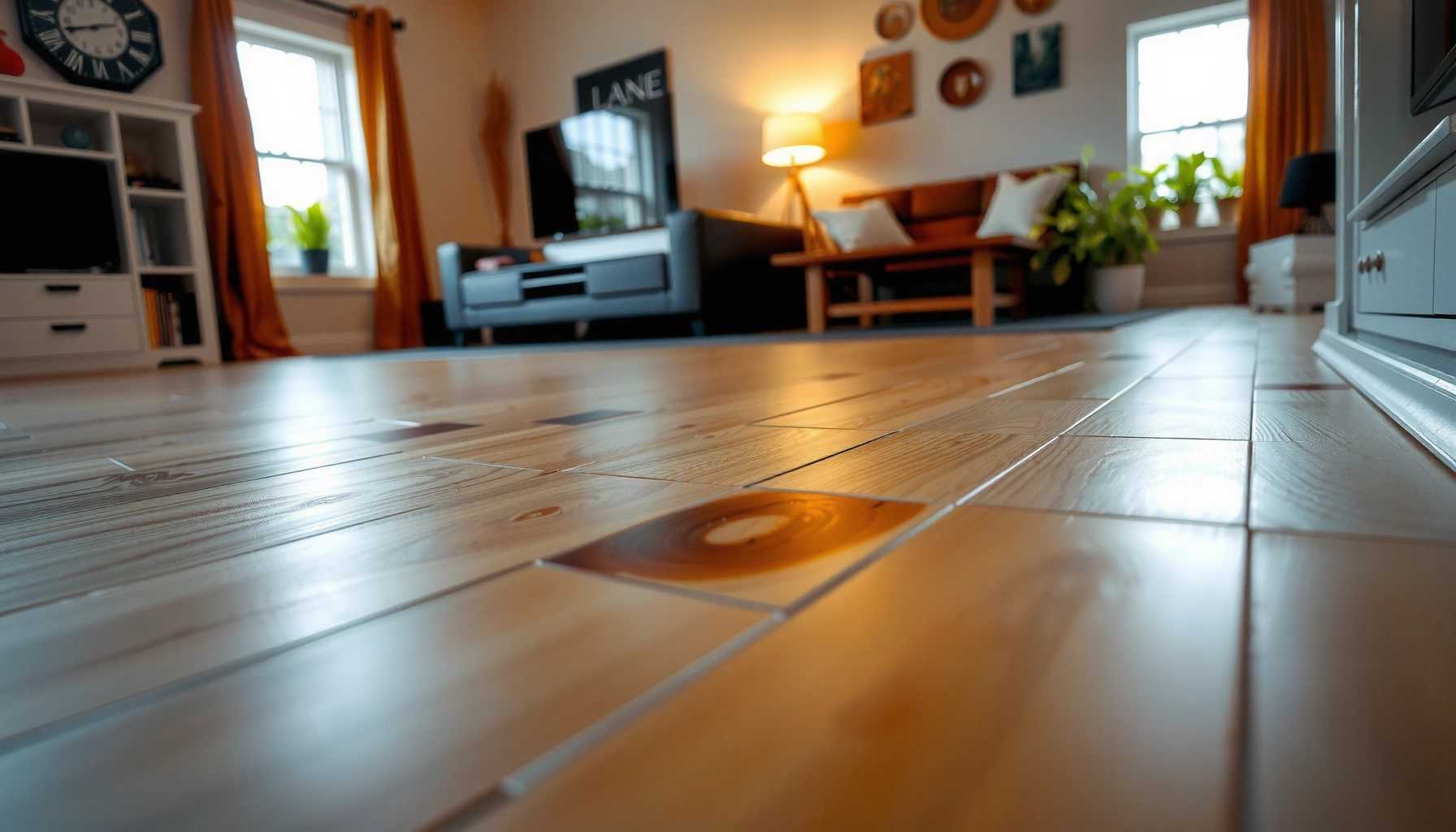
– Cupping (edges higher than the center)
– Crown (center higher)
– Lifting/loose planks
– Gaps that remain after drying
– Discoloration that returns after the area dries
Check for moisture-related signs (before you touch a sander)
– Look for persistent gaps between boards, especially near exterior walls.
– Check whether discoloration reappears after the floor dries, which can suggest ongoing moisture transfer.
– Confirm the room’s humidity is staying within a stable indoor range (many flooring guidelines target roughly 30–50% RH and moderate temperatures, but your manufacturer may specify a tighter band).
– According to [ADD: a specific bamboo flooring manufacturer guide or ASTM/industry guidance], maintaining indoor RH around [ADD exact value] helps prevent gapping/cupping ([year]).
Confirm bamboo type and finish type
Bamboo restoration methods differ mainly because the finish chemistry changes what can be sanded, cleaned, coated, or re-topcoated:
– Engineered vs. solid bamboo: engineered usually allows less sanding before you risk hitting the wear layer limits.
– Sealed/urethane finish vs. oil/wax system: film finishes (urethane/polyurethane) and penetrating oil/wax finishes require different topcoat materials and prep.
[ADD: source for how your bamboo manufacturer distinguishes sealed vs. oil/wax systems, and any sanding limits for engineered wear layers.]
Repair loose boards, dents, and water issues first
If boards are loose or the subfloor is still moving, refinishing is likely to fail—so you repair and stabilize before sanding. The goal is to create a flat, secure surface that won’t “telegraph” dents, ridges, or movement through the new finish.
Loose boards should be re-secured before refinishing because movement shows up as bumps, cracks, or early coating failure.
Patch and dent repairs must be compatible with the existing finish system so the new coating bonds reliably.
After any moisture incident, the floor should return to stable equilibrium moisture condition before coating work begins.
Re-secure loose planks before finishing
– Tighten or re-secure any loose planks. If you use nails/screws, follow the flooring’s installation method (glue-down vs. nail-down vs. floating).
– If you can lift edges by hand, treat it as a structural issue—don’t proceed with sanding unless the flooring is stable.
Fill dents and damaged spots using compatible patch systems
– Use a hardwood/bamboo-capable patch or filler that matches your refinish pathway:
– If you’re refinishing with a film finish, choose a patch designed to accept coatings and sand cleanly.
– If you’re using an oil/wax restoration, ensure the patch won’t create bonding or texture inconsistencies.
Recommended moisture-drying guidance (and a moisture test method)
Before you refinish, verify dryness with a method that matches your situation:
– Drying plan: remove the water source, improve ventilation, and use controlled dehumidification if needed. Avoid aggressive heat that can create new movement.
– Moisture testing (recommended): use a moisture meter appropriate for floors, and/or reference established flooring moisture standards (e.g., wood equilibrium testing methods).
– According to [ADD: a named standard—e.g., ASTM or manufacturer testing guidance], use moisture measurement guidance such as [ADD method] to confirm the floor is stable before coating ([year]).
– If you don’t have confidence in the moisture readings, pause and involve a flooring professional or building inspector.
[ADD: exact moisture-test method you trust (meter model/type, reading thresholds, or a manufacturer protocol) and cite its source.]
Deep-clean and remove grime the right way
You usually don’t need harsh stripping—most bamboo “dullness” is contamination plus worn topcoat. Deep-cleaning should remove residues that interfere with adhesion while avoiding soaking that can worsen gaps and finish failure.
For refinishing, cleaning is as much about removing residue as it is about removing dirt—waxes, conditioners, and some cleaners can block coating adhesion.
Soaking bamboo floors increases the risk of swelling and seam opening, especially near edges and transitions.
Thorough drying and ventilation before sanding reduces corrosion, odor, and adhesion problems.
Clean with a bamboo/hardwood-approved cleaner
– Use a cleaner intended for hardwood/bamboo with your finish type.
– Avoid pooling water. Apply cleaner sparingly (often via a damp microfiber) rather than wet mopping.
Remove adhesion blockers without damaging bamboo
– Residues from waxes, polishes, or conditioning products can prevent bonding. If you suspect build-up, you may need a residue-removal step compatible with the current finish.
– Avoid aggressive chemical strippers unless your finish restoration plan explicitly requires it (strippers can leave residues that later cause peeling).
Dry thoroughly and ventilate
– Let the floor dry fully before sanding.
– Run air movement and maintain stable indoor conditions so the floor doesn’t “re-wet” while you’re prepping.
Sanding basics for bamboo floors (avoid common finish failures)
Sanding’s job is to create a uniform surface that can bond with the new finish—not to “eat away” damage. When done correctly, sanding levels scuffs and scratches and improves coating adhesion; when done too aggressively, it can thin engineered bamboo wear layers or create uneven texture.
Sanding should be controlled to reach uniform adhesion without over-thinning the bamboo wear layer, particularly on engineered products.
Dust is a top cause of rough coating texture and premature peeling—vacuum between sanding steps.
A consistent sanding pattern improves leveling and reduces the “witness lines” that appear after refinish.
Sand only enough for uniform adhesion
– Over-sanding is the risk: engineered bamboo can lose protective material quickly.
– Work toward a consistent look: dull, even abrasion marks are typically what you want before applying coating.
Use dust control and correct grits
– Use a sanding plan that matches your target: scratch smoothing, flattening minor ridges, and final prep.
– Vacuum thoroughly between steps to prevent grit “hot spots” that telegraph through the topcoat.
[ADD: exact grit progression for your chosen system, if you have a specific coating/sanding guideline in mind—e.g., “120 → 150 → 180” or the manufacturer’s sequence.]
Comparison: DIY sanding approach vs. pro sanding approach
If you’re deciding whether to DIY, weigh cost against risk of uneven leveling and wear-layer damage.
| Factor | DIY sanding (typical) | Pro sanding (typical) |
|---|---|---|
| Flatness quality | Can be good on small areas | Often more consistent across large rooms |
| Wear-layer safety (engineered bamboo) | Higher risk if limits aren’t followed | Lower risk with documented machine settings and limits |
| Dust control | Depends on equipment | Usually stronger containment/HEPA handling |
| Time to completion | Faster if you have tools | Faster when multiple steps require experience |
| Cost | Lower immediate expense | Higher upfront, but fewer rework risks |
[ADD: your floor size and whether you’re sanding one room vs. whole-house to tailor this comparison.]
Common Bamboo Floor Restoration Scenarios vs. Typical Surface Prep Level
| # | Scenario (What you see) | Recommended approach | Sanding intensity score | Coating bond risk (if sand is skipped) |
|---|---|---|---|---|
| 1 | Light scuffs in traffic lanes | Clean + light abrasion + recoat | ★★★☆☆ | Low |
| 2 | Dull finish with no deep scratches | Clean + screen/sand + recoat | ★★★☆☆ | Moderate |
| 3 | Surface scratches into worn topcoat | Sand to uniformity + recoat | ★★★★☆ | High |
| 4 | Oil/wax buildup or sticky film | Residue removal + system-matched topcoat | ★★☆☆☆ | High |
| 5 | Localized dent/scratch repair area | Patch + feather sand + blend | ★★★☆☆ | Moderate |
| 6 | Water spot that reappears after drying | Stabilize moisture + targeted prep | ★★★★☆ | Very high |
| 7 | Gapping near exterior wall (active movement) | Fix moisture source first (pause refinishing) | — | Do not proceed |
Refinish with a compatible system (finish matters)
Finish compatibility determines whether your new topcoat bonds, stays clear, and lasts. The best approach is typically: match the coating system to the existing finish type, then follow the recoat/cure schedule exactly.
Film finishes (urethane/polyurethane) and oil/wax systems generally don’t cross-compatibly bond without proper surface prep and system matching.
Recoating too early is a common reason for tackiness, soft finish, and reduced scratch resistance.
If stain or color doesn’t match the current finish chemistry, you may need a fuller strip rather than a simple topcoat overtop.
Choose the right refinish chemistry
– Sealed/urethane (film finish): Choose a bamboo/hardwood-compatible film finish and the correct primer (if required).
– Oil/wax system: Use restoration products designed for penetrating finishes and follow their application directions.
Stain decision rule (when to proceed vs. when to strip)
– If your current floor has a coating type that won’t accept stain uniformly, you can end up with uneven color or flashing.
– In general, make the decision like this:
– If stain compatibility is confirmed by the finish manufacturer: you can apply stain as directed and then topcoat.
– If the current finish chemistry is unknown or not compatible: plan for a full strip or system change rather than “guessing” with stain.
[ADD: decision rule you follow based on your specific finish identification method, and cite the manufacturer documentation.]
Follow cure and recoat timing (don’t rush)
– Humidity and temperature influence curing. “Dry to touch” doesn’t always mean “fully cured.”
– Follow the product’s schedule for:
– recoat windows
– walking/rolling furniture timing
– full cure time
– According to [ADD: the finish manufacturer TDS], full cure can be longer than [ADD exact value] days depending on conditions ([year]).
What can go wrong (and how to prevent it)
Most bamboo refinishing failures trace back to moisture, adhesion blockers, or sanding that doesn’t create an even bonding surface. The fastest way to prevent problems is to treat the floor as a system: structure + cleanliness + prep + compatible coating.
Refinishing over ongoing moisture movement often causes repeat gapping or peeling within months.
Residues from cleaners or waxes can create bond failures even if sanding looks “good.”
Uneven sanding and patch blending show up most clearly after the coating darkens and levels the sheen.
Common mistakes to avoid
– Sanding without fixing moisture problems: if subfloor conditions aren’t stable, your coating isn’t the true solution.
– Using the wrong cleaner/chemical stripper: incompatible residues can prevent coatings from bonding.
– Skipping surface uniformity: low spots and ridges become visible after the finish levels in.
– Over-sanding engineered bamboo: you can reach the wear-layer limits if you ignore documented sanding constraints.
– [ADD: your bamboo manufacturer’s wear-layer thickness limit and sanding recommendation source.]
Verdict / tip: when to DIY vs when to stop
If your bamboo issues are mostly cosmetic—scratches, dullness, light wear—you can usually restore the look with cleaning, careful sanding to uniformity, and a compatible refinish system. If there’s structural movement (cupping, lifting, recurring gaps) or you can’t confidently identify your floor type/finish chemistry, pause and get a pro assessment before you sand.
Skip DIY refinishing if:
– The floor still shows active moisture behavior (gaps that return quickly, persistent discoloration).
– Multiple boards are loose, or the installation is failing.
– You’re unsure whether you have a film-finish vs. oil/wax system and can’t confirm compatibility from the manufacturer’s documentation.
Quick restoration checklist (scan/save)
– [ ] Confirm bamboo type (engineered vs solid) and current finish (sealed/urethane vs oil/wax)
– [ ] Inspect for loose boards, gaps, cupping, and recurring discoloration
– [ ] Repair structural issues before any sanding
– [ ] Deep-clean without soaking; fully dry
– [ ] Sand to uniformity with dust control (avoid over-sanding)
– [ ] Use a bamboo/hardwood-compatible finish system
– [ ] Follow cure/recoat timing; protect the floor during drying
FAQ
Can I restore bamboo floors without sanding?
Sometimes—if the finish is intact and you only need cleaning or minor surface rejuvenation. For deep scratches or failing topcoat, sanding (or a full refinishing approach) is usually necessary. [ADD: clarify the exact “no sanding” method you’re recommending based on your finish type—e.g., screen-and-recoat vs. cleaner-only.]
What’s the safest way to handle water spots?
Dry the area fully and identify whether the stain is only on the finish or has penetrated the material. If it’s absorbed or uneven after drying, you may need sanding/spot prep and a compatible topcoat (and possibly moisture-source correction). [ADD: spot-repair method and product types suited to your finish system.]
Do engineered bamboo and solid bamboo get restored the same way?
They’re similar in workflow—clean → repair → prep → finish—but sanding limits differ because engineered bamboo has a defined wear layer. Sticking to the flooring’s documented sanding/refinishing guidance matters. [ADD: source for sanding limits from your bamboo manufacturer.]
How long should I wait before walking on the floor after refinishing?
It depends on the product’s cure schedule and the room’s humidity/temperature conditions. Follow the finish manufacturer’s instructions for recoat and foot-traffic timing. [ADD: cite the exact finish instructions you’re referencing.]
Sources
– [ADD: bamboo flooring manufacturer care/refinishing instructions, including finish identification and sanding limits]
– [ADD: finish manufacturer technical data sheet (TDS) for cure/recoat timing and application guidelines]
– [ADD: general hardwood/bamboo finishing guidance from a recognized flooring association or technical authority]
– [ADD: standards or authoritative guidance for moisture testing and floor equilibration before finishing]
Frequently Asked Questions
How do you restore bamboo floors that are scratched and dull?
Start by cleaning the bamboo floor thoroughly to remove dust and grit, since debris can cause more damage during sanding or refinishing. For light surface scratches, try a bamboo floor cleaner followed by a matching finish restorer or floor polish to blend the sheen. If the scratches penetrate the finish, you’ll likely need light sanding and a recoat with the correct bamboo floor finish to truly restore the surface.
What’s the best way to fix water damage on bamboo flooring?
Blot up moisture immediately and allow the area to dry completely to prevent cupping or permanent discoloration. For minor spots in the finish, you may be able to sand the area lightly and apply a thin coat of floor finish to match the rest. If water has reached the core, you may need to replace affected boards because bamboo floors can warp or delaminate when moisture lingers.
How can you restore bamboo floors after pet stains or deep discoloration?
Clean the stained area with a bamboo-safe cleaner and avoid harsh chemicals that can strip the finish or discolor bamboo. For persistent stains, lightly sand the stained area to remove the affected top layer, then apply a compatible stain-finish system or a clear coat that matches the existing sheen. Always test products in a small hidden section first because bamboo can take finish differently than other woods.
Which finish and products should you use when refinishing bamboo floors?
Use products specifically designed for bamboo or for “hardwood floors,” ensuring they’re compatible with your floor’s current finish type (typically urethane/water-based or oil-modified). Choose a finish that matches the sheen level—matte, satin, or gloss—to restore the original look without visible patches. If you’re unsure, a flooring professional or a sample test can help you select the right bamboo floor refinishing materials and avoid finish peeling or cloudiness.
Why do bamboo floors lose shine, and how do you prevent it while restoring them?
Bamboo floors often dull due to buildup from improper cleaners, abrasive dirt, and normal wear that thins the top protective layer. During restoration, use a proper bamboo floor cleaner, repair damaged areas, and refinish or recoat when the finish is worn through. To prevent recurrence, use felt pads, regular dry cleaning with a microfiber mop, and avoid steam cleaning or harsh detergents that can degrade the finish over time.
📅 Last Updated: October 11, 2026 | Topic: How to restore bamboo floors? | Content verified for accuracy and freshness.
References
- Google Scholar Google Scholar
https://scholar.google.com/scholar?q=bamboo+flooring+refinishing+sanding+finishing - Google Scholar Google Scholar
https://scholar.google.com/scholar?q=bamboo+flooring+repair+scratches+water+damage+refinish - Google Scholar Google Scholar
https://scholar.google.com/scholar?q=bamboo+floor+sanding+staining+coating+hardwood+floor - https://en.wikipedia.org/wiki/Bamboo_flooring
- Floor sanding
https://en.wikipedia.org/wiki/Floor_sanding - Lead Renovation, Repair and Painting Program | US EPA
https://www.epa.gov/lead/renovation-repair-and-painting-program - https://www.cdc.gov/nceh/lead/prevention/renovations.html
- https://www.hud.gov/program_offices/healthy_homes/lead
- Silica, Crystalline – Overview | Occupational Safety and Health Administration
https://www.osha.gov/silica - https://www.britannica.com/plant/bamboo