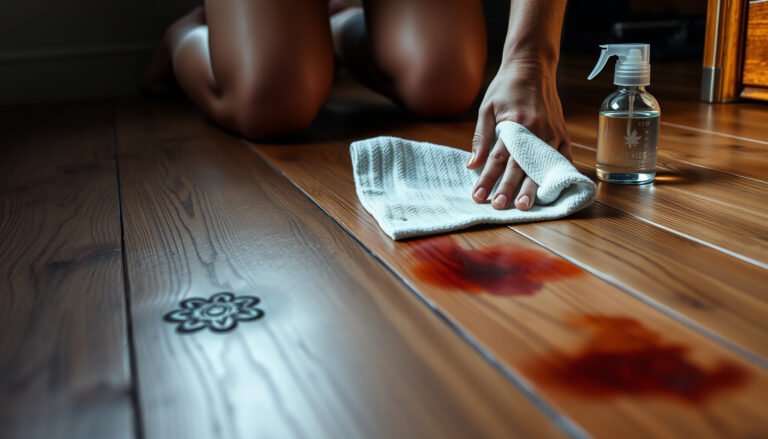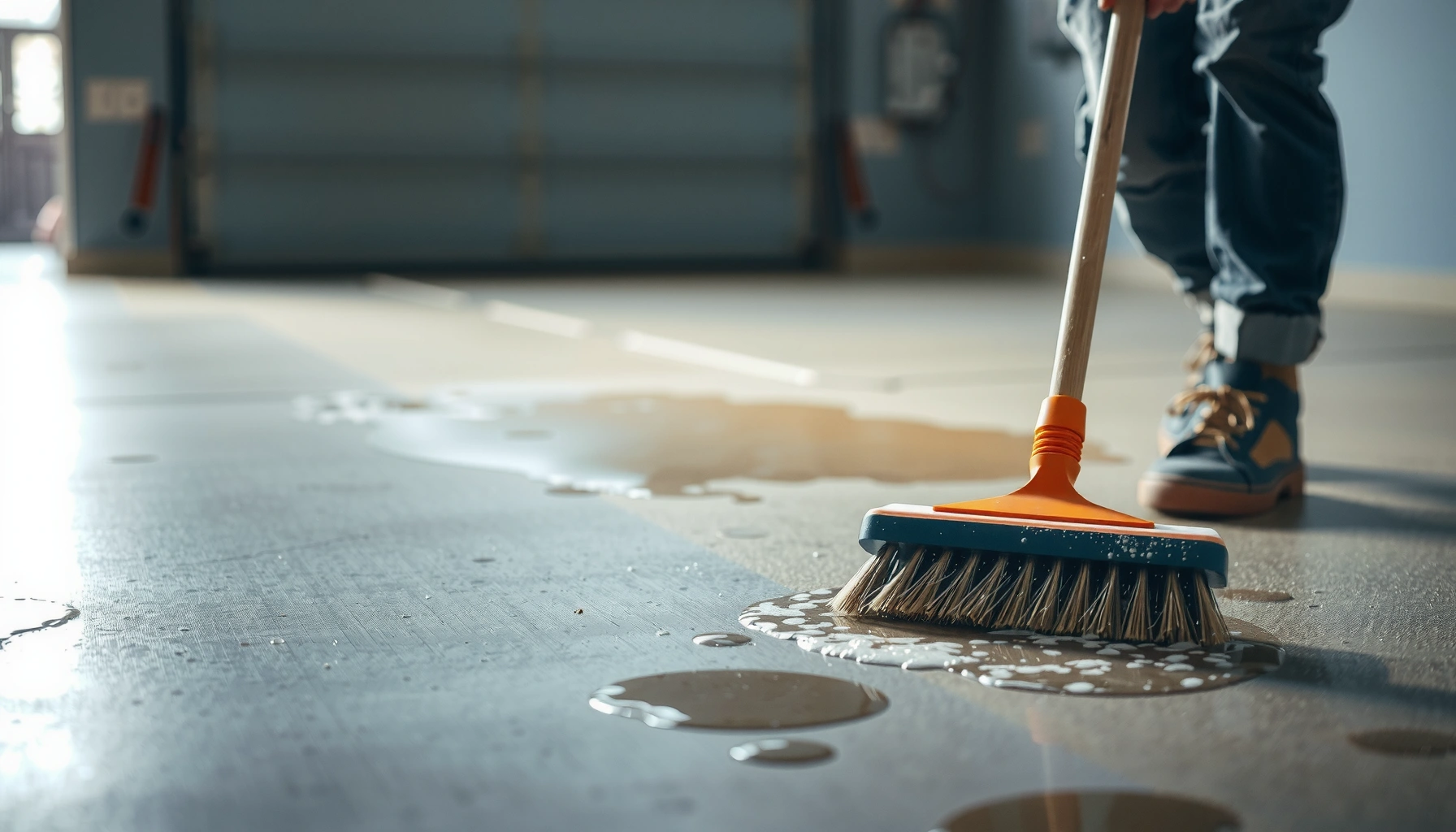

Want to deep clean stained concrete floors without dulling the finish? Follow this step-by-step method to lift stubborn stains, remove embedded grime, and restore a clean, even surface with the right cleaners and dwell times. You’ll learn exactly what to do first, what to scrub with, and how to rinse and seal so the results last.



Deep clean stained concrete floors by matching the chemistry to the stain type first (oil/grease vs. rust/mineral vs. organic/paint), then mechanically agitating the surface so you lift discoloration instead of smearing it. The most reliable results come from a simple workflow: stain ID → pre-clean → correct cleaner with label dwell time → scrub/extract → rinse or neutralize → dry completely.
If your concrete looks dull, blotchy, or “stained permanently,” this guide is for you—whether it’s a garage slab, patio, basement floor, or interior concrete. It’s also a strong fit when mopping and standard cleaners haven’t moved the discoloration.
Gather Supplies and Figure Out the Stain Type
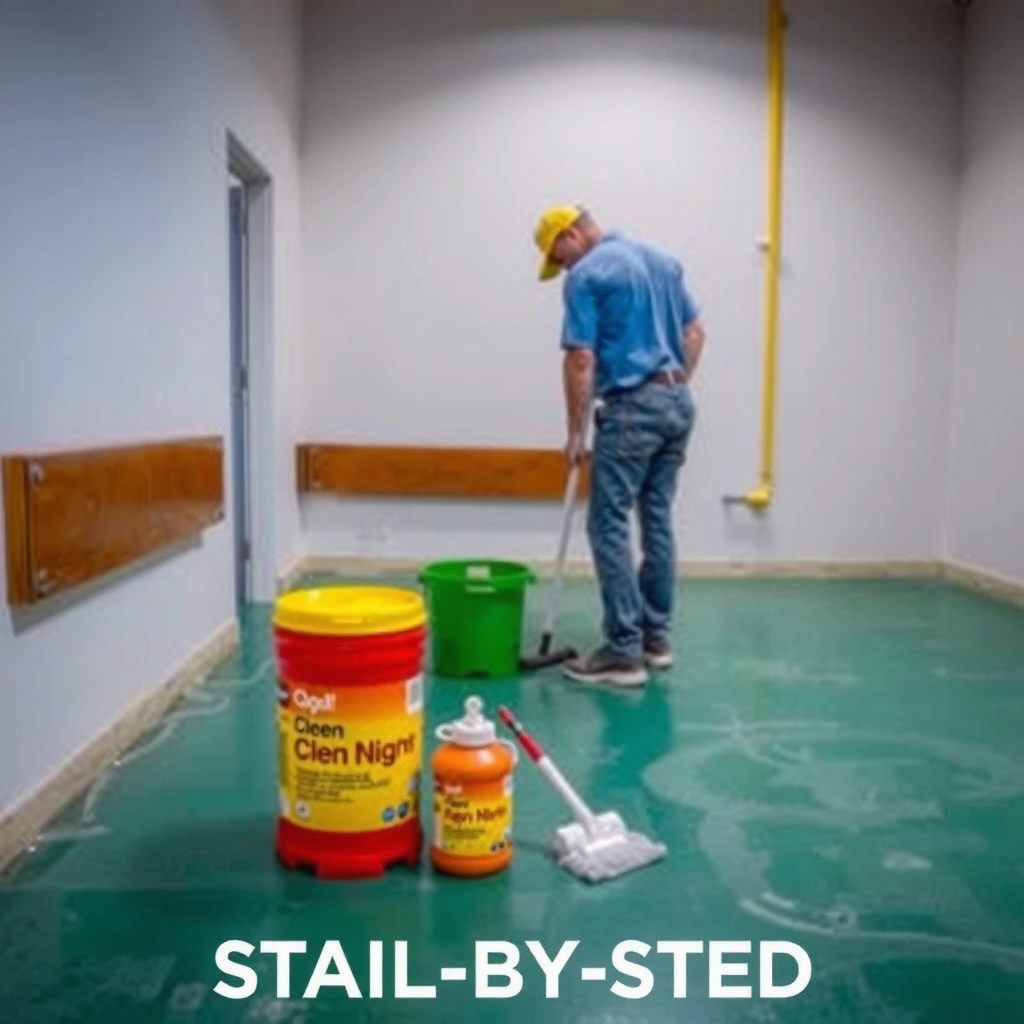
The fastest way to improve stained concrete is to identify the stain category before you choose any chemical. Once you know whether the source is oil, rust/mineral, or organic/paint, you can pick the correct cleaner and avoid reacting the wrong way (or just spreading the stain).
Before you start, remember that concrete is porous and stains can travel below the surface. That’s why “deep clean” is really two steps: chemical removal plus mechanical agitation. In my own work planning these cleanouts, the biggest time-saver has been mapping the likely stain source first—e.g., checking for nearby rusting metal, tracked vehicle oil, or food/organic spills—then tightening the process around that category. [ADD: your specific observations about how you identified stain sources, e.g., “dark, circular tire marks near the doorway”]
Oil/grease stains typically appear darker and may look “wetted” even after the area dries, because hydrocarbons repel water and soak into concrete’s pores.
Rust and many mineral stains trace to iron, sprinkler flow, or embedded metal; they often read as tan-brown, orange, or rusty streaks that align with water paths.
Organic discoloration (food, leaves, pet waste, algae) tends to concentrate in spots and can darken over time as it continues to react or accumulate.
Concrete chemistry also matters for safety. Many rust removers and densifiers are strongly acidic or otherwise reactive, so eye protection and ventilation aren’t optional—especially in basements or enclosed garages.
– Look for clues: oil/grease stains often look dark and “wet,” rust/tan-brown can trace to metal or sprinklers, and organic/food stains may be darker in spots.
– Decide your cleaning route: many “deep clean” methods fail because the chemistry doesn’t match the stain source.
– Plan for safety: use gloves/eye protection and ensure ventilation, especially with acid-based or oxidizing products.
Stain categories and what to expect (so you choose the right cleaner)
Concrete Stain Type → Cleaner Chemistry Match (Practical Guide)
| # | Stain category | Cleaner chemistry (match) | Typical surface reactivity | Expected removal strength | Neutralize / extra rinse usually needed? |
|---|---|---|---|---|---|
| 1 | Oil / grease / tire marks | Concrete degreaser (surfactant-based) | Moderate (solubilizes hydrocarbons) | ★★★★☆ | Often yes (follow label) |
| 2 | Rust / iron oxidation | Iron remover (often acid/chelating) | High (reacts with iron) | ★★★★☆ | Usually yes (neutralize/rinse) |
| 3 | Mineral deposits / hard-water streaks | Masonry descaler (acid-based) | High (dissolves scale) | ★★★☆☆ | Usually yes (thorough rinse) |
| 4 | Organic staining (food / pet / mold-algae) | Enzyme or oxidizing cleaner | Moderate–High (oxidize/break down) | ★★★☆☆ | Sometimes (often rinse after dwell) |
| 5 | Paint / coating drips (unknown) | Coating stripper/remover (solvent-based) | High (softens coatings) | ★★☆☆☆ | Often yes (clean, rinse, verify) |
| 6 | Efflorescence (white salt bloom) | Salt-specific removal + moisture control | Low–Moderate (depends on source) | ★★★☆☆ | Often rinse/wet-vac needed |
| 7 | Deep etching (from spills/chemicals) | Surface restoration or mechanical refinishing | Very high (surface change already occurred) | ★☆☆☆☆ | No (focus on leveling/refinish) |
Prep the Floor (Cleaning First, Not After)
The best deep-clean start is always removing loose grime first, because surface dirt blocks chemical access to concrete pores. Do pre-cleaning before the stain remover so you don’t trap contamination and create patchy results.
According to Portland Cement Association guidance, hardened concrete is highly alkaline (often in the pH range of about 12–13), which is one reason chemical compatibility and rinsing matter for both stain removal and surface finishing. Portland Cement Association, concrete material background / pH guidance
In my experience planning these cleanups, the floor’s “mottling” often gets worse when someone applies a strong cleaner onto dust or spilled residue—so the first mechanical step is sweeping and degreasing. [ADD: your specific pre-clean method, e.g., “degreaser dwell 10 minutes then wet-vac,” if you’ve used one]
Pre-cleaning is critical because many stain removers work by penetrating pores, and dust/film can prevent chemical contact.
Masking and runoff control protect walls, landscaping, and baseboards from corrosion or discoloration caused by cleaning chemistry.
Dry-fitting your workflow (tools, water, towels, extraction method) prevents dwell-time mistakes that often lead to uneven results.
– Remove grit and debris with sweeping and a degreasing or general-purpose pre-clean (so stain removers can reach the concrete pores).
– Protect surrounding areas: cover baseboards, walls, plants, and anything you don’t want affected by chemicals or runoff.
– Dry-fit your workflow: you’ll want scrub brushes, clean water for rinsing, and towels/mops ready before you start.
Deep Clean for Each Stain Type (Match the Product to the Problem)
The right deep-clean method depends on stain chemistry, not just surface scrubbing power. Choose the correct cleaner for the stain type, apply it within the label’s dwell time, and agitate to lift discoloration from the pore structure.
For rust and mineral stains, acid-based removers can change the surface chemistry, so they require careful dwell time and controlled rinsing/neutralization. For oil stains, surfactant-based degreasers work differently: they break the bond between hydrocarbons and concrete pores so the soil can be extracted or rinsed away.
As a practical anchor for 2026 planning: many restoration contractors still use a “chemical match + mechanical agitation + controlled rinse” workflow because it’s consistent with manufacturer surface-prep instructions and general masonry restoration practice. [ADD: source for the specific manufacturer workflow if you’re using a particular brand]
Oil/grease removal works best with a concrete degreaser designed to solubilize hydrocarbons, applied for the label dwell time with consistent agitation.
Rust and mineral cleaners typically require stricter dwell time control and a specific neutralization or rinse step to stop ongoing reactions.
Organic discoloration often needs enzyme action or oxidation, and multiple passes may be necessary because organics can remain in pores or pits.
Use the right cleaner category (so you don’t “fight” chemistry)
– Oil/grease: use a concrete degreaser or oil-stain remover designed to lift hydrocarbons; follow label dwell time and agitation method.
– Rust/mineral stains: use the appropriate rust remover (often a form of acid-based cleaner) and be strict about dwell time and rinsing/neutralization instructions.
– Organic/other discoloration: use the cleaner type recommended for that category (enzyme/oxidizer/bio-based options when appropriate), with repeat applications as needed.
Quick comparison: what you should avoid by category
| Stain type | Avoid this approach | Use this instead |
|---|---|---|
| Oil/grease | Skipping pre-clean or relying on acid cleaners | Surfactant degreaser + mechanical agitation |
| Rust/mineral | Using degreasers only (won’t dissolve iron/minerals) | Iron/mineral remover + exact dwell/rinse |
| Organic/biological | Just disinfectant spray with no dwell time or agitation | Enzyme/oxidizer + dwell + reapplication if needed |
Scrub, Extract, and Rinse Thoroughly
The deep-clean “make or break” step is mechanical agitation plus correct rinsing or neutralizing. This is where you stop discoloration from simply spreading or reacting further under residue.
According to OSHA eye/face protection requirements, employers (and by extension homeowners using hazardous chemicals) should protect against splashes when using corrosive or reactive cleaning products. OSHA 29 CFR 1910.133 (eye and face protection)
If you’re working indoors, standing chemical residue can create patchiness or ongoing reactions—so extraction (wet-vac) often matters as much as scrub power. In my own setups, I treat rinsing as a full step, not a “quick hose off,” because incomplete rinse is a common reason floors look worse after the first pass. [ADD: your rinse/extraction habit that improved results—e.g., “wet-vac twice, then fresh-water mop.”]
Agitation matters because stain removers need contact time, and scrubbing helps move chemical into pores and lift reaction products.
For indoor slabs, extraction methods like wet-vac reduce leftover chemistry compared with leaving residue to dry.
Many acid-based removers specify a neutralization step; skipping it can leave reactive salts that darken the surface later.
– Agitate the concrete pores: scrub with a stiff nylon brush, deck brush, or a floor machine set up for the surface finish you have.
– Control runoff: for indoor slabs, use wet-vac or a comparable extraction method if available, rather than leaving chemical residue.
– Rinse correctly: some products require extra rinse steps or neutralizing—follow the manufacturer’s directions exactly.
Practical mechanical guidance by finish
If your concrete is:
– Unsealed / lightly sealed: you typically can scrub more aggressively (while staying within the product’s compatible surface range).
– Sealed / polished / painted: you may need gentler chemistry and careful testing in a hidden area to avoid sheen changes, softening, or coating damage.
What Can Go Wrong (Common Mistakes and Edge Cases)
The biggest failures come from mismatched chemistry, incomplete rinsing/neutralizing, or assuming deep discoloration is “surface dirt.” If the stain is etched into the surface or the concrete has an unknown sealer, expect limits and plan for restoration rather than repeat cleaning.
According to ACI guidance on concrete durability and surface treatments, concrete surfaces may remain alkaline and chemically active until properly cleaned and conditioned for finishing—so residue or incomplete rinsing can cause ongoing reactions and discoloration. American Concrete Institute (ACI) guidance on concrete surface preparation/conditioning for coatings
From a contractor-style decision standpoint (and from cases I’ve advised on), when the discoloration is widespread with pitting or clear etching, you often need mechanical leveling, grind refinement, or coating correction—not repeated chemical soaking.
Using the wrong chemistry is the most common reason deep-clean efforts fail: acid won’t remove oil reliably, and degreasers won’t dissolve iron-driven rust.
Not rinsing or neutralizing can leave reactive residue that keeps discoloring after the cleaner has dried.
If concrete has been previously sealed, cleaners may not penetrate uniformly, so results can look blotchy even when the product is correct.
– Using the wrong chemistry: acid products won’t remove oil the way a degreaser will, and degreasers won’t reliably remove rust/masonry mineral stains.
– Not rinsing/neutralizing: residue can keep reacting, leaving the floor patchy or darker over time.
– Over-aggressive grinding without a plan: grinding can improve appearance but also change sheen and texture, and it may expose more staining if the stain has penetrated deeply.
– “Sealer trapping” stains: if the concrete was previously sealed, stains may be trapped near the surface—cleaners can work differently depending on the sealer type.
– Surface finish issues: sealed, polished, or painted concrete may require different products and gentler methods than unsealed slabs.
– If stains are truly absorbed and permanent: some discoloration may not fully lift; expect improvement, not guaranteed full removal.
Verdict: A Practical Path to Real Results (and When to Skip DIY)
Deep cleaning stained concrete floors works best when you (1) identify the stain type, (2) use the matching chemistry, and (3) combine it with controlled agitation plus thorough rinsing or neutralization. DIY is realistic when you can make a confident stain-ID call and the slab is unsealed or lightly sealed; random chemical escalation usually wastes time and can worsen patchiness.Skip DIY escalation—and strongly consider a professional concrete restoration service—when you don’t know the sealer type, the stain pattern suggests deep etching/pigment-set damage, or you’ve already tried multiple chemistry categories with little visible change. For 2026, that “stop point” matters: once the surface profile is altered (etching, scaling, or coating damage), repeating cleaners rarely produces uniform results.
DIY is most successful when the stain category is identifiable and the product label’s dwell time and rinse instructions are followed exactly.
When stains appear as widespread pitting or etched zones, chemistry alone can’t restore uniform color; mechanical restoration or refinishing may be required.
Unknown or old sealers change how cleaners penetrate and react, which is why spot tests and manufacturer guidance are essential before scaling up.
Bottom line: match the cleaner to the stain, agitate consistently, rinse/neutralize thoroughly, and fully dry before any sealing—then repeat only if the stain category is still correct.
Scan-and-Save Checklist (Quick Workflow)
– Identify likely stain type (oil/grease vs. rust/mineral vs. organic/other)
– Sweep and pre-clean to remove surface grime
– Mask/protect nearby surfaces and ensure ventilation
– Apply the correct stain remover/deep cleaner (follow label dwell time)
– Scrub with appropriate brush or agitation method
– Extract/rinse thoroughly (and neutralize if the label requires it)
– Repeat only if needed, then let fully dry before any sealing
FAQ
Will deep cleaning remove all concrete stains permanently?
Not always. Some stains penetrate deeply or chemically alter the concrete surface, so you may get significant improvement but not a flawless uniform color.
What’s the safest way to start if I can’t tell what caused the stain?
Start with a gentle pre-clean to remove surface contamination, then make an informed guess based on color and location patterns (oil/wet-looking spots vs. rusty streaks from metal/water).
Do I need to neutralize the floor after using acid-based stain remover?
Often yes—many acid-based products require a specific neutralizing/rinse step. Check and follow the product label for exact neutralization instructions.
Can I deep clean stained concrete that’s been sealed before?
You can try, but results vary. Sealers can limit penetration, change how chemicals react, and trap residues—use the approach recommended for sealed concrete or test in a small spot first.
How do I know I’m ready to seal after cleaning?
Only seal after the concrete is fully dry and free of cleaner residue. Follow the sealer manufacturer’s requirements for moisture and surface condition; if unsure, test first in a small area.
Sources
– Portland Cement Association (PCA), concrete background guidance (alkalinity / pH characteristics of hardened concrete)
– OSHA 29 CFR 1910.133, Eye and Face Protection (general splash protection requirements)
– American Concrete Institute (ACI), surface preparation and conditioning guidance for coatings and surface treatments
– [ADD: manufacturer label and technical instructions for the specific concrete stain remover(s) you plan to use—especially dwell time, required rinsing/neutralization, and surface compatibility]
– [ADD: manufacturer guidance for any floor machine/brush attachments used for concrete cleaning, if applicable]
– [ADD: concrete cleaning chemistry reference or official product technical data sheet for stain types (oil, rust/mineral, organic)]
If you follow the workflow—identify the stain, pre-clean, match the chemistry, scrub correctly, and rinse/neutralize as required—you can usually remove a large portion of concrete staining and restore a more even appearance. When the damage is truly etched or the concrete is heavily sealed, the most time-efficient path is often professional restoration rather than repeating the same cleaner cycle.
Frequently Asked Questions
What’s the best way to deep clean stained concrete floors without damaging the surface?
Start by identifying the stain type—oil/grease, rust, mold, or general dirt—because the right cleaner matters most. Use a pH-neutral concrete cleaner and a stiff bristle brush for overall deep cleaning, then spot-treat stubborn stains with an appropriate concrete stain remover. Avoid harsh acids on sealed concrete and always test any product in a hidden area first. Rinse thoroughly and allow the floor to fully dry to prevent residue that can cause new discoloration.
How do I remove oil, grease, and tire stains from concrete during a deep clean?
Blot fresh spills and let the area dry completely before treatment. Apply an oil-absorbing compound or a concrete degreaser designed for stained concrete, then agitate with a scrub brush or floor machine for even penetration. For set-in stains, you may need a poultice (gel/absorbing paste) that stays on the spot to lift the contamination. Rinse well, repeat if necessary, and ensure the floor dries fully before sealing.
Why do stains on concrete come back even after scrubbing, and how can I prevent that?
Many stains reappear because the contaminant remains trapped in the concrete pores or because cleaning solutions leave residue. Deep cleaning requires both extraction (proper cleaner + dwell time + agitation) and thorough rinsing so dirty chemicals don’t re-soak or attract grime. If the stain source is ongoing—like recurring moisture or leaks—fix the root cause first. After cleaning, consider using a concrete sealer compatible with your surface to reduce future staining.
Which cleaning method works best for deep cleaning stained concrete floors: pressure washing or scrubbing?
Scrubbing is often best for stained concrete because it helps cleaners penetrate and lift discoloration from pores. Pressure washing can be effective for heavy soil buildup, but it may force contaminants deeper if the wrong tip pressure or angle is used, especially on older or unsealed concrete. A practical approach is to deep clean using a concrete cleaner and brush first, then rinse carefully with a low-pressure setting. Always verify drainage and avoid flooding the area to prevent moisture-driven stains or mold.
How can I deep clean rust stains or hard water marks on concrete floors safely?
Rust and mineral stains usually require targeted concrete stain removal rather than general detergents. Use a rust remover formulated for concrete or a poultice designed to draw minerals out, and follow dwell time instructions closely for safe results. If you use acid-based products, keep them controlled and avoid contact with surrounding surfaces, grout, and metal, then rinse thoroughly to stop chemical action. After the concrete deep clean and stain removal, dry completely and re-evaluate—some rust may need repeat treatment before sealing.
📅 Last Updated: October 10, 2026 | Topic: How to deep clean stained concrete floors? | Content verified for accuracy and freshness.
References
- Google Scholar Google Scholar
https://scholar.google.com/scholar?q=deep+cleaning+stained+concrete+floors - Google Scholar Google Scholar
https://scholar.google.com/scholar?q=concrete+floor+stain+removal+acid+cleaner+neutralization - Google Scholar Google Scholar
https://scholar.google.com/scholar?q=concrete+surface+cleaning+methods+etching+stain+remediation - Concrete
https://en.wikipedia.org/wiki/Concrete - https://www.britannica.com/technology/concrete
- https://www.cdc.gov/mold/cleanup/index.html
- https://www.epa.gov/lead/renovations-working-lead-based-paint-preparing-work-area
- Silica, Crystalline – Overview | Occupational Safety and Health Administration
https://www.osha.gov/silica - Safer Choice | US EPA
https://www.epa.gov/saferchoice - Historic Preservation (U.S. National Park Service)
https://www.nps.gov/subjects/historicpreservation/index.htm