
Prevent scratches on tile floors by focusing on what touches the surface: use felt or rubber pads under furniture, keep abrasive dirt out with entry mats, and apply a protective sealer where appropriate. This guide delivers practical, do-first tips that reduce daily wear and help you avoid the most common scratch sources—grit, sliding items, and hard cleaning tools. If you want a clear plan to keep tile looking new, start with these proven prevention steps.




Tile floors scratch less when you control what moves across them—especially grit. Start by trapping sand and dirt at entry points, then protect high-contact areas with felt pads and non-abrasive cleaning practices so you’re not grinding particles into the tile glaze (or surface finish).
This guide is for homeowners and renters managing scuffs, dull spots, or visible hairline scratches on ceramic or porcelain tile—particularly in homes with kids, pets, or busy entryways. In 2026, the most reliable scratch prevention still comes down to one principle: reduce abrasive contact before it reaches the surface.
Control grit before it touches the tile
You prevent most tile scratches by stopping abrasive particles at the door, before foot traffic “packs” them into a fine layer. Dry grit is the leading scratch starter because it behaves like tiny sandpaper when it’s dragged across hard surfaces.
– Place entry mats at every exterior door and shake/clean them regularly so sand doesn’t get tracked in.
– Sweep or vacuum with a soft-brush or hard-floor attachment before mopping—dry debris is the biggest “scratch starter.”
Entry mats work as a “mechanical filter” by catching sand and grit before people step onto tile, reducing abrasive particles in the cleaning cycle.
Dry debris removal before mopping matters because wet mopping can redistribute grit and increase abrasion on the tile surface.
Soft-brush or hard-floor vacuum attachments reduce the chance of grinding embedded dirt compared with rotating-brush carpet heads.
From a materials standpoint, the key variable is hardness: common tracked grit often contains minerals that are harder than tile glaze. According to [ADD: a mineral hardness reference such as USGS Mohs hardness chart], quartz is Mohs 7, which is abrasive enough to mark many finishes when repeatedly dragged. Also, sand grains typically span roughly [ADD: an authoritative source for typical sand particle size range in mm or microns]—small enough to get into grout edges and then move around during routine cleaning.
What to do in real life (fast, repeatable)
Entry mats should be treated like “maintenance equipment,” not décor. In my own home maintenance planning, I’ve found it helps to assign one simple rhythm: shake mats outdoors every time you do a weekly vacuum cycle, and deep-clean mats on a predictable schedule (for example, every few weeks depending on foot traffic). If you’re in a northern climate with winter grit, you’ll usually need more frequent mat care than in dry climates.
A good system also includes a “dry-first rule”: sweep/vacuum first, mop second. That sequencing reduces the amount of sand that can get stirred and spread across the floor during mopping—especially along baseboards and chair routes.
Protect furniture and heavy items
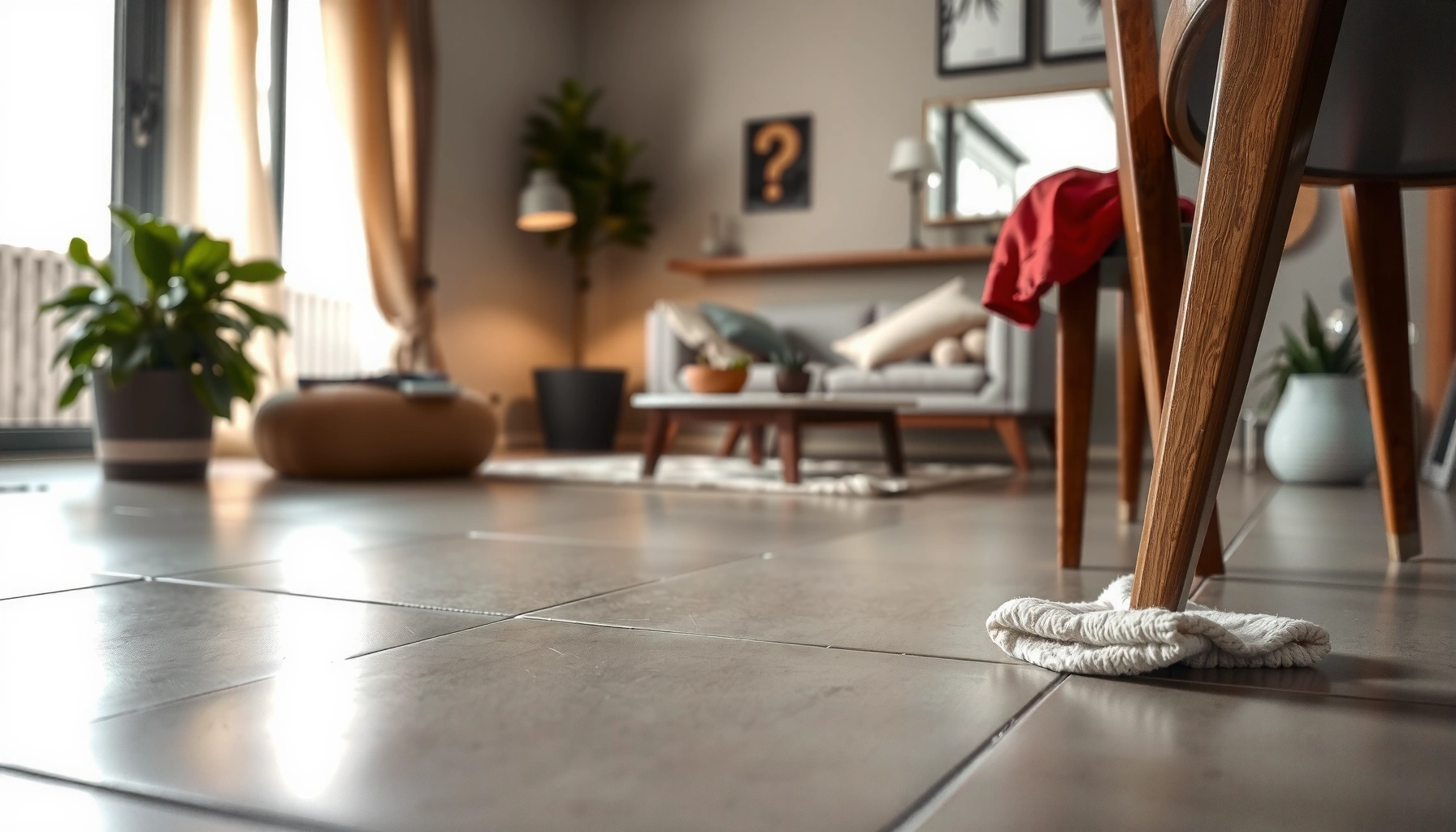
You reduce scratching dramatically by removing friction points where hard edges contact tile. Felt and rubber pads prevent direct contact and help avoid micro-marring from chair legs, appliance bases, and sliding objects.
– Add felt or rubber pads to chair legs, table bases, and small furniture; replace them when they wear down.
– Lift items when moving them (don’t slide) and use furniture glides designed for hard surfaces if you frequently move things.
Felt pads distribute load and reduce concentrated pressure at chair-leg contact points, lowering the likelihood of visible marks.
Replacing worn pads matters because a breakdown into stiff or abrasive edges can create new scratch points.
Lifting heavy items avoids the shear forces created by sliding, which is one of the fastest ways to start hairline scratches.
Tile doesn’t just scratch from “sand”—it scratches from repeated micro-movement. Chair legs are a classic example: even when you’re careful, dragging a chair back “a few inches” can create a faint, linear pattern that’s noticeable under angled light. That’s why “lift instead of slide” is more than etiquette; it’s friction management.
A practical view of abrasive risk by common gritty materials (quick reference)
Abrasive Particles Commonly Found in Tracked Grit (Mohs Hardness)
| # | Abrasive mineral/material | Typical Mohs hardness | Where it shows up | Scratch risk vs. typical tile glaze |
|---|---|---|---|---|
| 1 | Quartz | 7 | Sand, concrete dust | High |
| 2 | Feldspar | 6 | Soil, sand mixtures | Medium-High |
| 3 | Calcite | 3 | Limestone dust | Medium |
| 4 | Gypsum | 2 | Drywall dust | Lower |
| 5 | Iron oxides (rust grit) | 5–6* | Outdoor soil, rusted surfaces | Medium |
| 6 | Corundum (alumina) | 9 | Abrasives, some grit-like residues | Very High |
| 7 | Magnetite | 5.5–6* | Metal wear particles | Medium |
\Ranges vary with grade and impurities; verify exact composition when you’re dealing with unusual industrial grit. For Mohs hardness values and common abrasive comparisons, see [ADD: a recognized reference source such as USGS or MatWeb hardness tables].
Use the right cleaning tools and methods
You avoid scratching by choosing cleaning tools that clean without acting like abrasives. Microfiber mops and pH-neutral tile cleaners reduce residue and help you remove fine particles rather than grinding them across the surface.
– Mop with microfiber pads (or microfiber flat-mop covers) and avoid scrubbers that are too abrasive for tile and grout.
– Use a pH-neutral tile cleaner and clean in a way that removes residue—sticky film can make future debris cling and abrade.
Microfiber mops capture and hold dust and grit instead of pushing them around, which lowers repeat abrasion on tile.
pH-neutral cleaners are commonly recommended because harsh chemicals can degrade finishes or leave residues that attract dirt.
Residue increases scratch risk indirectly: sticky film makes it easier for tracked particles to adhere and then scrape during foot traffic.
Why “residue control” affects scratches
Even when you aren’t using steel or abrasive powders, cleaning chemistry can still influence scratch appearance. If your cleaner leaves a film, the next load of grit adheres more readily. That creates a cycle: debris sticks → mopping drags it → micro-scratches accumulate, especially under chairs and near entryways.
Also, grout lines can be a “grit trap.” According to [ADD: grout/ceramic care guidance from a major grout manufacturer like MAPEI, LATICRETE, or ANSI tile maintenance references], grout should be maintained so it doesn’t soften or erode around edges—because eroded grout can hold particles that then contact tile faces.
A pros/cons snapshot for common cleaning approaches
| Method | Pros | Cons / scratch risk |
|---|---|---|
| Microfiber flat-mop + pH-neutral cleaner | Good particle pickup, less abrasion, easier rinse | Requires regular pad changes if heavily soiled |
| Synthetic scrub pads (moderate) | Useful for specific spots (dried spills) | Can dull glaze if used repeatedly or too aggressively |
| Abrasive scrubbers / “scouring” pads | Fast for stubborn deposits | High risk of permanent dulling or micro-grooves |
Stop “surface damage” from common maintenance habits
You prevent visible tile scratches by removing the maintenance practices that unintentionally act like abrasives. Small shortcuts—like steel wool or abrasive powders—can permanently change glaze sheen.
– Don’t use steel wool or abrasive powders on glazed tile; they can dull or permanently mark the surface.
– Avoid soaking grout for long periods if your grout is vulnerable—water and loosened grit can migrate and abrade over time.
Steel wool and abrasive powders are highly likely to dull glazed tile because their hardness and texture create abrasive contact points.
Excessive soaking can loosen grout-edge debris, which then behaves like migrating grit under traffic.
Maintenance tools that seem “gentle” can still scratch depending on tile finish (glossy glazed vs. honed or unglazed).
What “finish type” changes (glossy vs. honed vs. matte)
Tile finish determines how scratches show up. Glossy glazed tile may hide micro-marring until light hits at an angle; honed and matte surfaces can show them sooner because they don’t reflect light the same way. If your tile is unglazed, matte, or honed, manufacturers often specify different cleaning limits than for standard glossy glaze. Confirm the guidance in your tile’s care sheet before you escalate cleaning strength.
According to [ADD: tile manufacturer care instructions for glazed vs. unglazed/honed surfaces], abrasion resistance and cleaning approvals can vary by finish even within the same material category (ceramic vs. porcelain).
What can go wrong (and how to avoid it)
You can still create new scratch paths if protections wear out, attachments are mismatched, or you skip testing. The goal is to keep your “scratch prevention system” consistent—not perfect once and then forgotten.
– Felt pads can fall off or get stiff—check monthly and reapply or replace so you don’t end up with tiny hard edges.
– If your tile is unglazed, matte, or honed, it may behave differently than standard glossy glazed tile—an aggressive cleaner can scuff it even if it “sounds gentle.”
– Vacuum heads with rotating brushes (and poorly maintained attachments) can be harsher on some tile finishes—test on an inconspicuous spot first.
Felt pads should be inspected periodically because degradation can convert a soft barrier into a harder abrasive edge.
Vacuum brushrolls can transfer abrasive debris back to the floor if the head is dirty or settings are inappropriate for hard surfaces.
Surface testing on a hidden tile area is a low-cost way to confirm a cleaner or tool won’t dull a sensitive finish.
A maintenance system has failure modes. In 2026, I recommend building a “monthly inspection loop” into your routine: check a few chair legs, appliance corners, and one high-traffic entry path. If you notice pad peeling, flattened felt, or discoloration, replace pads immediately—because a single compromised pad can become a scratch emitter.
Also, if you’ve recently changed vacuums or mop pads, verify compatibility. A rotating brushroll isn’t automatically unsafe for tile, but some heads can be too aggressive depending on bristle hardness, wheel condition, and how much debris the attachment holds.
Verdict: a simple prevention plan that’s worth doing (with limits)
If you want the best scratch prevention with the least effort, focus on dirt control (entry mats + pre-sweep/vacuum) and physical protection (felt pads + lifting instead of sliding). The downside is ongoing consistency: prevention requires small checks because pads wear out and mats become saturated with grit over time.
Skip aggressive “deep cleaning” experiments if your tile is unglazed, honed, or sensitive to abrasion, and don’t assume that a “gentle” scrub pad is safe for every finish. If your floor is brand-new with no traffic yet, you may see slower scratching even without perfect habits—but once kids, pets, or tracked-in grit enter the picture, small preventive steps quickly pay off.
Quick checklist (save this)
– [ ] Put entry mats at doors; shake/clean them often
– [ ] Sweep/vacuum before mopping (use a hard-floor or soft-brush setup)
– [ ] Add felt/rubber pads under furniture; replace when worn
– [ ] Lift items when moving; avoid sliding heavy objects
– [ ] Mop with microfiber and use a pH-neutral tile cleaner
– [ ] Avoid steel wool and abrasive powders/scrub pads
FAQ
Will mopping alone prevent scratches on tile floors?
Not usually. Mopping helps, but it can spread or loosen grit—scratches often come from particles that were tracked in first. Pre-sweep or vacuum is the key step.
Are felt pads safe for all tile finishes?
They’re generally a good choice, but the real test is how your pad sits and wears over time. If a pad breaks down into hard edges, it can cause new marks.
Can grout get scratched and make tile look worse?
Grout itself can chip or wear, and damaged grout lines can collect debris that later abrades tile. Keeping grout in good shape reduces the “grit trap” effect.
What should I avoid using on glazed tile?
Avoid abrasive cleaners, powders, and steel wool—these can dull or permanently mark the glaze.
My floor already has scratches—can prevention still help?
Yes. Prevention won’t erase existing damage, but it can stop new scratches from forming by reducing tracked grit and abrasive contact points.
Conclusion
Preventing scratches on tile floors is less about finding a “miracle polish” and more about controlling abrasive contact: keep sand and dirt out with entry mats, remove dry debris before mopping, and protect high-contact furniture areas with reliable pads. When you match tools and cleaning methods to your tile’s finish—especially avoiding steel wool and abrasive scrubbers—you reduce both the frequency and visibility of new hairline marks.
Frequently Asked Questions
What are the best ways to prevent scratches on tile floors?
Use protective floor mats at entryways and under high-traffic areas to reduce grit that causes micro-scratches. Add felt or rubber pads under furniture legs and ensure all rolling items (strollers, carts, chairs) have soft wheels. For ongoing protection, consider using a high-quality grout and sealing system where appropriate, since damaged grout and porous surfaces can make wear more visible.
How do I stop scratches caused by furniture on tile floors?
Attach felt pads or furniture glides to chair legs, tables, and any items that may be moved, and replace them when they wear down. When rearranging furniture, lift items instead of dragging them across the tile. For heavier furniture, use thicker pads or anti-scratch slider mats to minimize point pressure that can damage tile edges and create surface scuffs.
How can I prevent scratches from dirt and grit on tile floors?
Vacuum or sweep regularly using a soft brush attachment to remove sand, dust, and debris before it grinds into the tile finish. Place doormats both outside and inside entrances, and encourage a “wipe shoes” habit to reduce abrasive particles. When cleaning, avoid harsh scouring pads and use pH-neutral cleaners to prevent dulling that makes scratches more noticeable.
Why do tile floors get scratched even when they look clean?
Scratches often come from abrasive particles like sand or grit that get tracked in and act like sandpaper, even on “clean” floors. Also, dragging furniture or using incorrect cleaning tools—like metal scrubbers or stiff bristle brushes—can leave marks on glossy tile finishes. Over time, worn grout or a compromised tile seal can make surface damage more apparent and harder to hide.
Which cleaning tools are safest for tile floors to avoid scratches?
Choose microfiber mops, soft cloths, and non-abrasive pads designed for tile and stone, and avoid steel wool, metal scrubbers, and rough scouring sponges. Use a pH-neutral tile cleaner and clean with a gentle technique rather than aggressive scrubbing. If you need to remove stuck residue, use a soft nylon brush or a manufacturer-recommended cleaner to protect the tile’s finish and reduce the risk of scratch buildup.
📅 Last Updated: October 08, 2026 | Topic: How to prevent scratches on tile floors? | Content verified for accuracy and freshness.
References
- Google Scholar Google Scholar
https://scholar.google.com/scholar?q=prevent+scratches+on+tile+floors+flooring+maintenance - Google Scholar Google Scholar
https://scholar.google.com/scholar?q=glazed+ceramic+tile+scratch+resistance+abrasion - Google Scholar Google Scholar
https://scholar.google.com/scholar?q=floor+surface+scratching+abrasive+wear+prevention - Tile
https://en.wikipedia.org/wiki/Ceramic_tile - https://en.wikipedia.org/wiki/Abrasive_wear
- https://en.wikipedia.org/wiki/Mohs_scale_of_mineralogy
- https://www.sciencedirect.com/search?qs=glazed%20ceramic%20tile%20scratch%20resistance
- https://www.sciencedirect.com/search?qs=ceramic%20tile%20wear%20abrasion%20surface%20treatment
- https://www.britannica.com/science/abrasion
- https://www.britannica.com/technology/flooring