
Imagine standing on the beach, gazing out at the vast, seemingly endless ocean. Have you ever wondered what lies beneath those rolling waves?
The ocean floor is not just a static, barren landscape. It’s a dynamic world full of secrets and surprises. Ocean floor spreading is one of those fascinating processes occurring right under our feet—or rather, beneath the ocean’s surface. This phenomenon plays a crucial role in shaping the Earth’s crust and has profound implications for our planet’s geology.
By understanding ocean floor spreading, you gain a glimpse into the forces that mold the continents and influence seismic activities. Curious about how this underwater magic happens and what it means for you and the Earth? Dive in, and let’s unravel the mysteries of ocean floor spreading together.
Ocean Floor Spreading Basics
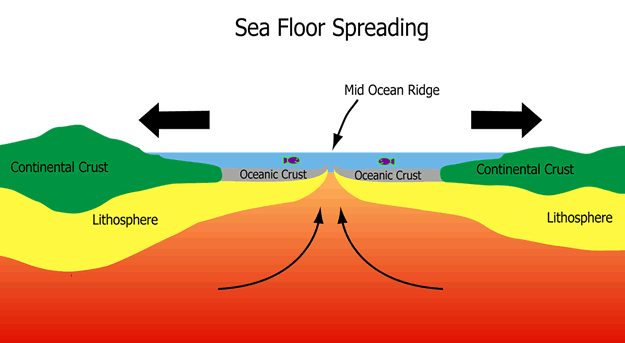
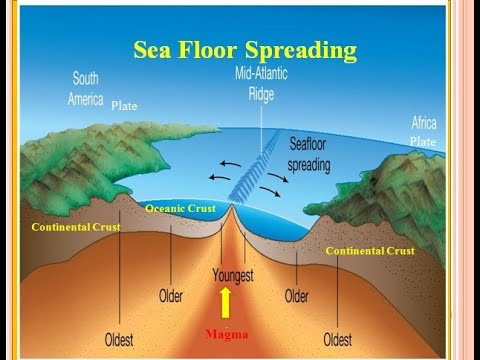
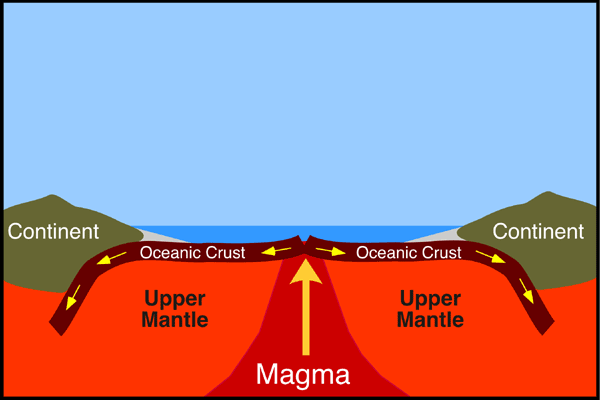
Ocean floor spreading happens at the bottom of the ocean. This is where tectonic plates meet. These plates are like puzzle pieces. They fit together to cover the Earth. Sometimes, they move apart. When they do, magma rises up. Magma is hot, melted rock. It comes from under the Earth. Once it reaches the surface, it cools down. It becomes new ocean floor. This is how new ocean floor is made. This process keeps the ocean floor young and active.
The Mid-Atlantic Ridge is a good example. It is a place where spreading happens. The ocean floor is always changing. This movement can cause earthquakes. It can also create underwater mountains. Scientists study this to learn more about Earth. They use special tools to watch the ocean floor. This helps them understand how our planet works.
Historical Discovery
Ocean floor spreading was first discovered in the 1960s. Scientists found that the ocean floor was not flat. It was moving and changing over time. Harry Hess, a scientist, played a big role. He suggested that new ocean floor is made at mid-ocean ridges. This was a new idea back then. Rocks at these ridges are very young. This surprised many people. As you move away from the ridge, rocks get older. This pattern showed that the ocean floor spreads. This discovery helped us understand how continents move. It was a big step in learning about our planet. The discovery changed how we see the Earth. Now we know the ocean floor is active. It is not still or quiet. This was an exciting time for science.
Role Of Mid-ocean Ridges
Mid-ocean ridges are like underwater mountains. They form where tectonic plates pull apart. New ocean floor is born here. Magma rises from the Earth’s mantle. It cools and hardens, creating new crust. This process is called ocean floor spreading.
The ridges are not straight. They have a zigzag pattern. This is due to the movement of tectonic plates. The ridges are found in all oceans. They are the longest mountain range on Earth.
Mid-ocean ridges are full of geological activity. Volcanoes and earthquakes are common here. The movement of plates causes this activity. Volcanic eruptions add new rock to the ocean floor. Earthquakes happen when plates move suddenly. This keeps the ocean floor young and active.
The activity at the ridges is important for life. Hydrothermal vents form here. They release hot, mineral-rich water. Many strange creatures live around these vents. They depend on the minerals for food. The ridges are a special part of the ocean.
Magnetic Striping Patterns
The ocean floor has magnetic stripes. These stripes are patterns. They are on the seafloor. Each stripe has a different age. These stripes show changes in Earth’s magnetic field. They are important. They help scientists understand seafloor spreading.
Seafloor spreading creates new ocean floor. It happens at mid-ocean ridges. The new floor moves away. Old floor moves too. This movement causes magnetic stripes. The stripes match Earth’s magnetic changes. This is a clue. It shows seafloor spreading is real.
Magnetic anomalies are like surprises. They are in the ocean floor. These anomalies show changes. The Earth’s magnetic field changes often. Anomalies help scientists. They give evidence for seafloor spreading. They are patterns. Patterns help us see the past. They tell a story of Earth’s history.
Tectonic Plate Movement
The Earth is covered with tectonic plates. These plates are always moving. They meet at plate boundaries. There are three types of boundaries. Convergent boundaries push plates together. Divergent boundaries pull them apart. Transform boundaries slide past each other.
Ocean floor spreading happens at divergent boundaries. Here, plates move apart. New ocean floor forms in the gap. Magma rises from below. It cools and hardens into new crust. This makes the ocean floor grow. This process is slow but important. It shapes the sea floor over time. Mountains and valleys form underwater. They create a unique landscape.
Impact On Marine Ecosystems
Ocean floor spreading creates new sea floors. This process forms unique habitats. These habitats are home to many sea creatures. Volcanic activity during spreading creates mountains. These mountains are called mid-ocean ridges. Sea creatures live on these ridges. They find shelter and food there.
Hot water vents appear during spreading. These vents provide a warm place to live. Some creatures only live near these vents. They depend on the heat and minerals. These new homes support life. Life that thrives in the deep ocean.
Ocean floor spreading supports biological diversity. New habitats allow different species to thrive. Some creatures adapt to the hot conditions. Others find new food sources. The more habitats, the more diverse life becomes.
Deep ocean areas are less explored. Many unique species live there. Scientists discover new animals often. These discoveries help us learn about life. Life that exists far below the ocean’s surface.
Scientific Techniques And Tools
Sonar technology helps us map the ocean floor. Ships send sound waves down. These waves hit the ocean floor. Then they bounce back up. Scientists measure the time it takes. This helps them know how deep the ocean is. Different areas have different depths. Some parts are flat. Others are like mountains. This map shows us the shape of the ocean floor.
Scientists use these maps to learn more. They study how the ocean floor changes. They find out what it is made of. This helps us understand the Earth better. It is like exploring a hidden world. The ocean floor is full of secrets. Sonar helps us discover them.
Significance For Earth’s Evolution
Ocean floor spreading affects Earth’s climate. New ocean floor forms at mid-ocean ridges. This process moves tectonic plates. It changes ocean currents. Ocean currents impact global temperatures. Warm water moves to cooler areas. This balance helps maintain Earth’s climate. It supports life on our planet.
Ocean floor spreading supports the Continental Drift Theory. Continents slowly move over time. They are on tectonic plates. These plates float on the mantle. As the ocean floor spreads, plates shift. Continents change position. This explains why some fossils are found on different continents. The theory helps us understand Earth’s past.

Frequently Asked Questions
What Causes Ocean Floor Spreading?
Ocean floor spreading occurs due to tectonic plate movements. Magma rises at mid-ocean ridges, creating new oceanic crust. As plates move apart, this new crust pushes older crust away, expanding the ocean floor.
How Does Ocean Floor Spreading Affect Geology?
Ocean floor spreading changes Earth’s geology by forming new crust. It creates mid-ocean ridges and deep-sea trenches. These geological features influence ocean currents and ecosystems.
Where Does Ocean Floor Spreading Occur?
Ocean floor spreading primarily occurs at mid-ocean ridges. These underwater mountain ranges are found in all major oceans. The most notable is the Mid-Atlantic Ridge.
What Is The Role Of Tectonic Plates?
Tectonic plates drive ocean floor spreading. Their movement causes magma to rise and form new crust. This process expands the ocean floor and influences geological activity.
Conclusion
Ocean floor spreading shapes our planet in fascinating ways. It creates new oceanic crust. This process moves continents over time. Scientists study these changes to understand Earth’s history. Ocean floor spreading is key to plate tectonics. It helps explain earthquakes and volcanoes.
This knowledge impacts how we prepare for natural events. Understanding ocean floor spreading enhances our view of Earth’s dynamics. It connects geology with everyday life. This natural phenomenon continues to intrigue scientists and enthusiasts alike. Keep exploring and learning about our planet’s wonders.
They reveal the incredible story beneath the waves.