
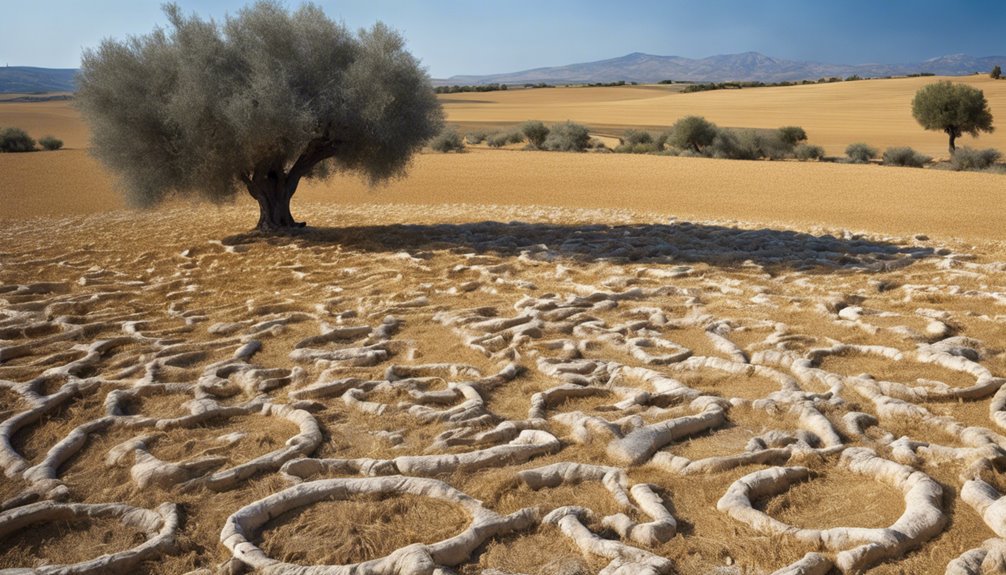

A threshing floor in the Bible serves as a significant agricultural site where grain is separated from chaff, emphasizing both sustenance and deeper metaphorical meanings. These spaces were not just practical; they functioned as community hubs, fostering social interaction and cultural identity in ancient Israel. They also stand as backdrops in biblical narratives, like Ruth and Boaz, illustrating themes of provision and divine favor. Symbolically, threshing floors represent moral and spiritual discernment, echoing the separation of the righteous from the unrighteous. Exploring their significance further reveals rich connections to faith and personal growth.
Definition of a Threshing Floor
A threshing floor is an essential agricultural site where harvested grain is separated from chaff. This space, often circular and paved, reflects a unique threshing floor architecture designed for efficiency. The process involves using tools like a flail or animals to tread upon the grain, highlighting the labor and community effort behind this crucial task. Threshing floor rituals often accompany the harvest, symbolizing gratitude and celebration, marking a time of abundance. These rituals not only affirm the connection between the land and its people but also serve as a communal gathering point, allowing individuals to share in the fruits of their labor. Understanding these practices sheds light on the profound relationship between agriculture and cultural identity.
Historical Significance in Israel
The significance of threshing floors in ancient Israel extends far beyond their agricultural function. They served as essential hubs for cultural practices and agricultural rituals, shaping community identity and economic stability.
- Community Gatherings: These spaces were often focal points for social interaction, where people came together to celebrate and share.
- Religious Significance: Threshing floors were sites for offerings and sacrifices, linking agriculture to spiritual beliefs.
- Economic Activities: The processing of grain here was fundamental for trade and sustenance, impacting the overall prosperity of families and tribes.
Threshing Floors in Biblical Stories
While many might view threshing floors merely as agricultural sites, their presence in biblical narratives reveals deeper layers of meaning and significance. In stories like Ruth and Boaz, the threshing floor serves as a backdrop for pivotal interactions, demonstrating the importance of community and tradition. Threshing floor rituals, such as gleaning, highlight themes of provision and divine favor. Additionally, these floors act as symbols of separation—between the wheat and chaff, representing moral and spiritual choices. The imagery of the threshing floor invites you to reflect on the process of discernment in your own life. By examining these narratives, you can uncover the nuanced symbolism that enriches your understanding of faith, community, and divine providence.
Symbolism of Threshing Floors
Symbolism permeates the concept of threshing floors in biblical texts, revealing their multifaceted roles beyond mere agricultural function. These spaces serve as powerful metaphors, emphasizing themes like:
- Symbolic separation: Threshing floors distinguish between the wheat and chaff, representing the divide between the righteous and the unrighteous.
- Spiritual purification: The act of separating grain reflects a process of cleansing, highlighting the necessity of refining one's spirit.
- Divine judgment: Threshing floors symbolize God's discernment, illustrating His ability to evaluate and separate those who follow Him from those who don't.
Understanding these symbols enhances your grasp of spiritual narratives, inviting you to explore deeper meanings and connections within scripture. Threshing floors embody the journey toward clarity and divine truth.
Threshing Floor as a Place of Encounter
The threshing floor serves as a significant backdrop for transformative encounters in the Bible, where characters experience profound spiritual awakenings. When you consider figures like Ruth and David, their moments on the threshing floor reveal deep connections to faith and divine guidance. These encounters not only shape their personal journeys but also reflect the broader spiritual significance of such sacred spaces in biblical narratives.
Spiritual Significance of Encounter
As you explore the biblical significance of the threshing floor, you'll find it emerges as a powerful symbol of divine encounter and transformation. This sacred space facilitates spiritual encounters that lead to profound divine revelations. The threshing floor represents a crossroads where individuals confront their inner selves, allowing for growth and breakthrough.
- A place of surrender: Yielding to God's will often occurs here.
- A site for clarity: It sharpens focus on one's spiritual journey.
- A moment for change: The threshing floor fosters transformation and renewal.
In essence, the threshing floor invites you into a deeper relationship with the divine, urging you to embrace liberation and authenticity in your spiritual walk.
Biblical Characters' Experiences
While many biblical narratives unfold in varied settings, the threshing floor uniquely serves as a pivotal encounter point for several key figures. Take Ruth and Boaz, for instance. Their personal encounter at the threshing floor illustrates themes of redemption and commitment, showcasing how a simple location can become a transformative space. Similarly, David's experience following his sin with Bathsheba emphasizes the threshing floor's role in repentance and accountability. These encounters reveal that the threshing floor isn't just a physical space; it represents a crossroads for biblical characters to confront their destinies. Each moment spent there resonates with spiritual significance, ultimately shaping their narratives and leading them toward divine purpose. The threshing floor, consequently, becomes a sacred ground for profound personal encounters.
Threshing Floors and Agricultural Practices
When you consider the role of threshing floors in ancient agriculture, it becomes clear that these sites were integral to effective harvesting techniques. The methods employed not only maximized grain separation but also highlighted the social and economic significance of the harvest. Understanding these practices offers valuable insights into the agricultural life depicted in biblical texts.
Ancient Threshing Techniques
Though ancient agricultural practices varied widely, the techniques of threshing remained a cornerstone of grain processing in biblical times. Using simple yet effective harvesting methods, communities relied on ancient equipment to separate grain from chaff. The process often involved several key techniques:
- Manual Beating: Workers would beat harvested sheaves with sticks to release the grain.
- Animal Power: Oxen or donkeys were often used to trample the grain on the threshing floor, speeding up the process.
- Wind and Winnowing: After threshing, the mixture was tossed into the air, allowing the wind to blow away the lighter chaff.
These methods highlight the ingenuity and resilience of ancient peoples, showcasing their deep connection to the land and their essential need for sustenance.
Significance in Harvesting
The threshing floor played an essential role in the agricultural practices of ancient societies, serving as a hub for grain processing that directly impacted food security and community life. It was here that grain separation occurred, transforming harvested crops into usable food. This process wasn't just practical; it was intertwined with harvest rituals that celebrated the fruits of labor and reinforced community bonds. Gatherings at the threshing floor allowed families and neighbors to come together, sharing not just work but also the joy of a successful harvest. The significance of these spaces extended beyond mere agriculture; they symbolized abundance and survival, serving as a reminder of the hard work and collective effort that sustain life and freedom within the community.
Spiritual Lessons From Threshing Floors
Although often overlooked, the threshing floor serves as a profound metaphor in biblical texts, offering valuable spiritual lessons for believers. It symbolizes the processes of spiritual purification and divine separation, reminding you of the importance of discernment in your faith journey.
Consider these key lessons:
- Separation of Chaff and Grain: Just as the threshing floor separates usable grain from waste, you're called to discern what truly nourishes your spirit.
- Harvesting Blessings: The threshing floor represents the rewards of hard work and faithfulness, encouraging you to celebrate spiritual growth.
- Preparation for New Seasons: Embracing the threshing process prepares you for new spiritual chapters and deeper understanding.
Engaging with these lessons can enrich your faith and inspire personal transformation.
Notable Threshing Floors in Scripture
Understanding the spiritual lessons from threshing floors naturally leads to an exploration of specific examples found in Scripture. These locations served as historical landmarks, representing pivotal moments in biblical narratives and cultural practices of the time.
| Threshing Floor | Significance |
|---|---|
| Araunah's Threshing Floor | Site of David's altar, marking a key moment in Israel's history. |
| Gideon's Threshing Floor | Where Gideon received his call to lead Israel against Midian. |
| Ruth and Boaz | Represents loyalty, love, and the foundation of David's lineage. |
| Solomon's Temple Site | Built on the threshing floor, symbolizing worship and sacrifice. |
| Jesus' Teachings | Used metaphorically to illustrate judgment and separation. |
Each threshing floor reflects deeper spiritual truths and the transformative journeys of those who encountered them.
Modern Interpretations of Threshing Floors
As we explore modern interpretations of threshing floors, it becomes clear that these biblical sites have transcended their agricultural origins to symbolize spiritual and emotional processes in contemporary life. Today, threshing floors serve as metaphors for personal growth and transformation, reflecting their cultural relevance.
- Personal Reflection: Individuals often view their own lives as a threshing floor, where struggles lead to clarity and purpose.
- Community Spaces: Modern gatherings in various cultures evoke the communal aspects once found on threshing floors, fostering connection and shared experiences.
- Therapeutic Practices: Mental health professionals use the concept to encourage clients to sift through their emotions, much like separating grain from chaff.
These modern applications illustrate how ancient symbols can still resonate deeply in our lives, guiding us toward freedom and self-discovery.
Threshing Floors in Christian Faith
While many may view threshing floors as mere remnants of agricultural practices, they hold profound significance in Christian faith, symbolizing the process of spiritual purification and discernment. Threshing floor symbolism invites you to contemplate moments of separation between the wheat and chaff in your life. These spaces serve as sacred encounters where God reveals truths, challenges, and transformation. Threshing floor encounters often occur during trials, prompting self-reflection and growth. They remind you that spiritual clarity emerges through discomfort and struggle. By embracing these moments, you can find freedom from burdens and discover a renewed sense of purpose. Ultimately, understanding the depth of threshing floors enriches your faith journey, guiding you toward a more profound relationship with God and yourself.
Frequently Asked Questions
What Materials Were Used to Construct Ancient Threshing Floors?
When it comes to threshing floor construction, you'll find ancient materials like stone, clay, and packed earth were commonly used. These sturdy elements provided a solid base for separating grain from chaff. Imagine a canvas where each layer plays a vital role in the harvest process. Additionally, wooden beams might've supported the structure, ensuring it held up against the elements. This blend of materials reflects the resourcefulness of those who relied on these floors for sustenance.
How Did Weather Affect the Use of Threshing Floors?
When you consider how weather impacted threshing floors, it's clear that rainy conditions could hinder the process considerably. Farmers had to time their activities carefully, as seasonal variations influenced not just the harvest but also the drying of crops. Wet weather made it challenging to separate grain efficiently, leading to potential losses. Understanding these factors would've been essential for ensuring a successful yield and maximizing the benefits of their labor.
What Tools Were Commonly Used on Threshing Floors?
When you explore ancient agriculture, you'll find that various tools were essential for effective threshing techniques. Farmers typically used a flail, which consisted of a wooden shaft with a swinging stick, to beat the grain from the stalks. Additionally, they often employed a threshing sledge, a heavy board dragged over the harvested crops, to separate the grain from the chaff. These tools highlight the ingenuity and resourcefulness of those who cultivated the land long ago.
Were Threshing Floors Used by All Agricultural Societies?
You might find it fascinating that over 70% of ancient agricultural societies utilized some form of threshing floor. The significance of these spaces goes beyond mere practicality; they were central to agricultural practices, symbolizing community and cooperation. While not every society operated with a designated threshing floor, those that did often experienced enhanced efficiency and crop yield. Clearly, the concept of a threshing floor reflects the broader agricultural advancements that shaped civilizations.
How Did Threshing Floors Influence Local Economies in Ancient Israel?
Threshing floors played an essential role in shaping local economies in ancient Israel. You'd find that their strategic locations facilitated agricultural trade, allowing farmers to process grain efficiently. This concentration of activity created hubs where surplus produce could be exchanged, boosting economic interdependence. As a result, threshing floor economics evolved, fostering relationships between communities and enhancing overall prosperity. Understanding these dynamics reveals how important these spaces were in sustaining livelihoods and promoting freedom through commerce.