
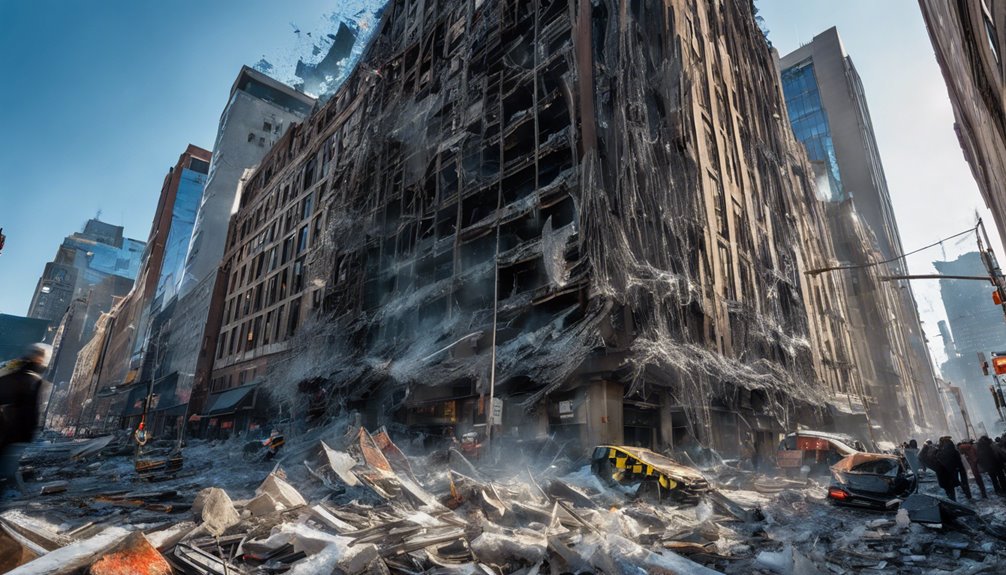

On September 11, 2001, the impact of the planes was devastating. American Airlines Flight 11 struck the North Tower of the World Trade Center between the 93rd and 99th floors at 8:46 AM. Meanwhile, United Airlines Flight 175 impacted the South Tower between the 77th and 85th floors at 9:03 AM. Both collisions caused catastrophic structural damage and ignited severe fires throughout the towers. These tragic events highlighted significant vulnerabilities in high-rise design and prompted extensive changes in U.S. security measures. If you explore further, you'll uncover more insights about the implications and aftermath of this profound tragedy.
Overview of the Attacks
As the world watched in horror on September 11, 2001, the coordinated attacks orchestrated by al-Qaeda not only reshaped global security policies but also left an indelible mark on the American psyche. To understand these events, it is crucial to examine the terrorist motivations rooted in a complex historical context. Al-Qaeda's leaders viewed the United States as an obstacle to their ideological goals, particularly in the Middle East. They believed that by striking high-profile targets, they could instigate fear and provoke a military response, thereby rallying support for their cause. This perspective reflects a broader narrative of perceived Western imperialism and cultural intrusion. Ultimately, the attacks were a calculated effort to destabilize and challenge the existing global order, impacting freedom and security worldwide.
The North Tower Impact
When American Airlines Flight 11 crashed into the North Tower of the World Trade Center at 8:46 AM, it marked a pivotal moment that would forever alter the landscape of global security. The flight path of the plane, originating from Boston, was deliberate and calculated, leading to a direct collision with the 93rd to 99th floors. This impact caused immediate structural damage and catastrophic fires, complicating evacuation efforts and emergency responses. The angle of the crash, coupled with the tower's unique design, exacerbated the devastation, revealing vulnerabilities in high-rise architecture. As you analyze this event, consider how it reshaped not only the United States' security protocols but also global counterterrorism measures, emphasizing the need for heightened vigilance against such unprecedented threats.
The South Tower Impact
At 9:03 AM, United Airlines Flight 175 struck the South Tower of the World Trade Center, impacting between the 77th and 85th floors. This flight impact occurred at a high velocity, leading to catastrophic structural damage and a significant fireball that engulfed the upper floors. The collision resulted in the immediate loss of life and injuries to many individuals within the building. The specifics of the impact zone indicated that the plane penetrated multiple floors, causing widespread devastation and disrupting essential infrastructure. In the aftermath, emergency responders faced immense challenges, including unstable conditions and fires. Understanding the dynamics of this flight impact is vital for analyzing the events of September 11, as it highlights the vulnerability of iconic structures to such unprecedented attacks.
Eyewitness Accounts
How did the chaos of that day unfold through the eyes of those who witnessed it? Eyewitness experiences reveal a harrowing reality, showcasing the confusion and fear that enveloped the South Tower. Survivor stories highlight several key aspects:
- Visual Impact: Many described the moment of impact as surreal, with flames and debris filling their vision.
- Soundscape: The deafening roar of the plane, followed by an eerie silence, left a lasting impression on those nearby.
- Immediate Response: Witnesses recounted frantic attempts to escape, with some helping others despite their own fear.
These accounts provide a poignant understanding of the day's events, emphasizing the human spirit amid unthinkable terror, and reminding us of the resilience found in shared experiences.
Aftermath and Memorials
Although the immediate aftermath of the attacks was marked by chaos and loss, it also sparked a profound collective response that shaped the future of memorialization and healing. Memorial design became a pivotal aspect of honoring those who perished, while survivor stories emerged as essential narratives that emphasized resilience.
Here's a breakdown of some influential memorials:
| Memorial Name | Location | Key Feature |
|---|---|---|
| National September 11 Memorial | New York City | Reflecting pools |
| Flight 93 National Memorial | Pennsylvania | Visitor center and wall of names |
| Pentagon Memorial | Arlington, Virginia | Benches representing victims |
| Oklahoma City National Memorial | Oklahoma City | The Field of Empty Chairs |
| USS Arizona Memorial | Pearl Harbor, Hawaii | Sunken battleship memorial |
Together, these memorials symbolize collective mourning and the enduring spirit of freedom.
Frequently Asked Questions
What Were the Flight Numbers of the Planes Involved in the Attacks?
When you think of tragedy, the heart aches for the lives forever changed. The flight details reveal that American Airlines Flight 11 and United Airlines Flight 175 were the planes involved in the September 11 attacks. The attack timeline shows these flights were hijacked and used as weapons against the World Trade Center, shattering the illusion of safety. Understanding these events is vital to honoring the memories of those lost in this devastating assault.
How Many People Were on Each Plane During the Attacks?
You're looking to understand the number of people aboard each plane during the attacks. Each flight had varying passenger demographics, with full capacity typically ranging from 150 to 200. American Airlines Flight 11 had 92 passengers, United Airlines Flight 175 carried 65, American Airlines Flight 77 held 59, and United Airlines Flight 93 had 44. These figures highlight the tragic loss of life and the impact on families and communities nationwide.
What Was the Intended Target of the Hijackers?
You might find it chilling that nearly 3,000 lives were lost on September 11, 2001. The hijacker motivations were rooted in a complex blend of ideology and revenge. Their target selection aimed at symbols of American power: the Twin Towers represented economic strength, while the Pentagon symbolized military might. This deliberate choice was meant to instill fear and disrupt the perceived invulnerability of the United States, highlighting the profound impact of terrorism on freedom and security.
How Did the Terrorists Gain Access to the Planes?
The terrorists gained access to the planes by exploiting vulnerabilities in security measures and airport procedures. They were able to bypass screenings by using fake identification and manipulating the boarding process. This highlighted significant flaws in the existing security protocols, as the attackers took advantage of complacency within the system. Ultimately, their actions demonstrated the need for stricter regulations and improved vigilance to guarantee the safety and freedom of air travel for everyone.
Were There Any Notable Last Communications From Passengers?
When considering notable last communications from passengers, you'll find that many displayed extraordinary bravery. Final messages sent to loved ones often conveyed love, fear, and a desire to protect. Some passengers chose to inform family about the situation, while others expressed hope or shared their final farewells. These communications reflect a profound human response to crisis, highlighting the strength and resilience of individuals in the face of unimaginable circumstances.