
To use a floor pump for your bike, first, check your tire pressure with a gauge. Make sure your bike is on a stable surface, then identify whether you have Presta or Schrader valves. Attach the correct nozzle securely to the valve, ensuring an airtight seal. As you pump, maintain a steady motion and monitor the built-in gauge to avoid over-inflation. Inflate until you reach the recommended pressure noted on the tire's sidewall. Properly inflated tires enhance performance and safety. For detailed maintenance tips and troubleshooting, you'll find helpful insights ahead.
Understanding Floor Pumps
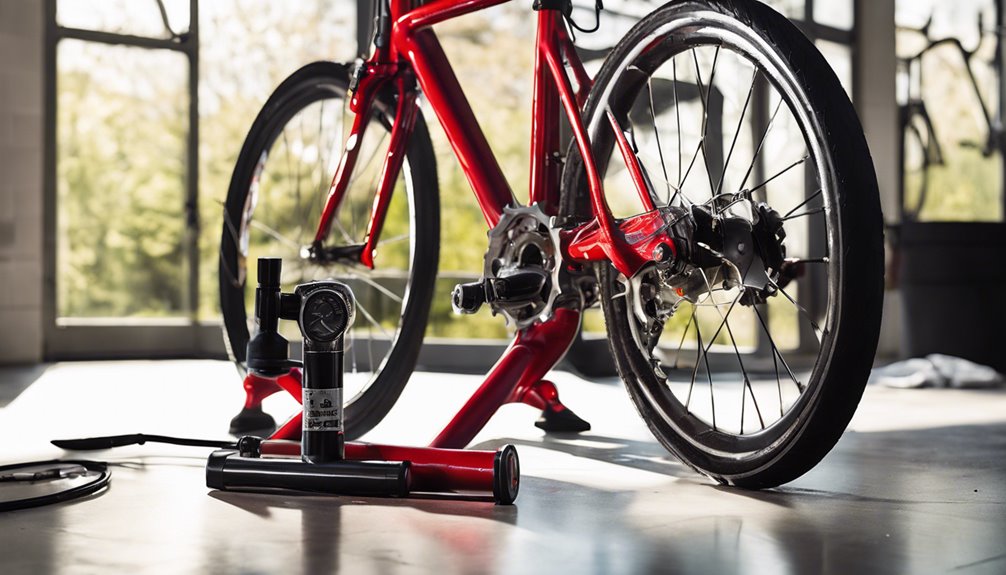
A floor pump is an important tool for any cyclist, designed to inflate tires efficiently and effectively. Understanding the different pump types is essential; you'll typically encounter two main styles: the dual-action pump, which inflates on both the upstroke and downstroke, and the single-action pump, which inflates only on the upstroke. Each has its advantages, depending on your needs.
Moreover, most quality floor pumps come equipped with pressure gauges, allowing you to monitor the tire pressure accurately. Maintaining the correct pressure is crucial for peak performance and safety. By familiarizing yourself with these elements, you'll guarantee that your tires are always ready for the freedom of the open road, enhancing both your cycling experience and your bike's longevity.
Preparing Your Bike
Before you start inflating your bike tires, it's essential to prepare your bike properly. First, check the current tire pressure using a gauge. This helps you determine how much air you need to add. Make certain your bike is on a stable surface to prevent it from tipping over while you work. Inspect the tires for any damage, such as cuts or punctures, as these can affect performance and safety. Also, verify that your bike frame and components are clean, as dirt can interfere with tire maintenance. Finally, familiarize yourself with the valve type on your tires, whether it's Presta or Schrader, to streamline the inflation process. Proper preparation is key to effective bike maintenance and a smooth ride.
Connecting the Pump
Connecting the pump to your bike's valve is a straightforward process that guarantees efficient inflation. Understanding the valve types on your bike is essential for a proper connection. Most bikes use either Schrader or Presta valves, and knowing which one you have will simplify the process.
- Identify your valve type: Check if it's a Schrader (like a car tire) or Presta (narrow, threaded).
- Choose the correct pump nozzle: Make sure your pump nozzle is compatible with your valve type. Some pumps have dual nozzles for versatility.
- Attach the nozzle securely: Place the nozzle over the valve and lock it in place by flipping the lever or twisting it, ensuring an airtight seal.
Now you're ready for inflation!
Inflating the Tires
Once you've securely attached the pump nozzle to the valve, you can begin inflating the tires. Start by checking the recommended tire pressure, which is usually printed on the sidewall. Different pump types, like floor pumps or hand pumps, can affect the ease of inflation. For most floor pumps, use a steady, rhythmic motion to push the handle down. It's important to monitor the pressure gauge if your pump has one, making sure you don't exceed the tire's limit. If you need more air, continue pumping until you reach the desired pressure. Remember, proper tire inflation enhances your bike's performance and guarantees a smoother ride, giving you the freedom to explore without worry.
Maintaining Your Floor Pump
Proper maintenance of your floor pump guarantees its longevity and peak performance. By following these essential steps, you can make certain that your pump is always ready for action:
- Inspect the hose and nozzle: Regularly check for cracks or wear to prevent air leaks.
- Lubricate the piston: Use a silicone-based lubricant on the piston to ensure smooth operation and minimize friction.
- Store properly: Keep your pump in a dry, temperature-controlled environment to avoid damage from extreme conditions.
Frequently Asked Questions
Can I Use a Floor Pump for Other Inflatable Items?
Yes, you can use a floor pump for other inflatable items. Its versatility makes it suitable for various applications beyond bikes, such as inflatable toys, sports equipment, and even air mattresses. Just verify you have the right nozzle attachment for the item you're inflating. While it's primarily designed for bicycles, the alternative inflatable uses are abundant, allowing you to enjoy the convenience of a single pump for multiple needs.
What Should I Do if the Pump Gauge Is Broken?
If your pump gauge's broken, don't panic. First, consider gauge replacement options; many pumps allow for easy swaps. Next, explore alternative pressure methods, like using a handheld pressure gauge to check inflation levels. You could also feel for firmness or use your bike's recommended pressure range as a guide. Remember, maintaining proper tire pressure is essential for safety and performance, so act promptly to guarantee your equipment's ready for your next adventure.
How Often Should I Check My Bike Tire Pressure?
You should check your bike tire pressure at least once a month, but it's best to inspect it more frequently, especially before long rides or if you notice a drop in performance. Variations in temperature and terrain can affect tire pressure, so regular checking guarantees peak performance and safety. Maintaining proper pressure not only enhances your ride quality but also increases tire lifespan, giving you the freedom to enjoy your cycling adventures.
Can I Overinflate My Bike Tires With a Floor Pump?
Yes, you can overinflate your bike tires with a floor pump. It's important to follow tire pressure guidelines recommended by the manufacturer, as exceeding these limits can lead to overinflation risks, like blowouts or decreased handling. Always check the sidewall of your tires for the maximum pressure rating and use a reliable gauge to monitor your progress. Maintaining proper pressure guarantees a safer, smoother ride while preserving tire longevity.
Are There Specific Floor Pumps for Different Bike Types?
Yes, there are specific floor pumps designed for different bike types, like mountain bikes and road bikes. Mountain bike tires typically require a higher volume of air, while road bike tires need higher pressure. Many pumps offer compatibility with both valve types, but you'll want to confirm the pump's pressure range suits your bike's needs. Choosing the right pump can enhance your riding experience, providing the freedom to tackle any terrain with confidence.