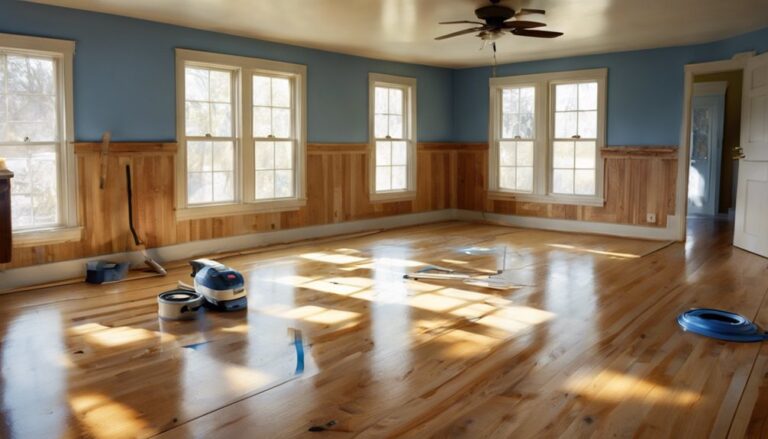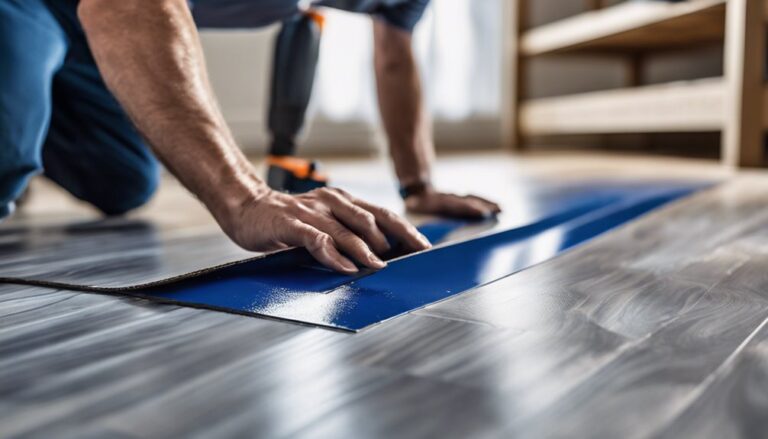
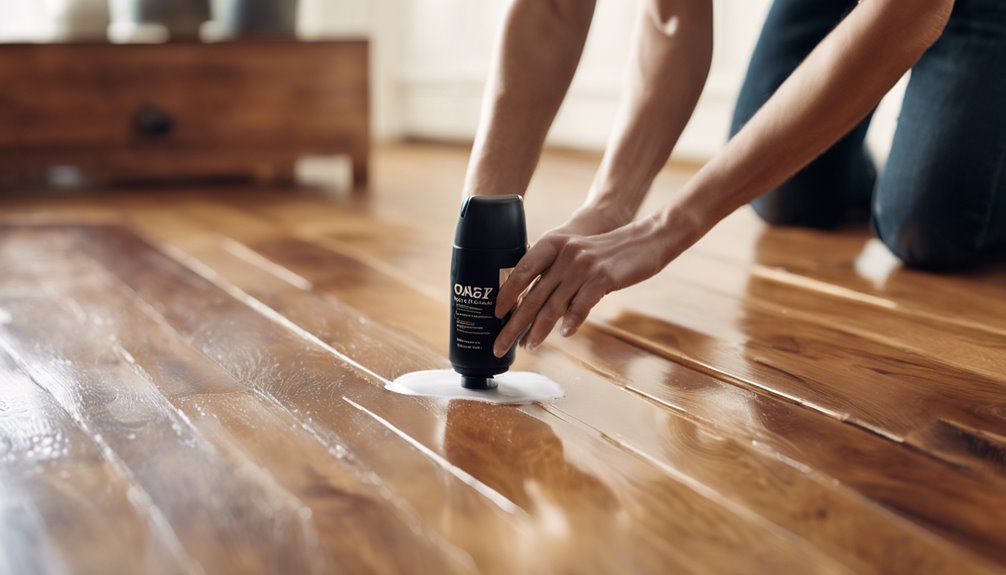

To stop your wood floors from creaking, first identify the source of the noise. Check for loose floorboards, and firmly tighten them with screws or wood glue. Lubricate gaps with light penetrating oil or silicone spray to reduce friction. Adding shims strategically under the floor joists can also provide extra support and stability. Maintain humidity levels in your home to reduce expansion and contraction of the wood. Regular inspections and addressing issues promptly will help keep your floors quiet. There's even more you can do to guarantee a peaceful environment, so you might want to explore additional tips.
Understanding the Causes of Creaking
While it might seem like a minor annoyance, creaking wood floors can indicate underlying issues that need addressing. Understanding the causes overview is essential for any homeowner seeking a peaceful environment. One primary cause stems from the floor material; hardwoods can expand and contract with changes in humidity and temperature, leading to gaps. Additionally, improper installation might leave boards loosely fitted, causing friction as you walk. Foundation settling can also play a role, shifting the structure and increasing movement in the flooring. Moreover, wear and tear over time can loosen fasteners, contributing to the noise. By recognizing these causes, you can better understand your floors and take appropriate action to restore tranquility to your living space.
Inspecting Your Floor Structure
To address creaking wood floors, start by inspecting the alignment of your joists. Misaligned joists can cause uneven support, leading to movement and noise. Next, assess the condition of your subfloor; any damage or wear can exacerbate creaking sounds, so make sure everything is secure and in good shape.
Check Joist Alignment
Before you start addressing the creaking of your wood floors, it's important to check the alignment of the joists supporting them. Misaligned joists can lead to improper joist spacing, causing stress on your floorboards and diminishing their structural integrity. Begin by inspecting the area beneath your floors; look for any visible sagging or gaps between the joists and the subfloor. You might need a level to guarantee each joist is straight and evenly spaced. If you find any discrepancies, consider adjusting the joists by adding shims or reinforcing them with additional support. This will not only help reduce creaking but also enhance the overall stability of your floor. Taking these steps can lead to a quieter, more comfortable living space.
Assess Subfloor Conditions
Many homeowners overlook the condition of their subfloor, but it's essential for reducing floor creaking. Start by inspecting your subfloor materials, whether they're plywood, oriented strand board, or concrete. Look for signs of damage, like warping or cracks, which can compromise stability. Next, check the moisture levels. High humidity can lead to expansion and contraction of the wood, causing creaks. Use a moisture meter to measure levels; ideally, they should be below 13%. If you find excessive moisture, consider improving ventilation or using a dehumidifier. By evaluating these conditions, you'll be better equipped to tackle those annoying creaks and enjoy a more peaceful home environment. Your floors deserve the freedom from noise!
Tightening Loose Floorboards
Although creaking floors can be annoying, tightening loose floorboards is a straightforward fix that can greatly reduce noise. By taking the time for some basic floorboard maintenance, you can tackle those squeaky repairs effectively. Here's how to do it:
- Identify loose boards: Walk around and listen for the squeaks; this'll help you find the problem areas.
- Get your tools: You'll need a drill, screws, and a screwdriver to secure the boards.
- Screw down the boards: Insert screws into the loose floorboards, making sure they're flush with the surface.
- Check for stability: Walk over the repaired areas again to verify the noise is gone.
With these steps, you'll enjoy quieter floors and greater freedom in your space!
Applying Lubrication Solutions
Occasionally, applying lubrication solutions can be an effective way to reduce creaking in your wood floors. You can use various lubrication techniques to target the gaps between floorboards. A common method involves oil application, where you can choose a light penetrating oil, like mineral oil or even furniture polish. Start by identifying the creaky areas, then apply a few drops directly into the cracks. Allow it to soak in for a while, which helps to lubricate the wood and reduce friction. Be cautious not to overdo it; a little goes a long way. After applying, walk over the area to work the oil into the joints, and hopefully, you'll notice a significant decrease in those annoying creaks.
Adding Support With Shims
To stop your wood floors from creaking, you'll first need to identify the areas causing the noise. Once you pinpoint those spots, you can choose the appropriate shims that will fit snugly into the gaps. Finally, installing the shims correctly will provide the support needed to eliminate the creaking sound.
Identify Creaking Areas
Creaking wood floors can be a source of frustration, but identifying the areas where the sound originates is the first step toward a solution. To effectively pinpoint these creaking areas, follow these steps for efficient floor maintenance and creaking prevention:
- Walk over your floors barefoot to listen closely for creaks.
- Pay attention to high-traffic zones where creaking is more pronounced.
- Use a flashlight to inspect beneath the floorboards for gaps or loose boards.
- Mark creaking spots with painter's tape to keep track of where the problems are located.
Choose Appropriate Shims
Once you've pinpointed the creaking areas, adding support with shims can be an effective way to reduce or eliminate the noise. Start by selecting appropriate shim materials, like wood or composite shims, which provide solid support. You don't want flimsy options that might not hold up over time. Next, consider shim placement; ideally, shims should be positioned directly under the floor joists to guarantee maximum stability. Carefully slide them into gaps, making sure they're snug but not overly forced, as this could create new issues. It's vital to check periodically, as settling might require adjustments. By choosing the right materials and placing shims strategically, you'll be well on your way to enjoying a quieter, creak-free living space.
Install Shims Correctly
Correctly installing shims is essential for effectively reducing floor noise. To guarantee a successful shim installation, follow these steps:
- Choose the Right Shim Materials: Select sturdy materials like wood or composite that match your floor's structure.
- Locate the Creaking Areas: Identify spots where the floor creaks the most—this is where you'll focus your shim placement.
- Insert Shims Gently: Slide shims into gaps between the joists and the subfloor without forcing them, as this can cause further damage.
- Check Stability: After placement, walk over the area to verify stability. Adjust shims as needed for a snug fit.
Using Floor Gap Fillers
If you're noticing gaps between your floorboards, using floor gap fillers can be an effective solution to reduce creaking and enhance the overall appearance of your wood floors. These fillers not only help in minimizing noise but also provide aesthetic appeal by creating a seamless look. When selecting fillers, consider materials like wood putty or caulk that are compatible with your flooring type. Opt for a color that matches your wood to guarantee a discreet finish. To apply, clean the gaps thoroughly, then fill them carefully, leveling off the surface. Allow the filler to dry completely before walking on the floor. By addressing these gaps, you'll enjoy the floor gap benefits of a quieter and more visually appealing space.
Professional Repair Options
Addressing gaps with fillers is a great start, but sometimes, you might need to contemplate professional repair options to tackle more complex issues causing your wood floors to creak. A professional assessment can pinpoint underlying problems and provide effective flooring solutions. Here are some options to evaluate:
- Reinforcing Joists: Strengthening the floor's structure can eliminate creaks.
- Adjusting Fasteners: Professionals can tighten or replace screws and nails that may have loosened.
- Using Lubricants: Applying specific lubricants can reduce friction between floorboards.
- Replacing Damaged Boards: If boards are warped or damaged, replacement can restore stability.
Frequently Asked Questions
Can Creaking Floors Indicate a Serious Structural Problem?
Creaking floors can indeed be a sign of structural issues. Did you know that about 35% of homeowners experience problems with their floors at some point? If your floors are creaking, it could indicate a compromise in their structural integrity. It's crucial to evaluate the source of the noise, as there are various repair options available. Addressing these issues early can save you from more significant problems down the line, ensuring your home remains secure.
How Often Should I Check My Wooden Floors for Creaking?
You should check your wooden floors for creaking during your regular floor maintenance routine, ideally every few months. This proactive approach helps with creaking prevention, ensuring you catch any issues early. Pay close attention to high-traffic areas, as they're more prone to wear. If you notice persistent creaks, it might be time to investigate further or consult a professional. Staying on top of this can save you from more significant problems down the line.
Will Humidity Levels Affect Creaking in Wood Floors?
Yes, humidity levels can definitely affect creaking in your wood floors. When humidity rises, wood absorbs moisture, causing it to expand. Conversely, during dry seasons, it contracts. These seasonal changes can lead to gaps and movement, resulting in creaking sounds. To minimize this, you might consider using a humidifier in dry months or ensuring proper ventilation during humid months. Monitoring humidity effects can help you maintain your floors and enjoy a quieter home.
Can Furniture Placement Contribute to Floor Creaking?
Yes, furniture placement can definitely contribute to floor creaking. When heavy furniture is placed in areas lacking proper floor support, it can cause the wood to flex and create noise. It's important to distribute the weight evenly and avoid overloading specific spots. If you notice creaks, consider rearranging your furniture to alleviate pressure on those areas, allowing your floors to move more freely without the added strain.
Are Certain Wood Types More Prone to Creaking Than Others?
Yes, certain wood types are more prone to creaking than others. Hardwood, like oak and maple, generally absorbs moisture less than softwood, such as pine or fir. This moisture absorption can lead to expansion and contraction, causing creaks as the floors settle. If you want to minimize noise, consider choosing denser hardwoods. Regularly maintaining humidity levels in your home can also help reduce the likelihood of creaking, no matter the wood type.