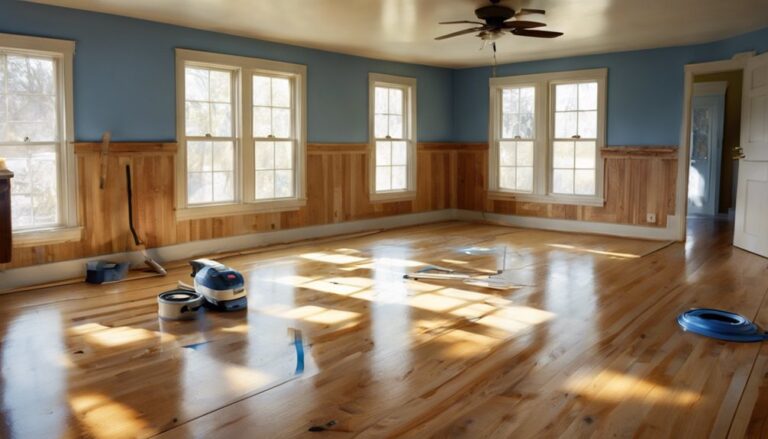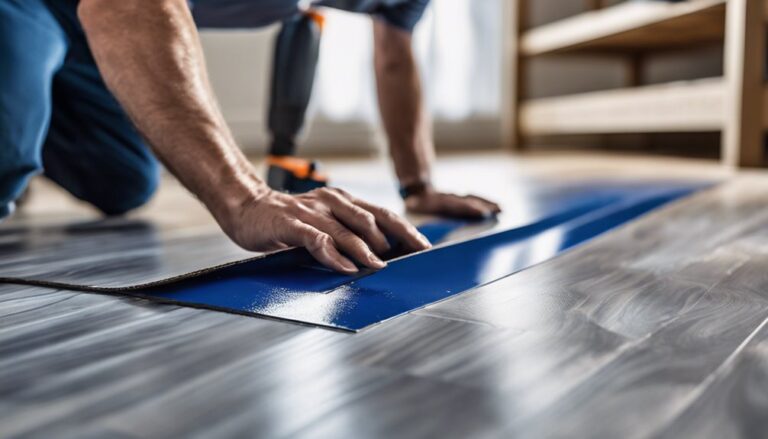


To stop squeaky wood floors, start by identifying the source of the squeaks. Look for loose floorboards and apply wood screws to secure them to the joists. You can also use talcum powder or graphite to reduce friction at the squeaky joints. If gaps exist, consider shimming between the joists and subfloor. Maintaining stable indoor humidity will help prevent future squeaks, so monitor moisture levels carefully. Additionally, using area rugs in high-traffic areas can minimize noise. For persistent issues, it may be wise to consult a professional for more targeted solutions that guarantee long-lasting silence.
Identify the Source of Squeaks
Squeaky wood floors can be an annoying disruption in your home, but before you can fix the problem, you need to identify its source. Start by walking around your space, paying attention to where the squeaks occur. Common squeak causes often include loose floorboards or the friction between different floor materials. If you hear a squeak when walking on a specific area, it might indicate that the subfloor isn't secured properly. Additionally, temperature changes can cause wood to expand and contract, leading to noise. Inspecting your floor from below, if possible, can help pinpoint the issue more accurately. Once you know the cause, you'll be better equipped to take action and reclaim your peaceful living environment.
Tighten Loose Floorboards
If you've identified loose floorboards as the source of your squeaks, tightening them is a straightforward solution. Start by gathering the right tools: a drill, screws, and a screwdriver. Next, locate the loose floorboard materials; you'll want to inspect the area beneath for any visible gaps. Using your drill, drive screws through the floorboards into the joists beneath. This will effectively secure them and minimize movement, which is key for squeak prevention. If the floorboards are particularly warped, consider using wood shims to fill gaps before tightening. Remember, ensuring your floorboards are snug not only stops those annoying squeaks but also enhances the overall stability and durability of your flooring. Enjoy the freedom of a quiet home!
Use Talcum Powder or Graphite
If you're looking for a quick fix for squeaky wood floors, talcum powder or graphite can be effective solutions. You'll want to apply them carefully to avoid a mess and guarantee they reach the floor joints. Choosing the right powder is key, so let's explore the best options and application techniques for ideal results.
Application Techniques
One effective method for silencing those annoying wood floor squeaks involves the use of talcum powder or graphite. These floor lubricant options can help reduce friction between the floorboards, which is often the cause of squeaks. Here's how to apply them effectively:
- Identify the squeaky areas: Use squeak detection methods to find where the noise is coming from.
- Apply the powder: Sprinkle a generous amount of talcum powder or graphite directly onto the squeaky spots.
- Work it in: Gently rub the powder into the seams between the floorboards, ensuring it penetrates.
Choosing the Right Powder
After applying the powder to the squeaky areas, it's important to choose the right type of lubricant for the best results. Two popular powder types are talcum powder and graphite. Talcum powder is great for its fine texture, easily penetrating gaps between floorboards, while graphite is a dry lubricant that works well in reducing friction.
Consider your application methods: sprinkle the powder directly into the squeaky area and work it in with a soft brush to reach deeper crevices. If you're dealing with larger squeaks, a more generous application might be necessary. Both options can help silence those annoying sounds and restore peace to your home. Choose the powder that suits your needs and enjoy the freedom of a quieter space!
Apply Lubricants to Joints
Applying lubricants to the joints of your wood floors can effectively reduce those annoying squeaks. By choosing the right lubricant types and application methods, you can quickly eliminate the noise and enjoy a quieter home. Here are three effective options:
- Wax: A simple and natural choice, wax can be rubbed into the joints for a smooth finish.
- Graphite Powder: This dry lubricant gets into tight spaces, reducing friction without making a mess.
- Silicone Spray: Easy to apply, it penetrates joints and lasts longer, providing consistent relief from squeaks.
Before you start, verify the area is clean and dry for the best results. With a little effort, you can reclaim the peace and tranquility of your living space!
Install Wood Screws
To effectively stop those annoying squeaks, you'll want to start by identifying the specific areas that are causing the noise. Once you've pinpointed these spots, select the appropriate screws that will secure the floorboards without causing damage. Finally, using the right installation technique guarantees a tight fit, keeping your floors quiet for good.
Identify Squeaky Areas
While it may seem challenging, identifying the squeaky areas in your wood floors is a straightforward process that can save you from further frustration. To tackle those annoying squeaky floorboards effectively, follow these steps:
- Walk Around: Carefully walk across the room, paying attention to any squeaks or creaks.
- Mark the Spots: Use chalk or tape to mark areas that make noise; this'll help you remember where to focus.
- Check for Loose Boards: Press down on the boards to see if any move or sound different, indicating they might need soundproofing techniques.
Once you've pinpointed the squeaky areas, you can proceed with appropriate fixes, ensuring a quieter and more enjoyable living space.
Select Appropriate Screws
Choosing the right screws is essential for effectively securing those squeaky floorboards. You'll want to reflect on different screw types, such as wood screws or drywall screws, depending on your floor's structure. Wood screws are typically preferred for their grip in wooden surfaces.
Next, pay attention to screw length. Ideally, you should choose screws that penetrate the subfloor by at least an inch, ensuring a solid hold. Too short won't provide the stability needed, while overly long screws could damage plumbing or wiring below.
Proper Installation Technique
Before you start installing wood screws, make certain you locate the floor joists beneath your floorboards, as this is where you'll want to anchor your screws for maximum stability. Proper subfloor preparation will guarantee your installation materials work effectively. Here's how to proceed:
- Gather Your Tools: You'll need a drill, wood screws, and a stud finder to locate the joists.
- Pre-Drill Holes: To prevent splitting, pre-drill holes in the floorboards where the screws will go.
- Install Screws: Drive the screws into the joists, ensuring they're snug but not over-tightened, which can cause more squeaks.
Consider Shimming
One effective method to reduce squeaky wood floors is shimming. When you hear those annoying creaks, it often stems from loose boards or gaps between the joists—common squeaky floor causes. To address this, you can employ various shimming techniques. Start by locating the noisy areas and evaluating the gaps. Carefully insert wooden shims between the joists and the subfloor to fill those spaces. Tap them in gently until you achieve a snug fit without overdoing it, as too tight can lead to other issues. Trim any excess shim protruding from the floor. This simple, hands-on approach can effectively stabilize your floor, letting you enjoy a quieter living space. Remember, sometimes freedom from noise is just a shim away!
Check for Moisture Issues
To tackle squeaky wood floors, it's essential to check for moisture issues. Start by inspecting the humidity levels in your home, as high humidity can lead to wood expansion and movement. Also, identify any potential water sources that could be causing damage, like leaks or poor drainage, to effectively address the problem.
Inspect Humidity Levels
Since humidity can greatly affect your wood floors, it's essential to inspect the humidity levels in your home. Proper humidity control and moisture management can prevent squeaks and maintain your floor's integrity. Here are three steps to help you:
- Use a Hygrometer: Invest in a hygrometer to measure indoor humidity accurately. Ideal levels are between 30-50%.
- Monitor Seasonal Changes: Pay attention to seasonal shifts. Humidity can fluctuate, especially in winter and summer.
- Adjust as Needed: If levels are too high or low, consider using a dehumidifier or humidifier to stabilize conditions.
Identify Water Sources
While you may not immediately see signs of water damage, identifying potential moisture sources is crucial for resolving squeaky wood floors. Start by checking for leaks around appliances, sinks, and pipes. Even small drips can lead to significant issues over time. Use leak detection methods, like moisture meters, to assess areas prone to dampness. Pay attention to your home's exterior; verify gutters and downspouts direct water away from the foundation. Inspect the crawl space or basement for signs of moisture accumulation. Proper ventilation can also prevent humidity-related issues that might contribute to squeaks. By tackling these potential water sources, you'll not only help eliminate those annoying squeaks but also protect your floors from future damage.
Use Area Rugs Strategically
How can area rugs help reduce the noise of squeaky wood floors? By using them wisely, you can dampen sound and add style to your space. Here's how to make the most of your area rugs:
- Choose the Right Materials: Opt for thick, plush area rug materials like wool or synthetic fibers, which absorb sound better than thinner options.
- Strategic Rug Placement: Position rugs in high-traffic areas where squeaks are most pronounced, like hallways and living rooms.
- Layering for Extra Cushion: Consider layering rugs to create additional cushioning over squeaky spots, enhancing both comfort and noise reduction.
Consult a Professional
If you've tried various DIY solutions and the squeaks persist, consulting a professional might be your best bet. Professionals specializing in wood floor maintenance can diagnose the underlying issues causing the noise. They have the expertise and tools to address problems that may be beyond your reach, such as loose floorboards, inadequate support, or moisture damage. These professional services can offer long-lasting solutions, ensuring your wood floors not only stop squeaking but also remain in excellent condition. By entrusting this task to experts, you'll save time and avoid potential missteps. Plus, you'll enjoy the peace of mind that comes with knowing your floors are handled properly, allowing you to focus on enjoying your space without the distraction of squeaky floors.
Prevent Future Squeaks
To keep your wood floors quiet, it's essential to take proactive steps that prevent future squeaks. Incorporating preventive measures into your regular maintenance routines can greatly reduce noise and enhance your floor's longevity. Here are three effective strategies:
- Humidity Control: Maintain a stable indoor humidity level to prevent wood expansion and contraction, which can lead to squeaks.
- Regular Inspections: Routinely check for loose boards or nails. Tightening or replacing them promptly can stop squeaks before they start.
- Use Area Rugs: Place rugs in high-traffic areas to minimize wear and tear, reducing the likelihood of squeaking over time.
Frequently Asked Questions
Can Squeaky Floors Indicate Structural Damage?
Squeaky floors can be both a minor annoyance and a warning sign. While some squeaks are just the result of normal wear, others may point to structural integrity concerns. If your floorboards are shifting, it could indicate underlying issues, like loose joists or moisture damage. It's crucial to identify the squeaky floor causes early on. Ignoring them might lead to more significant problems down the line, so don't hesitate to investigate further.
How Can I Prevent Squeaks in New Wood Floors?
To prevent squeaks in your new wood floors, focus on regular floor maintenance tips and effective squeak prevention techniques. Make certain your subfloor is properly installed and leveled before laying down the new flooring. Use quality nails or screws, and consider adding a sound-dampening underlayment. Keep humidity levels consistent to reduce wood expansion and contraction. Finally, regularly inspect and tighten any loose boards to maintain a quiet, smooth surface that enhances your space's freedom.
Are There Specific Tools Needed for Fixing Squeaky Floors?
To fix squeaky floors, you'll need a few specific tools. Start with a squeak identification tool, like a flashlight, to locate the problem areas. You might also want a drill, screws, and wood glue for repair techniques. A pry bar can help if you need to lift the floorboards. Having a stud finder on hand can assist in locating joists. With the right tools, addressing those pesky squeaks becomes much easier.
Is It Safe to Walk on Squeaky Floors?
Walking on squeaky floors can feel like dancing on a tightrope—one wrong step and you might be in for a surprise! Generally, it's safe to walk on them, but squeaky floor causes often hint at loose boards or worn-out nails. While you might want to avoid heavy stomping, temporary solutions like adding talcum powder or wood glue can help minimize noise. So, tread carefully and enjoy the quirkiness of your home!
How Long Does It Take to Fix Squeaky Wood Floors?
Fixing squeaky wood floors can take anywhere from a few hours to a couple of days, depending on the squeak causes and repair methods you choose. If you're using simple fixes like talcum powder or wood glue, it's usually a quick job. However, if you need to access the floor joists or replace boards, it might take longer. Remember, the sooner you tackle it, the sooner you can enjoy a quieter space!