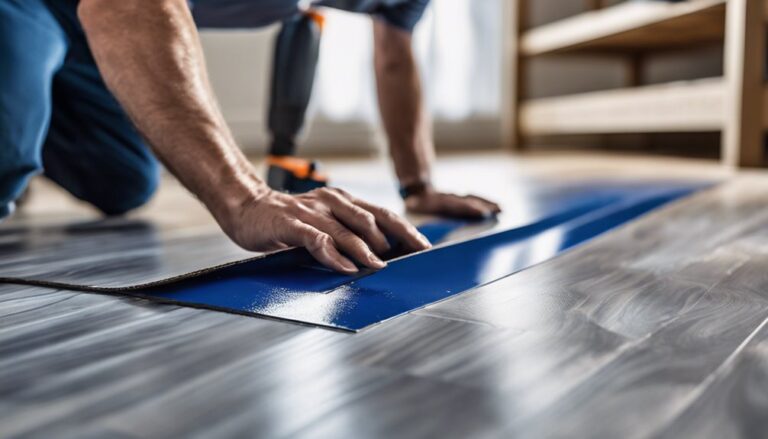


To stagger laminate flooring, start by measuring your room to plan plank placement. Verify the subfloor's clean and dry, then mark a centerline. Begin with your first row, using high-quality planks aligned against a straight wall, leaving an expansion gap. For subsequent rows, shift the starting plank at least 6 inches longer or shorter than the previous one to avoid aligning end joints. This not only enhances stability but also improves aesthetics. As you continue the installation, focus on precision and careful measurements to maintain the stagger pattern. You'll discover even more tips for a flawless finish.
Tools and Materials Needed
Before you plunge into staggering your laminate flooring, you'll need to gather several essential tools and materials. Start with a measuring tape, a square, and a pencil for precise measurements. You'll also need a laminate cutter or a circular saw, depending on the laminate types you're using. Don't forget a tapping block and a pull bar to guarantee tight seams. For installation, have spacers on hand to maintain expansion gaps. Depending on your cutting techniques, a utility knife may also be handy for smaller adjustments. Finally, consider safety gear like goggles and gloves to protect yourself. With these tools ready, you'll be well-equipped to achieve a stunning, staggered laminate floor that offers both style and freedom in your space.
Preparing the Subfloor
As you prepare to install your laminate flooring, guaranteeing your subfloor is in top condition is vital for a successful outcome. Start with a thorough subfloor inspection, checking for any signs of damage, unevenness, or moisture. If you find any issues, address them before proceeding. Repair cracks and fill in low spots to create a smooth surface. Next, consider the moisture barrier; this is critical in preventing water damage. Depending on your subfloor type, you may need to install a polyethylene sheet or underlayment designed to act as a moisture barrier. Remember, a well-prepared subfloor not only enhances the longevity of your laminate flooring but also guarantees it looks great and performs well over time.
Planning Your Layout
When you're ready to start laying down your laminate flooring, taking the time to plan your layout can make all the difference in achieving a polished look. Begin by measuring your room dimensions accurately to determine how many planks you'll need. Consider the layout design you want—typically, a staggered pattern works best for visual appeal and stability. Mark a centerline on the floor to guide your installation, ensuring the first row aligns with this line for a balanced look. Think about how the light enters the room; planks should run parallel to the longest wall or in the direction of natural light. Finally, lay out a few rows without adhesive to visualize the final effect before fully committing.
Installing the First Row
Starting with the first row of laminate flooring is essential for a successful installation, as it sets the tone for the entire project. Begin by ensuring you have proper first row alignment; this means placing your initial planks along a straight wall. Use a level to verify that the wall is straight, making adjustments if necessary. For plank selection, choose high-quality pieces without visible defects, as these will form the foundation of your floor. Lay the first plank in the corner, ensuring it's snug against the wall, but leave a small gap for expansion. Continue placing planks side by side, checking for alignment frequently. This careful attention to detail will lead to a professional-looking finish and facilitate the rest of your installation.
Continuing the Staggering Pattern
To create a visually appealing and structurally sound laminate floor, continue the staggering pattern by ensuring that the end joints of adjacent rows don't align. This method enhances stability and prevents the floor from buckling. Use staggering techniques like starting each new row with a board that's at least 6 inches shorter or longer than the last. This variation promotes pattern consistency, making your floor look seamless and professional. As you lay each row, measure carefully and adjust as necessary to maintain this staggered layout. Remember, a well-planned staggering pattern not only enhances aesthetics but also improves the overall durability of your flooring. Keep focusing on precision, and you'll achieve a beautiful laminate floor that feels both free and inviting.
Frequently Asked Questions
Can I Stagger Laminate Flooring in a Small Room?
Imagine fitting a puzzle piece in a small room design; each piece needs to align perfectly for the picture to shine. You can definitely stagger laminate flooring in a small space. This technique enhances flooring aesthetics by creating a sense of depth and movement, making the room appear larger. Just guarantee the planks' lengths vary enough to avoid uniformity, and you'll achieve a free-flowing look that's visually appealing and practical.
What Is the Best Way to Cut Laminate Planks?
When you're looking to cut laminate planks, it's essential to choose the best cutting methods for clean edges. A table saw or a circular saw fitted with a fine-toothed blade works well. If you need precision, a jigsaw can also do the job, especially for intricate cuts. Make sure you measure carefully and mark your planks before cutting. Using proper cutting tools not only enhances your finish but also gives you the freedom to customize your layout.
How Do I Fix Mistakes in Staggering?
Fixing mistakes in plank alignment can feel like untangling a set of Christmas lights. To correct errors, first, identify the misaligned planks. Gently lift the affected pieces without disturbing the surrounding boards. Reposition them to guarantee proper staggering, making sure the cuts fall at least six inches apart from each other. Once aligned, secure them back in place. Take your time; a little patience can lead to a flawless finish that feels like freedom.
Is Underlayment Necessary for Laminate Flooring Installation?
Yes, underlayment's necessary for laminate flooring installation. It provides a smooth surface and absorbs sound, enhancing comfort. There are various underlayment types, like foam, cork, or rubber, each offering unique benefits. Foam is cost-effective and moisture-resistant, while cork provides better insulation. Using underlayment not only improves durability but also extends the lifespan of your flooring. So, don't skip this step; it'll make a noticeable difference in your floor's performance and your overall experience.
How Long Does Laminate Flooring Installation Typically Take?
Laminate flooring installation typically takes one to two days, depending on the room's size and complexity. When you're project planning, consider factors like furniture removal and underlayment installation, which can extend your timeline. If you're experienced, it might go faster, but allowing ample time guarantees a smoother process. Always account for acclimation periods and potential adjustments, so you can enjoy a hassle-free installation and the freedom of your new flooring sooner.