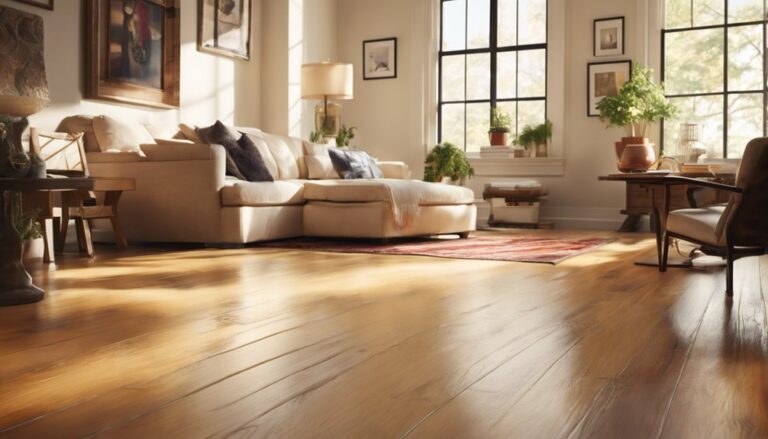

To refinish your hardwood floor, start by evaluating its condition and clearing the area of furniture. Gather essential tools like a drum sander and vacuum. Sand using coarse to fine grits, guaranteeing even coverage. After sanding, choose your stain, applying it with long strokes following the grain. Once stained, finish with multiple thin coats, allowing proper drying time in ideal conditions. Avoid foot traffic for at least 24 hours post-application. For ongoing maintenance, dust regularly and promptly clean spills. If you want to secure a flawless outcome, there's more to explore about each step in the process.
Assessing Your Floor Condition
Before diving into the refinishing process, you'll need to evaluate your hardwood floor's condition to determine the necessary steps. Start with a thorough floor inspection; check for scratches, dents, or any signs of water damage. Pay close attention to high-traffic areas, as they often show wear more quickly. For an extensive damage evaluation, look for loose boards or gaps, which may indicate underlying issues. Use a moisture meter to gauge humidity levels, as excessive moisture can compromise the wood's integrity. Finally, examine the finish; if it's dull or worn, it may need refinishing. By accurately evaluating your floor's condition, you can make informed decisions on the refinishing techniques required to restore its beauty and longevity.
Gathering Necessary Tools
To successfully refinish your hardwood floor, you'll need a specific set of tools and materials that will guarantee the process goes smoothly. Start by gathering essential tool types such as a drum sander or an orbital sander, which are critical for sanding down the surface. You'll also need a vacuum, tack cloths, and a buffer for the finishing touches. For higher quality results, consider reputable tool brands like Bona or Festool. Don't forget safety gear, including goggles and masks, to protect yourself during the process. Additionally, you'll require staining brushes or applicators for the finish. With these tools assembled, you're well on your way to achieving a beautiful, refinished hardwood floor.
Preparing the Workspace
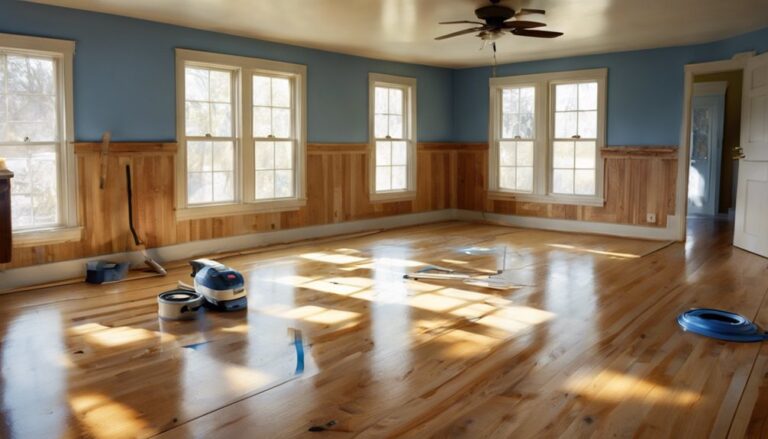
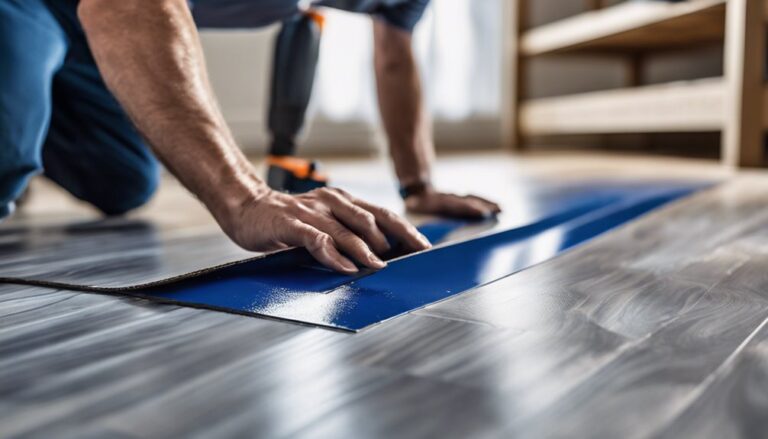
Preparing the workspace is essential for a successful hardwood floor refinishing project. Start by guaranteeing proper workspace organization to create an efficient environment. Clear the area of furniture, rugs, and any obstructions. Protect adjacent surfaces with drop cloths or plastic sheeting.
Next, prioritize safety precautions. Wear protective gear such as goggles, masks, and knee pads to minimize risks. Guarantee adequate ventilation by opening windows or using fans.
Here's a quick reference table for your workspace setup:
| Task | Details |
|---|---|
| Clear the Area | Remove furniture and rugs |
| Protect Surfaces | Use drop cloths/plastic sheeting |
| Wear Protective Gear | Goggles, masks, knee pads |
| Guarantee Ventilation | Open windows or use fans |
Following these steps sets the foundation for an effective refinishing process.
Sanding the Floor
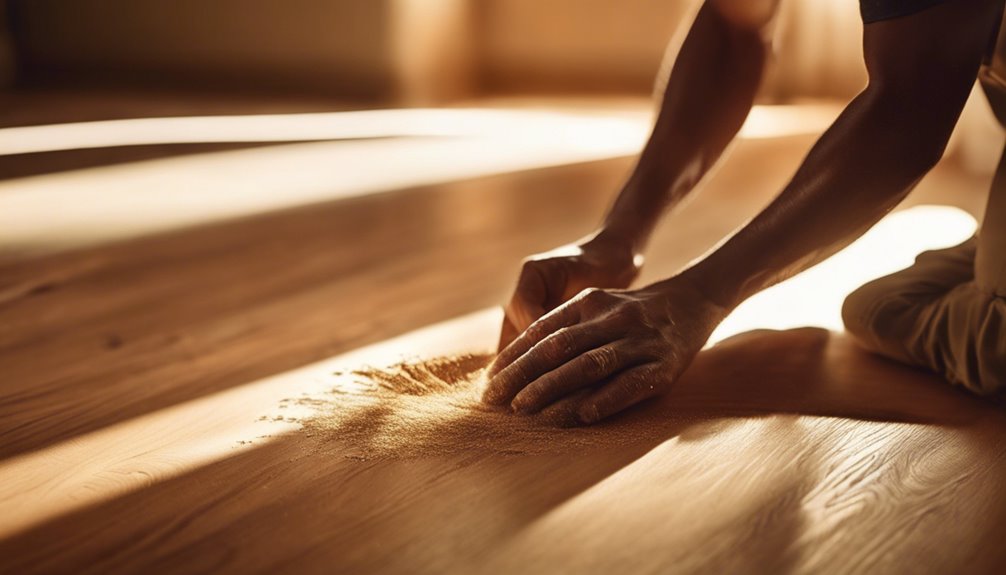
Sanding the floor is a critical step in the refinishing process that helps remove old finish, scratches, and imperfections, revealing the fresh wood underneath. Start with coarse grit sandpaper to tackle deeper scratches and gradually move to finer grits for a smooth finish. Employ effective sanding techniques, such as using a drum sander for large areas and an edge sander for corners. Always maintain a consistent speed and overlap your passes to guarantee even sanding. To minimize dust, implement dust control measures like a vacuum attachment on your sander and sealing off the workspace with plastic sheeting. This not only protects your lungs but also simplifies cleanup, allowing you to focus on achieving that beautiful, renewed hardwood surface.
Applying Stain or Finish
Once you've sanded the floor, it's essential to choose the right stain to achieve your desired color and durability. Consider factors like the wood type and the room's lighting before applying the stain. Next, use specific finish techniques to guarantee an even application and ideal protection for your newly refinished hardwood.
Choosing the Right Stain
How can you guarantee your hardwood floor reflects your personal style while also enhancing its natural beauty? Choosing the right stain is essential. Start by considering stain types such as oil-based, water-based, or gel stains, each offering unique characteristics. Oil-based stains provide rich, deep color effects but take longer to dry. Water-based options dry quickly and emit fewer fumes, while gel stains offer excellent control for vertical applications. Test samples on a small area to see how different colors interact with your wood grain. Remember, darker stains can create a dramatic effect, while lighter shades can brighten a space. Ultimately, your choice should harmonize with your decor, ensuring your floor stands out as a beautiful expression of your style.
Applying Finish Techniques
Begin by preparing your workspace and gathering the necessary tools for applying the finish. You'll need a high-quality applicator, such as a foam brush or a lambswool pad, and a clean, lint-free cloth. Before starting, verify the surface is free from dust and debris. When applying finish, use long, even strokes, working with the grain of the wood to avoid streaks. Don't overload your applicator; it's better to apply multiple thin coats than a single thick one. Allow each coat to dry according to the manufacturer's instructions before sanding lightly with fine-grit sandpaper. This enhances adhesion for the subsequent coat. Mastering these finish techniques will guarantee a smooth, professional-looking result that highlights the beauty of your hardwood floor.
Buffing and Polishing
To achieve a smooth and glossy finish on your hardwood floor, you'll need the right tools for buffing and polishing. Understanding various buffing techniques is essential for effectively preparing the surface and applying the polish correctly. Additionally, selecting the appropriate polish can greatly enhance the durability and appearance of your floor.
Tools Needed for Buffing
When buffing and polishing a hardwood floor, having the right tools is essential for achieving a smooth, professional finish. You'll need a reliable buffing machine, which is designed to efficiently smooth out imperfections and enhance the wood's shine. Choose a machine that suits your floor size and type for peak performance. Pair it with appropriate buffing pads; these come in various grits and materials, allowing you to customize the buffing process based on your floor's condition. A medium-grit pad is great for initial buffing, while a fine-grit pad is ideal for polishing. Don't forget safety gear, like goggles and a dust mask, to protect yourself during the process. With these tools, you're set for an effective buffing session.
Buffing Techniques Explained
After gathering the necessary tools for buffing, understanding the techniques involved is key to achieving a flawless finish on your hardwood floor. Start by selecting the appropriate buffing methods—use a rotary buffer for large areas and a square buffer for corners. Maintain a consistent speed while moving the buffer in a circular motion to avoid uneven surfaces. It's crucial to monitor your buffing frequency; typically, buffing every 6 to 12 months helps maintain the wood's luster without excessive wear. Verify you're using the right pad for your finish; a coarse pad can remove more material, while a fine pad polishes the surface. Always follow a systematic approach to achieve uniform results throughout the entire floor.
Choosing the Right Polish
Selecting the right polish is essential for enhancing the beauty and longevity of your hardwood floor. Different polish types can appreciably impact the finish durability, so it's vital to choose wisely. Here are four key considerations:
- Water-based vs. Oil-based: Water-based polishes dry quickly but may require more frequent applications; oil-based options provide a rich finish but take longer to cure.
- Sheen Level: Decide between matte, satin, or gloss based on your aesthetic preference and maintenance willingness.
- Compatibility: Verify the polish is compatible with your existing finish to prevent issues.
- Usage: Consider the foot traffic in your space; higher durability finishes are ideal for busy areas.
Allowing Proper Drying Time
While you may be enthusiastic to see the results of your refinishing project, allowing proper drying time is vital to achieving a flawless finish. The drying conditions in your workspace greatly impact the final outcome. Aim for a temperature between 65°F and 75°F with humidity levels around 40-60%. High humidity can prolong drying, leading to uneven surfaces or sticky finishes, while low humidity may cause the finish to dry too quickly, resulting in cracks or peeling. It's important to avoid foot traffic during the drying period, typically 24 to 48 hours, depending on the products used. Patience here pays off; rushing this step could compromise the durability and appearance of your newly refinished hardwood floor.
Maintaining Your Refinished Floor
Once your hardwood floor has fully dried, maintaining its beauty and durability becomes a priority. Implementing a solid cleaning routine and preventative maintenance is essential for longevity. Here are four key practices to follow:
- Regular Dusting: Use a microfiber mop to remove dust and debris weekly, preventing scratches.
- Prompt Spill Cleanup: Wipe up spills immediately with a damp cloth to avoid water damage.
- Avoid Excess Moisture: When mopping, use a damp (not soaked) mop and a pH-neutral cleaner to protect the finish.
- Furniture Protection: Use felt pads under furniture legs to minimize scratches and dents.
Frequently Asked Questions
Can I Refinish My Hardwood Floor Without Professional Help?
Absolutely, you can refinish your hardwood floor without professional help—it's like crafting your own masterpiece. With DIY refinishing, you're not just saving money; you're gaining the freedom to customize your floor. However, consider the cost considerations: sanding equipment, stains, and sealants can add up. If you're willing to invest time and effort, follow detailed guides, and guarantee proper safety measures, you'll achieve stunning results and take pride in your work.
How Often Should I Refinish My Hardwood Floors?
You should consider refinishing your hardwood floors every 7 to 10 years, depending on the refinishing frequency based on foot traffic and wear. Regular maintenance tips, like cleaning with appropriate products and using area rugs, can extend the life of the finish. If you notice scratches or dullness, assess the condition before deciding to refinish. Keeping an eye on these factors will help you maintain your floors in top shape without excessive effort.
What Types of Finishes Are Available for Hardwood Floors?
When you're considering finishes for hardwood floors, you've got a couple of main options. Oil-based finishes offer durability and a rich, warm color but can take longer to dry. On the other hand, water-based finishes dry quickly, allowing for faster project completion, and they tend to have lower VOCs, making them a healthier choice. Each type has its pros and cons, so it's essential you assess your priorities before deciding.
Is It Safe to Refinish Floors With Pets at Home?
You might think it's risky to refinish floors with pets at home, but it can be done safely. Guarantee thorough floor preparation, like moving furniture and cleaning, to minimize hazards. Use low-VOC finishes to protect your pets from harmful fumes. Keep your pets in a separate area during the refinishing process and allow ample time for the floor to cure. With proper precautions, you can enjoy your beautiful floors without compromising pet safety.
How Can I Tell if My Hardwood Floor Needs Refinishing?
To determine if your hardwood floor needs refinishing, start with a scratches evaluation. Look for deep gouges or numerous surface scratches that catch your fingernail. Next, check for wear indicators like discoloration or a dull finish, which suggest the protective layer is compromised. If water beads up on the surface, your finish is still intact, but if it soaks in, it's time to contemplate refinishing for protection and aesthetics.