
To figure out flooring square footage, start by measuring each room’s length and width with a tape measure or laser tool. Multiply these dimensions to get individual areas. For irregular shapes, break the space into rectangles or triangles, then sum those areas. Don’t forget to include closets and small spaces separately. Add all areas for the total square footage, ensuring precise measurements to avoid waste or shortage. Explore further to master accurate methods and smart planning tips for your flooring project.
Tools Needed for Measuring Flooring
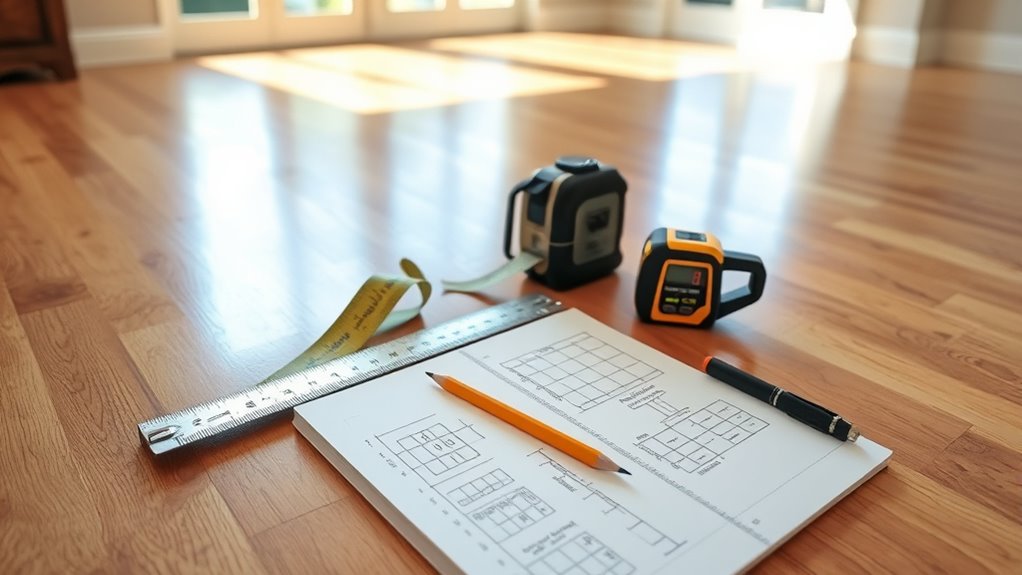
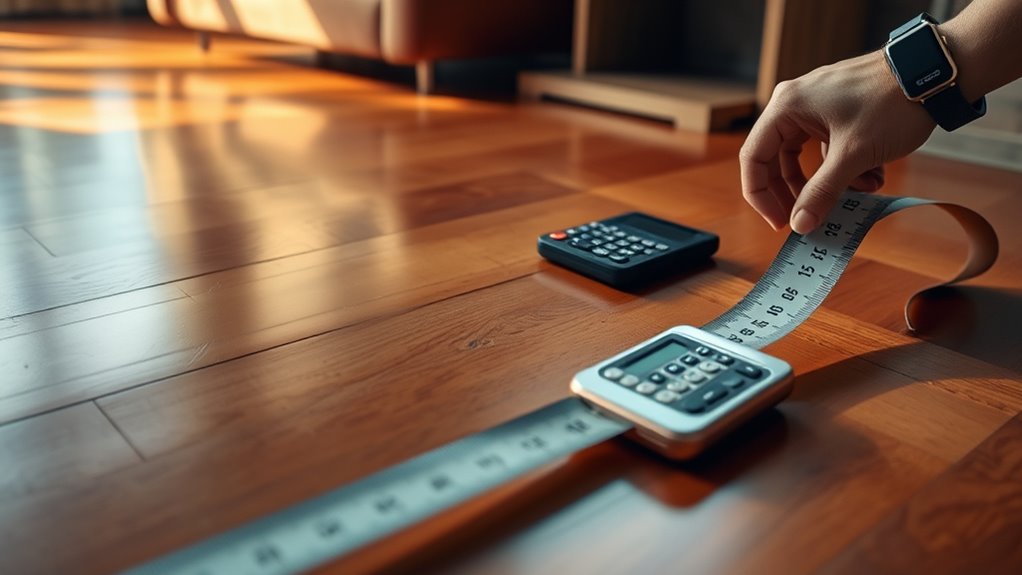
Accurate measurement starts with the right tools. To determine flooring square footage efficiently, you’ll need reliable measuring devices. Laser measuring tools provide precision over long distances and reduce human error, offering quick digital readouts. They’re ideal for complex spaces where accuracy is paramount and speed matters. Complementing these, traditional tape measures remain essential for shorter distances and tight spaces where lasers can be obstructed or less effective. Choose tape measures with clear, durable markings for easy reading. Combining laser measuring devices with tape measures grants you flexibility and control, freeing you from guesswork and enabling confident calculations. By equipping yourself with these tools, you’ll guarantee measurements are exact, setting the foundation for precise flooring estimates without unnecessary constraints or complications.
Measuring Rectangular and Square Rooms
To measure a rectangular or square room, start by determining its length and width using your measuring tools. Employ straightforward measuring techniques: place the tape measure along one wall to capture the length, then measure the adjacent wall for the width. Record these room dimensions accurately to guarantee precise calculations. Avoid approximations to maintain freedom in your project decisions. Double-check measurements for consistency, especially if walls are uneven. Once you have the length and width, multiplying these values yields the room’s square footage. This method simplifies calculating flooring needs for standard-shaped rooms, allowing you to plan material purchases efficiently. Precise measuring techniques minimize waste and cost, giving you control over your flooring project without unnecessary constraints.
Calculating Square Footage for Irregularly Shaped Spaces
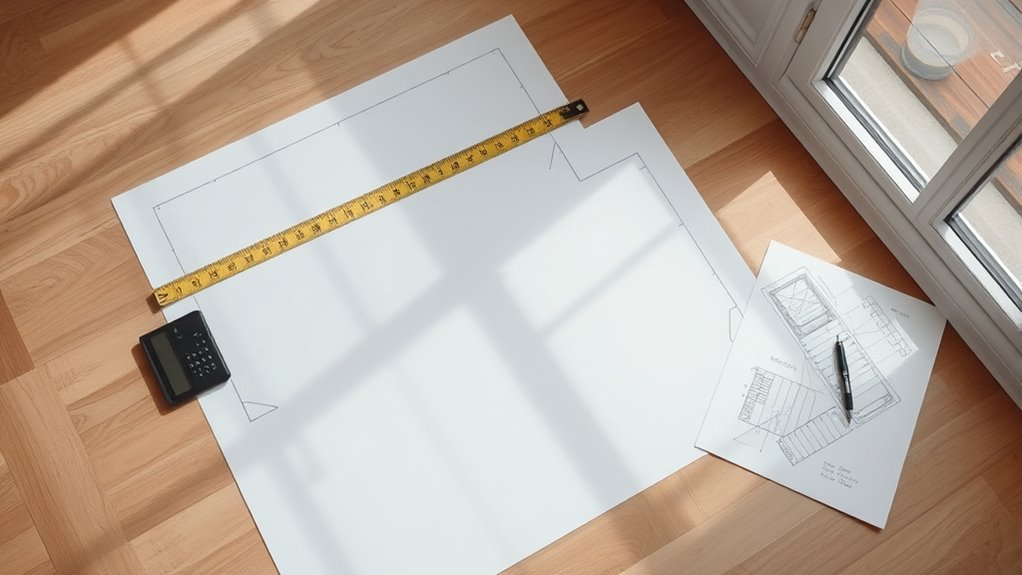
When dealing with irregularly shaped spaces, start by breaking the area into simple geometric shapes. You can apply the grid method or measure triangles separately to calculate each section’s square footage. Finally, sum these measurements to get the total area accurately.
Break Down Complex Shapes
Although measuring square footage is straightforward for regular rooms, irregularly shaped spaces require a more methodical approach. Start by applying complex shape analysis: divide the area into simple geometric figures like rectangles, triangles, or circles. Use irregular shape strategies by measuring each segment’s dimensions precisely, then calculate their individual areas. Sum these areas to get the total square footage. This breakdown simplifies your task, allowing accurate calculations without guesswork. It also offers flexibility, letting you adapt measurements to varied layouts. By mastering these techniques, you’ll confidently determine flooring needs for any space, no matter how unconventional. This approach guarantees precision and maximizes your freedom to design and renovate with informed decisions based on exact square footage figures.
Use Grid Method
Breaking areas into simple shapes works well, but irregular spaces can still challenge accuracy. To tackle this, you can apply the grid method. Start by overlaying a grid layout on your floor plan, either drawn on graph paper or digitally. Each square represents a fixed unit of measurement, making area calculation straightforward. Count the full squares within the irregular shape, then estimate partial squares by approximating their coverage. Multiply the total counted squares by the area each square represents to get your flooring square footage. This method offers precise control, letting you calculate complex areas without breaking them into multiple geometric figures. Using the grid method, you gain freedom from complicated formulas while maintaining accuracy in your measurements.
Measure Triangles Separately
Since irregular spaces often include triangular sections, measuring these areas separately guarantees accuracy. Start by identifying each triangular segment within your floor plan. Use a tape measure to record the base and height of each triangle precisely. Calculating the triangle area involves applying the formula: (base × height) ÷ 2. Be sure to keep measurements consistent in units, typically feet, to avoid conversion errors. Once you have the triangle area, add it to the total square footage of other sections. Measuring triangles separately prevents underestimating or overestimating floor space, especially in rooms with unconventional layouts. This method gives you the freedom to tackle any irregular shape confidently, ensuring your flooring materials fit perfectly without waste or shortage.
Adding Multiple Rooms Together
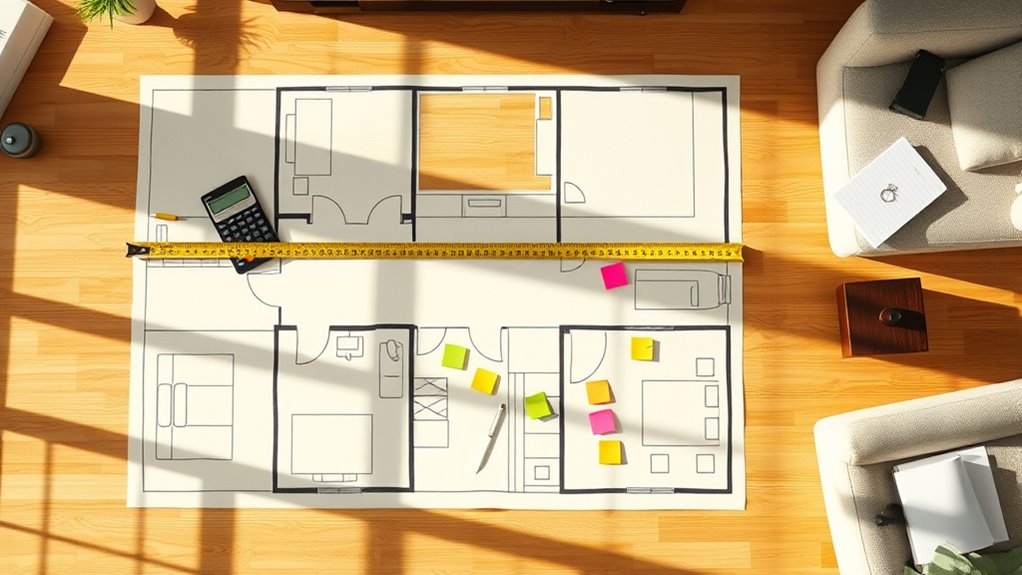
When calculating the total flooring square footage for multiple rooms, you’ll need to measure each room individually and then sum their areas. Start by recording the room dimensions—length and width—for each space. Multiply these to get the area of each room. Accuracy here is essential to avoid costly material shortages or excess. Once you have each room’s total area, add them all together to determine the combined square footage. This method gives you a clear, precise measure of the total flooring needed for your project. By handling each room separately, you maintain control and flexibility, ensuring your flooring purchase matches your exact needs without waste or constraint. Keep your measurements consistent to guarantee your final total area is reliable and thorough.
Accounting for Closets and Other Small Areas
After totaling the square footage of all main rooms, don’t overlook closets and other small spaces that also require flooring. Accurately measuring closet dimensions is vital; these often irregular spaces can add up and impact your material needs. Use a tape measure to record length and width, then multiply to get square footage. For small area considerations, include pantries, entryways, and alcoves, as ignoring these can lead to underestimating your total flooring requirement. Precisely adding these measurements guarantees you purchase enough material without excess waste. Remember, even modest spaces influence your budget and installation process. Taking these small areas into account grants you freedom from unexpected shortages or overspending, allowing you to plan flooring projects with confidence and accuracy.
Converting Measurements to Square Feet
Although measuring rooms and small areas provides raw dimensions, converting these measurements into square feet is crucial for accurate flooring estimates. To do this, multiply length by width when dimensions are in feet. If you have measurements in inches, use the conversion factor 1 foot = 12 inches to perform unit conversions before calculating area. For example, convert inches to feet by dividing the measurement by 12. When dealing with other units, like yards, remember 1 yard = 3 feet. Applying appropriate conversion factors guarantees all dimensions align uniformly in feet, allowing you to calculate square footage correctly. This precise approach eliminates errors and gives you the freedom to plan flooring needs confidently without guesswork or miscalculations.
Tips for Accurate Measurement and Estimation
Converting your measurements accurately is only part of the process; ensuring those measurements are taken correctly is just as important. Start by selecting reliable measurement techniques—use a laser measure or steel tape for precision. Measure each room’s length and width separately, noting irregular shapes and subtracting areas occupied by fixed structures. When dealing with complex layouts, divide spaces into smaller rectangles and sum their areas to improve accuracy. For estimation methods, always add a 5-10% buffer to your total square footage to accommodate cutting waste and errors. Double-check measurements before finalizing calculations to avoid costly mistakes. By applying precise measurement techniques and proven estimation methods, you gain confidence in your flooring quantity, giving you the freedom to plan and budget effectively.