
To deep clean vinyl floors, start by gathering essential supplies like a soft-bristle broom, microfiber mop, bucket, and a gentle, pH-neutral cleaner. Clear the area of furniture and vacuum or sweep to remove loose debris. Use the damp mop to clean with even strokes, changing the water frequently to avoid spreading dirt. For stubborn stains, apply a baking soda paste or vinegar solution, blotting rather than rubbing. After cleaning, make certain the floor dries completely to prevent moisture buildup. Maintaining this routine will keep your floors looking great, and there's more to explore for thorough care and upkeep.
Gather Your Cleaning Supplies
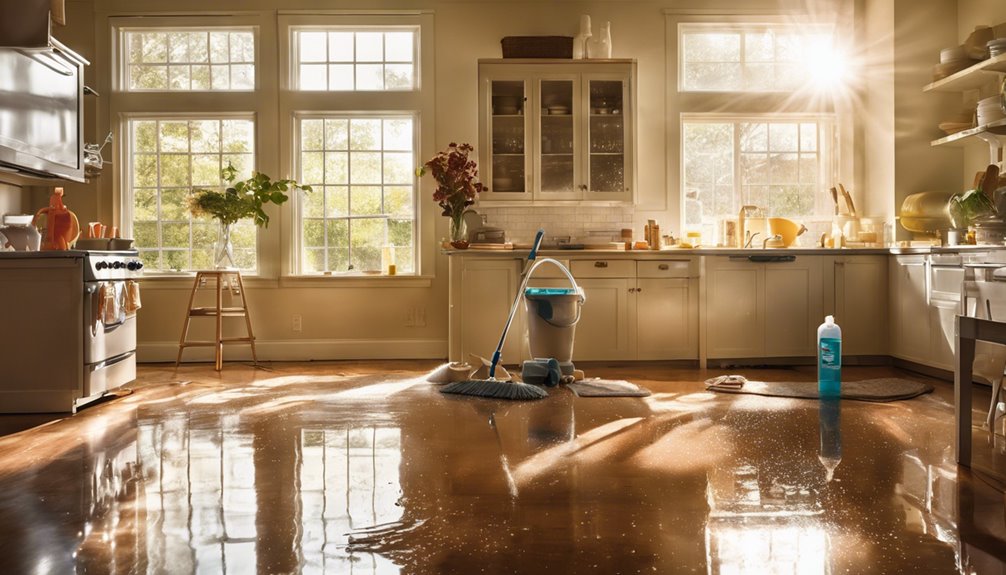
Before diving into the deep cleaning process, it's important to gather your cleaning supplies. Start by collecting essential supplies like a soft-bristle broom, a microfiber mop, and a bucket. You'll also need a gentle vinyl floor cleaner; avoid harsh chemicals to protect your flooring and maintain its integrity. Have a scraper handy for any stuck-on debris, along with a few clean, absorbent towels for drying. If you want to enhance your cleaning routine, consider using a steam mop, but verify it's safe for vinyl. Organizing your cleaning tools beforehand not only streamlines the process but also empowers you to tackle the task with confidence. With everything at your fingertips, you're ready to transform your vinyl floors into a gleaming surface.
Prepare the Floor Surface
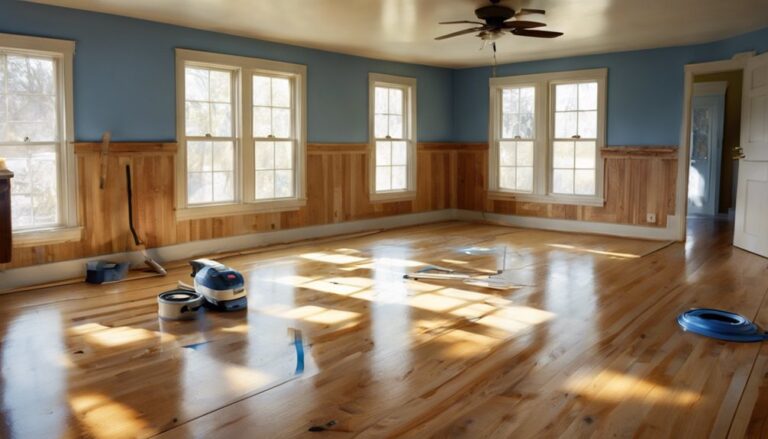
Before you start cleaning your vinyl floors, you need to prepare the surface effectively. Begin by clearing any loose debris, such as dust and dirt, to guarantee a smooth cleaning process. Then, remove furniture obstacles to provide ample space for thorough cleaning.
Clear Loose Debris
To effectively prepare the floor surface for deep cleaning, start by clearing loose debris from the vinyl floor. Utilize proper sweeping methods to gather dust and dirt, ensuring you reach corners and edges where debris tends to accumulate. A soft-bristle broom is ideal for this task, as it won't scratch the vinyl.
Once you've swept the area, employ effective vacuuming techniques to pick up any remaining particles. Use a vacuum with a hard floor setting to avoid damage, and make sure it has a clean filter for peak performance. Pay close attention to grout lines and seams, where dirt can hide. This thorough approach will create a clean canvas, making your deep cleaning efforts more effective and freeing your space from unnecessary clutter.
Remove Furniture Obstacles
Removing furniture obstacles is an essential step in preparing your vinyl floors for deep cleaning. Start by carefully relocating any large items like sofas, tables, or chairs. This not only guarantees you have complete access to the floor but also allows for more effective space organization. Consider the furniture placement while moving items; try to create designated zones for each piece to enhance flow and functionality. If possible, break down heavier items into smaller components to ease the lifting process. Once you've cleared the area, inspect the floor for any remaining debris or stains. This thorough approach ensures a clean surface, paving the way for an efficient deep cleaning process that revitalizes your vinyl floors and enhances your living space.
Choose the Right Cleaning Solution
Choosing the right cleaning solution for your vinyl floors is essential for maintaining their integrity. You'll want to take into account various types of solutions while avoiding harsh chemicals that could damage the surface. Additionally, exploring natural cleaning alternatives can provide effective results without compromising the health of your home.
Types of Cleaning Solutions
When it comes to maintaining the beauty and longevity of your vinyl floors, selecting the right cleaning solution is essential. You'll find various options, including eco-friendly cleaners and commercial products. It's vital to choose one that aligns with your preferences and cleaning needs.
| Type of Cleaner | Description |
|---|---|
| Eco-Friendly Cleaners | Non-toxic, biodegradable options that are safe for your family and pets. |
| Commercial Products | Stronger solutions designed for tough stains, often with specific cleaning agents. |
| DIY Solutions | Homemade mixes of vinegar and water that can effectively clean and shine. |
| Specialized Cleaners | Formulated specifically for vinyl, ensuring no damage to the flooring. |
Understanding these types will help you make informed choices for your vinyl floors.
Avoiding Harsh Chemicals
While it's tempting to grab the strongest cleaner for stubborn stains, opting for harsh chemicals can damage your vinyl floors over time. Instead, consider eco-friendly options that effectively clean without risking your flooring's integrity. Look for products labeled as safe for vinyl surfaces, ensuring they meet chemical safety standards. Vinegar and baking soda can be great alternatives, offering a gentle yet effective clean. Always read labels and avoid any cleaners containing ammonia or bleach, as these can lead to discoloration and wear. By choosing safer solutions, you not only protect your floors but also contribute to a healthier home environment. Prioritizing eco-friendly choices empowers you to maintain your space without compromising on floor safety.
Natural Cleaning Alternatives
Exploring natural cleaning alternatives can further enhance the maintenance of your vinyl floors without risking damage. One of the best eco-friendly options is a simple vinegar solution. By mixing one cup of white vinegar with a gallon of warm water, you create a powerful yet gentle cleaner. The vinegar benefits include cutting through grime and eliminating odors, all while being safe for your flooring. You can also add a few drops of dish soap for extra cleaning power. Just be sure to mop with a damp cloth, avoiding excessive moisture, which can harm vinyl. Using these natural solutions allows you to maintain a clean and healthy environment, free from harsh chemicals, ensuring your floors stay beautiful and resilient.
Use Proper Cleaning Techniques
To effectively deep clean vinyl floors, it is essential to implement proper cleaning techniques that not only maintain the floor's appearance but also extend its lifespan. Start by sweeping or vacuuming to remove loose dirt and debris. Next, use a damp mop with a gentle, pH-neutral cleaner specifically designed for vinyl. Avoid soaking the floor, as excess water can damage it. When mopping, use straight, even strokes to cover the entire surface, ensuring you reach corners and edges. For floor maintenance, remember to change your mop water frequently to prevent spreading dirt. Finally, consider using a microfiber mop for a more efficient clean, as it captures dust and grime without scratching the vinyl.
Address Stubborn Stains
Even with regular cleaning, stubborn stains can sometimes mar the appearance of your vinyl floors. To effectively tackle these blemishes, you'll need the right approach and cleaning tools. Here's a simple method for stain removal:
- Baking Soda Paste: Mix baking soda with water to create a paste, then apply it to the stain.
- White Vinegar Solution: Combine equal parts of vinegar and water in a spray bottle for a natural cleaner.
- Isopropyl Alcohol: For tougher stains, dab a cloth with alcohol and gently blot the area.
- Commercial Cleaners: Use vinyl-safe cleaners specifically designed for stain removal.
Rinse and Dry the Floors
Once you've tackled the stubborn stains, it is important to rinse and dry the floors properly to guarantee no residue is left behind. Start by using a clean mop or cloth dampened with fresh water to wipe away any remaining cleaning solution. Work in sections, ensuring even coverage. After rinsing, choose effective drying techniques; a microfiber mop can help absorb excess moisture quickly. If time allows, open windows or turn on fans to facilitate floor drying, promoting air circulation. Alternatively, you can use a dry towel to wipe the surface, ensuring it's completely dry to prevent slips. Proper rinsing and drying not only enhance the appearance of your vinyl floors but also prolong their life, keeping them looking fresh and inviting.
Maintain Your Vinyl Floors
After ensuring your vinyl floors are clean and dry, maintaining their condition becomes a priority. Consistent care will preserve their beauty and durability. Here are some essential floor maintenance tips to follow:
- Sweep or Vacuum Regularly: Remove dirt and debris to prevent scratches.
- Use Mild Cleaners: Stick to pH-balanced solutions specifically designed for vinyl care techniques.
- Avoid Excess Water: Use a damp mop instead of soaking the floor to prevent water damage.
- Protect with Rugs: Place mats in high-traffic areas to minimize wear and tear.
Frequently Asked Questions
Can I Use a Steam Cleaner on Vinyl Floors?
You might be wondering if you can use a steam cleaner on your vinyl floors. While steam cleaning offers benefits like sanitizing and removing stubborn dirt, it's crucial to proceed with caution. High heat can damage the vinyl if used incorrectly. To maximize effectiveness, use a low steam setting and keep the cleaner moving to avoid moisture buildup. Always refer to your floor's manufacturer guidelines for the best results and to guarantee you maintain your flooring's integrity.
How Often Should I Deep Clean My Vinyl Floors?
You should aim to deep clean your vinyl floors every few months, but your cleaning frequency can depend on foot traffic and lifestyle. For high-traffic areas, consider monthly deep cleaning to maintain their appearance. Incorporating maintenance tips like regular sweeping and spot cleaning can also help extend the time between deep cleans. By establishing a routine, you'll keep your floors looking great without feeling overwhelmed, giving you the freedom to enjoy your space.
Are Homemade Cleaners Safe for Vinyl Flooring?
Think of your vinyl floors as a canvas; you want to keep them pristine without damaging the art beneath. Homemade cleaners can be safe for vinyl, provided you choose natural alternatives and avoid harsh cleaning agents. Ingredients like vinegar and baking soda can effectively lift grime without causing harm. Just be sure to test any solution in a small area first. With careful selection, you can maintain your floors' beauty and enjoy a cleaner space.
What Should I Avoid When Cleaning Vinyl Floors?
When cleaning vinyl floors, you should avoid harsh cleaning products like bleach or ammonia, as they can damage the surface. Instead, opt for pH-neutral solutions specifically designed for vinyl. Don't use abrasive pads or scrubbing brushes that can scratch the finish. Also, avoid excessive water, as it can seep into seams and cause damage. For effective floor maintenance, always follow manufacturer recommendations and maintain a regular cleaning routine to preserve the floor's integrity.
Can I Use Vinegar on My Vinyl Floors?
Imagine your vinyl floors sparkling like a sunlit lake. You can use vinegar on your vinyl floors, and it offers several benefits. This natural cleaning solution effectively cuts through grime while being gentle on your flooring. Mix equal parts water and vinegar for an ideal cleaning solution. Just remember to avoid excessive moisture, as it can seep into seams. With proper care, your floors will shine, providing a sense of freedom in your space.