
Is your kitchen floor looking a bit worse for wear? You’re not alone.
The kitchen is the heart of your home, where spills, crumbs, and splashes are all part of the daily routine. But don’t worry, you can transform your kitchen floor from grimy to gleaming in no time. Imagine walking into your kitchen and seeing a spotless, shiny floor that you can be proud of.
Not only does a clean floor make your kitchen look inviting, but it also contributes to a healthier home environment. In this guide, you’ll discover the best techniques and tips to clean your kitchen floor efficiently, with minimal effort. Ready to make your kitchen floor sparkle? Let’s dive in and get started!

Choosing The Right Cleaning Tools
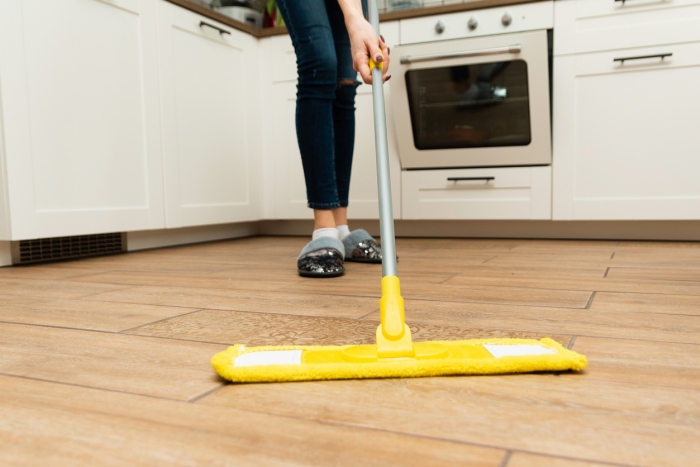
A good mop helps clean wet spills. Choose one with a soft head. This will keep floors safe. Brooms are for dry dirt. Pick a broom with strong bristles. It sweeps dirt away easily.
Vacuum cleaners are great for cleaning dust. They suck up crumbs too. Choose one with a strong motor. This helps it work better. Use a vacuum on dry floors only.
Scrubbing brushes help clean tough spots. Use them for sticky stains. Pick a brush with hard bristles. This helps scrub off dirt. Brushes are useful for grout lines and corners.
:strip_icc()/mopping-floor-with-string-mop-2ebdf3eb-f7a50242c3104431a093b1cb6582ac81.jpg)
Selecting The Best Cleaning Solutions
Use vinegar for a shiny kitchen floor. Vinegar is safe and cheap. Mix it with water. Lemon juice is also good. It smells nice and cleans well. Baking soda helps scrub tough spots. It does not harm the floor.
Buy a floor cleaner from the store. Read the label first. Check if it suits your floor type. Some cleaners are strong. They might damage delicate floors. Use a small amount to test first. Always follow instructions on the bottle.
Mix soap and water for a quick clean. Add a few drops of dish soap to warm water. Stir it well. This is gentle on most floors. Salt can help scrub dirty spots. It’s easy and you have it at home.
Preparing The Kitchen Floor
Start by removing chairs and tables. This makes cleaning easier. Store them in another room. Check for rugs or mats on the floor. Roll them up and set aside. Look for any toys or items on the floor. Pick them up and put them away. A clear floor is ready for cleaning.
Use a soft broom to sweep the floor. Gather dust in a dustpan. Throw it in the trash. Check the corners for hidden dirt. Use a vacuum for tough spots. Make sure no debris is left on the floor. A clean surface is ready for mopping.
Step-by-step Cleaning Process
Start by sweeping the floor to remove loose dirt. Use a mop and warm soapy water. Dip the mop in the water and wring out excess. Mop the floor in small sections. Go over each area twice. This ensures all dirt and grime is removed. Rinse the mop often. Change the water if it gets dirty. Finish by letting the floor air dry.
For small stains, use a damp cloth. Apply a bit of baking soda on the stain. Gently scrub the area. Use a clean cloth to wipe it away. For tougher stains, use a vinegar solution. Mix equal parts of vinegar and water. Apply it on the stain. Let it sit for a few minutes. Wipe clean with a cloth.
Deep clean by mixing white vinegar with water. Mop the floor with this solution. Let it sit for 5 minutes. Use a scrub brush for tough spots. Pay attention to corners and edges. Rinse with clean water. Dry the floor with a towel. This keeps the floor shiny and clean.
Drying And Polishing
Air drying is easy and effective. Open windows to let fresh air in. This helps the floor dry faster. Use a fan if the air is still. A fan will move the air around. This speeds up drying. Be careful with puddles. They can take longer to dry.
Use a towel to dry wet spots. A cloth can help too. Press the towel on the floor to soak up water. Move it around for best results. Repeat until the floor is dry. This stops water spots from forming. Choose a soft towel for best results.
Polishing gives the floor a nice shine. Use a floor polish for best results. Apply polish with a clean cloth. Rub gently in circles. This makes the floor look new. Let the polish dry before walking on it. A shiny floor looks clean and bright.
Maintaining A Clean Kitchen Floor
Sweep the floor every day to remove crumbs. Use a damp mop to clear spills and sticky spots. Always dry the floor after mopping. This stops water stains. Clean up spills quickly. This prevents stains from forming.
Deep clean the floor every week. Use a mild cleaner for the job. Scrub the corners and edges well. Once a month, polish the floor. This keeps it shiny and new. Check for damage or scratches often. Fix them right away.
Place mats near the sink and stove. These catch spills and crumbs. Encourage family to wipe their feet. This keeps dirt outside. Avoid wearing shoes inside. This reduces dirt and scratches. Always clean spills as they happen. Quick cleaning stops stains from setting in.
Safety Precautions
Always read labels on cleaning products. Follow instructions carefully. Some chemicals can be harmful. Keep them away from food and pets. Ventilate the area while cleaning. Open windows for fresh air. Wear gloves to protect your hands.
Wet floors can be dangerous. Wipe up spills immediately. Use rugs or mats in heavy traffic areas. Choose non-slip footwear to avoid falls. Make sure the floor is dry before walking.
Wear gloves when using cleaning chemicals. They protect your skin. Safety goggles are important too. They keep your eyes safe. Consider a mask if the smell is strong.

Frequently Asked Questions
What Is The Best Way To Clean Kitchen Floors?
The best way to clean kitchen floors depends on the material. For tiles, use a mild detergent and warm water. For wooden floors, opt for a specialized wood cleaner. Regular sweeping and mopping helps maintain cleanliness.
Can Vinegar Be Used To Clean Kitchen Floors?
Yes, vinegar is a natural cleaner suitable for most kitchen floors. Mix equal parts of water and vinegar. It effectively removes stains and disinfects surfaces without harsh chemicals.
How Often Should Kitchen Floors Be Cleaned?
Kitchen floors should be cleaned regularly to maintain hygiene. Sweep or vacuum daily to remove debris. Mop weekly with appropriate cleaning solutions. Adjust frequency based on foot traffic and usage.
Are Steam Mops Safe For Kitchen Floors?
Steam mops are safe for most kitchen floor types, including tile and sealed wood. They effectively remove dirt and bacteria. Ensure the floor material is compatible with steam cleaning to avoid damage.
Conclusion
Keeping your kitchen floor clean is crucial. It prevents germs and keeps it looking fresh. Use the right tools and cleaners for best results. Regular sweeping and mopping are essential. Pay attention to spills immediately. This avoids stains and sticky spots.
Choose eco-friendly products for safety. These protect your family and the environment. Follow these tips consistently. Your kitchen will stay welcoming and healthy. Enjoy cooking in a clean space. Simple habits make a big difference. Start today for a fresher, cleaner kitchen.