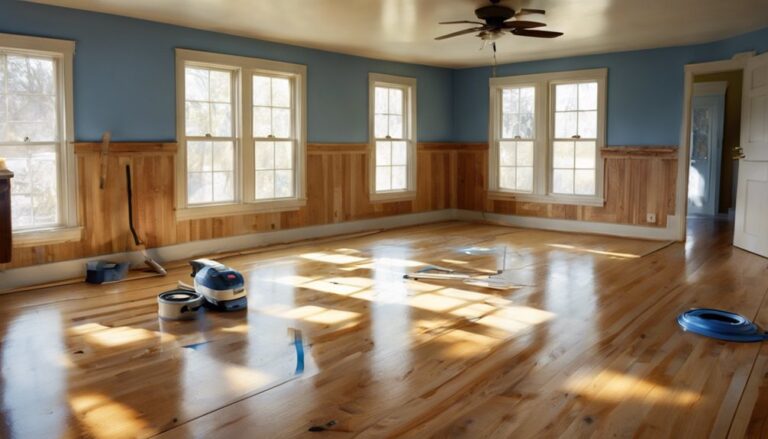
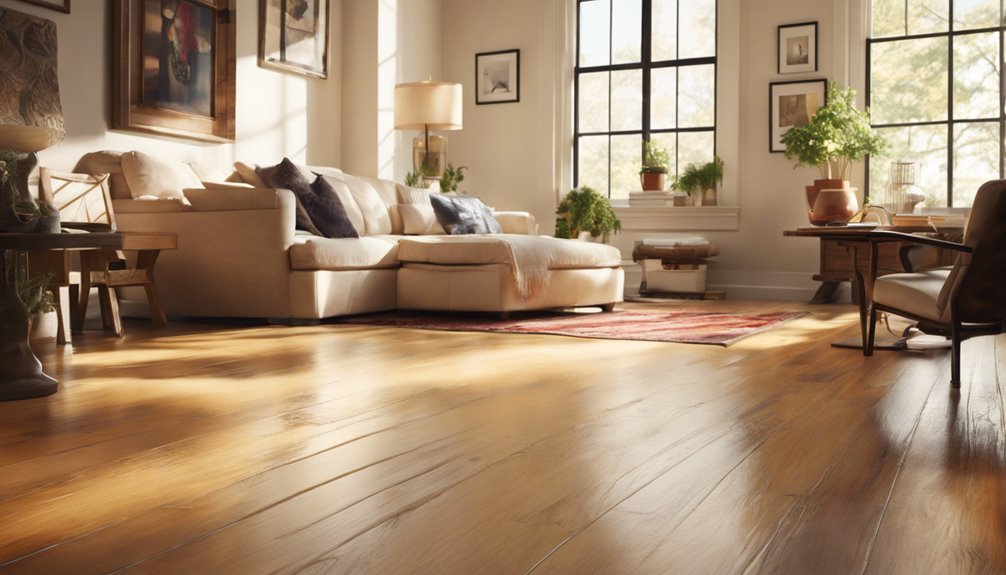

Laminate flooring usually lasts between 15 to 25 years, though high-quality options can extend up to 30 years. Its longevity depends on several factors, including foot traffic, humidity, and how well it's installed. To maximize its lifespan, guarantee proper installation and regular maintenance, like cleaning and using protective pads under furniture. Avoid excessive moisture and harsh chemicals during cleaning to keep your floor in top shape. By understanding what affects durability, you can make a more informed choice for your home. You'll find even more insights on maintenance and replacement signs ahead.
Overview of Laminate Flooring
When you're considering flooring options, laminate flooring often stands out due to its blend of aesthetics and functionality. You'll find various laminate types, including high-pressure laminate and waterproof laminate, each catering to different needs and styles. These options allow you to express your personal taste while ensuring durability.
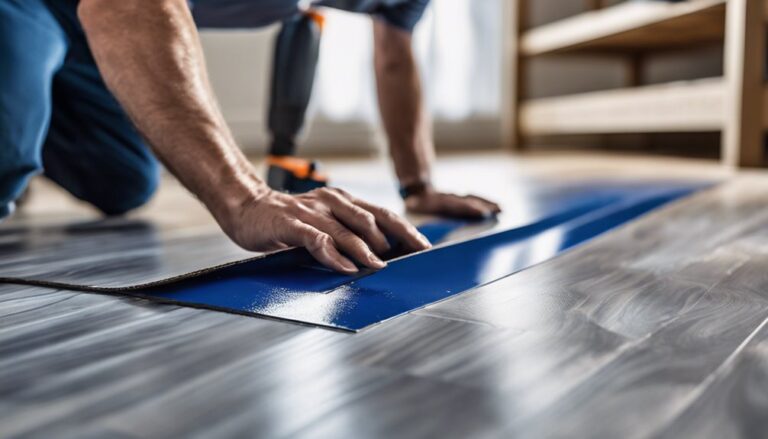
When it comes to installation methods, laminate is typically easy to install, making it a popular choice for DIY enthusiasts. You can opt for click-lock systems, which require no glue or nails, or glue-down methods for a more permanent solution. This versatility not only saves you money on labor costs but also gives you the freedom to transform your space at your own pace. Embrace the possibilities with laminate flooring!
Typical Lifespan of Laminate
When considering laminate flooring, it's important to know its average lifespan expectancy, which typically ranges from 15 to 25 years. However, several factors can affect this longevity, including foot traffic, humidity levels, and quality of installation. To maximize durability, regular maintenance and proper care are essential in preserving your flooring for years to come.
Average Lifespan Expectancy
Laminate flooring typically boasts an impressive lifespan of 15 to 25 years, depending on factors like quality, maintenance, and foot traffic. When you choose high-quality laminate, you're investing in laminate durability that can withstand daily wear and tear. Regular cleaning and proper care can greatly extend your flooring lifespan, allowing you to enjoy its beauty for years to come. If your home sees a lot of activity, the type of laminate can make a difference; thicker options often perform better under pressure. Keep in mind that while minor scratches may occur, a good laminate can handle these with ease. Ultimately, with the right choices and care, you can relish your laminate flooring for a long time.
#
Factors Affecting Longevity
Several factors contribute to the lifespan of laminate flooring, influencing how long you can expect it to last in your home. Understanding these can help you make informed choices:
- Installation Quality: Proper installation is essential. If it's not done right, you could face issues like gaps or buckling, shortening its lifespan.
- Environmental Factors: Humidity and temperature fluctuations can affect laminate. High moisture levels can warp the planks, while dry conditions may cause cracking.
- Foot Traffic: The amount and type of foot traffic can wear down the surface. High-traffic areas may require more durable options to withstand daily use.
Maintenance for Durability
Although laminate flooring is designed to be durable, regular maintenance is essential for maximizing its lifespan. Implementing effective cleaning techniques and applying protective coatings can greatly enhance your floor's longevity. Here's a quick reference to help you maintain your laminate flooring:
| Action | Frequency | Benefit |
|---|---|---|
| Sweep or vacuum | Weekly | Prevents dirt buildup |
| Damp mop with pH-neutral cleaner | Monthly | Keeps surface clean |
| Reapply protective coatings | Every 1-3 years | Shields against wear |
## Factors Affecting Longevity
When considering the longevity of your flooring, it is essential to recognize that various factors come into play. Understanding these can help you make informed choices and maintain your laminate's lifespan.
- Material Quality: Higher-quality laminate typically lasts longer, as it's designed to withstand wear and tear better than cheaper options.
- Environmental Conditions: Humidity and temperature fluctuations can warp or damage flooring, so consider your home's climate.
- Foot Traffic: Areas with heavy foot traffic may cause more wear, so it's wise to use rugs or mats in those spaces.
Common Myths About Durability
Many homeowners hold misconceptions about the durability of laminate flooring that can influence their purchasing decisions and maintenance practices. One common myth is that laminate isn't as durable as hardwood; however, with proper care, it can withstand significant wear and tear. Another durability misconception is that laminate flooring is prone to scratching; while it can scratch, higher-quality options feature advanced wear layers that enhance resilience. Also, some believe laminate isn't water-resistant, but many modern varieties are designed to handle moisture better than ever. Myth debunking around these points can guide you in selecting the right product for your lifestyle. Understanding these facts can empower you to make informed choices, ensuring you enjoy the freedom and beauty of laminate flooring for years to come.
Maintenance Tips for Longevity
To guarantee your laminate flooring lasts for years, it's important to implement a few simple maintenance practices. By using the right cleaning techniques and ensuring proper flooring protection, you'll keep your floors looking great. Here are three tips to help you maintain your laminate flooring:
- Regular Sweeping or Vacuuming: Remove dirt and debris often to prevent scratches and wear.
- Damp Mopping: Use a slightly damp mop with a laminate-friendly cleaner to avoid excess moisture, which can damage the floor.
- Furniture Pads: Place pads under furniture legs to prevent dents and scratches when moving items.
Signs It's Time to Replace
How can you tell if it's time to say goodbye to your laminate flooring? Look for noticeable wear patterns, like scratches, dents, or fading, that compromise the beauty and functionality of your space. If you find that cleaning doesn't restore its original luster, it's a strong sign that replacement is necessary. Additionally, consider how outdated your flooring appears; if it clashes with your style or you're eyeing flooring upgrades, it might be time to make a change. Water damage, such as warping or buckling, is another red flag that indicates a need for replacement. Ultimately, if your laminate no longer meets your aesthetic or functional needs, don't hesitate to explore new options that align with your vision for freedom in your home.
Cost vs. Lifespan Considerations
When you're considering laminate flooring, it's crucial to weigh the initial investment against its longevity. While cheaper options may save you money upfront, they often come with higher maintenance costs and a shorter lifespan. Understanding this balance can help you make a more informed decision that suits your budget and lifestyle.
Initial Investment vs. Longevity
While you might be drawn to the affordable price of laminate flooring, it's essential to weigh this initial investment against its longevity and overall value. Consider these factors for long-term savings:
- Durability: High-quality laminate can last 15-25 years, making it a smart choice for busy households.
- Installation Costs: While DIY can save you money, professional installation may guarantee a better fit and longer lifespan.
- Resale Value: Laminate flooring can enhance your home's appeal, potentially increasing its market value.
Maintenance Costs Over Time
Considering the initial investment in laminate flooring is just the beginning; maintenance costs over time play a significant role in the overall expense. You'll want to budget for cleaning products that are safe for laminate surfaces, which can range from mild cleaners to specialized solutions. Regular cleaning helps maintain the floor's appearance and longevity, but remember to avoid harsh chemicals that can cause damage.
When it comes to wear and tear, repair options are generally straightforward. You might need to replace individual planks, which can be cost-effective compared to full replacements. Keeping a few spare planks on hand can save you money in the long run. Ultimately, balancing these costs with the lifespan of your flooring is key to making the most of your investment.
Frequently Asked Questions
Can Laminate Flooring Be Installed Over Existing Floors?
You might be wondering if you can simply lay laminate flooring over your existing floors. The answer's not as straightforward as it seems. First, you'll need to take into account the installation process and guarantee your current flooring is compatible. If it's level and stable, you could save time and effort. Just be cautious—any imperfections could affect the new laminate's performance. So, evaluate your flooring carefully before diving into the project!
Is Laminate Flooring Waterproof or Water-Resistant?
Laminate flooring isn't completely waterproof, but it does offer good water resistance. This means it can handle spills and moisture without sustaining immediate damage. However, you should still act quickly to prevent any moisture damage, as prolonged exposure can lead to warping or swelling. If you're installing laminate in areas prone to high humidity or water, consider using a higher-grade product specifically designed for those conditions to enhance durability.
How Does Laminate Compare to Hardwood in Durability?
When it comes to durability, laminate flooring can feel like a superhero compared to hardwood. In a durability comparison, laminate often excels, resisting scratches and dents better than its hardwood counterpart. Maintenance requirements for laminate are minimal—just regular sweeping and occasional mopping—while hardwood demands refinishing and special care. If you're seeking a stylish, resilient option that gives you the freedom to live without constant worry, laminate might just be your ideal choice.
Can I Repair Scratches on Laminate Flooring?
Yes, you can repair scratches on laminate flooring with some simple steps. Start by cleaning the area to remove dirt. For minor scratches, laminate care kits are available, containing color-matched markers or wax fillers. Apply the product according to instructions, blending it with the surrounding area. For deeper scratches, consider using a laminate repair patch. Regular maintenance and attention to scratches can help maintain your floor's appearance, giving you the freedom to enjoy your space worry-free.
Does Laminate Flooring Emit Harmful Chemicals?
Did you know that over 20% of indoor air quality issues stem from flooring materials? When it comes to laminate flooring, laminate safety concerns often arise due to volatile organic compounds (VOCs) that some products can emit. However, many manufacturers now produce low-VOC options, greatly improving indoor air quality. You should check for certifications like CARB or FloorScore to verify you're choosing a safer product for your home and family.