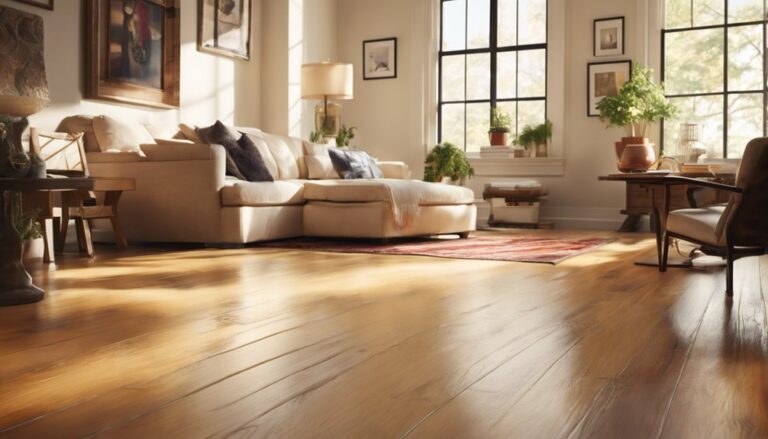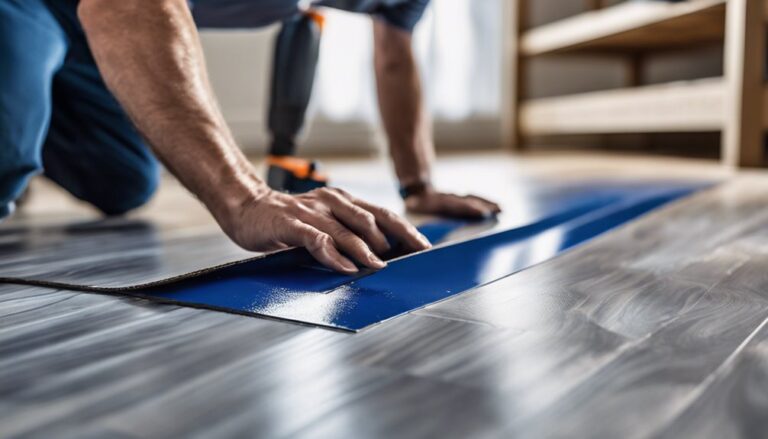
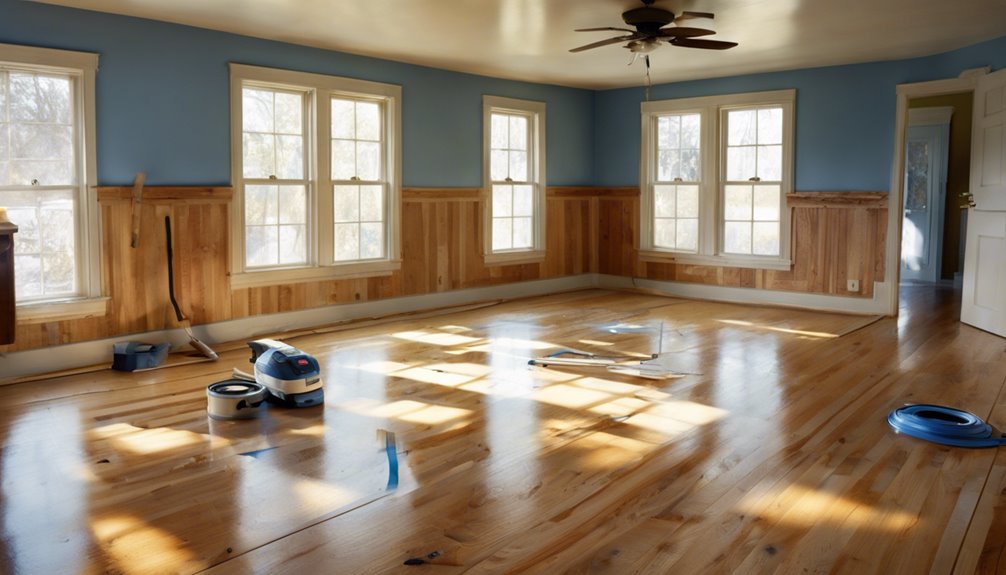

Refinishing hardwood floors usually takes about 5 to 10 days. This timeline encompasses several stages, including sanding, which requires a full day, followed by staining and sealing, taking another 1 to 2 days with additional drying time. It's vital to allow 3 to 7 days for the finish to cure before heavy foot traffic resumes. Factors like the size of your area, the condition of the floors, and the type of finish chosen can impact the overall duration. If you're keen to learn more about each step and how to prepare, you'll find helpful insights ahead.
Understanding the Refinishing Process
When you decide to refinish your hardwood floors, understanding the process can make the experience smoother and more rewarding. The refinishing techniques you choose will greatly impact the final result. Typically, the process starts with thorough cleaning to remove dirt and debris, followed by sanding to eliminate the old finish and imperfections. After sanding, many opt for a stain to enhance the wood's natural beauty, followed by a protective sealant that guarantees durability. Consistent floor maintenance afterward is essential; regular cleaning and periodic refinishing can prolong the life of your floors. By grasping these steps and techniques, you empower yourself to achieve stunning results and maintain the elegance of your hardwood, allowing your space to shine.
Factors Affecting Timeframes
While the refinishing process can seem straightforward, several factors can considerably affect the time it takes to complete the job. First, the size of the area plays a significant role; larger spaces naturally require more time. Additionally, the condition of your hardwood floors will impact the duration—extensive damage might necessitate more preparation and treatment. Your choice of finishes also matters; quicker-drying products can reduce wait times. Effective time management and project planning are essential, as they help guarantee a smooth workflow and minimize delays. Finally, if you're hiring professionals, their availability can influence your timeline. By considering these factors, you can better estimate how long the refinishing process will take, guaranteeing a successful and timely project.
Preparation Steps
Before diving into the refinishing process, it's crucial to take several preparation steps to guarantee the best results. Start by gathering the tools needed, such as a drum sander, edger, vacuum, and floor finish applicator. Make sure you also have safety gear, including goggles, dust masks, and knee pads. Clear the area of furniture and any obstacles to create a safe working environment. It's wise to inspect the floors for any repairs; fixing these issues now will save time later. Finally, maintain proper ventilation by opening windows or using fans to disperse fumes. By taking these safety precautions and setting up correctly, you'll create a solid foundation for a successful refinishing project.
Sanding the Floors
With the area prepped and ready, the next step is sanding the floors. This essential process utilizes various sanding techniques to effectively remove the old finish and imperfections. You'll want to start with coarse grit sandpaper to tackle deeper scratches and then progress to finer grits for a smoother surface. Make certain to use the right sanding equipment, such as a drum sander or orbital sander, to guarantee even results. Pay attention to corners and edges, where a detail sander might be necessary. Always follow the grain of the wood to avoid scratches. Don't forget to wear a dust mask and goggles; safety is key while you embrace the freedom of creating a beautifully refinished floor.
Staining Options
Choosing the right stain for your hardwood floors can greatly enhance their appearance and protect the wood. When it comes to stain types, you'll typically encounter oil-based and water-based options. Oil-based stains offer deep, rich colors, while water-based stains dry faster and have less odor.
| Stain Type | Color Choices |
|---|---|
| Oil-Based | Dark Walnut, Cherry, Mahogany |
| Water-Based | Natural, Whitewash, Espresso |
| Gel Stain | Java, Antique Oak, Blue Gray |
Your choice depends on the look you want to achieve and the level of durability you need. Consider testing samples on your floor to see how different stains interact with the wood grain and lighting in your space.
Applying Finish
Once you've chosen your stain, it's time to contemplate the finish, which plays an essential role in protecting your hardwood floors. You'll encounter various types of finishes, each with its own application techniques that can affect the final look and durability. Understanding these options will help you achieve the best results for your flooring project.
Types of Finish
Although selecting the right type of finish for your hardwood floors can seem overwhelming, understanding the various options available will help you make an informed decision. Two popular choices are oil finishes and water-based finishes.
Here's a quick comparison to guide you:
| Finish Type | Key Features |
|---|---|
| Oil Finishes | Rich color, enhances grain, longer drying time |
| Water-Based Finishes | Quick drying, low odor, less yellowing over time |
Oil finishes provide a warm tone and deep penetration, but they require longer drying times. On the other hand, water-based finishes are more environmentally friendly, dry faster, and maintain clarity. Choosing the right finish ultimately depends on your style preferences and lifestyle needs.
Application Techniques
Having selected the right finish for your hardwood floors, the next step is mastering the application techniques that will guarantee a smooth and durable result. You can choose between brush techniques and roller application, each offering unique benefits. Brush techniques allow for precision, especially in corners and edges, while roller application provides a faster method for covering larger areas.
- Use a high-quality brush or roller to guarantee an even finish.
- Work in small sections to maintain a wet edge, preventing lap marks.
- Apply thin coats to avoid drips and guarantee proper drying.
- Allow adequate drying time between coats for ideal results.
Drying Times
Once you've applied the finish, understanding the drying times is vital for a successful refinishing project. The initial coating typically dries within a few hours, but it's important to allow adequate time for the complete cure, which can take several days. Knowing these timelines will help you plan your space effectively and avoid damaging your newly finished floors.
Initial Coating Drying Time
When you refinish hardwood floors, understanding the initial coating drying time is essential for achieving a flawless finish. Various factors come into play, including the initial coating techniques you choose and the humidity effects in your environment. Generally, you'll find that drying times can range from 2 to 8 hours, depending on these variables.
- Proper ventilation can speed up drying.
- Higher humidity may extend drying times.
- Use high-quality products for better results.
- Monitor environmental conditions for best outcomes.
Complete Cure Duration
While the initial coating may dry relatively quickly, the complete cure duration for refinished hardwood floors is an important aspect to take into account for long-lasting results. The curing process can take anywhere from several days to a few weeks, depending on the type of finish used and environmental conditions. It's vital to allow the finish to fully cure before subjecting the floors to heavy foot traffic or placing furniture back. During this time, you'll want to avoid any moisture exposure, as it can hinder the curing process. Once the curing is complete, a final inspection should be conducted to verify the finish is even and durable. By being patient, you'll enjoy beautifully refinished floors that stand the test of time.
Total Time Estimates
Understanding the time it takes to refinish hardwood floors is essential for planning your project effectively. Good time management guarantees you can enjoy your freshly refinished floors without unnecessary delays. Here's what you might expect in total time estimates:
- Preparation: 1-2 days for moving furniture and cleaning the floors.
- Sanding: 1 day, depending on the size of the area.
- Staining/Sealing: 1-2 days, allowing for drying time.
- Curing Time: 3-7 days before heavy foot traffic.
Tips for Efficiency
To maximize efficiency during your hardwood floor refinishing project, it's crucial to plan ahead and organize each step methodically. Start by gathering all necessary tools and materials before diving in. Create a detailed timeline for each phase, including sanding, staining, and sealing. This will aid in workflow optimization, ensuring no time is wasted between tasks. If possible, enlist help—having an extra set of hands can speed things up considerably. Also, consider working in sections to maintain focus and prevent overwhelm. Finally, be mindful of drying times and plan activities around them. These efficiency tips will help streamline your project, allowing you to enjoy your beautiful refinished floors without unnecessary delays.
Frequently Asked Questions
Can I Stay in My Home During the Refinishing Process?
Refinishing your hardwood floors is like a butterfly emerging from its chrysalis; it's transformative but can disrupt your space. During the refinishing timeline, it's usually best to avoid staying in your home, as the fumes and dust can be overwhelming. However, if you have staying options, like a separate area or room, you might manage it. Just be prepared for some noise and limited access to certain areas of your house.
What Tools Do Professionals Use for Refinishing Hardwood Floors?
When refinishing hardwood floors, professionals use various tools to achieve a stunning finish. They typically employ sanding machines that utilize advanced sanding techniques to remove old finishes and smooth the wood. For the finishing process, they rely on high-quality finishing products, like polyurethane or oil-based finishes, ensuring durability and a beautiful sheen. With the right tools and techniques, you'll have floors that not only look great but also stand the test of time.
How Often Should I Refinish My Hardwood Floors?
Imagine a family that moved into a charming old home with beautiful hardwood floors. To maintain that beauty, they learned that refinishing frequency is essential. Generally, you should refinish your hardwood floors every 5 to 7 years, depending on traffic and wear. Regular hardwood maintenance, like cleaning and applying protective finishes, can extend the life of your floors. Staying proactive guarantees your floors remain stunning and enhances your home's overall appeal.
Will Refinishing Remove Deep Scratches and Dents?
Yes, refinishing your hardwood floors can effectively address deep scratches and dents. The sanding process smooths out the surface, allowing for scratch removal and dent repair. However, the extent to which these imperfections are eliminated depends on their depth and severity. If scratches or dents are particularly deep, they might require additional treatments before refinishing. Ultimately, refinishing can rejuvenate your floors, restoring their beauty and enhancing your living space.
Is It Safe for Pets During the Refinishing Process?
When refinishing hardwood floors, pet safety is a significant concern. It's best to keep your pets away from the area during the process due to fumes and dust. Consider arranging alternative accommodations for them, like staying with a friend or in a separate room. This not only protects your pets but also guarantees a smoother refinishing experience. Always verify the area is well-ventilated to further safeguard your furry friends.