
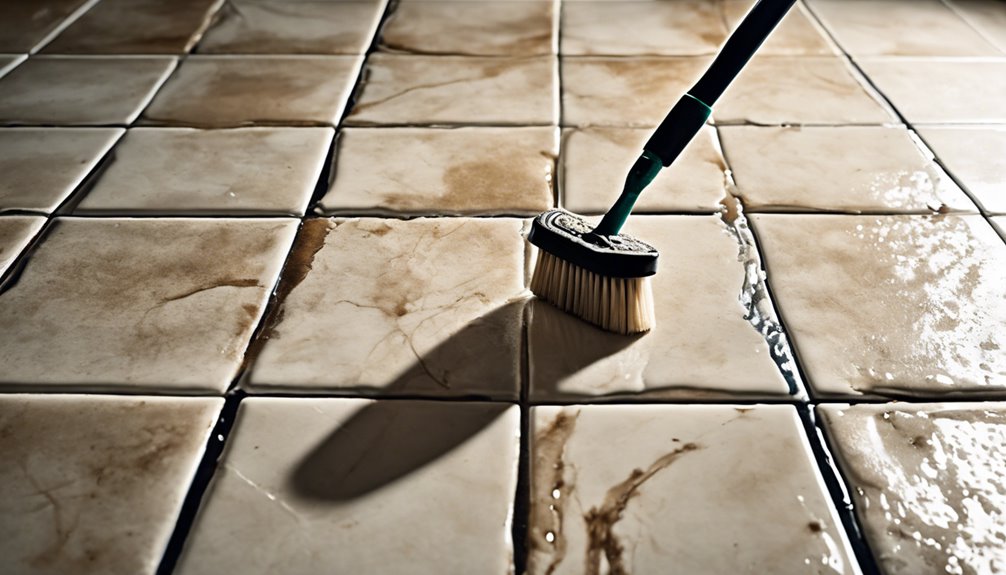

To clean your floor grout, start by mixing equal parts baking soda and vinegar to create a powerful cleaning paste. Apply it to the grout lines and let it sit for about 10-15 minutes. Then, scrub with an old toothbrush to lift stains. For tough spots, consider using a hydrogen peroxide paste. You can also use a steam cleaner for deep cleaning. Remember to rinse thoroughly with water afterward. Regular maintenance is essential, so seal the grout periodically and address spills promptly to prevent future stains. There's plenty more you can learn to keep your grout looking fresh and clean.
Understanding Grout Composition
Grout, often overlooked, plays a crucial role in tile installations by filling the gaps between tiles and providing structural integrity. Understanding grout composition is fundamental for choosing the right grout types for your project. There are mainly two types: cement-based and epoxy grout. Cement-based grout is porous, making it less durable but easier to apply, while epoxy grout offers superior strength and resistance to stains and moisture, enhancing grout durability. When selecting grout, consider where you'll use it; high-moisture areas like bathrooms benefit from epoxy, while dry areas can use cement-based options. By understanding these differences, you can guarantee your tile installation withstands wear and tear, allowing you the freedom to enjoy your space without constant upkeep.
Common Grout Stains
What types of stains are most likely to affect your grout? Understanding common grout discoloration causes can help you tackle the issue effectively. Here are a few stains you might encounter:
- Food and grease spills: These can lead to unsightly yellow or brown stains.
- Mold and mildew: Often found in damp areas, these can create dark patches.
- Hard water deposits: Mineral build-up can leave white marks that dull your grout's appearance.
For effective stain removal, you'll need to identify the stain type and use the right cleaning method. Regular maintenance and prompt attention to spills can keep your grout looking fresh and clean. Don't let stubborn stains take away your freedom to enjoy your space!
Essential Cleaning Supplies
To tackle floor grout cleaning effectively, you'll need a few essential supplies. This includes common cleaning products like baking soda and vinegar, as well as some DIY solutions that can save you money. Knowing the right tools and materials can make your grout cleaning process much more efficient and satisfying.
Common Cleaning Products
While you might think that any cleaner will work on floor grout, using the right products can make a significant difference in effectiveness and ease. Opting for eco-friendly options not only helps your grout but also protects the environment. Here are some common cleaning products you might consider:
- Baking Soda and Vinegar: A powerful natural alternative that cuts through grime.
- Oxygen Bleach: An effective stain remover that's safer than chlorine bleach.
- Castile Soap: A biodegradable soap that's gentle yet effective for regular cleaning.
DIY Solutions and Tips
Although maintaining clean grout might seem intimidating, having the right DIY solutions and essential cleaning supplies can simplify the process considerably. Here's a quick guide to help you gather what you need for effective stain removal, including eco-friendly options:
| Supply | Purpose | Eco-Friendly Option |
|---|---|---|
| Baking Soda | Scrubbing and deodorizing | Combine with vinegar |
| Vinegar | Disinfecting and cleaning | Use in a diluted solution |
| Hydrogen Peroxide | Stain removal | Mix with baking soda |
| Old Toothbrush | Scrubbing hard-to-reach areas | Recycle an old one |
| Spray Bottle | Easy application | Reuse any existing spray bottle |
With these supplies in hand, you're ready to tackle that grout with confidence!
DIY Cleaning Solutions
Creating your own DIY cleaning solutions for floor grout can be both effective and budget-friendly. By using natural ingredients, you can create powerful, effective mixtures that tackle grime without harsh chemicals. Here are three simple recipes to try:
- Baking Soda and Vinegar: Combine equal parts baking soda and vinegar for a fizzing action that lifts dirt.
- Hydrogen Peroxide Paste: Mix hydrogen peroxide with baking soda to form a paste; apply it directly to stained grout.
- Dish Soap Solution: Blend warm water with a few drops of dish soap for a gentle yet effective cleaner.
These DIY options allow you to customize your cleaning routine while keeping your home safe and fresh. Enjoy the satisfaction of a clean space with these simple, natural solutions!
Commercial Grout Cleaners
When it comes to cleaning floor grout, commercial grout cleaners offer a variety of options tailored to different needs. You'll find specialized formulas designed for tough stains, mold, and mildew, each with specific application techniques for ideal results. Understanding the types available and how to use them effectively can make a significant difference in restoring your grout's appearance.
Types of Grout Cleaners
If you're looking to tackle stubborn grout stains, commercial grout cleaners can be a game changer. These products offer powerful solutions that can quickly restore your grout's original look. When choosing a cleaner, consider the following options:
- Heavy-duty cleaners: Ideal for tough stains, these contain potent chemicals for quick results.
- Natural cleaners: These eco-friendly options use plant-based ingredients, making them safer for your home and the environment.
- Foam cleaners: They cling to grout surfaces, allowing for deeper penetration and effective cleaning.
Always read labels to verify you're selecting the right product for your needs. While commercial options are effective, remember to balance them with natural cleaners for a more sustainable approach to your cleaning routine.
Application Techniques Explained
After selecting the right commercial grout cleaner for your needs, knowing how to apply it effectively is key to achieving the best results. Here are some application methods and cleaning techniques to take into account:
| Method | Steps | Tips |
|---|---|---|
| Spray & Scrub | Spray cleaner on grout, let it sit, scrub with a brush. | Use a stiff-bristle brush for tough stains. |
| Soak & Wipe | Apply cleaner, let it soak for 10-15 mins, then wipe. | Ideal for less dirty grout. |
| Steam Cleaning | Use a steam cleaner on grout lines. | Great for deep cleaning without chemicals. |
Step-by-Step Cleaning Process
Cleaning floor grout doesn't have to be an intimidating task, and following a simple step-by-step process can make it manageable. Start by gathering your supplies: a stiff brush, a bucket, and a suitable cleaning solution. Then, follow these steps:
- Prepare: Mix the cleaning solution in the bucket according to the manufacturer's instructions.
- Scrub: Apply the solution to the grout and scrub in circular motions. Be sure to focus on areas with heavy stains.
- Rinse and Seal: Rinse with clean water and allow it to dry before applying grout sealing for long-lasting protection.
For best results, maintain a regular cleaning frequency to keep grout looking fresh and prevent build-up. Your efforts will pay off with cleaner, brighter floors!
Preventative Maintenance Tips
Maintaining clean floor grout is easier when you incorporate preventative measures into your routine. Start by applying grout sealing every six months to protect against stains and moisture. This simple step creates a barrier, making it harder for dirt to penetrate. Additionally, schedule regular inspections of your grout lines. Look for any signs of wear, discoloration, or damage, and address them promptly. If you notice cracks or gaps, consider re-grouting to keep your floors looking fresh. Finally, be mindful of spills; clean them up immediately to prevent staining. By taking these proactive measures, you'll maintain your grout's integrity and beauty, giving you the freedom to enjoy your space without the worry of extensive cleaning down the line.
When to Seek Professional Help
How can you tell when it's time to call in the professionals for your floor grout? If you notice any signs of damage that regular cleaning can't fix, it might be time. Here are a few indicators to take into account:
- Persistent stains that won't budge
- Cracked or loose grout that needs repair
- Mold or mildew growth that's hard to eliminate
These issues often require specialized tools and expertise that are beyond typical DIY methods. Professional services can restore your grout to its original condition while ensuring it's properly sealed against future damage. So, if you find yourself overwhelmed or your efforts aren't yielding results, don't hesitate to seek help. Your floors will thank you for it!
Frequently Asked Questions
How Often Should I Clean My Floor Grout?
You should aim for regular grout maintenance to keep your floors looking fresh. A good cleaning frequency is every three to six months, depending on foot traffic and spills. If you notice discoloration or stains, don't wait—clean it up sooner. Regularly mopping can help, but deeper cleans will keep mold and mildew at bay. By staying on top of it, you'll enjoy a cleaner, more inviting space without the hassle later on.
Can I Use Bleach on Colored Grout?
Bleach can be a brutal choice for colored grout; it might strip away that stunning shade you love. Instead, consider bleach alternatives like vinegar or baking soda, which clean effectively without damaging your grout's hue. When tackling tough stains, make a paste with baking soda and water, applying it gently. Always test any cleaner in a small area first to guarantee it won't cause any color catastrophe. Your grout deserves the best care!
Will Cleaning Grout Damage My Tiles?
Cleaning grout won't usually damage your tiles, but it depends on the grout cleaning techniques you use and the tile material considerations. For instance, harsh chemicals can harm softer tiles like limestone or marble. Instead, opt for gentle methods, such as a baking soda paste or vinegar solution, which are effective yet safe. Always test a small area first to guarantee your tiles remain intact while you tackle that pesky grout!
Is It Safe to Steam Clean Grout?
Yes, it's safe to steam clean grout! Steam cleaning can effectively remove dirt and stains without harsh chemicals, making it a great option for those who want a natural cleaning method. The high temperature of the steam penetrates the grout, loosening grime and bacteria. Plus, it can help maintain the integrity of your tiles by preventing mold growth. Enjoy the benefits of a cleaner, healthier space with this efficient cleaning technique!
How Do I Remove Mildew From Grout?
Mildew management matters! To remove mildew from grout, consider using natural cleaning solutions like vinegar or baking soda. Simply mix vinegar with water, spray it on the affected areas, and scrub with a brush. For stubborn spots, a paste of baking soda and water can do wonders. Don't forget mildew prevention methods like ensuring proper ventilation and regularly cleaning your grout to maintain its freshness. You'll enjoy a cleaner, healthier space with these simple strategies!