

Have you ever felt the thrill of discovering a hidden gem in the world of programming? Imagine uncovering a feature in Python that could simplify your coding process and make your scripts run more efficiently.
You’re about to dive into a concept that might just be the secret weapon you need in your coding toolkit: Floor Division. But what exactly is Floor Division in Python, and why should you care? This article is here to answer these questions and more, guiding you through the intricacies of this valuable operation.
You’ll learn how Floor Division can transform your approach to handling numbers and calculations, making your code not just functional, but optimal. Whether you’re a seasoned developer or a curious beginner, understanding Floor Division will empower you to write cleaner, faster, and more precise code. Stick with us, and you’ll gain a new perspective on how this simple operation can have a big impact on your programming projects.
Basics Of Floor Division
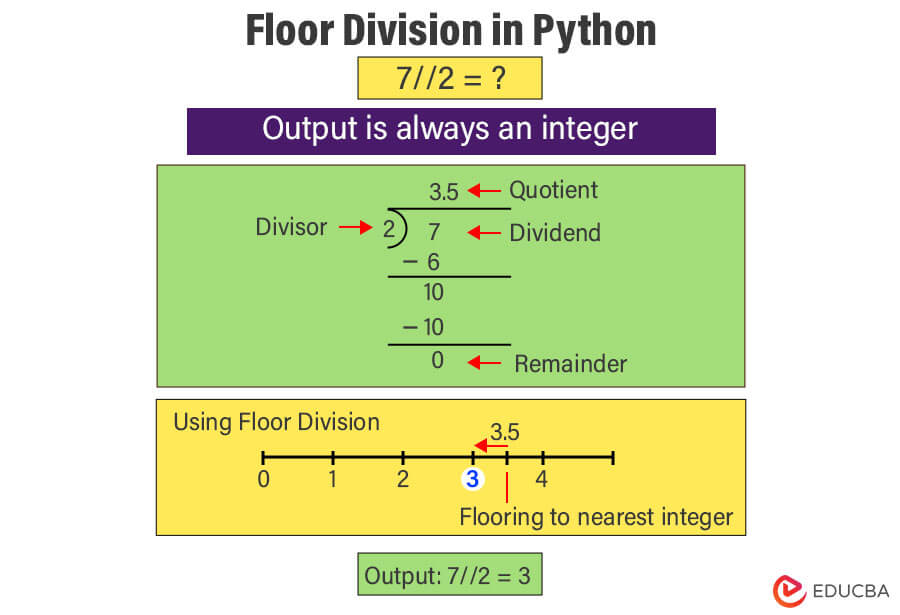
Floor division is a math operation in Python. It divides numbers and rounds down the result. The symbol for floor division is //. It gives the largest whole number. For example, 7 // 2 equals 3. Regular division uses / symbol. Regular division gives a decimal answer. Floor division keeps numbers simple. It is helpful in coding. It helps when you need whole numbers only.
Floor division is different from regular division. Regular division could be tricky for kids. Floor division is easy to learn. It is useful for making games. It helps in counting steps or moves. Floor division is fun to use. Try it with friends. Learn and explore Python with floor division.
How Floor Division Works
Floor division in Python is a simple math operation. It uses the double slash symbol //. This operation divides two numbers and then rounds down the result. For example, 7 // 3 equals 2. The result is always an integer.
This is different from normal division. Normal division uses a single slash /. It gives you a decimal number. Floor division only gives whole numbers. This is useful in many coding tasks. You can easily find out how many times one number fits into another.
Syntax And Usage
Floor division in Python uses the `//` operator. It divides two numbers and returns the largest whole number. This number is less than or equal to the result. For example, `7 // 3` will give you `2`. The operation ignores anything after the decimal point.
Using floor division is simple. It works with both integers and floats. The operator makes calculations easy. It’s helpful in situations where a whole number is needed. Floor division is different from regular division. Regular division uses `/` and gives precise results. But floor division rounds down the result.
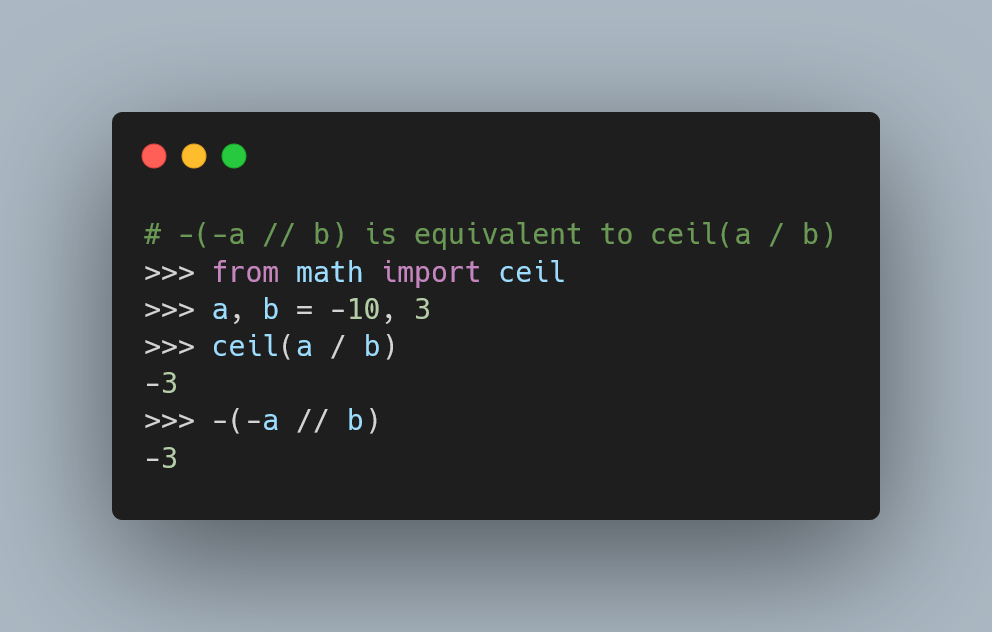
Python handles negative numbers differently. With negative numbers, it rounds away from zero. For instance, `-7 // 3` results in `-3`. Understanding this rule is essential.
Practical Examples
Floor division divides two numbers and rounds down the result. It uses the // operator. For example, 7 // 2 equals 3. This is because 7 divided by 2 equals 3.5. The floor division removes the decimal part, leaving 3. It is useful for dividing items into equal groups.
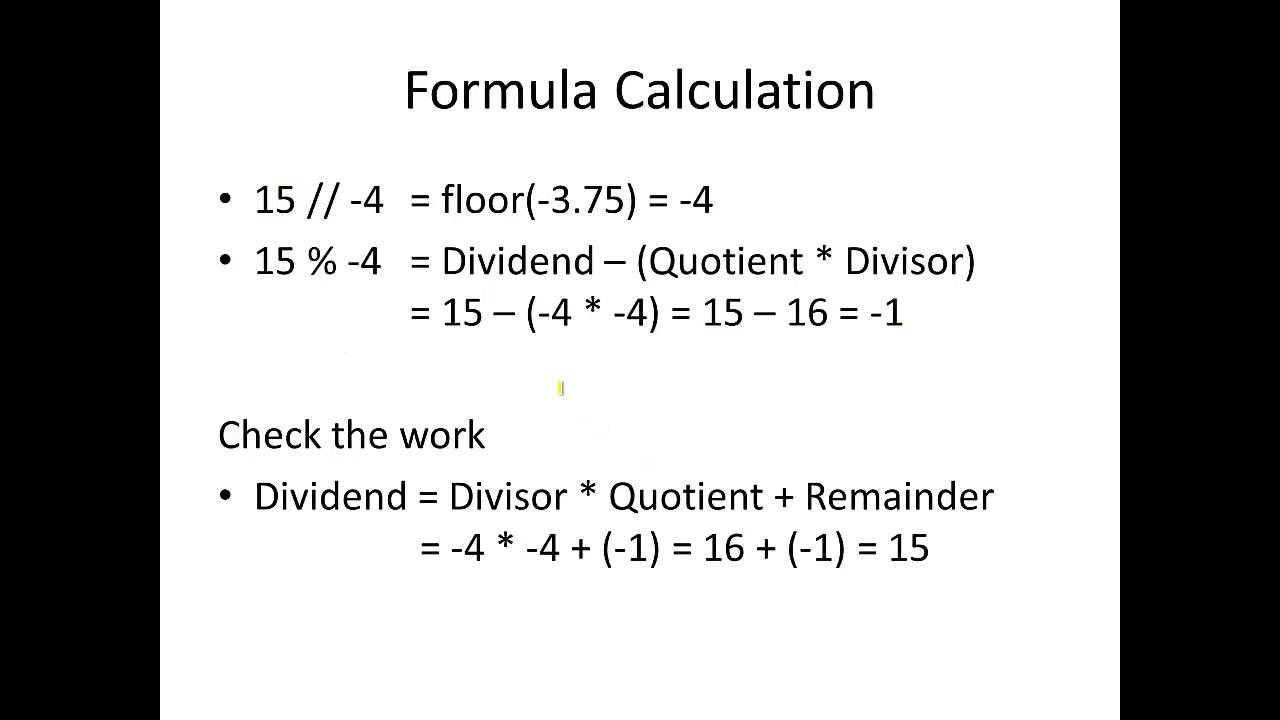
Floor division works with negative numbers too. For instance, -7 // 2 equals -4. This is because -7 divided by 2 equals -3.5. The floor division rounds down to the nearest whole number, -4. It helps in scenarios where negative values need rounding.
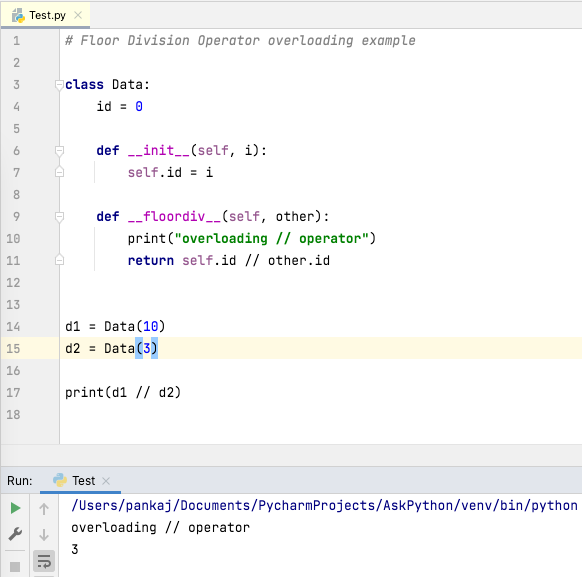
Floor division is helpful in loops. It can manage iterations. If you have 10 items, and you want groups of 3, use 10 // 3. It gives 3 groups. This operation simplifies loops and grouping tasks.
Handling Different Data Types
Python uses floor division with the // operator. This operation divides two numbers. It then rounds down to the nearest whole number. This is called the floor of the division.
Floor division works with different data types. The most common types are integers and floats. When both numbers are integers, the result is also an integer. If one or both are floats, the result is a float.
Let’s see an example. 5 // 2 gives 2. But 5.0 // 2 gives 2.0. This shows how data types affect results. Understanding this helps avoid mistakes in your code.
Common Pitfalls
Floor division in Python can be tricky. It divides and then rounds down. This means it always goes to the next whole number down. For example, 5 // 2 results in 2, not 2.5. People sometimes forget about this rounding down. This can cause mistakes in code. Negative numbers add another twist. -5 // 2 gives -3. Not -2.5. Always check your results with negative numbers. Mixing data types can also confuse. Floor division on floats might not work as expected. Always use the correct types. Pay attention to these points to avoid errors.
Optimization Techniques
Floor division in Python is fast. But, it can be faster. Use these techniques for better speed.
Use integer division instead of floating-point. This saves time. Use // for floor division. It is quicker than /. This is because integers are simpler for computers.
Pre-calculate values if they repeat often. This reduces the number of operations. Store results in a variable. This makes the code run faster. Use math.floor() for more control. It helps when working with complex numbers.
Optimize loops with floor division. Use it to find even numbers. Or to check if a number is odd. This reduces extra steps in code. Avoid unnecessary calculations. Simplify your code. It saves both time and resources.
Applications In Real-world Scenarios
Floor division in Python simplifies calculations by dividing numbers and rounding down to the nearest whole number. This feature proves useful in real-world applications like calculating discounts, determining event counts, or planning resources efficiently, ensuring accurate results without decimals.
Financial Calculations
Floor division helps in financial calculations. It rounds down to nearest whole number. Banks use it to calculate monthly payments. This ensures customers pay the right amount. It avoids small errors in decimals. Accountants also use it for budgets. They divide total money into parts. Each part is exactly equal without fractions. This keeps money clear and simple.
Game Development
In games, floor division is useful. It calculates player levels. Players reach new levels after gaining points. Points are divided by a number. The result is always a whole number. This keeps levels fair for everyone. It also helps in timer settings. A game timer counts down in whole seconds. This makes games easier to play and understand.
Frequently Asked Questions
What Is Floor Division In Python?
Floor division in Python uses the ‘//’ operator to divide numbers. It returns the largest integer less than or equal to the division result. This is especially useful when you need integer results without rounding. It’s commonly used in scenarios requiring precise division results, such as pagination or loop iterations.
How Does Floor Division Differ From Regular Division?
Floor division differs from regular division by returning the largest integer less than or equal to the result. Regular division returns a floating-point number. Floor division is useful when integer results are required. It ignores any remainder, unlike regular division that provides decimal values.
When Should You Use Floor Division?
Use floor division when you need integer results from division. It’s ideal for calculations where fractional values aren’t needed. Examples include pagination or distributing items evenly. It ensures precise control over the division outcome by discarding any fractional part.
Can Floor Division Handle Negative Numbers?
Yes, floor division can handle negative numbers. It always rounds towards the smallest integer. This means results might be more negative than expected. For example, `-7 // 2` results in `-4`. This behavior is consistent with Python’s handling of negative integers in arithmetic operations.
Conclusion
Understanding floor division in Python opens up new coding possibilities. It calculates the largest whole number from a division. This method is helpful for tasks needing integer results. Python’s floor division uses “//” to perform this operation. It simplifies calculations, avoiding complex fractions.
Floor division is efficient and widely used in programming. Mastering this concept can enhance your coding skills. Practice with examples to get comfortable. Boost your Python knowledge with floor division. It’s simple, yet powerful. Keep exploring and learning Python’s versatile features.
Happy coding!