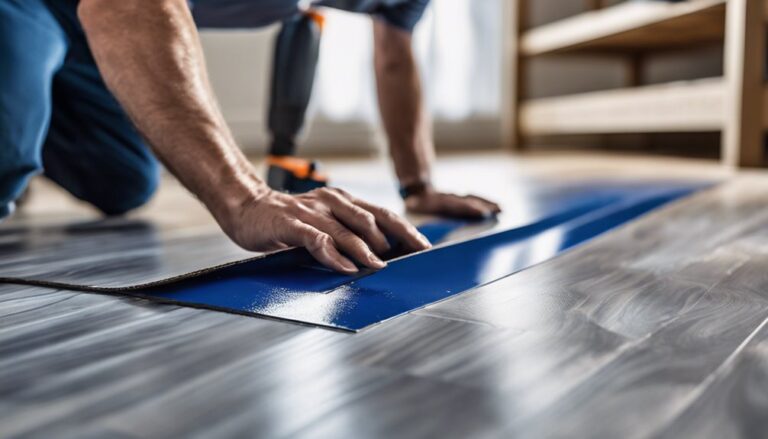
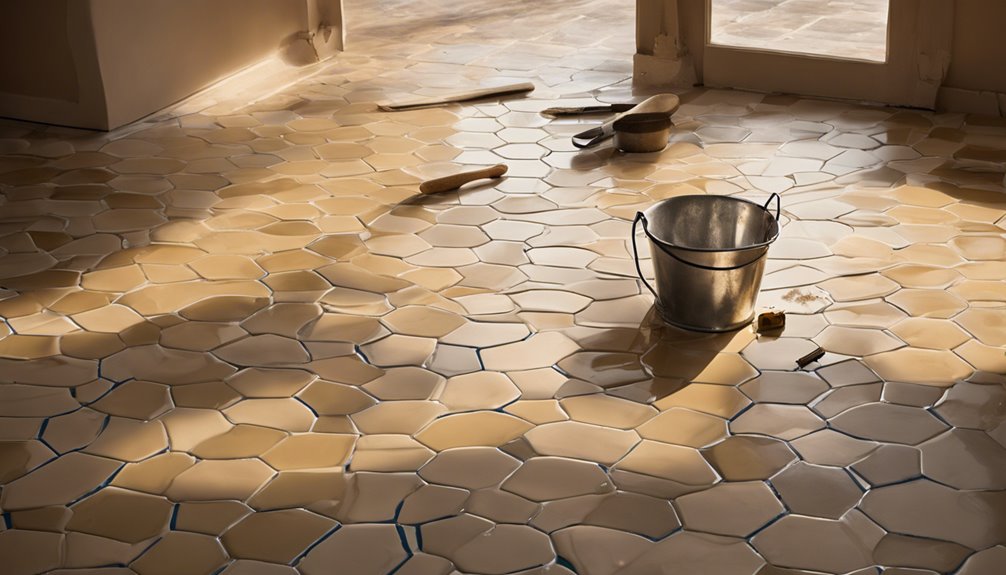

To install ceramic floor tile, start by gathering essential tools and materials such as a tile cutter, trowel, spacers, adhesive, and grout. Verify your subfloor is clean, dry, and level; consider a moisture barrier if necessary. Plan your tile layout and cut the tiles as needed for a precise fit. Apply adhesive, lay down the tiles, and space them evenly. Once set, grout the joints carefully and remove excess with a damp sponge. Allow the grout to cure before sealing it. If you follow these steps accurately, you'll achieve a professional finish that enhances your space. More awaits you ahead.
Gather Necessary Tools and Materials
Before you begin the installation process, it's essential to gather all necessary tools and materials to guarantee a smooth workflow. Start by selecting the right tile types, such as ceramic or porcelain, depending on your design and durability needs. You'll need a tile cutter, trowel, spacers, and a level to ascertain accuracy. Don't forget adhesive, grout, and a mixing bucket. Installation tips include laying out tiles in a dry fit to visualize the final arrangement, which helps prevent mistakes. Having a rubber mallet can assist in adjusting tiles without damaging them. Finally, confirm you have safety gear like knee pads and goggles. With everything prepared, you can confidently tackle the installation ahead.
Prepare the Subfloor
To guarantee a successful tile installation, you must prepare the subfloor properly, as a solid foundation is essential for the longevity of your ceramic tiles. Start by evaluating the subfloor types: concrete, plywood, or cement board. Each requires specific preparation. Make sure the surface is clean, dry, and level; any imperfections can lead to tile cracking. If your subfloor is prone to moisture, install a moisture barrier to protect the tiles and adhesive. This barrier will prevent water damage, making certain your tiles adhere properly. Check for any loose boards or tiles, and secure them before proceeding. Following these steps will create a reliable base, allowing your ceramic tiles to perform effectively and last for years.
Plan Your Tile Layout
With a solid subfloor in place, the next step involves planning your tile layout. This vital phase guarantees your installation looks professional and functions well. Consider these three key elements:
- Layout Patterns: Choose from common patterns like straight lay, diagonal, or herringbone that best suit your space.
- Tile Spacing: Determine the grout line width, typically 1/16 to 1/8 inch, to maintain consistency and aesthetics.
- Centering: Find the focal point of the room and work outwards to avoid awkward cuts at the edges.
Cut the Tiles
To cut tiles accurately, you'll need specific tools like a tile cutter or wet saw, along with measuring and marking devices. Start by measuring each tile and marking your cuts clearly to guarantee precision. Using the right techniques will help you achieve clean, even cuts that fit seamlessly into your layout.
Tools Required for Cutting
When cutting ceramic floor tiles, having the right tools is essential for achieving clean, precise edges. Your tool selection will directly impact the quality of your tile cutting. Here are three must-have tools:
- Tile Cutter: A manual or electric tile cutter allows for straight cuts and is perfect for most tile sizes.
- Wet Saw: For intricate cuts or larger tiles, a wet saw provides a smooth finish and reduces dust.
- Tile Nippers: These are great for small adjustments and irregular cuts, ensuring your tiles fit perfectly in tight spaces.
Investing in these tools will enhance your tile cutting experience and lead to professional-looking results. Get ready to transform your space with confidence!
Measuring and Marking Tiles
After gathering the right cutting tools, the next step involves accurately measuring and marking your tiles. Employ precise measuring techniques like using a tape measure and square for straight lines. Once you've determined your cuts, apply effective marking strategies. A pencil or tile marker works well for clear visibility.
| Tile Size | Measurement Technique | Marking Strategy |
|---|---|---|
| 12×12 inches | Tape Measure | Pencil for clarity |
| 6×24 inches | Square for angles | Marker for visibility |
| 18×18 inches | Level for alignment | Chalk for visibility |
| Custom Size | Combination of tools | Fine-tip marker |
Taking your time during this stage guarantees accurate cuts, giving you the freedom to create a seamless installation.
Techniques for Accurate Cuts
While you may feel confident with your measurements, achieving accurate cuts requires specific techniques tailored to your chosen tile type. Here are three effective methods for cutting tiles that help maintain your tile patterns and meet your design vision:
- Tile Cutter: For straight cuts, use a manual tile cutter. Score the tile and snap it along the line for a clean edge.
- Wet Saw: For intricate cuts or cutting angles, a wet saw minimizes dust and provides precision. It's ideal for larger tiles.
- Nippers: When working on curves or irregular shapes, tile nippers allow you to chip away small pieces for perfect fitment.
Mastering these techniques will guarantee your cuts are precise, enhancing the overall appearance of your installation.
Install the Tiles
Begin by spreading the adhesive evenly on the floor using a notched trowel, ensuring a consistent layer that promotes strong adhesion. Once you've prepared the surface, place your first tile at the intersection of your layout lines. Press it down firmly and wiggle it slightly to secure it in the adhesive. Continue laying tiles, maintaining consistent gaps for grout, using spacers as needed. Apply the tile adhesive in manageable sections to prevent it from drying out before you lay the tiles. Follow proper installation techniques, ensuring each tile is level and aligned with the others. Regularly check for alignment as you progress to maintain the overall aesthetic. Avoid stepping on freshly laid tiles until the adhesive fully cures.
Grout and Finish the Installation
Once all the tiles are securely placed and the adhesive has cured, it's time to grout the installation. Begin with the grout application, ensuring you choose a color that complements your tiles. Use a rubber float to push the grout into the joints, working diagonally across the tiles to avoid displacing them.
Here are three key steps for smooth finishing touches:
- Remove Excess Grout: Wipe away any excess grout from the tile surface with a damp sponge before it hardens.
- Allow to Cure: Let the grout cure for the recommended time, typically 24-48 hours, to achieve maximum strength.
- Seal the Grout: After curing, apply a grout sealer to protect against stains and moisture.
With these steps, your ceramic floor tile installation will be complete!
Frequently Asked Questions
How Long Does It Take to Install Ceramic Floor Tile?
When tackling a project, you might wonder about the installation timeline. For ceramic floor tile, the project duration can vary based on factors like room size, tile type, and your experience. Typically, you could expect to spend one to three days for installation, including preparation, laying the tiles, and grouting. If you're organized and have a plan, it can go smoothly, allowing you to enjoy your new flooring sooner rather than later.
Can I Install Tile Over Existing Flooring?
Yes, you can install tile over existing flooring, but it depends on the type of flooring options you currently have. If the surface is clean, structurally sound, and not too thick, you can proceed with tile installation. However, you'll need to verify the original flooring won't hinder adhesion or create uneven surfaces. Always check local building codes and guidelines to guarantee a successful and durable installation for your new tile.
What Type of Grout Should I Use?
When choosing grout, you need to take into account your tile's spacing. If your joints are wider than 1/8 inch, sanded grout's your best bet, as it provides strength and minimizes cracking. For narrower joints, unsanded grout is ideal, offering a smooth finish and easier application. Both types come in various colors, so you can match your tile perfectly. Make sure to follow manufacturer instructions for mixing and curing to achieve the best results.
How Do I Clean Ceramic Tiles After Installation?
After installing your ceramic tiles, you'll want to make certain they're cleaned properly. Use a soft broom or vacuum for dust and debris removal. For deeper cleaning, mix a pH-neutral cleaner with warm water, applying it with a mop. Avoid harsh chemicals that could damage the surface. Regular maintenance tips include wiping up spills promptly and using coasters under heavy objects to prevent scratches. These cleaning techniques will keep your tiles looking great for years.
Is Professional Installation Recommended for Beginners?
If you're a beginner, professional installation's often recommended. DIY tips can help, but you might face installation challenges like uneven surfaces or precise cutting. Professionals have the experience to guarantee a flawless finish. While tackling it yourself can be rewarding, consider the time, tools, and skills required. If you're confident in your abilities and ready for the commitment, go for it! Just be aware of the potential obstacles ahead.