
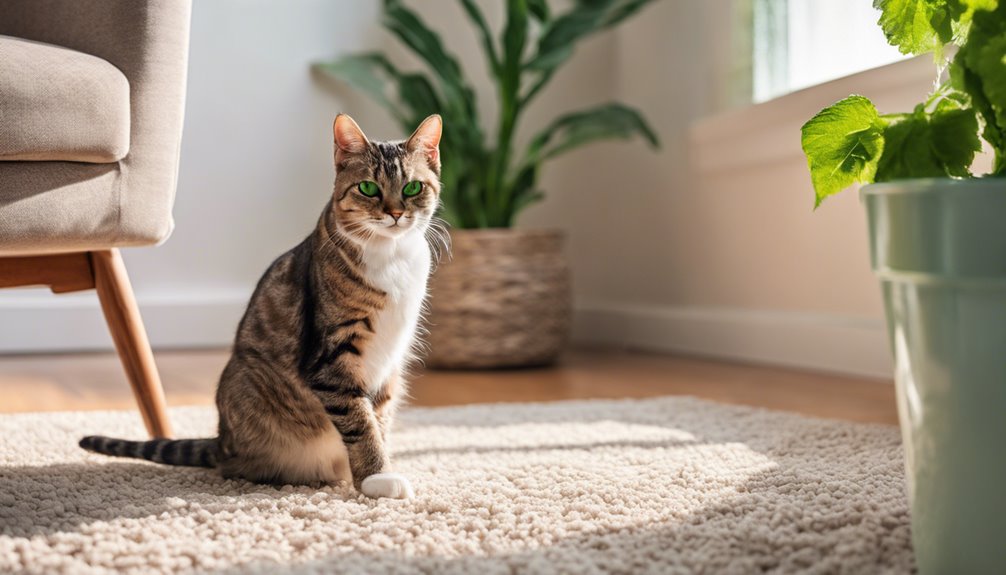

To stop your cat from peeing on the floor, first, rule out any medical issues by consulting a veterinarian. Cats may also react to stressors, so monitor environment and routine changes that could affect their behavior. Verify you have enough clean litter boxes placed in quiet areas, and use a litter that your cat prefers. Clean any accidents thoroughly with enzymatic cleaners to prevent repeat visits to those spots. Consider applying deterrents to areas where they frequently go. By taking these steps, you can create a more comfortable environment for your cat. More insights are just a moment away.
Understand the Behavior
Understanding why your cat is peeing on the floor is essential to addressing the issue effectively. Feline instincts often drive behaviors that can be perplexing to us. It's vital to identify potential behavioral triggers, such as changes in the environment, stress, or territorial disputes. Cats may not always communicate their feelings directly, but their actions speak volumes. For instance, a new pet, a recent move, or even alterations in your routine can upset your cat's sense of security. Observing your cat's body language and habits can provide valuable insights. By understanding these underlying motivations, you're better equipped to create a safe and comforting environment that respects your cat's needs, ultimately guiding them back to appropriate elimination habits.
Rule Out Medical Issues
If your cat is peeing on the floor, it's vital to rule out any medical issues first. Visiting the veterinarian can help identify potential health problems, while monitoring your cat's urination patterns can provide valuable insights. Addressing any underlying medical concerns is essential for both your cat's well-being and your peace of mind.
Visit the Veterinarian
Before diving into behavioral modifications, it's important to consult with a veterinarian to rule out any underlying medical issues. A veterinary checkup can provide a thorough health assessment, ensuring your cat isn't suffering from conditions like urinary tract infections or kidney problems. These issues can lead to inappropriate urination, and addressing them is vital for your cat's well-being.
Here's a quick reference table to bear in mind during your visit:
| Symptom | Possible Issue |
|---|---|
| Frequent urination | Urinary tract infection |
| Straining to urinate | Bladder stones |
| Blood in urine | Kidney disease |
| Lethargy | Systemic illness |
| Changes in appetite | Metabolic disorders |
Taking these steps can help you understand your cat's needs better.
Monitor Urination Patterns
After verifying there are no underlying medical issues, it's important to closely monitor your cat's urination patterns. Keep track of the urination frequency and note any behavioral changes. Is your cat peeing more or less than usual? Changes in urination can signal stress, anxiety, or other environmental factors affecting your pet's well-being. Consider keeping a journal to document these observations, as patterns may help you identify triggers or the need for adjustments in your cat's environment. If your cat's urination habits shift considerably, revisit your veterinarian for further evaluation. By being attentive to these details, you can better understand your cat's needs and ensure a happier, healthier home for both of you.
Clean Up Properly
Cleaning up properly is essential to prevent your cat from returning to the same spot. Start by using effective cleaning supplies designed for pet messes. First, blot the area with paper towels to absorb as much liquid as possible. Then, apply an enzymatic cleaner specifically formulated for odor removal. These cleaners break down the substances in cat urine, effectively eliminating lingering scents that might entice your cat to revisit the area.
After cleaning, verify the spot is thoroughly dried to avoid any residual moisture. If your cat has a favorite spot, consider placing a deterrent there, like a mat or a pet-safe spray. Consistent, careful cleaning helps create a more inviting environment for your cat and encourages better litter box habits.
Provide Enough Litter Boxes
To help prevent your cat from peeing on the floor, it's essential to provide enough litter boxes. Ideally, you should have one box per cat, plus an extra, and consider their placement in quiet, accessible areas. Additionally, the type of litter you choose can greatly impact your cat's willingness to use the boxes, so it's worth experimenting to find what they prefer.
Ideal Number of Boxes
Providing enough litter boxes is essential for preventing your cat from peeing on the floor. A common guideline is to have one box for each cat plus one extra. This guarantees that your feline friend always has access to a clean space, reducing the likelihood of accidents. Box maintenance tips, like regularly scooping and changing the litter, keep the boxes inviting. You should also consider box accessibility factors—place them in quiet, easily reachable areas, away from food and water. This way, your cat feels secure and comfortable using them. By meeting your cat's needs for space and cleanliness, you'll promote good habits and a more harmonious living environment for both of you.
Box Placement Strategy
Even with the right number of litter boxes, their placement can greatly impact your cat's bathroom habits. You need to take into account box location and guarantee litter accessibility. Here are some tips to help:
- Place boxes in quiet, low-traffic areas to reduce stress.
- Avoid placing boxes near food and water dishes.
- Confirm each box is easily accessible, especially for older or disabled cats.
- Take into account multiple floors if you live in a multi-story home.
Litter Type Consideration
Choosing the right type of litter can profoundly influence your cat's willingness to use their litter box. Cats have unique litter preferences, and experimenting with different types can lead you to the ideal choice. Some cats prefer clumping litter for its consistency, while others might gravitate toward non-clumping or natural options. Pay attention to your cat's reactions; if they consistently avoid the box, it may be time to reassess the litter type. Additionally, providing enough litter boxes—ideally one more than the number of cats—can alleviate territorial disputes and encourage proper use. By aligning their litter environment with their preferences, you'll foster a more comfortable and inviting space for your cat, helping to prevent accidents on the floor.
Choose the Right Litter
Finding the right litter can make a significant difference in your cat's bathroom habits. Cats can be particular about their litter box preferences, so experimenting with different litter material options is essential. Here are some popular choices to contemplate:
- Clumping clay litter for easy cleanup
- Natural and biodegradable options for eco-friendliness
- Crystal litter for odor control and low dust
- Scented versus unscented varieties based on your cat's preference
Establish a Routine
Establishing a routine can make a significant difference in your cat's behavior, helping to reduce accidents around the house. By setting regular feeding times, maintaining a consistent litter box schedule, and incorporating daily playtime sessions, you'll create a sense of stability that your cat will appreciate. This structured approach not only promotes good habits but also strengthens your bond with your feline friend.
Set Regular Feeding Times
While it might seem simple, setting regular feeding times for your cat can greatly reduce instances of inappropriate urination. By establishing a consistent routine, you'll help your feline friend feel more secure and less stressed. Here are a few benefits of setting a feeding schedule:
- Helps monitor food intake and weight
- Promotes a healthy digestive system
- Reduces anxiety by creating predictability
- Encourages a regular bathroom routine
When you set feeding times, your cat will learn when to expect meals, making it easier for you to anticipate bathroom breaks. This routine fosters a sense of stability, ultimately leading to fewer accidents in the house. Consistency is key, so stick to your schedule to support your cat's well-being.
Consistent Litter Box Schedule
A consistent litter box schedule is essential for helping your cat feel comfortable and secure in their environment. By establishing a routine, you're promoting a sense of stability that can reduce stress and encourage proper behavior. Make sure to set specific times for litter box maintenance, which includes scheduled cleaning to keep it fresh and inviting. Cats are creatures of habit, so regularity helps them associate the box with a safe space for their needs. Additionally, monitor their usage patterns; if you notice changes, it might indicate a problem. Consistency in cleaning and maintenance not only keeps the box odor-free but also reinforces the idea that it's the designated area for your cat's business.
Daily Playtime Sessions
Creating a routine that includes daily playtime sessions can greatly benefit your cat's overall well-being. Regular interaction through play not only strengthens your bond but also addresses behavioral issues, such as inappropriate urination.
Consider incorporating these elements into your routine:
- Interactive toys that challenge your cat mentally and physically
- Structured playtime at the same time each day for consistency
- Variety in activities to keep your cat engaged and excited
- Social engagement by joining in on the fun, enhancing your connection
Reduce Stressful Triggers
To effectively stop your cat from peeing on the floor, it is crucial to identify and reduce stressful triggers in their environment. Cats are sensitive creatures, and environmental changes, such as moving furniture or new pets, can disrupt their sense of security. Understanding behavioral triggers like loud noises or sudden changes in routine also plays a critical role.
Here's a quick reference table to help you identify these triggers:
| Trigger Type | Examples | Solutions |
|---|---|---|
| Environmental Changes | New furniture, moving homes | Gradual introductions |
| Behavioral Triggers | Loud noises, new pets | Create a calm environment |
| Social Changes | New family members | Proper introductions |
| Routine Changes | Changed feeding times | Stick to a schedule |
Create a Safe Space
After addressing potential stressors, establishing a safe space for your cat can greatly enhance their comfort and security. Creating a safe environment allows your feline friend to feel at ease and reduces the likelihood of unwanted behaviors, like peeing on the floor.
Consider these elements when designing their safe space:
- Cozy bedding: Provide a soft, comfortable area for them to rest.
- Hideaway spots: Offer secluded spaces where they can retreat and feel secure.
- Familiar scents: Use blankets or toys that carry their scent to promote comfort.
- Interactive toys: Engage their mind and alleviate boredom, preventing stress.
Use Deterrents Effectively
While it's essential to understand the reasons behind your cat's behavior, using effective deterrents can help discourage them from peeing on the floor. One way to do this is by applying deterrent sprays specifically designed for pets. These products often contain natural ingredients that repel cats without causing harm. You can also explore scent repellents, as many cats dislike certain smells, such as citrus or vinegar. By applying these deterrents around the areas your cat tends to target, you'll create an unwelcoming environment for them. Remember to combine these methods with positive reinforcement, encouraging your cat to use their litter box instead. With patience and consistency, you can help your cat feel secure while keeping your home clean.
Consult a Professional
Have you tried everything to stop your cat from peeing on the floor but still face challenges? It might be time to consult a professional. Experts can provide insight that goes beyond basic advice, helping you understand your cat's behavior more deeply. Consider reaching out if:
- You've ruled out medical issues
- Your cat shows signs of stress or anxiety
- You need help with effective litter training
- You're interested in behavioral therapy options
A professional can guide you through tailored solutions, ensuring your cat feels secure and happy in their environment. Don't hesitate to seek help—sometimes, a fresh perspective can make all the difference in reclaiming your home and your cat's well-being.
Frequently Asked Questions
Can Certain Cat Breeds Be More Prone to Inappropriate Urination?
Imagine a serene home, sunlight filtering through the windows, yet your cat's behavior disrupts that peace. Certain cat breeds can indeed be more prone to inappropriate urination due to their unique behaviors and litter habits. For instance, Siamese and Burmese cats may express anxiety more readily, causing them to stray from their litter box. Understanding these nuances helps you create a supportive environment that nurtures your feline friend's well-being and reduces accidents.
How Can I Tell if My Cat Is Stressed?
To tell if your cat's stressed, observe its body language closely. You might notice flattened ears, a twitching tail, or dilated pupils. Other feline behavioral signs include excessive grooming, hiding, or changes in appetite. If your cat seems more irritable or restless, it could indicate stress. Understanding these cues can help you create a more comforting environment, allowing your cat to feel safe and secure in its home.
Is It Safe to Use Essential Oils Around Cats?
When considering essential oil safety around cats, it's vital to proceed with caution. Many essential oils can be toxic to felines, impacting their health negatively. Always dilute oils and avoid using those like tea tree, citrus, or lavender. If you want to create a calming environment, consider alternative methods like pheromone diffusers. Your cat's well-being should always come first, so it's best to consult a veterinarian before introducing any new products.
What Age Do Cats Typically Stop Developing Litter Box Habits?
Cats typically develop their litter box habits within their first few months of life, reaching significant litter training milestones by around 4 to 6 months. By this age, most kittens have established their preferences and behaviors regarding litter use. Understanding the cat behavior timeline can help you support your kitty in this vital phase, ensuring they feel comfortable and secure in their environment, which ultimately fosters good habits as they grow into adulthood.
Can Changes in My Routine Affect My Cat's Bathroom Habits?
You might think your cat's bathroom habits are set in stone, but routine changes can greatly impact them. Cats thrive on consistency, so if your daily schedule shifts, it can cause stress, leading to litter box issues. Whether it's moving the litter box or altering feeding times, your cat may react by avoiding the box. Being mindful of these changes can help maintain their comfort and encourage proper litter box use.