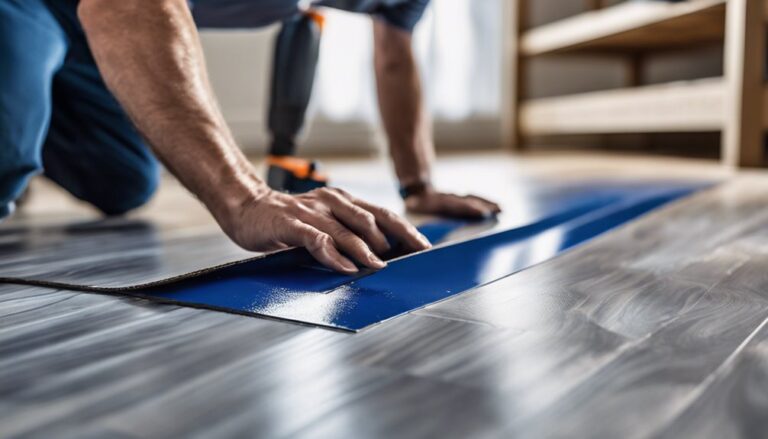
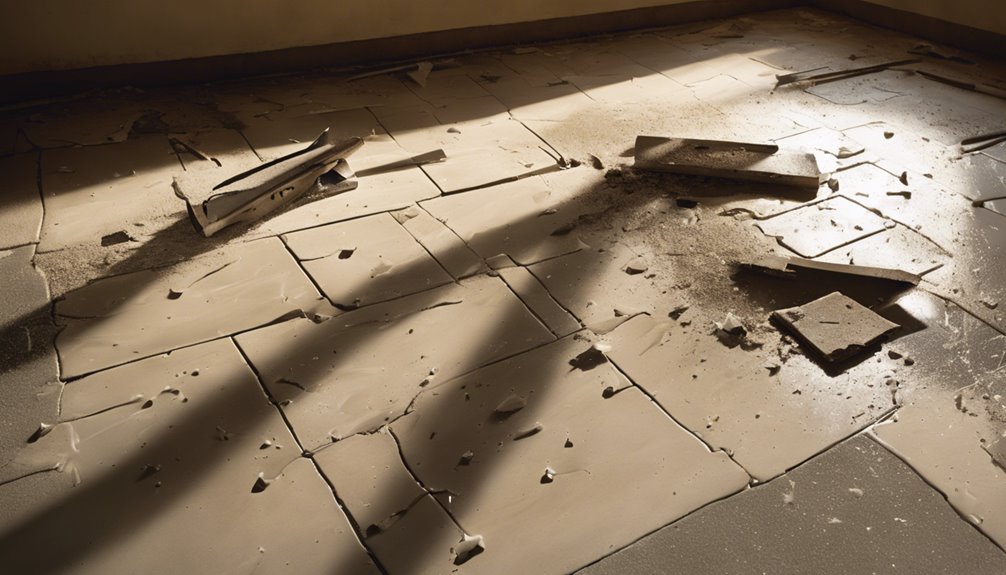

To remove ceramic floor tile, start by gathering tools like a chisel, hammer, utility knife, and pry bar. Clear the workspace of furniture and prep the area with adequate lighting. Score the grout lines with your utility knife and use a grout saw for deeper cuts. Begin at a loose tile, score its surface lightly, then insert the pry bar and tap with a hammer to lift it. Continue prying up tiles, scraping away adhesive afterward. Sweep the subfloor clean and check for damage. Each step will lead you closer to successfully replacing your flooring, uncovering more helpful tips along the way.
Gather Necessary Tools
Before you plunge into removing ceramic floor tile, it's vital to gather the right tools. First off, you'll need a chisel and hammer for effective tile removal techniques. A pry bar can help lift stubborn tiles without damaging the subfloor. Don't forget a utility knife for cutting grout lines, and a putty knife to scrape up adhesive. Safety gear is essential too—goggles and gloves will protect you from debris. An electric tile remover can save time, but it's optional. Finally, a vacuum will keep your workspace clean as you go. With these essential tools in hand, you're ready to tackle your tile removal project with confidence and freedom.
Prepare the Workspace
Before you start removing your ceramic floor tile, make sure to clear the area of any furniture or obstacles. This will not only give you ample space to work but also help prevent any damage to your belongings. Once the space is clear, gather your necessary tools so you're ready to tackle the job efficiently.
Clear the Area
Clearing the area is a crucial step in preparing your workspace for removing ceramic floor tile. Start by moving furniture out of the room to create a spacious environment. This not only protects your belongings but also makes the job easier. Next, confirm you clear pathways to avoid tripping hazards. You want to be able to move freely as you work, so remove any rugs, decorations, or obstacles that might get in your way. If there are any appliances, consider relocating them temporarily. This preparation sets the stage for a smooth and efficient tile removal process, allowing you to focus on the task at hand without distractions or clutter. A clean, clear workspace is essential for success!
Gather Necessary Tools
Having the right tools on hand is essential for a successful tile removal project. With the proper equipment, you'll make your work easier and more efficient. Here's what you'll need to gather:
- A sturdy pry bar for lifting the tiles
- A hammer to drive the pry bar or break up stubborn tiles
- A chisel to help with tile removal techniques
- Safety goggles and gloves to protect yourself
These essential tools will guarantee you tackle the job confidently and safely. By preparing your workspace with these items, you'll be ready to plunge into the tile removal process. Remember, having the right tools not only speeds things up but also empowers you to take control of your renovation project.
Remove Baseboards and Trim
Before you start removing your ceramic floor tile, you'll need to take off the baseboards and trim. Gather essential tools like a pry bar, utility knife, and painter's tape to make the process smoother. Carefully work your way around the edges to avoid damaging the walls or the trim itself.
Gather Necessary Tools
To successfully remove ceramic floor tile, you'll first need to gather the right tools for the job, especially if you're planning to remove baseboards and trim. Having the right tile removal tools and safety equipment is essential to guarantee the process goes smoothly and safely.
Here's what you'll need:
- Pry bar: To carefully lift the baseboards without damaging them.
- Utility knife: For cutting any caulk or adhesive.
- Hammer: To gently tap the pry bar when needed.
- Safety goggles: To protect your eyes from debris.
With these tools in hand, you'll be well-equipped to tackle the task ahead and reclaim your space, giving you the freedom to create the floor you've always wanted.
Carefully Remove Trim
Start by gently prying away the baseboards and trim from the walls. Use a flat pry bar and a soft cloth to protect the wall's surface. Slide the pry bar between the wall and the trim, applying gradual pressure to avoid breaking the wood. If you encounter stubborn spots, try tapping the pry bar lightly with a hammer. Remember, the goal is to minimize damage for easier trim reinstallation later. As you remove each piece, keep track of any nails or screws, since these trim removal techniques can save you time during the trim installation process. Finally, label the trim pieces if you plan to reuse them, ensuring your next project goes smoothly.
Score the Tile Surface
Begin by scoring the tile surface to create a controlled break line, making it easier to remove the ceramic tile. Utilize effective scoring techniques, ensuring you follow the tile patterns to avoid cracking more tiles than necessary.
- A sharp utility knife glides smoothly along the surface.
- A straight edge keeps your line clean and straight.
- Light pressure helps create a shallow groove without breaking the tile.
- A steady hand allows for precision in your cuts.
Take your time during this step; it's vital for a successful removal. By scoring the tiles accurately, you'll enhance your control over the breaking process, giving you the freedom to work efficiently and confidently.
Lift the Tiles
Gently pry up the scored tiles using a chisel or a flat pry bar, working from one corner and gradually moving across the tile. Employ effective tile lifting techniques by applying even pressure to prevent breakage. If the tile doesn't budge, reposition your tool closer to the center and try again. Always prioritize tile removal safety—wear safety goggles and gloves to protect yourself from sharp edges and debris. As you lift each tile, keep an eye on any underlying adhesive that might need attention later. This process not only helps you maintain control but also guarantees a cleaner removal. Stay patient and methodical, and you'll have those tiles up without unnecessary hassle or injury.
Address Stubborn Adhesive
While removing ceramic floor tiles, you might encounter stubborn adhesive that can complicate the process. Different adhesive types like thin-set mortar, mastic, or epoxy can cling tightly to your subfloor. Here are some effective removal techniques to tackle that adhesive:
- Heat Gun: Gently apply heat to soften the adhesive for easier scraping.
- Putty Knife: Use a sturdy putty knife to scrape away the loosened adhesive.
- Adhesive Remover: Apply a commercial adhesive remover to break down tough residues.
- Floor Scraper: A floor scraper can help lift larger sections of stubborn adhesive.
Experiment with these methods, and don't hesitate to combine techniques for the best results. You'll reclaim your freedom to create a fresh space.
Clean the Subfloor
Cleaning the subfloor is an essential step after you've removed the ceramic tiles and any stubborn adhesive. Start with a thorough inspection to identify any damage or remaining debris. Next, sweep or vacuum to eliminate dust and dirt, guaranteeing a clean surface for subfloor preparation. If there's any adhesive residue left, a mixture of warm water and vinegar can help break it down—just scrub gently with a floor scraper or abrasive pad. For tougher spots, consider a commercial adhesive remover. Once you've tackled the cleaning, allow the subfloor to dry completely before moving forward with your project. Proper subfloor cleaning not only enhances the look of your new flooring but also guarantees it adheres correctly, giving you the freedom to enjoy your space.
Dispose of Old Tiles
Once you've successfully removed the ceramic tiles, the next crucial step is to dispose of them properly. Start by checking local disposal regulations, as they can vary considerably. You may find tile recycling options in your area, which can help reduce waste and promote sustainability.
Consider these disposal methods:
- Recycling centers that accept ceramic materials
- Donation to local charities or community projects
- Construction debris drop-off sites
- Landfill for non-recyclable tiles
It's important to handle the tiles safely, using gloves and protective gear. By following these steps, you can responsibly dispose of your old tiles, contributing to a cleaner environment while enjoying the freedom of a fresh start in your home.
Prepare for New Flooring
Before you lay down your new flooring, it's essential to verify that the subfloor is properly prepared. An unprepared subfloor can lead to issues down the road, so follow these installation tips to guarantee a solid foundation. Start by checking for any damage, moisture, or uneven spots.
| Flooring Options | Preparation Steps |
|---|---|
| Hardwood | Sand down rough areas |
| Laminate | Level the surface |
| Vinyl | Clean and dry thoroughly |
| Tile | Repair cracks and gaps |
Taking the time to prep your subfloor means your new flooring will perform better and last longer. Embrace the freedom of a well-prepared space, and enjoy the transformation!
Frequently Asked Questions
Can I Reuse Old Ceramic Tiles After Removal?
Yes, you can reuse old ceramic tiles after removal, but it requires careful tile restoration. First, inspect the tiles for cracks or chips. If they're in good shape, clean them thoroughly to remove adhesive residue. When reinstalling, use proper installation techniques to guarantee they adhere well. This not only saves money but also allows you to maintain a unique look in your space, giving you the freedom to express your style.
How Long Does It Typically Take to Remove Tiles?
Isn't it funny how we think we can just rush through a tile removal project? In reality, the time estimation can vary widely depending on your removal techniques. If you're just yanking tiles off, it might take a few hours. But if you're being meticulous, it could stretch into days. Factor in the adhesive, your tools, and your experience, and you'll find that freedom takes time, patience, and a bit of strategy!
Is It Safe to Remove Tiles Without Professional Help?
Yes, it's generally safe to remove tiles without professional help if you follow DIY techniques and take necessary safety precautions. Make certain you wear protective gear, like gloves and goggles, to shield yourself from debris. Familiarize yourself with the tools required, and make sure your workspace is clear. If you encounter any electrical or plumbing issues, don't hesitate to call an expert. With the right approach, you can tackle this project successfully and confidently.
What Should I Do if I Crack a Tile While Removing It?
If you crack a tile while removing it, don't panic. First, assess the damage; small cracks might not require immediate repair. For larger breaks, you'll need tile repair techniques. Carefully remove the broken pieces, clean the area, and consider replacing the tile entirely if it's beyond repair. Use appropriate removal techniques to avoid further damage, and guarantee the new tile matches the existing ones for a seamless look.
Are There Any Health Risks Associated With Removing Ceramic Tiles?
Did you know that over 12 million people in the U.S. experience respiratory issues from dust exposure? When you're removing ceramic tiles, be aware of health risks like inhaling dust and debris. It's essential to wear a mask and goggles to protect yourself. Additionally, make sure you're using tools safely to avoid injuries. Taking these precautions helps you minimize risks and keep your workspace safe while enjoying the freedom of your renovation project.